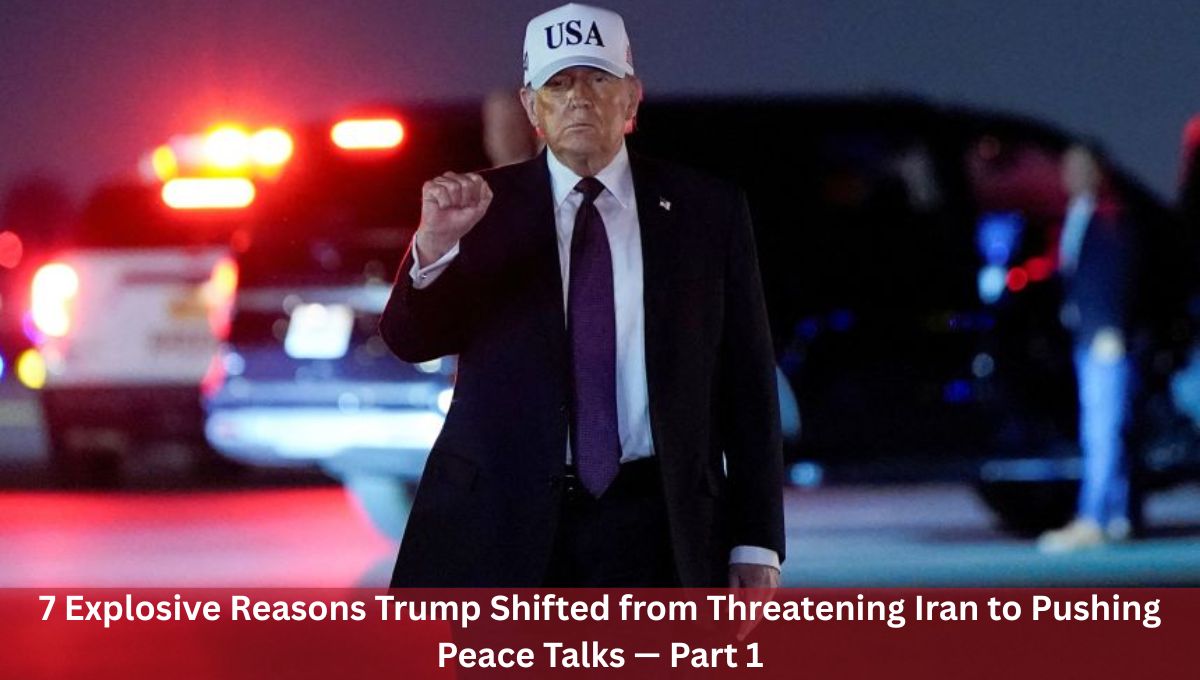
7 Explosive Reasons Trump Shifted from Threatening Iran to Pushing Peace Talks — A sudden pivot that shocked the world. In a matter of days, U.S. President Donald Trump moved from issuing one of the most aggressive threats of the conflict—targeting Iran’s civilian power infrastructure—to publicly promoting peace talks and hinting at a diplomatic resolution.
The shift was abrupt, strategic, and deeply consequential.
On Friday, Trump dismissed the idea of a ceasefire, arguing that halting military momentum while “obliterating the other side” made little sense.
By Monday, however, he was speaking confidently about negotiations, claiming that Iran “wants to settle.”
This dramatic change has triggered intense debate among analysts, policymakers, and global markets alike.
Was it a calculated move, a forced retreat, or a reflection of evolving geopolitical realities?
This article breaks down the key drivers behind Trump’s pivot and what it means for the future of the conflict.
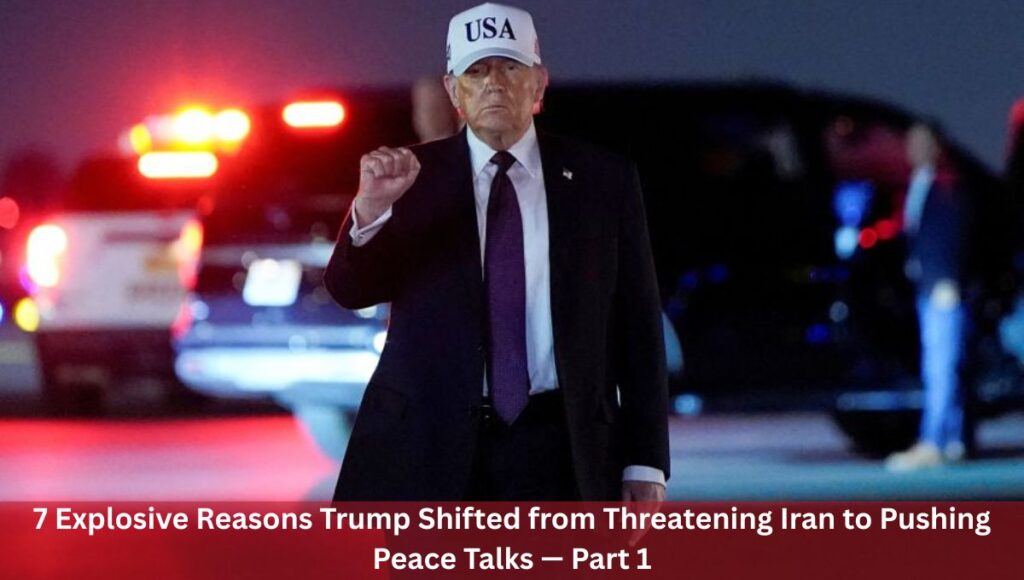
7 Explosive Reasons Trump Shifted from Threatening Iran to Pushing Peace Talks — Part 1
The Timeline: From Escalation to De-escalation
Friday: Rejection of Ceasefire
Trump initially signaled a hardline stance, rejecting the idea of a ceasefire even as global tensions escalated. His rhetoric suggested confidence in continued military pressure.
Saturday: The 48-Hour Ultimatum
The situation escalated dramatically when Trump issued a stark ultimatum:
- Iran must reopen the Strait of Hormuz within 48 hours
- Failure would result in U.S. strikes on Iranian power plants
This marked a dangerous escalation, targeting civilian infrastructure—an action widely seen as crossing a major threshold.
Sunday: Rising Alarm
Behind the scenes, allies and regional powers reacted with urgency. Warnings poured in about catastrophic consequences if energy infrastructure was attacked.
Monday: A Dramatic Reversal
By Monday, Trump had changed course:
- Announced “productive” discussions with Iran
- Delayed strikes on energy infrastructure by five days
- Suggested a deal could be imminent
Markets responded immediately, signaling how significant the shift was.
1. Pressure From Gulf Allies Forced a Strategic Rethink
One of the most decisive factors behind the shift was pressure from U.S. allies in the Gulf region.
Why Allies Were Alarmed
Striking Iran’s power plants would have:
- Triggered direct retaliation against Gulf infrastructure
- Risked attacks on desalination plants (critical for water supply)
- Escalated into a regional energy catastrophe
Countries heavily dependent on stable energy flows and water systems warned that such actions could destabilize the entire region.
The Risk of Regional Collapse
Gulf nations rely heavily on interconnected infrastructure.
Any escalation could have:
- Disrupted electricity grids across multiple countries
- Cut off drinking water supplies
- Crippled industrial output
These warnings appear to have significantly influenced Washington’s recalibration.
2. The Strait of Hormuz: Iran’s Strategic Leverage
At the heart of the crisis lies one of the world’s most critical choke points:
the Strait of Hormuz.
Why It Matters
- Handles roughly 20% of global oil supply
- Essential for energy exports from multiple countries
- Critical for Asian economies including India, China, and Japan
Iran’s Tactical Advantage
Despite military setbacks, Iran demonstrated its leverage by:
- Restricting access to certain vessels
- Creating uncertainty in shipping routes
- Driving up global oil prices
This asymmetrical leverage forced the U.S. to reconsider its approach.
3. Economic Shockwaves: Markets Forced a Policy Shift
Trump’s pivot coincided with immediate market reactions.
What Happened
- Oil prices surged above $100 per barrel
- Global supply chains showed signs of stress
- Investor confidence weakened
After the Shift
Once talks were announced:
- Oil prices dropped sharply
- Stock markets rallied
- Investor sentiment improved
This suggests economic pressure played a central role in the decision.
4. The Danger of Targeting Civilian Infrastructure
Targeting power plants marked a significant escalation.
Why It Was Controversial
- Could be viewed as violating international norms
- Risked humanitarian crises
- Would devastate Iran’s civilian population
Potential Consequences
Experts warned such strikes could:
- Set back Iran’s development by years
- Trigger retaliatory attacks on civilian infrastructure across the region
- Escalate into full-scale regional war
The risks likely outweighed the strategic benefits.
5. Iran’s Retaliation Strategy Raised the Stakes
Iran made it clear that any attack would not go unanswered.
Threats Issued
Iran signaled it would target:
- Power plants in Israel
- Energy infrastructure in Gulf countries
- U.S.-linked financial and corporate assets
Expanded Battlefield
Iran also hinted at:
- Cyberattacks
- Financial disruption
- Attacks on desalination plants
This broadened the conflict beyond traditional military engagement.
6. Backchannel Diplomacy Was Already Underway
Despite public denials, multiple countries were working behind the scenes to mediate.
Key Mediators
- Pakistan
- Turkey
- Egypt
- Oman
Nature of Talks
While direct negotiations remain disputed:
- Messages were exchanged via intermediaries
- Proposals were circulated
- A framework for discussions began to emerge
This suggests diplomacy never fully stopped—it just went underground.
7. Trump’s Negotiation Strategy: Escalate to De-escalate
Trump’s approach appears consistent with a broader pattern.
The Strategy
- Apply maximum pressure
- Create urgency through threats
- Open door to negotiations at peak tension
Evidence in This Case
- Threat to destroy power plants
- Immediate pivot to diplomacy
- Claims of “major points of agreement”
This aligns with his long-standing negotiation philosophy.
The Role of Oil and Global Supply Chains
The crisis exposed vulnerabilities in global energy systems.
Immediate Effects
- Surge in fuel prices worldwide
- Supply chain disruptions
- Increased shipping insurance costs
Long-Term Implications
- Greater focus on energy diversification
- Strategic reserves becoming critical
- Renewed geopolitical competition over trade routes
Conflicting Narratives: Are Talks Real?
A major uncertainty remains: are negotiations actually happening?
U.S. Claims
- Talks are “productive”
- Progress has been made
- Agreement may be close
Iran’s Position
- Denies direct negotiations
- Accuses U.S. of misinformation
- Maintains hardline stance
Reality Check
Most evidence suggests:
- Indirect communication is ongoing
- Formal negotiations have not begun
- Both sides are testing positions
Military Movements Contradict Diplomatic Signals
Even as talks are discussed, military buildup continues.
Developments
- Additional U.S. Marines deployed
- Ongoing strikes on non-energy targets
- Continued Israeli operations
What It Means
This dual-track approach indicates:
- Diplomacy is uncertain
- Military pressure remains active
- Both sides are hedging outcomes
Internal and External Political Pressures
Trump’s decision was also shaped by political realities.
Domestic Pressure
- Rising fuel prices affecting voters
- Criticism from political allies
- Concerns over prolonged war
International Pressure
- Allies urging restraint
- Risk of losing global support
- Economic instability affecting partnerships
The Nuclear Issue Remains Central
At the core of negotiations is Iran’s nuclear program.
U.S. Demands
- No nuclear weapons
- Transfer of enriched uranium
- Strict limitations on capabilities
Iran’s Position
- Claims program is peaceful
- Rejects external control
- Seeks sovereignty recognition
This issue remains the biggest obstacle to any deal.
What Happens Next?
Short-Term Outlook
- Continued indirect diplomacy
- Possible meeting via mediators
- Temporary de-escalation
Medium-Term Risks
- Talks collapse
- Renewed military escalation
- Wider regional conflict
Long-Term Scenarios
- Diplomatic agreement
- Frozen conflict
- Prolonged instability
Conclusion: A Fragile Pause, Not a Resolution
Trump’s shift from military threats to diplomatic overtures reflects a complex interplay of:
- Strategic pressure
- Economic realities
- Geopolitical risks
- Tactical negotiation
While the move has temporarily reduced tensions, the situation remains highly volatile.
The underlying issues—nuclear ambitions, regional power dynamics, and control of critical energy routes—are far from resolved.
What appears to be a step toward peace may ultimately be just another phase in a rapidly evolving conflict.
Also Read: 8 Explosive Developments as Trump Issues 48-Hour Ultimatum Over Hormuz Crisis
Also Read: Pakistan ‘ready to host US-Iran talks’: Can latest peace push work?