7 Alarming Signals as North Korea Expands nuclear weapons Capacity with new enrichment facilities. Global concerns over nuclear proliferation have intensified after the United Nations’ nuclear watchdog issued a stark warning about North Korea’s rapidly expanding weapons programme.
Thank you for reading this post, don't forget to subscribe!According to Rafael Grossi, head of the International Atomic Energy Agency, North Korea has made “very serious” advances in its ability to produce nuclear weapons.
The warning highlights increased activity across multiple facilities, including the country’s primary nuclear hub at Yongbyon, alongside evidence suggesting the construction of a new uranium enrichment plant.
These developments mark a critical escalation, raising alarms not only in East Asia but across the global security landscape.
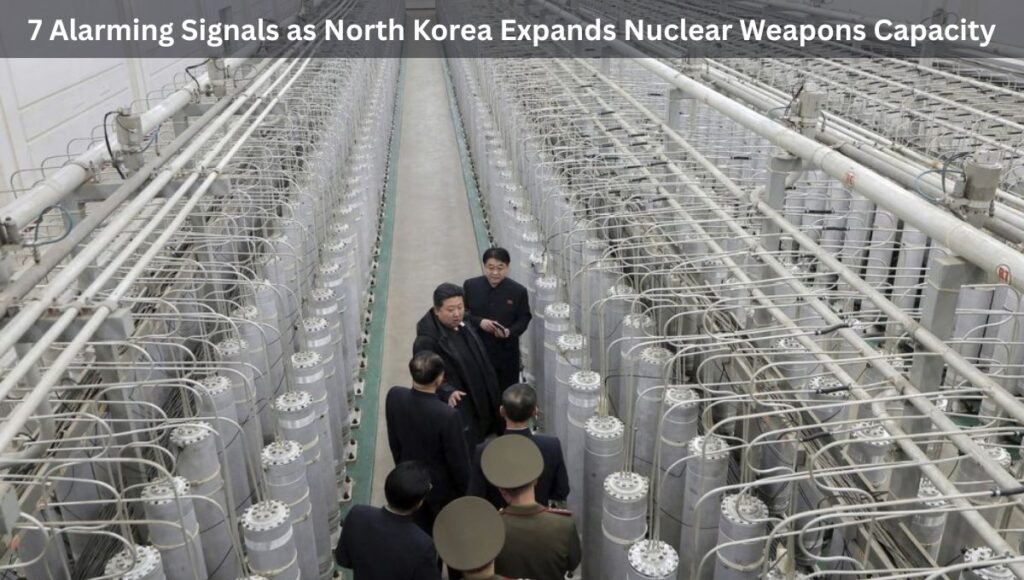
7 Alarming Signals as North Korea Expands Nuclear Weapons Capacity
IAEA Warning: ‘Very Serious’ Increase in Capabilities
Speaking during a visit to Seoul, Grossi confirmed that the IAEA has observed a sharp rise in operations at key nuclear sites in North Korea, officially known as the Democratic People’s Republic of Korea (DPRK).
“All of them point to a very serious increase in the capabilities of the DPRK in the area of nuclear weapons production,” Grossi said.
The agency’s assessment is based on satellite imagery, external analysis, and indirect indicators, as international inspectors have not had access to North Korean facilities since 2009.
Yongbyon: The Core of North Korea’s Nuclear Programme
At the center of the latest concerns is the Yongbyon Nuclear Scientific Research Center, a sprawling facility located about 100 kilometers north of Pyongyang.
Key Developments at Yongbyon
- Increased activity at the 5-megawatt reactor
- Expanded operations at the reprocessing unit
- Activation of a light water reactor
- Evidence of new infrastructure construction
This complex has long been the backbone of North Korea’s nuclear ambitions, serving as a primary site for producing plutonium and processing nuclear materials.
New Uranium Enrichment Facility Raises Alarm
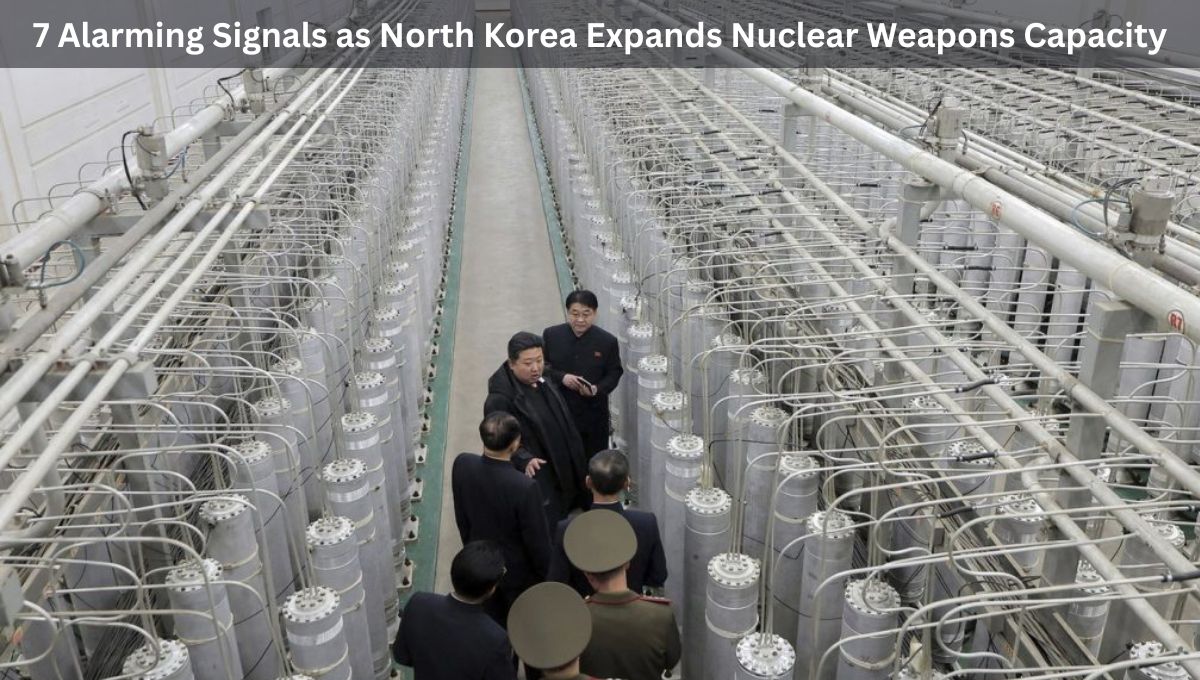
One of the most concerning findings is the likely addition of a new uranium enrichment facility.
The IAEA has identified a structure resembling existing enrichment halls at Yongbyon and another key site, Kangson.
While direct verification is not possible, analysis of external features suggests a significant expansion in enrichment capacity.
Why Uranium Enrichment Matters
- Provides a faster route to weapons-grade material
- Complements plutonium production
- Enables diversification of nuclear capabilities
Experts widely consider uranium enrichment to be a more efficient and scalable pathway to building nuclear warheads.
Satellite Imagery Confirms Expansion
Independent analysis has reinforced the IAEA’s findings.
The Center for Strategic and International Studies reported that satellite imagery from April shows the completion of a suspected uranium enrichment facility capable of producing weapons-grade material.
This external validation strengthens the case that North Korea is not only maintaining but actively expanding its nuclear infrastructure.
Estimated Arsenal: A Growing Stockpile
Despite limited access, experts estimate that North Korea currently possesses a few dozen nuclear warheads.
While the exact number remains uncertain, the combination of increased production capacity and multiple operational facilities suggests that this stockpile could grow significantly in the coming years.
Dual Pathways: Plutonium and Uranium Strategy
North Korea’s nuclear programme relies on two primary methods for producing fissile material:
1. Plutonium Reprocessing
- Extracted from spent nuclear fuel
- Produced at reactors like Yongbyon
2. Uranium Enrichment
- Converts uranium into weapons-grade material
- More flexible and scalable
By pursuing both pathways simultaneously, North Korea is enhancing its resilience and ability to expand its arsenal under international pressure.
No Clear Evidence of Russian Nuclear Assistance
Amid growing geopolitical tensions, questions have arisen about potential cooperation between North Korea and Russia.
However, Grossi stated that the IAEA has not found evidence of Russian technology being used in North Korea’s nuclear weapons programme.
While a cooperation pact between the two countries exists, it appears to be limited to civilian nuclear activities—for now.
South Korea’s Nuclear Submarine Plan Adds Complexity
The situation is further complicated by developments in South Korea.
Seoul is advancing plans to build nuclear-powered submarines, prompting concerns about potential proliferation risks.
Grossi has urged South Korea to work closely with the IAEA to ensure transparency and compliance with international safeguards.
Key Concern
Nuclear fuel used in submarines can remain uninspected for extended periods, creating challenges for monitoring and verification.
Regional Security Implications
North Korea’s expanding nuclear capabilities are reshaping the security landscape in East Asia.
Potential Risks
- Increased tensions with South Korea and Japan
- Strengthening of military alliances
- Acceleration of regional arms race
As Pyongyang enhances its arsenal, neighboring countries may feel compelled to boost their own defense capabilities, further escalating tensions.
Global Impact: A Challenge to Non-Proliferation
The developments also pose a significant challenge to global non-proliferation efforts.
Key Concerns
- Weakening of international nuclear agreements
- Reduced effectiveness of sanctions
- Increased risk of nuclear technology spread
Grossi emphasized that pursuing nuclear weapons does not enhance security but instead increases the likelihood of proliferation.
Limited Oversight: A Major Challenge
One of the biggest obstacles in assessing North Korea’s nuclear programme is the lack of direct access.
Since expelling IAEA inspectors in 2009, North Korea has operated largely outside the global monitoring system.
Current Monitoring Methods
- Satellite imagery
- Intelligence reports
- Indirect indicators of activity
This limitation makes it difficult to accurately measure the scale and pace of nuclear expansion.
Missile Tests and Military Modernisation
In addition to nuclear developments, North Korea continues to strengthen its conventional military capabilities.
Recent missile tests and naval modernization efforts indicate a broader strategy aimed at enhancing overall deterrence.
These efforts are closely linked to the country’s nuclear programme, forming a comprehensive defense posture.
Strategic Intent: Deterrence and Regime Security
North Korea’s nuclear expansion is widely seen as a strategy to ensure regime survival.
Key Objectives
- Deter external threats
- Strengthen bargaining power in negotiations
- Maintain internal political stability
By expanding its nuclear arsenal, Pyongyang aims to secure its position both domestically and internationally.
Risk of a Regional Arms Race
As North Korea advances its capabilities, the risk of a regional arms race grows.
Countries such as South Korea and Japan may consider enhancing their own military capabilities, potentially including nuclear options.
This could lead to a destabilizing cycle of escalation across East Asia.
International Response: Limited Options
The international community faces significant challenges in responding to North Korea’s nuclear expansion.
Possible Measures
- Strengthening sanctions
- Renewing diplomatic efforts
- Enhancing regional defense cooperation
However, past efforts have yielded limited success, highlighting the complexity of the issue.
What Happens Next?
The situation remains highly dynamic.
Key Developments to Watch
- Further satellite evidence of expansion
- Potential diplomatic engagement
- Regional military responses
- Changes in North Korea–Russia relations
The trajectory of North Korea’s nuclear programme will play a crucial role in shaping global security in the coming years.
Conclusion: A Critical Turning Point
The IAEA’s warning marks a significant moment in the ongoing challenge of nuclear proliferation.
North Korea’s rapid expansion of its nuclear capabilities underscores the limitations of existing international frameworks and the urgent need for renewed diplomatic and strategic efforts.
As tensions rise and uncertainties grow, the world faces a critical question:
how to contain a nuclear programme that continues to advance despite decades of sanctions and negotiations.
Final Takeaway
North Korea’s nuclear ambitions are entering a new phase—one defined by increased capacity, greater complexity, and heightened global risk.
The coming months will be crucial in determining whether this trajectory can be slowed—or whether the world must prepare for a more nuclearized and unstable future.
Also Read: 7 Shocking Facts About North Korea Elections 2026 as Kim Secures 99.93% Vote
Also Read: North Korea rapidly expanding nuclear weapons capability, UN watchdog warns