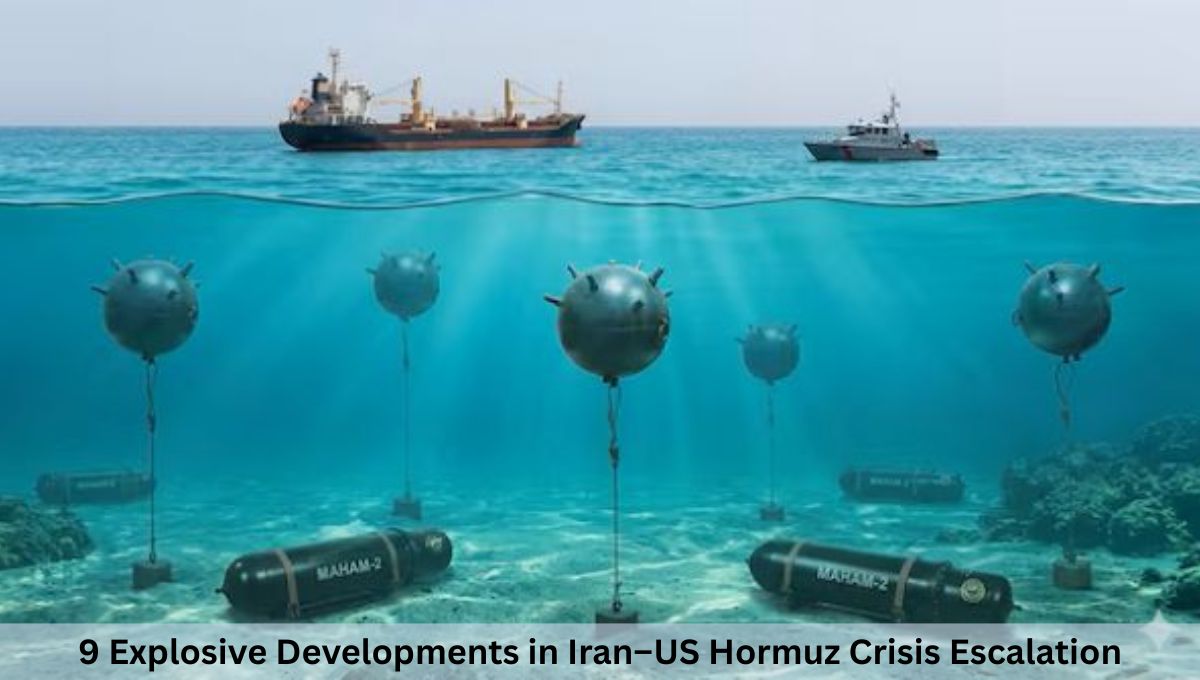
9 Explosive Developments in Iran–US Hormuz Crisis Escalation as reports emerge of Iran mining the Strait. The geopolitical standoff between Iran and the United States has entered a volatile new phase, with fresh reports indicating that Iran has deployed additional naval mines in the Strait of Hormuz — one of the world’s most critical energy choke points.
Thank you for reading this post, don't forget to subscribe!Simultaneously, former U.S. President Donald Trump has reportedly ordered the U.S. Navy to take immediate and lethal action against any Iranian vessels involved in mine-laying operations.
This sharp escalation raises the risk of broader military confrontation while sending shockwaves across global energy markets.
This article provides a comprehensive, fact-driven breakdown of the unfolding crisis, its military dynamics, economic implications, and what it means for the world.
9 Explosive Developments in Iran–US Hormuz Crisis Escalation
Why the Strait of Hormuz Matters
The Strait of Hormuz is not just another maritime passage — it is the backbone of global energy logistics.
A Critical Oil Artery
- Roughly 20% of global seaborne oil passes through the strait during normal conditions.
- Major Asian economies — including China, Japan, and South Korea — rely heavily on this route.
- Even minor disruptions can trigger significant price volatility in global oil markets.
Strategic Vulnerability
The strait is geographically narrow, making it highly susceptible to:
- Naval blockades
- Mine-laying operations
- Missile or drone attacks
- Interception of commercial vessels
Because of these factors, any escalation here has immediate global consequences.
Iran’s Alleged Mine Deployment
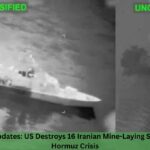
Recent intelligence reports suggest that Iran’s Islamic Revolutionary Guard Corps (IRGC) Navy has intensified its operations in the region.
Key Developments
- Additional naval mines have reportedly been laid in the strait.
- This marks the second known mining operation since the conflict began.
- U.S. officials claim they detected and tracked the activity in real time.
Tactical Approach
Iran is believed to be using:
- Small, fast vessels similar to fishing boats
- Boats capable of carrying 2–4 mines each
- Platforms equipped with machine guns and rocket launchers
These tactics make detection and prevention extremely difficult.
Trump’s “Shoot on Sight” Directive
One of the most alarming aspects of the escalation is the reported directive issued to the U.S. Navy.
What the Order Means
- U.S. forces have been instructed to engage and destroy any vessel involved in mine-laying.
- The directive emphasizes “no hesitation”, signaling a shift toward aggressive engagement rules.
Strategic Implications
- Raises the risk of direct military clashes
- Reduces space for diplomatic de-escalation
- Signals a willingness to escalate quickly and decisively
This posture significantly heightens tensions in an already fragile environment.
Collapse of Maritime Traffic
Shipping activity in the Strait of Hormuz has dropped sharply amid the crisis.
Current Situation
- Traffic has fallen from over 100 ships daily to single digits
- Many shipping companies are avoiding the route entirely
- War-risk insurance costs have surged
Why Ships Are Staying Away
Even a single undetected mine can:
- Sink large oil tankers
- Trigger environmental disasters
- Lead to massive financial losses
As a result, commercial operators are unwilling to take the risk.
The Mine-Clearing Challenge
Removing naval mines is a complex and time-consuming process.
Current Efforts
The U.S. military is deploying:
- Underwater drones
- Mine countermeasure vessels
- Specialized helicopters
- Surveillance aircraft
Timeline Controversy
- Some reports suggest clearing operations could take up to six months
- The Pentagon has strongly denied this timeline
- Officials insist a prolonged closure is “unacceptable”
Technical Difficulties
Modern mines reportedly include:
- GPS-guided systems
- Remote-floating capabilities
- Advanced triggering mechanisms
These features make them harder to detect and neutralize.
Military Build-Up in the Region
The United States is rapidly increasing its military presence.
- Three aircraft carriers are now in the region
- Multiple mine countermeasure ships deployed
- Expanded surveillance and strike capabilities
Strategic Objective
- Maintain control over the strait
- Prevent further mine-laying
- Ensure safe passage for commercial vessels
This build-up signals preparation for extended operations.
Iran’s Strategic Position
Despite heavy losses, Iran appears to retain operational capabilities.
Ongoing Activities
- Continued mine deployment
- Speedboat patrols
- Air defense operations
- Possible use of fighter aircraft
Political Messaging
Iran has:
- Denied laying mines
- Declared parts of the strait a “danger zone”
- Linked reopening to lifting the U.S. naval blockade
This indicates a strategy aimed at leveraging disruption for negotiation power.
Global Oil Market Shock
The crisis has already begun to impact energy markets worldwide.
Immediate Effects
- Oil prices have surged past key thresholds
- Supply chain uncertainty has increased
- Shipping costs have risen sharply
Long-Term Risks
If disruption continues:
- Sustained high fuel prices
- Inflationary pressure globally
- Economic slowdown in import-dependent countries
The International Energy Agency has warned that the disruption could rival or exceed the 1970s oil shocks.
Geopolitical Fallout
The crisis is not just about oil — it is reshaping global power dynamics.
Key Concerns
- Escalation into a broader regional war
- Increased involvement from global powers
- Strain on international alliances
Diplomatic Breakdown
- Talks between the U.S. and Iran remain stalled
- Preconditions for negotiation remain unmet
- Trust between both sides is at a low point
Without diplomacy, the situation risks spiraling further.
What Happens Next?
Several scenarios could unfold in the coming weeks:
Scenario 1: Controlled De-escalation
- Limited naval engagements
- Gradual reopening of the strait
- Resumption of negotiations
Scenario 2: Prolonged Standoff
- Continued mine-laying and clearing operations
- Persistent shipping disruptions
- Elevated oil prices
Scenario 3: Full-Scale Escalation
- Direct military confrontation
- Closure of the strait
- Severe global economic impact
At present, the situation appears to be moving toward prolonged tension rather than immediate resolution.
Conclusion
The Strait of Hormuz crisis represents one of the most serious geopolitical flashpoints in recent years.
Iran’s alleged mine deployment and the United States’ aggressive military posture have created a high-risk environment with far-reaching consequences.
From disrupted oil supplies to rising geopolitical tensions, the stakes extend far beyond the Middle East.
The coming weeks will be critical in determining whether the situation stabilizes or escalates into a broader conflict.
For now, global markets, governments, and security agencies remain on high alert as events continue to unfold in this strategically vital region.
Also Read: 7 Shocking Reasons Iran Can’t Reopen Strait of Hormuz Amid Mine Crisis
Also Read: Five Things to Know About Iranian Mine laying