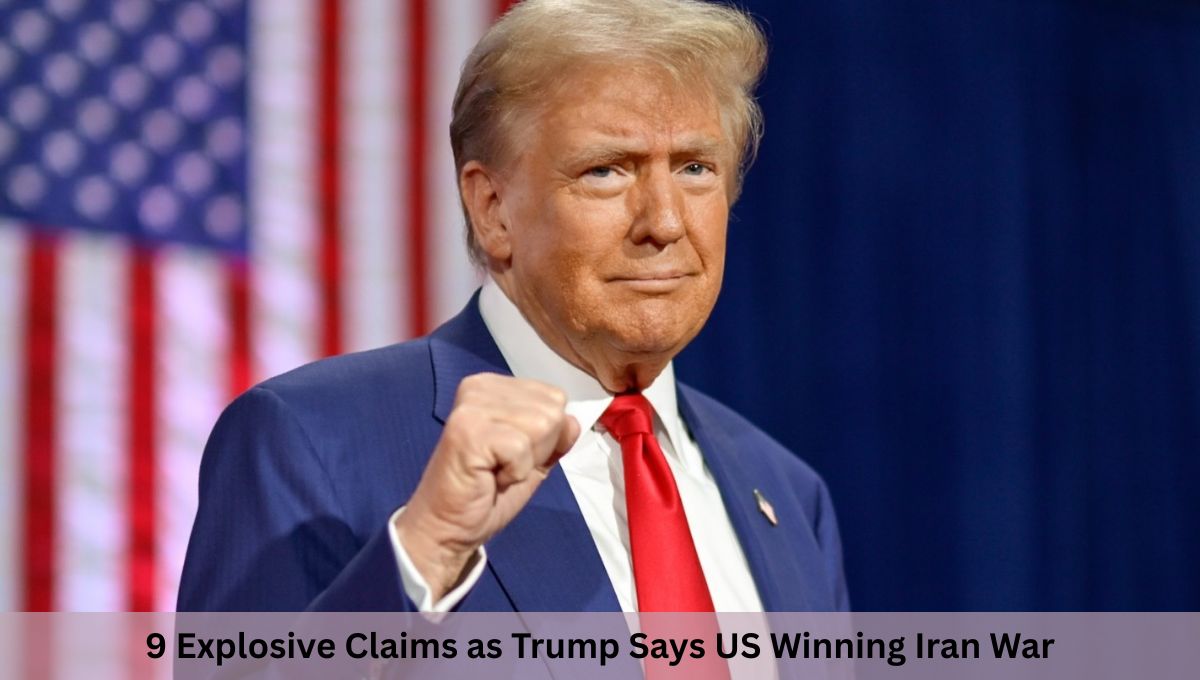
9 Explosive Claims as Trump Says US Winning Iran War while tensions rise over nuclear demands. The geopolitical standoff between the United States and Iran has entered one of its most volatile phases in recent history. With a fragile ceasefire nearing expiration and no clear diplomatic breakthrough in sight, tensions are rapidly escalating across political, military, and economic fronts.
Thank you for reading this post, don't forget to subscribe!US President Donald Trump has taken an unusually assertive tone, insisting that Washington is “winning the war by a lot” while simultaneously claiming he is under “no pressure” to finalize a deal.
These statements come amid growing uncertainty over negotiations, rising oil market volatility, and fears of a renewed military confrontation.
This evolving crisis is not confined to bilateral relations between Washington and Tehran. It has become a global issue with implications for energy security, financial stability, and international diplomacy.
The coming days could prove decisive in shaping the trajectory of the conflict.
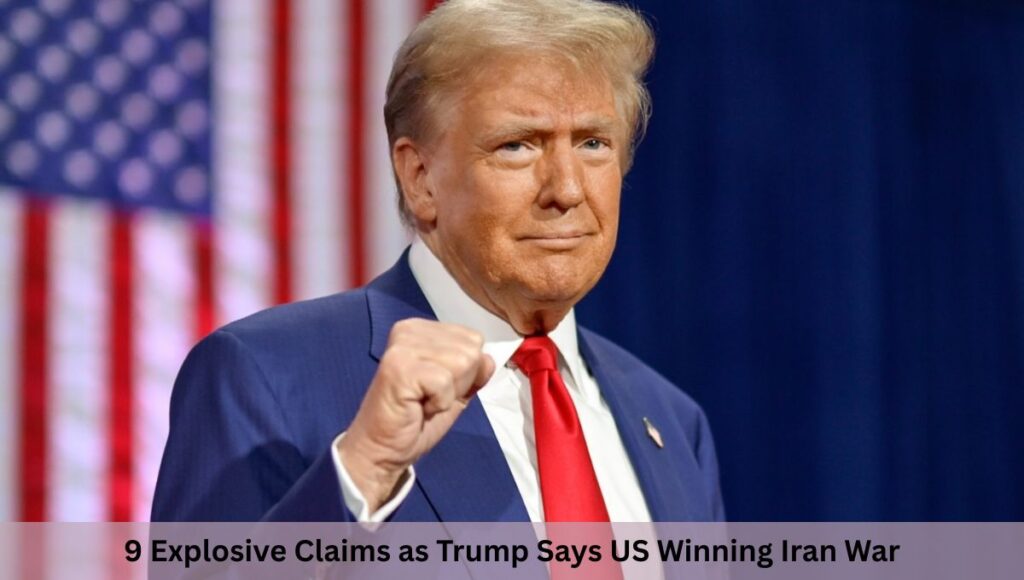
9 Explosive Claims as Trump Says US Winning Iran War
Trump’s Strategic Messaging: Confidence as Leverage
Trump’s repeated insistence that he is not under pressure reflects a calculated negotiation strategy.
By projecting confidence and dismissing urgency, he aims to strengthen the United States’ bargaining position.
From a strategic standpoint, this approach serves multiple purposes. It reassures domestic audiences, signals resolve to allies, and attempts to pressure Iran into making concessions.
However, it also carries risks, particularly if perceived as dismissive or inflexible by negotiating counterparts.
His messaging emphasizes that any deal will be concluded on US terms and will surpass previous agreements in strength and effectiveness.
This narrative aligns with his broader foreign policy approach, which prioritizes leverage, unpredictability, and direct engagement.
“Winning by a Lot”: Assessing the Claim
Trump’s assertion that the United States is winning the war has become a central theme in his communication.
He has cited military actions, economic sanctions, and the naval blockade as evidence of US dominance. However, evaluating this claim requires a nuanced analysis.
While the United States possesses superior military capabilities and global reach, Iran has demonstrated resilience through asymmetric strategies.
These include leveraging regional alliances, disrupting maritime routes, and maintaining internal cohesion despite economic pressure.
In modern conflicts, victory is rarely defined solely by military metrics.
Economic endurance, political stability, and strategic positioning all play critical roles. As such, the true balance of power remains contested.
Domestic Political Dimension
The Iran conflict has also become a focal point in US domestic politics. Trump has accused opposition parties of undermining national interests by pushing for a rushed agreement.
His criticism extends to media organizations, which he claims are misrepresenting the situation.
This reflects a broader trend of politicization in foreign policy, where international developments are increasingly shaped by domestic narratives.
The interplay between domestic politics and international strategy adds complexity to decision-making processes.
Leaders must balance internal pressures with external realities, often leading to contradictory signals.
Ceasefire Deadline: Strategic Pressure Point
The impending expiration of the ceasefire represents a critical juncture. Trump has indicated that an extension is unlikely, effectively setting a deadline for negotiations.
Deadlines can serve as powerful tools in diplomacy, creating urgency and forcing decisions. However, they can also backfire if parties are unwilling to compromise under pressure.
In this case, the deadline increases the risk of miscalculation. Without a clear agreement, both sides may revert to military options, escalating the conflict rapidly.
Islamabad Talks: High Stakes Diplomacy
Pakistan’s capital has emerged as the focal point for potential negotiations.
The proposed talks in Islamabad are seen as a last opportunity to secure a diplomatic breakthrough before the ceasefire expires.
Preparations for the talks underscore their importance. Security measures, diplomatic coordination, and logistical planning reflect the high stakes involved.
Yet uncertainty remains a defining feature. Iran has not confirmed its participation, and conflicting reports about delegation movements have added to the ambiguity.
Iran’s Calculated Ambiguity
Iran’s approach to the talks reflects a strategy of calculated ambiguity. By neither fully committing nor completely withdrawing, Tehran maintains flexibility while exerting pressure.
This approach allows Iran to assess developments, gauge international reactions, and adjust its position accordingly.
It also complicates US planning, as uncertainty limits the effectiveness of pressure tactics.
Iranian officials have cited concerns about US credibility, inconsistent positions, and perceived violations of agreements as reasons for their cautious stance.
Nuclear Issue: The Core Fault Line
At the center of the conflict lies the dispute over Iran’s nuclear program.
The United States demands strict limitations or complete cessation of uranium enrichment, viewing it as essential for preventing nuclear weapon development.
Iran, on the other hand, insists on its right to pursue peaceful nuclear activities. While it has shown willingness to negotiate limits, it rejects demands that undermine its sovereignty.
This fundamental disagreement has been a persistent obstacle in negotiations.
Bridging this gap requires compromise, verification mechanisms, and mutual trust—elements currently in short supply.
Strait of Hormuz: Economic and Strategic Impact
The Strait of Hormuz remains a critical factor in the crisis. As a key global shipping route, it handles a significant portion of the world’s energy supply.
Disruptions in the strait have immediate and far-reaching consequences.
Shipping delays, increased insurance costs, and supply uncertainties can drive up oil prices and impact global markets.
Both the United States and Iran have used the strait as leverage, highlighting its importance as a strategic asset. Control over this waterway provides significant bargaining power.
Oil Market Volatility and Global Economy
The US-Iran conflict has had a direct impact on global oil markets. Prices have fluctuated in response to developments, reflecting uncertainty and risk perception.
Investors and policymakers closely monitor the situation, as prolonged instability could lead to sustained price increases.
This, in turn, affects inflation, economic growth, and energy security worldwide.
Emerging economies, in particular, are vulnerable to such fluctuations, given their dependence on energy imports.
Military Posturing and Escalation Risks
Both sides have engaged in significant military posturing. The United States has maintained a strong naval presence, while Iran has demonstrated its ability to disrupt regional stability.
Trump’s warnings of potential large-scale attacks underscore the seriousness of the situation. Iran’s counter-warnings further highlight the risk of escalation.
In such an environment, even minor incidents can trigger significant consequences. The potential for miscalculation remains a major concern.
Maritime Incidents and Rising Tensions
Recent maritime incidents, including the seizure of vessels, have added another layer of tension.
These incidences not only impact trade but also increase the likelihood of confrontation.
Control over shipping routes has become a key aspect of the conflict. Both sides view maritime dominance as essential for achieving their strategic objectives.
Pakistan’s Role as Mediator
Pakistan’s involvement as a mediator has been crucial. Its diplomatic efforts have helped maintain communication channels and facilitate potential negotiations.
The country’s strategic position and relationships with both parties enable it to play a unique role. However, mediation alone cannot resolve deep-rooted differences.
The success of these efforts depends on the willingness of both sides to engage constructively.
Internal Dynamics and Decision-Making
Internal political dynamics within both the United States and Iran influence the negotiation process.
Differences in priorities, perspectives, and power structures can affect decision-making.
In Iran, various institutions and factions may have differing views on how to approach negotiations. In the United States, domestic political considerations also play a role.
These internal factors add complexity and can lead to inconsistent or contradictory signals.
Information Warfare and Narrative Control
Both sides are actively engaged in shaping narratives. Strategic communication plays a key role in influencing public opinion and international perception.
Trump’s assertive statements and Iran’s defiant responses are part of this broader information strategy. Each side seeks to project strength and legitimacy.
However, such messaging can also harden positions and make compromise more difficult.
Diplomatic Challenges and Trust Deficit
A major obstacle to progress is the lack of trust between the United States and Iran. Historical grievances, past agreements, and recent actions have all contributed to skepticism.
Rebuilding trust requires consistent behavior, transparency, and credible commitments. Without these elements, even well-structured agreements may fail.
Potential Scenarios: Detailed Outlook
Renewed Conflict
If negotiations collapse, hostilities could resume rapidly. This scenario would likely involve airstrikes, maritime confrontations, and regional escalation.
Interim Agreement
A temporary agreement could extend the ceasefire and provide a framework for further negotiations. This would reduce immediate risks but may not resolve underlying issues.
Comprehensive Deal
A broader agreement addressing nuclear concerns, sanctions, and regional dynamics could bring stability. However, achieving this outcome would require significant compromise.
Prolonged Standoff
A scenario where neither side escalates fully nor reaches an agreement could lead to sustained instability.
Global Strategic Implications
The outcome of the US-Iran conflict will shape global geopolitics. Alliances, trade routes, and security arrangements may all be affected.
Countries in Europe, Asia, and the Middle East are closely monitoring developments, as the نتائج will influence their own policies and strategies.
Energy Security and Supply Chains
Energy security is a central concern in the current crisis. Disruptions in supply chains can have cascading effects on industries and economies.
The Strait of Hormuz plays a critical role in this context. Ensuring its stability is essential for maintaining global energy flows.
Economic Ripple Effects
Beyond energy markets, the conflict affects broader economic indicators. Stock markets, currency values, and trade volumes are all influenced by geopolitical stability.
Uncertainty can lead to reduced investment, slower growth, and increased risk premiums.
Humanitarian and Regional Impact
While much focus is on strategic and economic aspects, the humanitarian impact should not be overlooked. Conflict can lead to displacement, casualties, and infrastructure damage.
Regional stability is also at risk, with potential spillover effects affecting neighboring countries.
Conclusion: A Decisive Moment in Global Politics
The US-Iran standoff has reached a decisive stage. With the ceasefire deadline approaching and negotiations uncertain, the risk of escalation remains high.
Trump’s claims of victory and lack of pressure contrast with the complicated realities on the ground.
While diplomacy offers a path forward, deep mistrust and competing interests continue to hinder progress.
The coming days will be critical in determining whether the situation moves toward resolution or further conflict. For the global community, the stakes could not be higher.
Also Read: 9 Explosive Claims by Trump on Iran War That Could Change Global Power Dynamics
Also Read: Trump says US won ‘total and complete victory’ after ceasefire deal with Iran, AFP reports
Related Posts:
- 3 Explosive Conditions Iran Sets to End War with US…
- 11 Explosive Warnings as Trump Vows to ‘Knock the…

- 10 Explosive Signals Trump Says Iran War Could End…
- 12 Explosive Claims as Donald Trump Says Iran War…
- Trump's 3 Blunt Warnings to China and Russia Over…
- 10 Explosive Signals: Trump Rates Iran War “15/10”…