
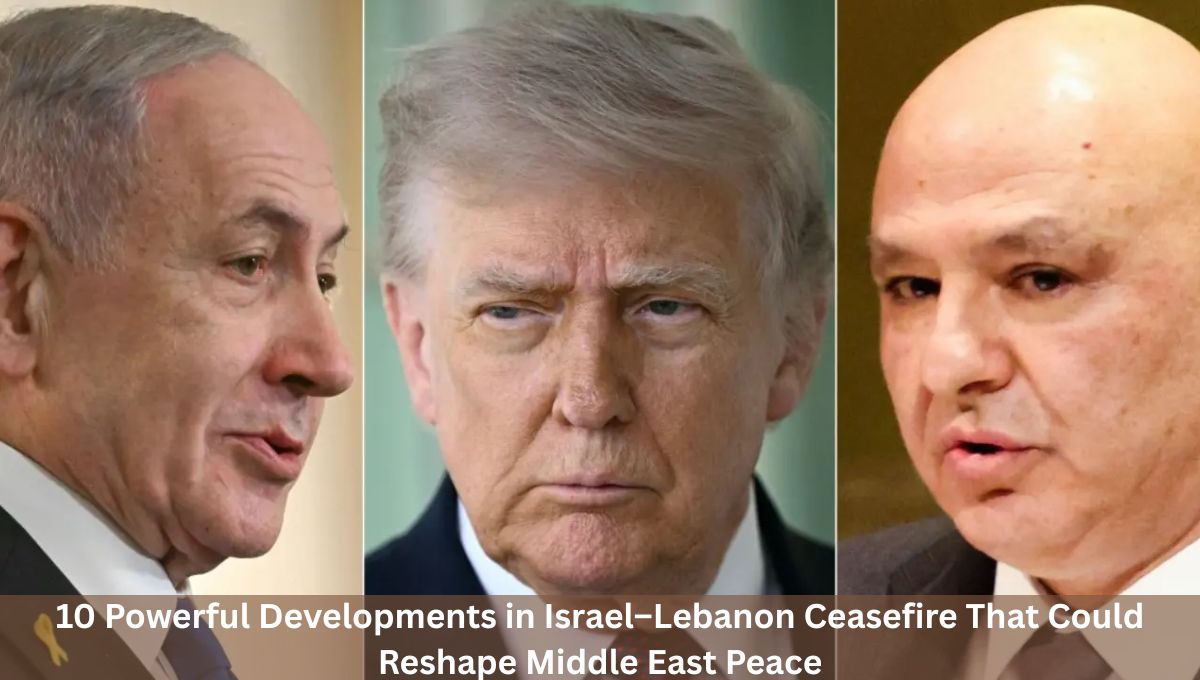
10 Powerful Developments in Israel–Lebanon Ceasefire That Could Reshape Middle East Peace and Hezbollah’s role. A 10-day ceasefire between Israel and Lebanon has come into force, offering a rare pause in a conflict that has escalated rapidly in recent weeks. While celebrations erupted across Beirut as the truce began, the reality on the ground remains complex and uncertain.
Thank you for reading this post, don't forget to subscribe!This ceasefire is not just a localized agreement—it is deeply intertwined with broader geopolitical negotiations involving the United States, Iran, and regional actors.
The temporary halt in hostilities is being framed as a crucial confidence-building measure.
However, underlying tensions, conflicting strategic goals, and unresolved political demands continue to threaten its stability.
As global attention turns toward the Middle East, this ceasefire may either serve as a stepping stone toward lasting peace or collapse under the weight of entrenched rivalries.
10 Powerful Developments in Israel–Lebanon Ceasefire That Could Reshape Middle East Peace
A Ceasefire Begins Amid Celebration and Skepticism
As the ceasefire took effect at midnight, celebrations broke out across Beirut.
Fireworks lit up the sky, and celebratory gunfire echoed through neighborhoods that have endured weeks of bombardment and fear.
For many civilians, the truce represents a desperately needed reprieve from violence. However, the optimism was immediately tempered by reports of violations.
Lebanese authorities accused Israeli forces of intermittent shelling in southern regions shortly after the ceasefire began.
Israel, meanwhile, maintained that its military presence remains necessary due to ongoing threats from Hezbollah.
This dual reality—celebration on one hand and continued tension on the other—highlights the fragile nature of the agreement.
The Diplomatic Breakthrough Behind the Ceasefire
The ceasefire did not emerge in isolation. It is the result of intensive diplomatic efforts led by the United States, with direct involvement from top leadership.
The agreement followed high-level discussions between Israeli and Lebanese officials in Washington—the first such direct contact in decades.
The United States has positioned this truce as a gateway to broader negotiations.
The goal is not just to halt fighting temporarily but to create a framework for a long-term peace agreement between Israel and Lebanon.
The initiative also includes plans for future talks at the White House, potentially marking a historic moment in regional diplomacy.
Conflicting Objectives: The Core Challenge
Despite the diplomatic progress, the ceasefire is burdened by fundamentally incompatible objectives:
Israel’s Position
- Maintain a military presence in southern Lebanon
- Establish an expanded security zone
- Ensure the complete dismantling of Hezbollah
Lebanon’s Position
- Full withdrawal of Israeli forces
- Return of displaced civilians
- Release of Lebanese prisoners
Hezbollah’s Position
- Reject negotiations entirely
- Continue armed resistance
- Oppose disarmament under any condition
These conflicting goals create a structural contradiction that undermines the foundation of the ceasefire.
Hezbollah: The Central Obstacle
Hezbollah remains the most significant barrier to lasting peace. The Iran-backed group has been excluded from negotiations, yet it is a primary actor in the conflict.
Its leadership has openly condemned the ceasefire, describing it as a strategic maneuver designed to pressure the group into disarming.
Hezbollah insists that it will not lay down its weapons and has vowed to continue resistance against Israeli forces.
This exclusion creates a paradox:
a peace process that does not include one of the key combatants.
The Role of the United States
The United States has taken a leading role in orchestrating the ceasefire and pushing for broader negotiations.
Senior officials have been tasked with facilitating dialogue and ensuring compliance during the truce.
Washington’s strategy extends beyond Lebanon. The ceasefire is closely linked to parallel negotiations with Iran, particularly concerning nuclear activity and regional stability.
The U.S. sees this moment as an opportunity to achieve multiple objectives:
- De-escalate regional conflict
- Secure commitments on Iran’s nuclear program
- Stabilize global energy markets
Link to US–Iran Negotiations
The ceasefire in Lebanon is not an isolated development—it is directly tied to ongoing negotiations between the United States and Iran.
Iran has consistently maintained that any comprehensive agreement must include a halt to hostilities in Lebanon.
By facilitating this ceasefire, the United States may have addressed one of Tehran’s key demands.
There are emerging signs of compromise in nuclear discussions:
- Potential limits on uranium enrichment
- Partial transfer of enriched uranium stockpiles
- Possible easing of sanctions
However, significant differences remain, particularly regarding the duration and scope of nuclear restrictions.
The Strait of Hormuz and Global Impact
One of the most critical aspects of the broader conflict is the Strait of Hormuz—a vital transit route through which approximately 20% of global oil supply flows.
The ongoing tensions have led to:
- Severe disruptions in oil shipments
- Sharp increases in global energy prices
- Economic uncertainty worldwide
A successful ceasefire and subsequent peace agreement could stabilize the region and significantly reduce pressure on global markets.
Humanitarian Crisis in Lebanon
Beyond geopolitics, the human cost of the conflict has been devastating.
Key Figures:
- Over 2,100 people killed
- More than 1 million displaced
- Extensive infrastructure destruction
Critical infrastructure, including bridges and transport routes, has been destroyed, isolating communities and hindering aid delivery.
The ceasefire provides a narrow window for humanitarian relief efforts, but the scale of the crisis requires sustained peace to enable recovery.
Internal Political Pressure in Israel
The ceasefire has also sparked intense debate within Israel. Critics argue that the temporary halt in fighting allows Hezbollah to regroup and undermines long-term security objectives.
Political opposition leaders have labeled the truce a strategic mistake, while supporters view it as a necessary step toward a broader peace agreement.
To address domestic concerns, Israeli leadership has emphasized that military forces will remain in southern Lebanon and that operations may resume if threats persist.
Lebanon’s Delicate Position
Lebanon faces a complex balancing act. While the government seeks peace and stability, it has limited control over Hezbollah, which operates as both a political and military entity.
The Lebanese leadership has:
- Supported the ceasefire
- Called for Israeli withdrawal
- Expressed willingness to engage in negotiations
However, internal divisions and external pressures complicate its ability to deliver on these commitments.
Fragility of the Ceasefire
Early reports of violations underscore the fragile nature of the agreement. Both sides accuse each other of breaching terms, raising concerns about its sustainability.
Key risks include:
- Renewed military clashes
- Escalation involving Hezbollah
- Breakdown of diplomatic talks
The next few days will be critical in determining whether the ceasefire can hold.
Economic Stakes and Global Repercussions
The conflict has had far-reaching economic consequences:
- Rising oil prices
- Inflationary pressures worldwide
- Disruption of global trade routes
For many countries, particularly energy-importing nations, the outcome of this ceasefire carries significant economic implications.
Prospects for a Historic Peace Agreement
Despite the challenges, the ceasefire presents a rare opportunity for progress.
If negotiations succeed, the region could witness:
- A formal peace agreement between Israel and Lebanon
- De-escalation of tensions with Iran
- Stabilization of global energy markets
However, achieving these outcomes will require overcoming deeply rooted mistrust and conflicting strategic interests.
Conclusion
The 10-day ceasefire between Israel and Lebanon is a pivotal moment in Middle Eastern geopolitics.
It offers a temporary pause in violence and a potential pathway toward broader peace, but its success is far from guaranteed.
The agreement sits at the intersection of multiple conflicts—local, regional, and global.
Its fate will depend on the ability of all parties to navigate complex political realities, address core grievances, and commit to meaningful dialogue.
For now, the ceasefire remains both a symbol of hope and a reminder of how fragile peace can be in one of the world’s most volatile regions.
Final Takeaway
This ceasefire is not the end of the conflict—it is a test. A test of diplomacy, political will, and the possibility of transforming temporary calm into lasting peace.
The coming days will determine whether this moment becomes a turning point in history or just another brief pause in an ongoing cycle of conflict.
Also Read: 7 Explosive Developments as Netanyahu Pushes Lebanon Talks Amid Fragile Iran Ceasefire
Also Read: Iran declares Strait of Hormuz completely open to commercial traffic during Israel-Lebanon ceasefire
Related Posts:
- 5 Major Takeaways from the US Supreme Court's…

- Afghanistan–Pakistan War 2025: Inside the 48-Hour Ceasefire

- 3 Explosive Conditions Iran Sets to End War with US…
- 9 Explosive Claims as Trump Says US Winning Iran War

- 7 Powerful Facts About Ayatollah Ali Khamenei’s…
- Trump’s 20-Point Gaza Peace Plan Gains Urgent Global…
