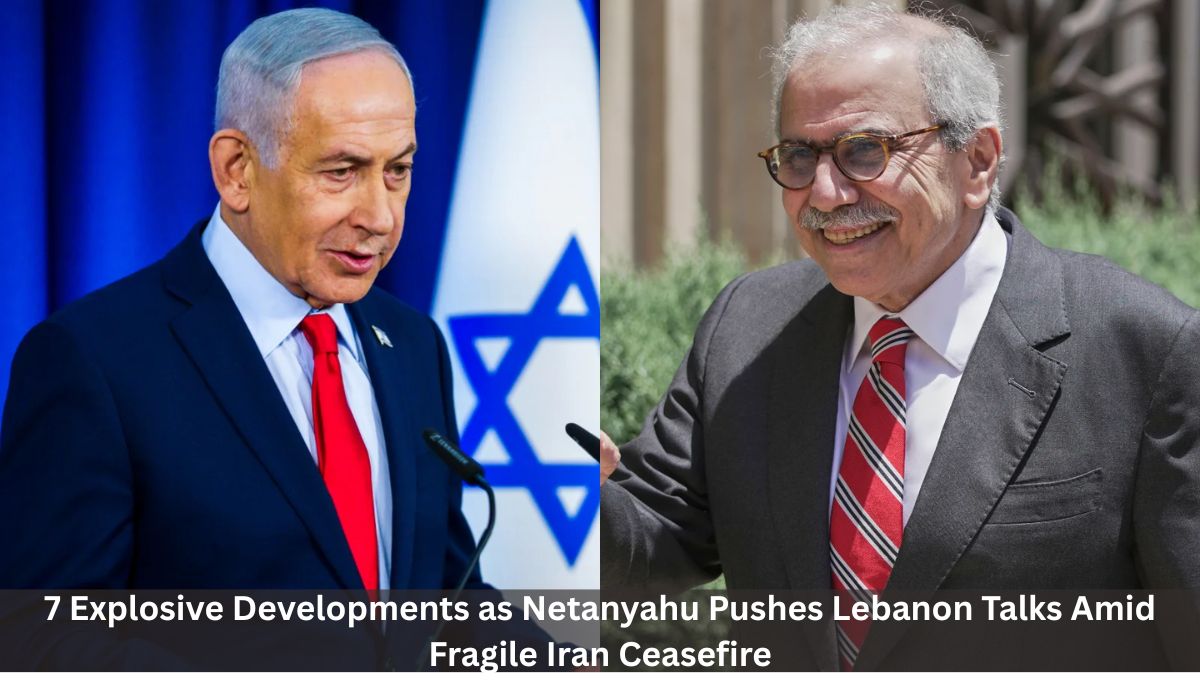
7 Explosive Developments as Netanyahu Pushes Lebanon Talks Amid Fragile Iran Ceasefire, as deadly strikes continue. A dramatic shift is underway in the Middle East as Israel signals readiness for direct negotiations with Lebanon, even as ongoing military strikes threaten to derail a fragile ceasefire between the United States and Iran.
Thank you for reading this post, don't forget to subscribe!Israeli Prime Minister Benjamin Netanyahu’s decision to authorize talks with Lebanon “as soon as possible” comes at a critical moment, where diplomacy and escalation appear to be unfolding simultaneously.
While the move suggests a possible opening for peace, continued violence on the ground and deep disagreements over ceasefire terms are raising serious doubts about whether negotiations can succeed.
At the center of the crisis lies a fundamental dispute: whether Lebanon is part of the US–Iran ceasefire agreement.
This disagreement is not just technical—it could determine whether the region moves toward stability or spirals into a broader conflict.
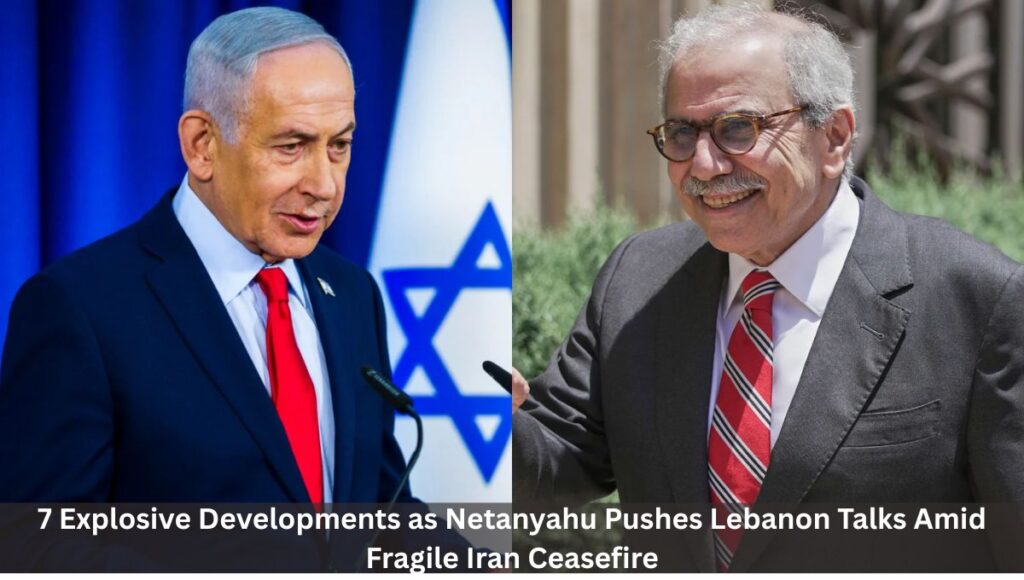
7 Explosive Developments as Netanyahu Pushes Lebanon Talks Amid Fragile Iran Ceasefire
A Sudden Diplomatic Shift After Deadly Strikes
The announcement of potential Israel–Lebanon talks follows one of the deadliest escalations in recent months.
Israeli airstrikes across Lebanon killed more than 300 people in a single day, according to Lebanese authorities, marking the largest wave of attacks since the conflict intensified earlier this year.
These strikes targeted areas across Beirut, the Bekaa Valley, and southern Lebanon—regions where Hezbollah maintains a strong presence.
However, footage and reports from the ground indicate that civilians were also among the casualties, intensifying international criticism.
Despite the escalation, Netanyahu’s office confirmed that Israel is now open to direct negotiations with Lebanon.
The talks, if they proceed, are expected to focus on two primary objectives:
- Disarming Hezbollah
- Establishing long-term peace relations between Israel and Lebanon
This dual-track approach—continuing military pressure while opening diplomatic channels—reflects Israel’s broader strategy in the region.
The Core Dispute: Is Lebanon Part of the Ceasefire?
One of the most contentious issues surrounding the crisis is whether Lebanon is included in the ceasefire agreement between the United States and Iran.
The US and Israel’s Position
Both Washington and Tel Aviv have consistently maintained that the ceasefire agreement does not extend to Lebanon.
According to their interpretation:
- The truce applies strictly to direct US–Iran hostilities
- Israel retains the right to continue operations against Hezbollah
- Lebanon is considered a separate conflict zone
This stance allows Israel to continue its military campaign in Lebanon without technically violating the ceasefire.
Iran’s Position
Iran, however, strongly disagrees.
Tehran has insisted that:
- Lebanon is an integral part of the ceasefire framework
- Israeli strikes in Lebanon constitute a violation of the agreement
- Any meaningful peace process must include Lebanon
Iranian officials have warned that continued attacks could trigger retaliation, potentially collapsing the fragile truce.
This fundamental disagreement has created a volatile situation where both sides claim to be adhering to the ceasefire—while accusing the other of violating it.
US Intervention: Preventing a Collapse
As tensions escalated, the United States stepped in to prevent the situation from spiraling out of control.
US President Donald Trump reportedly held a direct phone call with Netanyahu, urging him to scale back military operations in Lebanon.
According to officials, the message was clear:
- Reduce the intensity of strikes
- Avoid actions that could derail upcoming negotiations with Iran
- Preserve the fragile ceasefire framework
Trump’s intervention appears to have had some impact. Reports suggest that Israel has since moderated its attacks, though operations have not completely stopped.
This highlights Washington’s delicate balancing act—supporting Israel’s security concerns while trying to maintain diplomatic momentum with Iran.
Lebanon’s Position: Ceasefire First, Talks Later
While Israel has expressed readiness for negotiations, Lebanon has taken a more cautious stance.
Lebanese officials have emphasized that:
- A ceasefire is a precondition for any talks
- Ongoing military operations make negotiations impossible
- The United States must act as a guarantor for any agreement
Lebanon has spent the past 24 hours actively pushing for a temporary ceasefire to create space for diplomacy.
Officials have described the proposed talks as a “separate track but the same model” as the US–Iran negotiations.
This approach reflects Lebanon’s broader strategy—seeking immediate de-escalation before engaging in long-term discussions.
Hezbollah Rejects Direct Negotiations
Complicating matters further is the position of Hezbollah, the Iran-backed militant group at the center of the conflict.
Hezbollah has categorically rejected direct negotiations with Israel, stating that:
- Talks cannot proceed without a ceasefire
- Israeli forces must withdraw from Lebanese territory
- Displaced civilians must be allowed to return home
The group’s stance presents a significant obstacle to any diplomatic breakthrough. Even if Israel and Lebanon agree to talks, Hezbollah’s opposition could undermine the process.
Given Hezbollah’s influence within Lebanon, its position cannot be ignored.
Rising Death Toll and Humanitarian Crisis
The human cost of the conflict continues to rise.
According to Lebanese health authorities:
- More than 1,800 people have been killed since the conflict escalated
- Over 6,000 have been wounded
- More than a million people have been displaced
Hospitals across Lebanon are struggling to cope with the influx of casualties. Rescue workers have described scenes of devastation, with many victims buried under rubble.
The scale of destruction has prompted calls for an immediate ceasefire from international organizations and governments worldwide.
A Fragile Ceasefire Under Pressure
The US–Iran ceasefire, which was meant to create a pathway for negotiations, is now under severe strain.
Key challenges include:
- Continued Israeli strikes in Lebanon
- Iran’s threats to withdraw from talks
- Conflicting interpretations of the agreement
- Pressure from regional actors
Iran has warned that it was “on the verge” of responding to what it considers ceasefire violations. Only last-minute diplomatic intervention reportedly prevented further escalation.
This underscores how close the region is to a broader conflict.
Upcoming Talks in Washington
Despite the tensions, preparations are underway for potential talks between Israel and Lebanon in Washington next week.
According to US officials:
- The State Department will host the discussions
- The focus will be on ceasefire negotiations and broader peace efforts
- The talks may proceed even without a full ceasefire
However, several uncertainties remain:
- Neither Israel nor Lebanon has formally confirmed participation
- Hezbollah’s opposition could complicate proceedings
- Ongoing violence may disrupt the timeline
If the talks take place, they could mark a significant diplomatic milestone. However, expectations remain cautious.
The Role of Pakistan in Mediation
An important but often overlooked aspect of the crisis is the role of Pakistan as a mediator.
Pakistan has:
- Brokered the initial US–Iran ceasefire
- Facilitated backchannel communications
- Worked to prevent escalation involving Lebanon
Officials indicate that Pakistan is also exploring ceasefire arrangements for Lebanon and other conflict zones.
This multi-layered mediation effort highlights the complexity of the situation, where multiple tracks of diplomacy are unfolding simultaneously.
Strait of Hormuz: A Global Flashpoint
Beyond the immediate conflict, the crisis is having significant global implications—particularly in the Strait of Hormuz.
Iran’s near-total blockade of the strait has:
- Disrupted global oil supplies
- Reduced shipping traffic dramatically
- Triggered sharp increases in energy prices
Before the conflict, around 140 ships passed through the strait daily. Recent reports indicate that only a handful of vessels are now making the journey.
This disruption has created one of the worst energy crises in recent history, affecting economies worldwide.
Global Reactions and Diplomatic Pressure
The escalating conflict has drawn strong reactions from the international community.
Countries including:
- United Kingdom
- France
- Russia
- Türkiye
have called for Lebanon to be included in the ceasefire agreement.
Germany has warned that the severity of Israeli strikes could jeopardize broader peace efforts.
These reactions reflect growing concern that the conflict could expand beyond the region, with far-reaching consequences.
Israel’s Strategic Calculations
Israel’s approach reflects a complex set of strategic objectives:
- Weakening Hezbollah’s military capabilities
- Maintaining pressure on Iran’s regional influence
- Securing its northern border
At the same time, Israel faces increasing pressure from allies to avoid actions that could undermine diplomatic efforts.
This has resulted in a delicate balancing act between military operations and political considerations.
Iran’s Warning: Escalation Risks Remain
Iran has issued strong warnings regarding the situation in Lebanon.
Officials have stated that:
- Any further violations of the ceasefire will have consequences
- Lebanon is an “inseparable part” of the agreement
- Iran will not abandon its regional allies
These statements highlight the risk of escalation if tensions continue.
What Happens Next?
The coming days are likely to be critical.
Possible scenarios include:
1. Diplomatic Breakthrough
Talks proceed successfully, leading to a broader ceasefire and de-escalation
2. Partial Progress
Limited agreements are reached, but tensions remain
3. Collapse of Ceasefire
Renewed hostilities lead to a wider regional conflict
Much will depend on whether all parties can find common ground on the key issue—Lebanon’s role in the ceasefire.
Conclusion: A Region on the Edge
The Middle East stands at a critical juncture. Netanyahu’s decision to open talks with Lebanon offers a potential pathway to de-escalation.
However, ongoing military operations, deep disagreements, and competing strategic interests continue to threaten progress.
The fragile ceasefire between the United States and Iran remains the foundation for any diplomatic effort.
If it collapses, the consequences could be far-reaching—not just for the region, but for the entire world.
As global leaders push for dialogue, the question remains:
will diplomacy prevail, or will the cycle of conflict continue?
For now, the answer hangs in the balance.
Also Read: 7 Shocking Truths About Iran-US Ceasefire as Israel Excludes Lebanon from Truce
Also Read: Benjamin Netanyahu pushes for swift direct talks with Lebanon
Related Posts:
- 7 Powerful Facts About Ayatollah Ali Khamenei’s…
- 3 Explosive Conditions Iran Sets to End War with US…
- 5 Major Takeaways from the US Supreme Court's…

- 9 Explosive Claims as Trump Says US Winning Iran War

- Afghanistan–Pakistan War 2025: Inside the 48-Hour Ceasefire

- 7 Heartbreaking Facts About Venezuela's Earthquake Disaster