7 Explosive Developments as US Navy Enforces Iran Blockade, Seizes Ship tightening control over the Strait of Hormuz. The geopolitical standoff between the United States and Iran has entered a more volatile phase, with maritime operations now at the center of global attention.
Thank you for reading this post, don't forget to subscribe!A recent interception of an Iranian-flagged vessel by the US Navy underscores how the conflict has shifted from conventional military threats to economic warfare through maritime control.
At the heart of this confrontation lies the Strait of Hormuz—a narrow but critical waterway responsible for transporting nearly a fifth of the world’s oil supply.
The latest developments reveal not just a tactical escalation, but a broader strategic play that is reshaping global energy markets, diplomatic alignments, and military calculations.
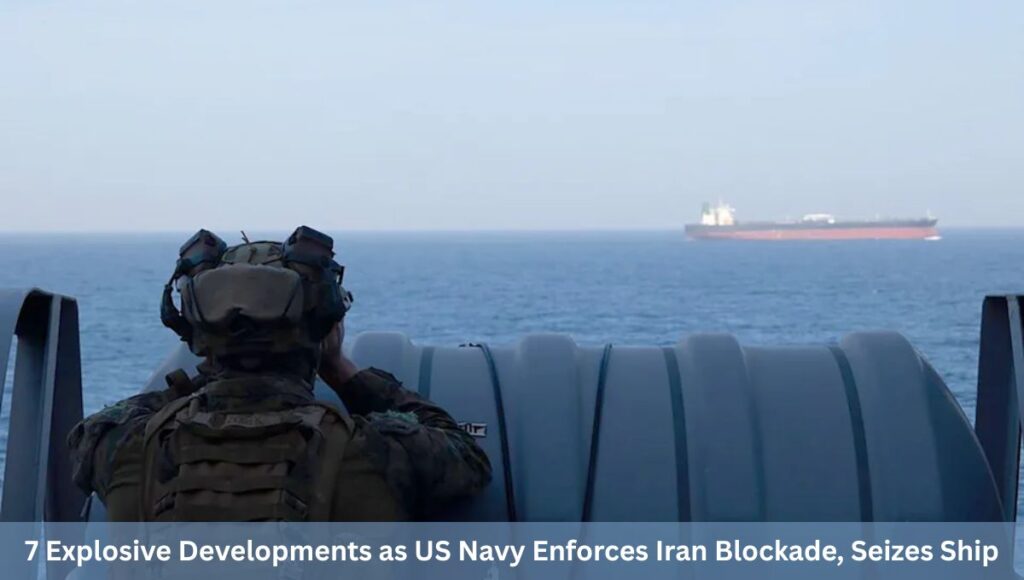
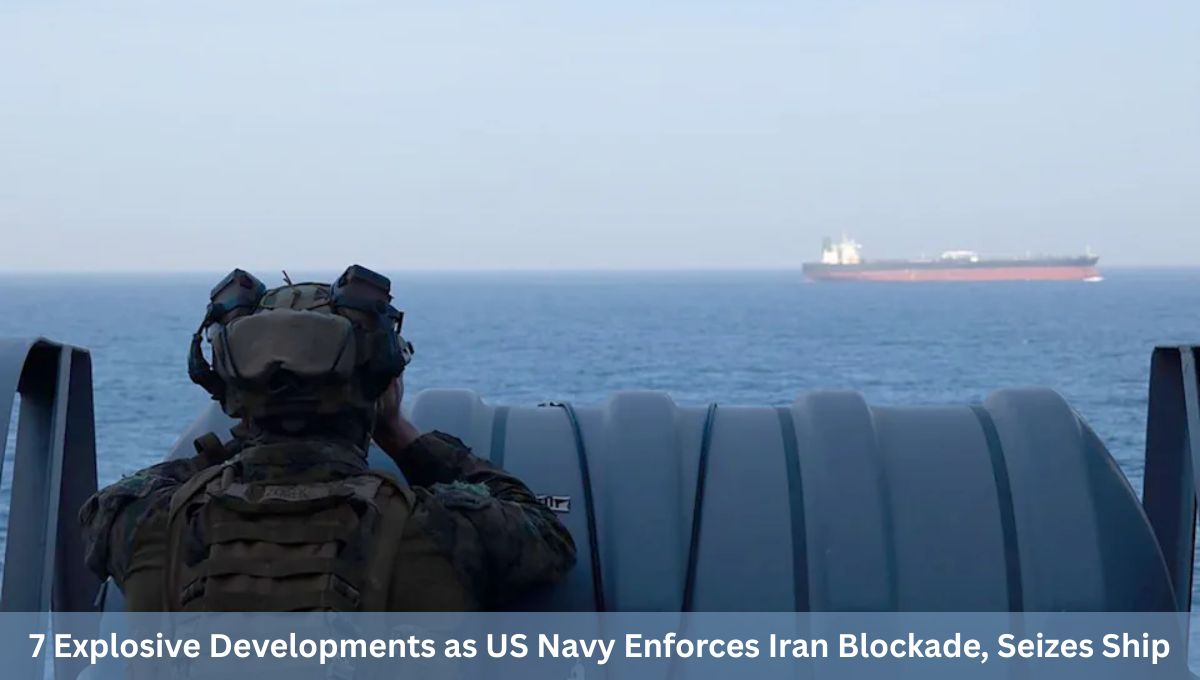
In a significant move, the United States Central Command (CENTCOM) confirmed that the guided-missile destroyer USS Rafael Peralta intercepted an Iranian-flagged ship attempting to reach an Iranian port.
The operation was part of an ongoing enforcement of a US-led naval blockade aimed at restricting Iran’s maritime trade.
According to CENTCOM, the vessel was stopped after failing to comply with repeated warnings.
This marks one of several such actions taken in recent weeks as Washington intensifies its efforts to choke off Iran’s access to international shipping routes.
The interception highlights a shift toward aggressive maritime enforcement, where naval forces are not just monitoring but actively controlling sea traffic linked to Iran.
The blockade itself began earlier in April following the collapse of diplomatic negotiations over Iran’s nuclear program.
It has since evolved into a wide-ranging maritime restriction covering vessels of multiple nationalities suspected of trading with Iran.
The United States, under the leadership of Donald Trump, has framed the blockade as a necessary measure to prevent Iran from accessing resources that could support its military or nuclear ambitions.
Key features of the blockade include:
- Interception and inspection of vessels heading to Iranian ports
- Diversion or forced turnaround of ships linked to Iranian trade
- Seizure of vessels suspected of carrying restricted or “dual-use” goods
- Deployment of multiple warships and surveillance assets in the region
Reports indicate that dozens of ships have already been intercepted or redirected, significantly reducing maritime traffic linked to Iran.
Strait of Hormuz: A Global Choke point Under Pressure
The Strait of Hormuz has once again become the epicenter of global tension. This narrow passage connects the Persian Gulf to the Arabian Sea and is vital for global energy flows.
Recent data shows a dramatic decline in shipping activity:
- Only a handful of vessels are passing through daily
- Many shipping companies are avoiding the route entirely
- Insurance costs for vessels in the region have surged
The slowdown has triggered ripple effects across global supply chains, especially in energy markets.
With both Iran restricting passage and the US enforcing a blockade, the strait is effectively operating under dual pressure.
Seized Vessel Controversy: What Was Onboard?
One of the most contentious aspects of the current crisis revolves around the cargo of intercepted ships.
A vessel identified as Touska was previously seized by US forces, sparking conflicting claims.
US Position
US officials suggested the ship may have been carrying “dual-use” materials—items that can serve both civilian and military purposes.
These could include:
- Industrial metals
- Electronic components
- Specialized equipment
Donald Trump even claimed the vessel carried a “gift from China,” though he declined to provide specifics.
Iran’s Response
Iran strongly rejected these allegations, stating the ship was transporting:
- Dialysis equipment
- Medical supplies
Iran’s Red Crescent and its UN mission described the seizure as a violation of international law, arguing it endangered civilian lives by disrupting access to critical healthcare supplies.
China’s Reaction
China dismissed the claims outright, with officials calling them “unfounded” and urging respect for normal trade relations.
This dispute highlights the information war surrounding the conflict, where narratives about cargo legitimacy play a crucial role in shaping global opinion.
Rising Military Tensions at Sea
The blockade has not been limited to passive enforcement. In at least one case, US forces reportedly used warning shots and disabling fire to stop a non-compliant vessel.
According to military accounts:
- A ship ignored warnings for several hours
- The US Navy fired inert rounds targeting the engine
- Marines boarded the vessel after immobilizing it
Such actions mark a significant escalation, bringing the situation closer to direct confrontation.
The presence of multiple US warships, including aircraft carriers and destroyers, further underscores the seriousness of the situation.
Iran’s Countermoves and Strategic Leverage
Iran has not remained passive. It has leveraged its geographical advantage to exert pressure on global shipping.
Key Iranian actions include:
- Restricting passage through the Strait of Hormuz
- Allowing only “friendly” vessels to transit
- Conducting attacks on select ships
- Seizing foreign vessels in retaliation
The Iranian military, particularly the Islamic Revolutionary Guard Corps (IRGC), claims to have effective control over the strait. This assertion has significantly altered maritime dynamics in the region.
Iran has also appealed to the United Nations, urging intervention and demanding the release of seized vessels and crews.
Diplomatic Efforts Continue Amid Crisis
Despite escalating tensions, diplomatic channels remain open. Iran’s Foreign Minister Abbas Araghchi recently traveled to Pakistan for high-level discussions.
Meetings included:
- Shehbaz Sharif
- Ishaq Dar
- Asim Munir
These talks aim to:
- De-escalate tensions
- Restore maritime stability
- Revive stalled negotiations
However, progress remains limited due to deep disagreements over sanctions, nuclear policy, and maritime access.
Global Energy Markets Under Stress
The impact of the blockade is being felt worldwide, particularly in energy markets.
Key Effects:
- Oil prices have surged above $100 per barrel
- LNG supplies have been disrupted
- Shipping costs have increased significantly
Countries heavily dependent on Middle Eastern oil are facing supply uncertainties, while businesses globally are dealing with rising costs.
The crisis has drawn comparisons to past disruptions, including the 1980s Tanker War, when similar attacks on oil shipping routes caused widespread instability.
Historical Context: Echoes of the Tanker War
The current situation bears resemblance to the Tanker War during the Iran-Iraq conflict in the 1980s.
During that period:
- Both sides targeted oil tankers
- The US intervened to protect shipping lanes
- Naval confrontations became frequent
Today’s scenario mirrors those dynamics, with the added complexity of modern geopolitics and globalized trade.
Legal and Strategic Implications
The blockade raises serious legal questions under international maritime law.
Key Issues:
- Is the blockade lawful under international law?
- Does it violate freedom of navigation?
- Can “dual-use” goods justify seizure?
The US argues its actions are justified under sanctions enforcement and security concerns. Iran, however, labels them as acts of “piracy” and unlawful aggression.
This legal ambiguity adds another layer of complexity to an already volatile situation.
What Comes Next?
The trajectory of the crisis will depend on several factors:
1. Diplomatic Breakthrough
A successful negotiation could ease tensions and restore shipping flows.
2. Military Escalation
Further confrontations at sea could lead to direct conflict.
3. Economic Pressure
Sustained blockade effects may force concessions from either side.
4. International Intervention
Global powers or the United Nations may step in to mediate.
Conclusion: A Crisis With Global Stakes
The interception of an Iranian-flagged vessel by the US Navy is more than a tactical operation—it is a signal of a broader geopolitical struggle unfolding at sea.
With the Strait of Hormuz under strain, global energy markets disrupted, and diplomatic efforts hanging in the balance, the situation remains highly unstable.
As both sides continue to assert control—militarily and economically—the risk of escalation looms large.
The coming weeks will be critical in determining whether this crisis moves toward resolution or spirals into a wider conflict with global consequences.
Also Read: 7 Explosive Moves as Trump Extends Iran Ceasefire, Keeps Hormuz Blockade
Also Read: US Navy seizes Iranian ship after it breaches blockade
Related Posts:
- Strait of Hormuz Standoff: Iran Rejects Oman's…
- 3 Explosive Conditions Iran Sets to End War with US…
- 10 Explosive Warnings as Donald Trump Calls Iran…
- 12 Explosive Claims as Donald Trump Says Iran War…
- 10 Explosive Signals Trump Says Iran War Could End…
- 7 Explosive Claims on Seized Iran Ship: China Link…