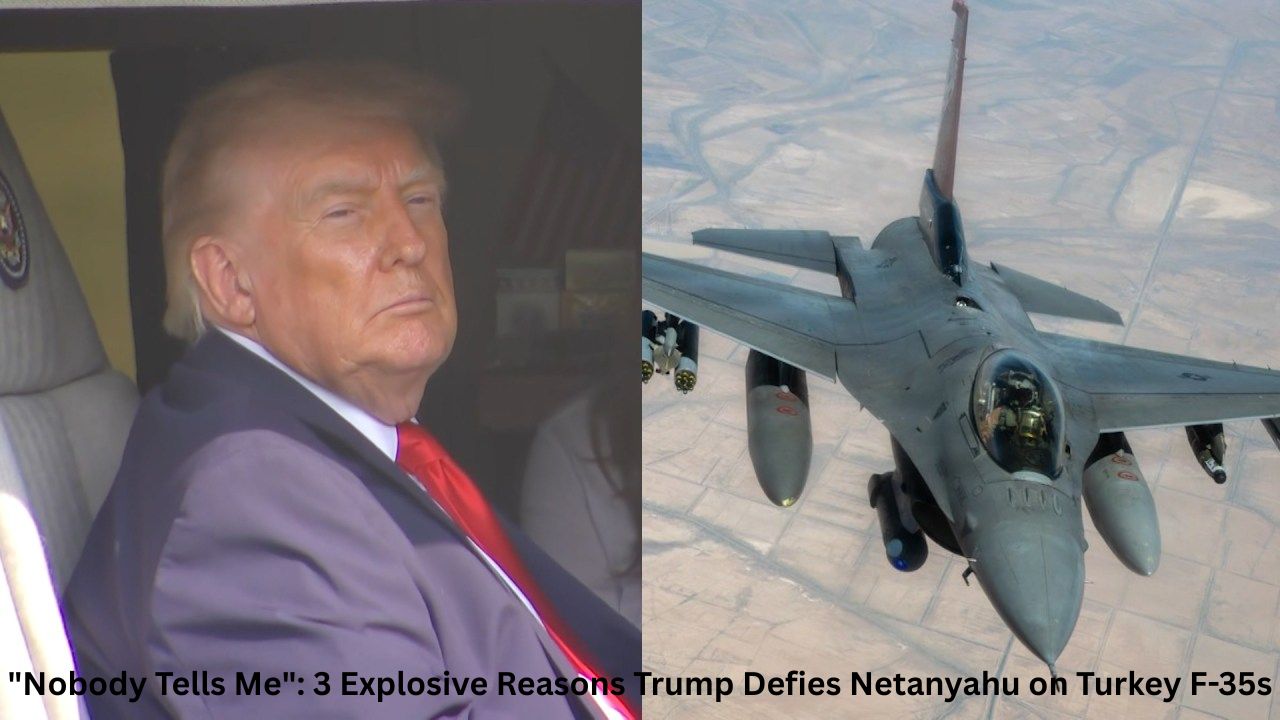
“Nobody Tells Me”: 3 Explosive Reasons Trump Defies Netanyahu on Turkey F-35s, calling Ankara a “Tremendous Ally.” Just one day before sitting down face-to-face with Israeli Prime Minister Benjamin Netanyahu at the White House, President Donald Trump publicly and bluntly shut down Israel’s objections to a potential US sale of F-35 fighter jets to Turkey.
Speaking to reporters aboard Air Force One on Monday, Trump made clear that no foreign leader — not even one of America’s closest allies — gets to dictate US arms sales.
“Nobody tells me what we should be selling,” Trump told reporters, before heaping praise on Turkey and its president, Recep Tayyip Erdogan.
It’s a striking moment of daylight between Washington and Jerusalem on defense policy, arriving at an especially delicate time, with Trump set to host Netanyahu on Tuesday for their first in-person meeting since the war involving Israel, the US, and Iran began.
Here’s a full breakdown of the dispute, why it matters, and what happens next.
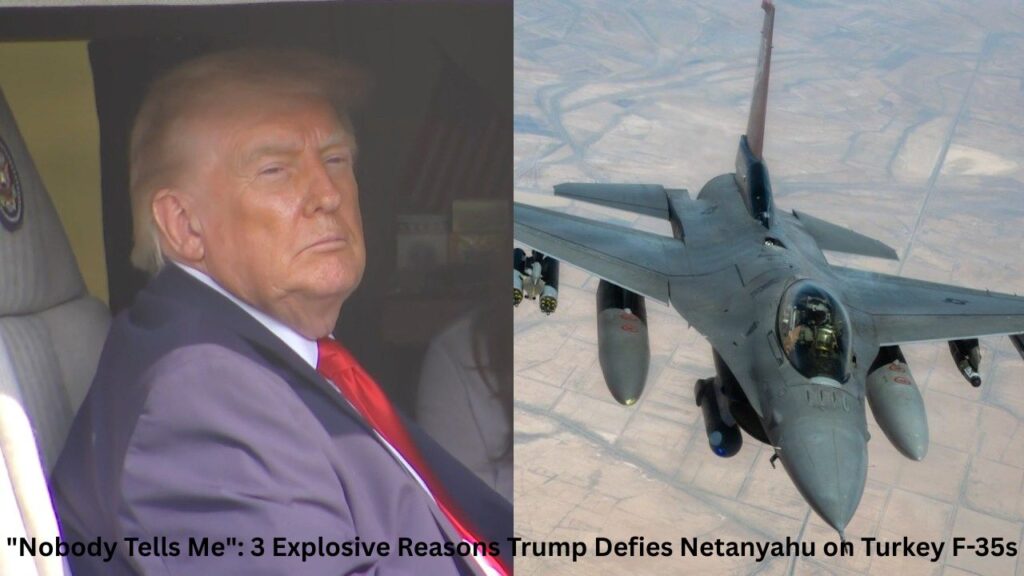
“Nobody Tells Me”: 3 Explosive Reasons Trump Defies Netanyahu on Turkey F-35s
What Trump Actually Said About Turkey
Trump didn’t hold back when addressing the controversy.
He described Turkey as a “tremendous ally,” and when acknowledging that Ankara isn’t particularly fond of Israel or Netanyahu personally, he insisted that doesn’t change how valuable the US-Turkey relationship is to him.
“Turkey’s not a big fan of Israel, not a great fan of Bibi. But they’ve been great for me,” Trump said, offering a rare, unfiltered glimpse into how personal rapport factors into his foreign policy decisions.
He went further, calling Turkey a “very powerful country” with a “tremendous military” and “a lot of great equipment,” and pointed to his warm relationship with Erdogan, whom Turkish officials say Trump has described as having done a “very good job” handling regional matters, including Syria.
Reports Say Trump Was Frustrated by Netanyahu’s Public Criticism
According to multiple reports, Trump’s forceful comments were also a reaction to frustration behind the scenes.
Media accounts circulating before his remarks suggested Trump was irritated by Netanyahu’s public campaign against the sale, having expected the matter to be handled more quietly through diplomatic channels rather than aired on television.
That’s likely because Netanyahu didn’t mince words either.
Speaking to Fox News earlier this month, the Israeli prime minister described Turkey as “a regime infected by the Muslim Brotherhood, an extreme movement that hates America and chants ‘Death to America,'” and said plainly that he did not believe Turkey should receive F-35 jets or engines for its existing fighter fleet.
That kind of public rebuke of a NATO ally, delivered on American airwaves, appears to be exactly what pushed Trump to respond so directly.
Why the F-35 Sale to Turkey Is So Controversial
To understand why this dispute has become such a flashpoint, it helps to rewind to how Turkey lost access to the F-35 program in the first place.
Ankara originally joined the multinational F-35 partnership as a full participant, both buying jets and manufacturing components for the broader program.
That all changed when Turkey moved forward with purchasing Russia’s S-400 air defense missile system — a move Washington viewed as a serious security risk, since operating the S-400 alongside the F-35 could theoretically allow Russia to gather sensitive data on the stealth fighter’s capabilities.
As a result, the US suspended Turkey from the F-35 program and imposed sanctions on Ankara under the Countering America’s Adversaries Through Sanctions Act, commonly known as CAATSA.
Turkey has consistently pushed back on that reasoning, arguing there is no real technical conflict between the two systems, proposing a joint technical commission to study the issue, and maintaining that its removal from the program violated the original agreement.
Ankara has also argued that reinstating it would ultimately strengthen not just Turkey’s military, but NATO’s collective defense posture as well.
Trump Signaled a Shift Earlier This Month
This isn’t a sudden reversal from Trump — he’d already been laying the groundwork for restoring Turkey’s access to F-35s. At the NATO summit held in Turkey earlier in July, Trump indicated he would “certainly consider” resuming sales to Ankara, framing Turkey as being more dependable than some other allies.
He also announced plans to lift the CAATSA sanctions tied to the S-400 purchase during his meeting with Erdogan at that summit.
However, the State Department threw a wrinkle into that timeline just last week, informing Congress in a letter that Turkey still does not currently qualify for the purchase.
The letter stated that US policy toward Turkey’s F-35 ambitions “remains unchanged and fully consistent,” and specifically noted that Ankara would need to resolve the S-400 issue entirely — meaning no longer possessing the system or associated equipment, along with binding assurances against reacquiring it in the future — before the deal could move forward.
In other words, while Trump has expressed clear personal enthusiasm for the sale, the bureaucratic and legal path to actually delivering the jets remains unresolved.
A Test for the Trump-Netanyahu Relationship
This dispute lands at a particularly sensitive moment for US-Israel relations.
Trump and Netanyahu have not always seen eye to eye recently, particularly over strategy regarding Iran, and this is their first face-to-face meeting since the broader regional conflict began.
The F-35-Turkey disagreement adds another layer of friction to an already complicated relationship, even as both leaders continue to publicly emphasize their alliance.
It’s also worth noting the broader diplomatic backdrop:
both leaders are also expected to attend Tuesday’s funeral for the late US Senator Lindsey Graham, a longtime supporter of Israel whose death has added a layer of significance to this particular round of high-level meetings in Washington.
Outside the White House itself, demonstrators have also gathered to protest Netanyahu’s visit, reflecting the broader political sensitivities swirling around this trip.
Turkey-Israel Relations at a Historic Low
It’s important to understand this dispute isn’t happening in a vacuum — it’s unfolding against the backdrop of a dramatic breakdown in Turkey-Israel relations.
Diplomatic ties between Ankara and Jerusalem collapsed following the war in Gaza that began after the October 7, 2023 Hamas-led attack, and Israeli officials, including Netanyahu himself, have increasingly characterized Turkey as a regional adversary rather than a neutral or friendly power.
That context makes Trump’s willingness to publicly back Turkey over Israel’s objections all the more notable, since it suggests Washington isn’t necessarily aligning its arms sales strategy with Jerusalem’s current view of the regional chessboard.
What This Means for Global Readers
For audiences outside the US, Turkey, and Israel, this dispute is a useful window into how transactional and personality-driven American foreign policy decisions can be under the current administration.
Trump’s rationale for backing the Turkey sale wasn’t rooted in a detailed strategic assessment shared publicly — it was framed around loyalty, personal relationships, and Turkey’s military stature.
That approach carries real implications for how other US allies and partners might expect Washington to weigh their own requests and objections going forward.
It also signals that NATO’s internal dynamics remain complicated, with member states sometimes finding themselves at odds over defense sales that affect the broader alliance’s security calculations.
Whether Turkey ultimately meets the conditions the State Department has laid out — fully divesting from the S-400 system and offering credible guarantees against reacquiring it — will determine whether this becomes a genuine breakthrough or simply another chapter of stalled negotiations.
The Bigger Picture: Trump’s Approach to NATO Allies
This episode also fits into a broader pattern that has defined Trump’s second-term foreign policy:
a willingness to make major defense and diplomatic decisions based on personal chemistry with foreign leaders rather than strictly following the preferences of traditional US allies.
Trump has repeatedly emphasized his personal relationship with Erdogan throughout his time in office, and this latest F-35 dispute reinforces just how much weight that relationship carries in shaping US decisions, even when it puts Washington at odds with Israel, historically one of its closest and most reliable partners in the region.
For NATO watchers, the situation is also a reminder that alliance unity doesn’t automatically translate into agreement on bilateral defense sales.
Turkey remains a NATO member with the second-largest military in the alliance, giving Washington strong incentives to keep Ankara close, even as tensions between Turkey and Israel continue to simmer.
How the Trump administration ultimately balances those competing relationships could shape defense cooperation across the region for years to come.
Conclusion
Trump’s blunt dismissal of Netanyahu’s objections marks a rare, public moment of daylight between two leaders who have otherwise worked to project a united front.
With the State Department still holding firm on its conditions for restoring Turkey’s F-35 access, and Trump and Netanyahu due to meet in person just a day after these comments, all eyes will be on whether this disagreement gets resolved quietly behind closed doors — or whether it becomes yet another visible crack in an alliance already navigating one of its most turbulent stretches in years.
Also Read: 7 Key Facts About Trump’s Powerful Netanyahu Meeting Plan
Also Read: Trump vs Netanyahu over F-35s for Turkey: Why a fighter jet sale is creating a new US-Israel rift