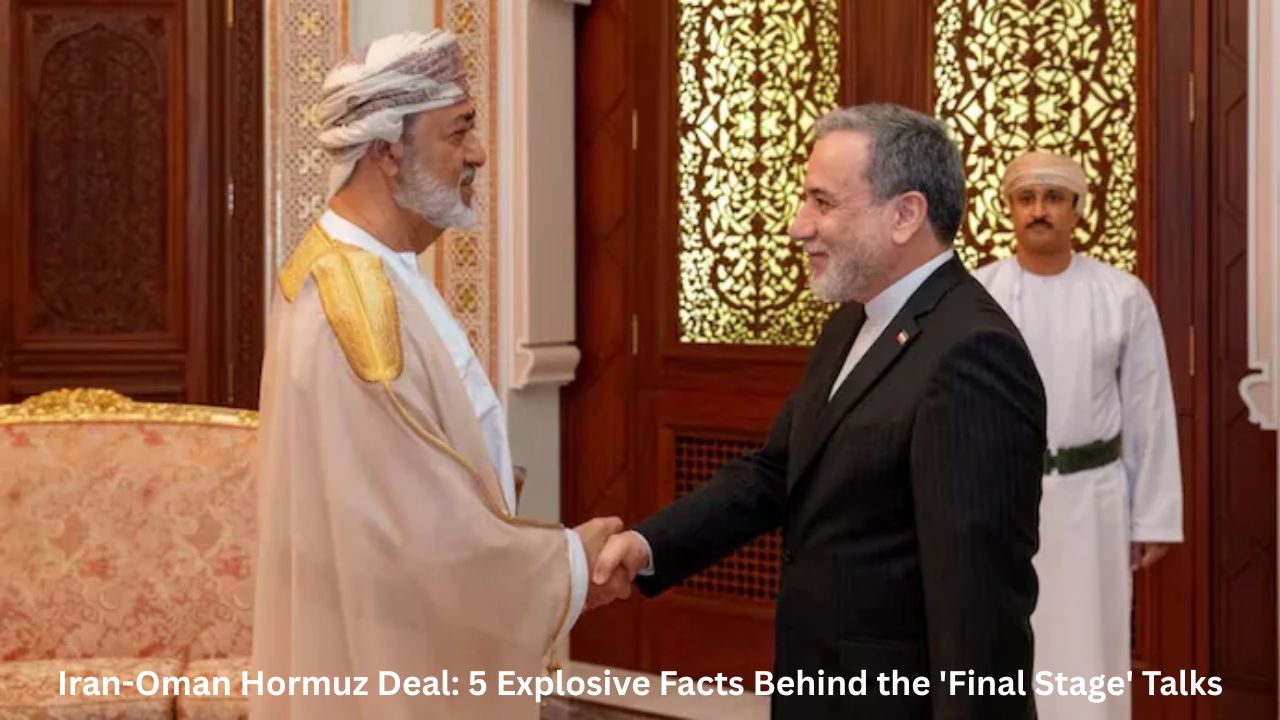
Iran-Oman Hormuz Deal: 5 Explosive Facts Behind the ‘Final Stage’ Talks as Iran Denies Trump’s Claims of a Deal. Just when the world thought it understood where things stood between Washington and Tehran, Iran dropped a fresh twist into the story.
Thank you for reading this post, don't forget to subscribe!While President Trump was busy telling reporters that the outlines of a ceasefire deal had been reached, Iran’s own foreign ministry was delivering a very different message:
forget the American version of events — the real breakthrough, Tehran says, is happening quietly with Oman. It’s a reminder that this conflict rarely moves in a straight line.
Here’s what’s actually unfolding behind the scenes of the Strait of Hormuz negotiations, and why the details matter far beyond the Gulf itself.
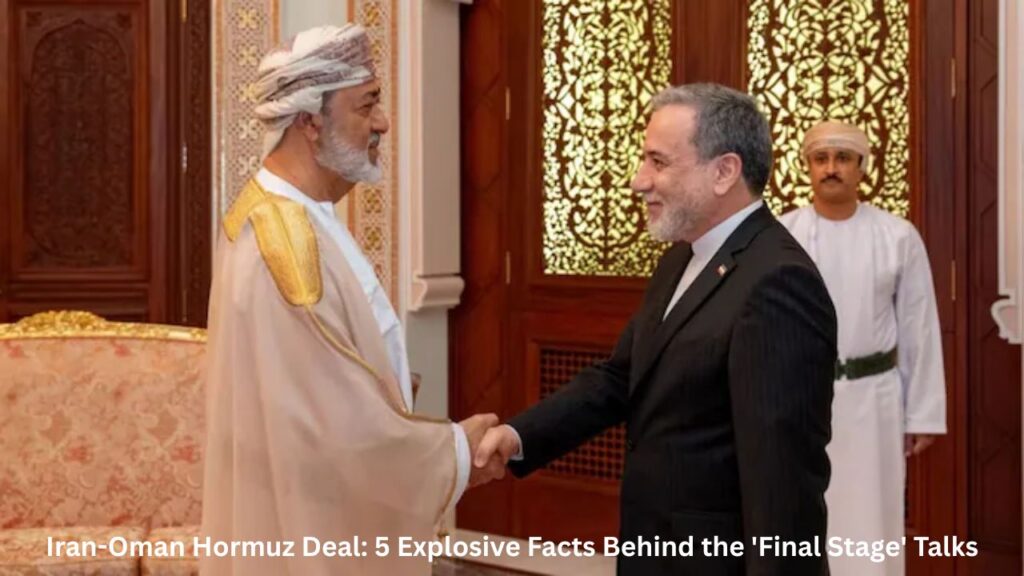
Iran-Oman Hormuz Deal: 5 Explosive Facts Behind the ‘Final Stage’ Talks
Iran Says a Deal With Oman Is Almost Done
What Araghchi Told Iran’s Cabinet
Iranian Foreign Minister Abbas Araghchi told his country’s cabinet on Sunday that negotiations with Oman over a new route through the Strait of Hormuz were, in his words, on their way to being finalized.
The announcement, posted on Telegram, came just hours after Trump claimed the US and Israel had agreed to pause new attacks on Iran while a broader deal came together.
Foreign Ministry spokesperson Esmail Baghaei went further in a state television interview, explaining that both sides were working toward an arrangement that avoids the routes previously in dispute.
He described the goal as a passage that respects the sovereign rights of both countries while safeguarding each side’s security interests.
A New Route, Not the Old One
Here’s the part that matters for global audiences trying to make sense of the headlines: this isn’t simply about “reopening” Hormuz in the way most people picture it.
Iran has effectively controlled shipping through the strait since the war began, and roughly 20 percent of global oil consumption normally passes through this narrow waterway between Iran and Oman.
What’s being negotiated now is a brand-new corridor — separate from the traditional shipping lanes — that both Tehran and Muscat would need to sign off on.
The Secret Compromise Proposal
Enter via Iran, Exit via Oman
According to reporting cited by multiple outlets, the emerging framework — brokered with US and Qatari mediators — would have vessels enter the Persian Gulf through Iranian waters and exit through Omani waters.
It sounds like a technical detail, but it carries enormous significance for who controls maritime traffic through one of the world’s most strategically vital chokepoints.
Iran’s “Victory”: Collecting Transit Fees
Under this arrangement, Iran would effectively be positioned to collect transit fees from vessels passing through its waters — something Tehran has pushed for throughout months of on-and-off negotiations.
Analysts following the talks have described this outcome as a significant win for Iran, since it would allow Tehran to hold ships accountable if they attempted to bypass payment, all while technically allowing the strait to reopen to commercial traffic.
Oman’s Hesitation
Not everyone involved is fully on board yet. Diplomatic sources say Oman has agreed to the broad outline of the proposal but is seeking clarification on one crucial point:
whether Iran’s Revolutionary Guard Corps, which has operational control over much of the strait, actually endorses Araghchi’s position.
Given that hardline elements inside Iran’s security establishment have publicly contradicted the foreign ministry before, that’s not an unreasonable concern — and Qatari mediators are reportedly still working to secure full buy-in from all sides.
Two-Sided Messaging: Threats and Talks at Once
Iran’s Warning to Saudi Arabia, Turkey, and Pakistan
Even as diplomats work toward a deal, Iran has been sending an unmistakably different message through military channels.
Araghchi held separate calls with officials in Turkey, Pakistan, and Saudi Arabia, warning that Tehran would respond decisively to any new American or Israeli aggression.
He told Saudi Arabia’s foreign minister that any strikes — or regional cooperation with them — would trigger what he called a proportionate response.
An Explicit Threat to Gulf Energy Sites
Iran’s messaging got considerably more specific through Nournews, an outlet affiliated with the country’s top security body, which stated plainly that American strikes on Iranian energy infrastructure would be met with retaliation against oil fields in Saudi Arabia and the UAE, along with gas facilities in Qatar and Israel.
It’s a stark illustration of how quickly a strike on Iran could ripple across the entire region’s energy infrastructure.
“They Cannot Deceive the Islamic Republic”
Adding to the confusion, Iranian lawmaker Hassan Ghashghavi publicly accused Washington of playing a double game, arguing that American officials were talking up escalation in public while quietly requesting negotiations through established diplomatic channels.
“They cannot deceive the Islamic Republic,” he wrote on social media, insisting that regardless of whether the US chooses war or diplomacy, Washington will eventually have to accept Tehran’s terms on the strait.
Why Iran Insists the Strait Isn’t Actually “Reopening”
One of the more striking claims out of Tehran this week is that its talks with Oman have nothing to do with whether the strait is officially reopened or remains closed.
Baghaei placed the blame squarely on Washington, arguing that the closure resulted directly from the US naval blockade and what he called hostile measures taken against Iran throughout the conflict.
In other words, from Iran’s perspective, the ball remains in America’s court — a framing that stands in sharp contrast to Trump’s public claims of an imminent, comprehensive resolution.
Global Oil Markets Are Feeling Every Twist
Financial markets have had little choice but to track this diplomatic back-and-forth in real time.
Brent crude climbed roughly 24 percent in July alone as the conflict escalated, and analysts have warned prices could rise further if the situation deteriorates again.
Most commercial shipping has already been avoiding the Strait of Hormuz since the war erupted, forcing insurers, traders, and energy-dependent economies worldwide to price in continued uncertainty.
The risk isn’t confined to Hormuz, either.
Tensions have also risen near the Bab el-Mandeb strait, where Iran-aligned Houthi forces in Yemen have threatened shipping through the southern Red Sea, adding a second potential chokepoint to an already fragile picture.
Over the weekend, two separate maritime incidents were reported off the coast of Oman, including a tanker struck by an unidentified projectile that damaged its engine room — a sharp reminder that de-escalation, however promising it may sound in diplomatic statements, hasn’t yet translated into safety on the water.
Pezeshkian’s Long Game: The MOU as a “Cornerstone”
Amid all the mixed signals, Iranian President Masoud Pezeshkian offered a notably longer-term framing of the situation.
Writing on social media, he described the memorandum of understanding originally signed with the US in June as the foundation for Tehran’s future foreign relations going forward.
“We must strive to make the enemy abide by what it signed,” Pezeshkian wrote, arguing that holding Washington to that earlier agreement would ultimately strengthen security for Iran, the wider region, and its allies.
That framing matters because it suggests Iran’s leadership sees this moment not as an isolated crisis to manage, but as a longer negotiation over the terms that will define its relationship with Washington for years to come.
What Comes Next
With Trump pushing for negotiations to begin quickly, Iran signaling progress with Oman while simultaneously threatening regional energy infrastructure, and the Revolutionary Guard’s position still not fully confirmed, this remains a fluid and genuinely uncertain situation.
Iranian officials have suggested a delegation could travel to Muscat again soon to continue talks, and mediators in Qatar are still working the phones to secure full agreement across Iran’s fractured decision-making apparatus.
For now, what’s clear is that any resolution will likely be layered and incremental rather than a single dramatic breakthrough — a new shipping route here, a fee structure there, ongoing threats running in parallel with quiet diplomacy.
Conclusion
The gap between Washington’s public optimism and Tehran’s careful, conditional statements captures just how complicated this moment really is.
Iran appears to be pursuing a genuine off-ramp through its talks with Oman, while simultaneously keeping every threat of retaliation on the table in case those talks collapse.
That dual-track approach may be frustrating for outside observers hoping for clarity, but it reflects the reality of a conflict where trust between the two sides remains in short supply.
Until Oman, Qatar, and Iran’s own Revolutionary Guard are all visibly aligned, the world’s oil markets, shipping companies, and Gulf neighbors will have every reason to stay cautious rather than celebratory.
Also Read: Strait of Hormuz Standoff: Iran Rejects Oman’s Historic 3-Lane Plan to End Oil Crisis
Also Read: Iran, Oman near deal to manage Hormuz as US watches navigation pledges
Related Posts:
- 11 Explosive Warnings as Trump Vows to ‘Knock the…

- 7 Explosive Impacts of Trump’s 25% Iran Tariff on…
- 10 Explosive Warnings as Donald Trump Calls Iran…
- Trump’s Historic Gaza Ceasefire Deal 2025 - Powerful…

- 9 Explosive Signals From Trump’s ‘Accept or Face…
- Trump's 3 Blunt Warnings to China and Russia Over…