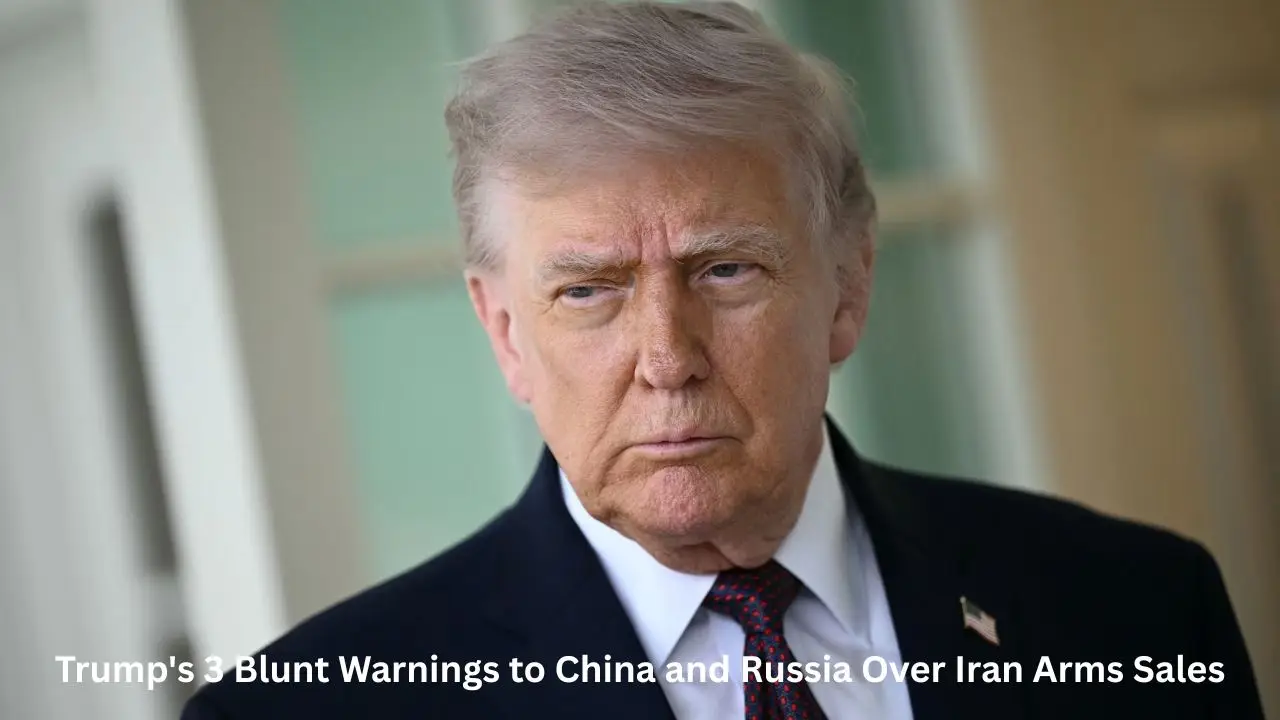
Trump’s 3 Blunt Warnings to China and Russia Over Iran Arms Sales amid the Middle East conflict. US President Donald Trump has sent a sharp message to two of the world’s biggest powers: stay out of Iran’s war chest.
In a series of posts on Truth Social on Friday, July 24, 2026, Trump warned China and Russia against selling or supplying weapons to Iran, even as he expressed confidence that neither country is currently doing so.
The warning lands at a tense moment, with the Middle East gripped by months of on-and-off fighting between the United States and Iran, and comes just as Washington reportedly digs into whether Beijing or Moscow have quietly helped Tehran target US forces in the region.
For a global audience watching oil prices, shipping routes, and the balance of power between Washington, Beijing, and Moscow, Trump’s comments matter far beyond the language of a single social media post.
They offer a rare, if unverified, window into how the US president believes the world’s major powers are — and are not — involved in one of the most dangerous conflicts of the decade.
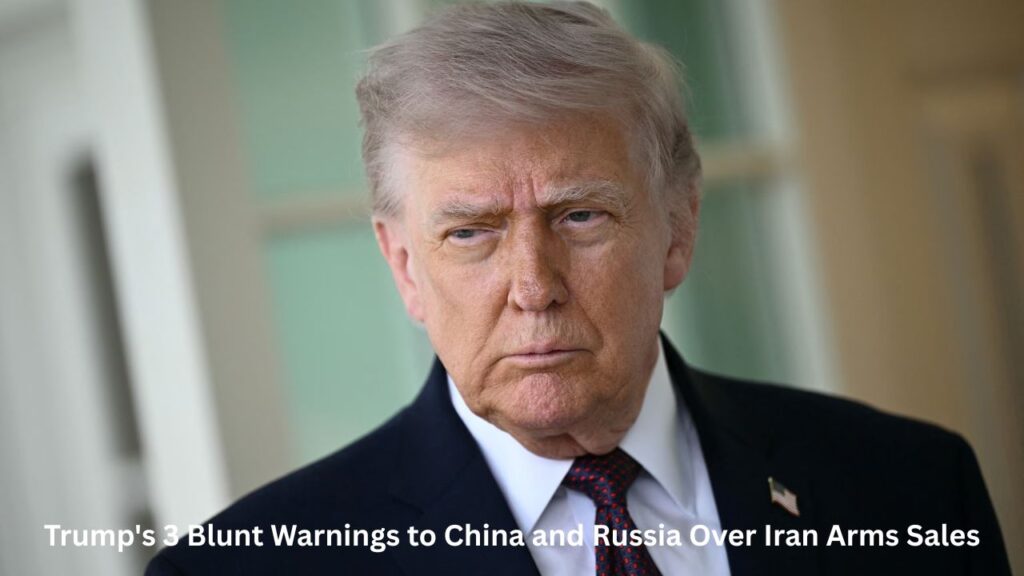
Trump’s 3 Blunt Warnings to China and Russia Over Iran Arms Sales
What Trump Actually Said
Writing on Truth Social, Trump stated that he believes China and Russia are, in his words, “not participating” in arming Iran, and warned there would be consequences if that changed. He said doing so “would be very bad” for both countries and “certainly not in their best interests.”
It was a rare instance of Trump extending public trust to Beijing and Moscow — two governments he has often sparred with over trade, technology, and Ukraine — while simultaneously drawing a hard line they should not cross.
The remarks were notable for their tone. Rather than accusing China or Russia of wrongdoing, Trump framed his warning as a caution based on personal assurances, describing conversations he says he has had directly with both President Xi Jinping and President Vladimir Putin.
Xi Jinping’s Personal Pledge to Trump
According to Trump, the assurance from China came directly from Xi during a meeting the two leaders held in Beijing in May 2026.
Trump said Xi told him China would not, under any circumstances, provide or sell weapons to Iran — and that the commitment extended to Chinese companies as well, not just the Chinese state.
Trump added that given the current relationship between the two leaders, he was inclined to take Xi at his word, and noted that he believes he has done Beijing “very big favors” in return.
This is significant because China has deep economic ties with Iran, particularly through oil purchases, and Washington has long suspected that Chinese firms could serve as a backdoor for military-relevant technology to reach Tehran even without direct government involvement.
Trump’s comments suggest the US president, at least publicly, is choosing to trust Xi’s personal guarantee rather than lean into confrontation over the issue — for now.
Putin’s Assurance and the Ukraine Weapons Distinction
Trump said Putin had made a similar pledge, despite Russia’s own ongoing war in Ukraine and its historically close defense relationship with Iran.
Trump drew a distinction between how the US supplies weapons to Ukraine’s war effort and how it arms its NATO allies, arguing that Putin understands the US does not sell weapons directly to Kyiv but instead sells them to NATO member states, which pay full price.
What those countries then do with the weapons, Trump said, is beyond his knowledge or control.
The comparison appeared designed to draw a parallel: just as Trump argues the US is not the sole party accountable for how NATO allies use American-made weapons, he suggested Russia should likewise not be assumed to be arming Iran simply because of its historical ties to Tehran.
Whether that comparison holds up to scrutiny is likely to be debated by foreign policy analysts, but it reflects how Trump is choosing to frame the current moment.
The Investigation Behind the Warning
Trump’s warning did not emerge in a vacuum. It comes amid reports that US officials are actively investigating whether China or Russia have supplied Iran with intelligence — specifically targeting data — that could have helped Iranian forces strike American military installations in the region.
Iran has carried out a string of missile and drone attacks on US bases and allied countries since the conflict escalated earlier this year, and any evidence of foreign assistance in those attacks would mark a serious escalation in how the war is perceived internationally.
Why Targeting Data Matters
Targeting information — details on the location, movement, or vulnerabilities of military assets — is considered far more sensitive than simply supplying arms.
If confirmed, involvement of this kind by a major power like China or Russia would represent a significant shift from indirect diplomatic sympathy toward active military support for Iran, something that could reshape how Washington approaches its relationships with both countries going forward.
The Bigger Picture: A War That Has Dragged On for Months
To understand why Trump’s warning carries weight, it helps to look at how the conflict reached this point. The current war began after US and Israeli airstrikes on Iran in late February 2026, which killed Iran’s supreme leader and destroyed a range of military and government sites.
Iran responded with missile and drone strikes against Israel, US bases, and US-allied nations across the Middle East, and moved to disrupt shipping through the Strait of Hormuz, a waterway through which roughly a fifth of the world’s oil normally flows.
A ceasefire brokered by Pakistan in April briefly calmed the region, but it has repeatedly broken down in the months since, with fresh rounds of strikes, naval blockades, and attacks on commercial vessels rattling global energy markets.
Oil prices have surged well above $100 a barrel at various points, and US gas prices have climbed sharply since the war began.
Just days before Trump’s latest comments, drone strikes were reported near US-linked positions in Iraq, and Iranian missiles and drones had targeted Bahrain, Kuwait, and Jordan following renewed American strikes — a reminder that, despite periodic lulls, the conflict remains far from resolved.
Why Trump’s Tone Toward Xi and Putin Stands Out
One striking feature of Trump’s message is the deference he showed toward Xi and Putin compared to how he often addresses Washington’s own treaty allies.
Trump has frequently argued that major world leaders like Xi and Putin deserve to be taken at their word given their standing as heads of powerful nations — a posture that has drawn both praise from supporters who see it as pragmatic diplomacy and criticism from those who argue it risks giving Beijing and Moscow too much benefit of the doubt during an active war involving US troops.
For an international audience, this dynamic is worth watching closely.
Trump’s willingness to publicly vouch for Chinese and Russian intentions, even while warning them not to cross a line, signals how he is trying to manage three major-power relationships simultaneously:
containing the Iran conflict, avoiding direct confrontation with Beijing and Moscow, and maintaining leverage over both without escalating tensions further.
What This Means for Global Markets and Security
Beyond the diplomacy, Trump’s comments carry real-world stakes for markets and everyday consumers far from the Middle East. Continued instability around the Strait of Hormuz has already pushed oil prices higher and disrupted shipping routes worldwide, with ripple effects on fuel costs, airfares, and shipping timelines.
Any confirmed involvement by China or Russia in arming Iran — or worse, aiding attacks on US forces — could trigger a fresh wave of sanctions, diplomatic fallout, and market volatility, making this a story with consequences well beyond the three countries directly named.
For businesses, governments, and everyday readers around the world, the situation underscores how deeply intertwined global energy security, great-power diplomacy, and regional conflict have become.
A single Truth Social post from the US president can move oil futures, shift diplomatic calculations in Beijing and Moscow, and add another layer of uncertainty to an already fragile Middle East.
Conclusion
Trump’s warning to China and Russia over potential arms sales to Iran captures the delicate balancing act at the heart of US foreign policy right now. On one hand, the president says he trusts direct assurances from Xi Jinping and Vladimir Putin that their countries are staying out of Iran’s weapons pipeline.
On the other, he has made clear that any change in that position would carry serious consequences. With Washington reportedly investigating possible Chinese or Russian involvement in intelligence-sharing with Iran, and the broader war showing no clear sign of ending, this is a story that will likely keep evolving in the days and weeks ahead.
For a global audience watching oil prices, alliances, and the risk of wider escalation, Trump’s words this week are less a resolution than a warning shot — one that puts Beijing and Moscow on notice while the Middle East conflict continues to unfold.
Also Read : 7 Explosive Developments in Trump’s Renewed Feud With Italy’s Meloni Before NATO Summit
Also Read: Trump considers ‘massive attack’ on Iran; Pakistan reportedly seeks to restart stalled peace talks
Related Posts:
- 11 Explosive Warnings as Trump Vows to ‘Knock the…

- 5 Powerful Highlights as Trump Lands Second Nobel…

- Can the EU and NATO Impose Tariffs on India and…

- 9 Explosive Claims as Trump Says US Winning Iran War
- 10 Explosive Warnings as Donald Trump Calls Iran…
- 3 Explosive Conditions Iran Sets to End War with US…