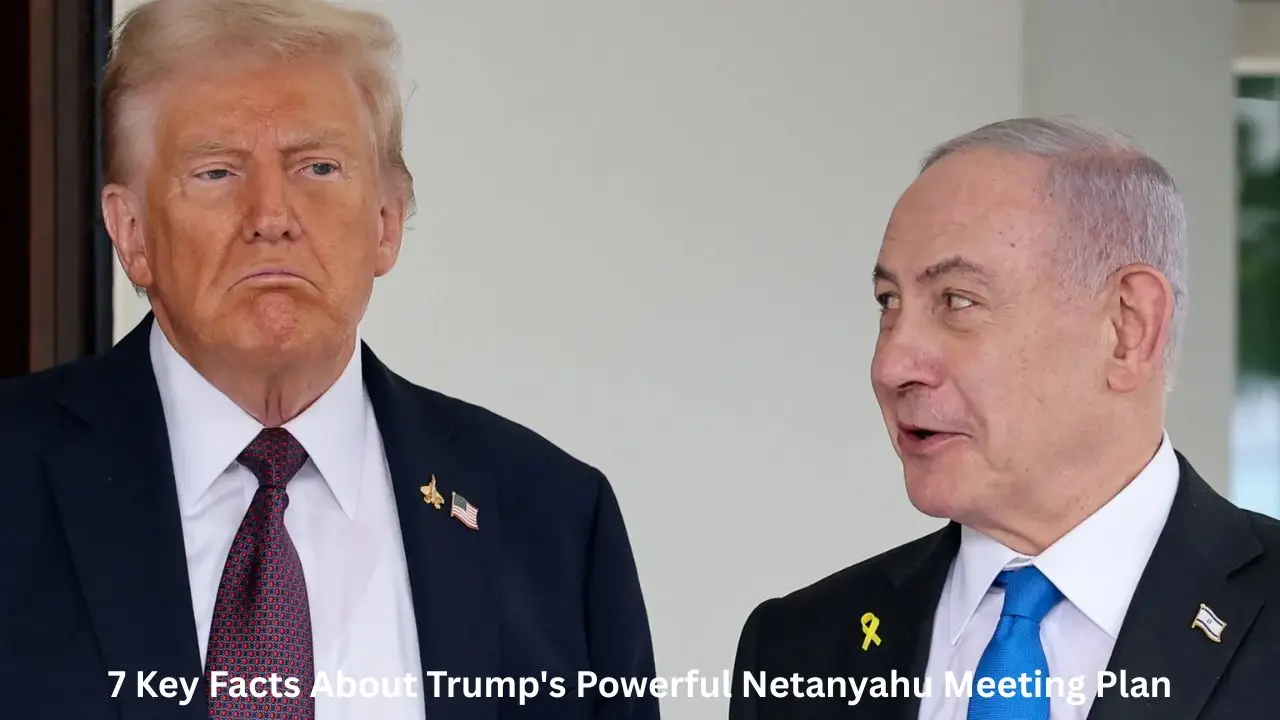
7 Key Facts About Trump’s Powerful Netanyahu Meeting Plan amid middle east tensions. President Donald Trump has confirmed that Israeli Prime Minister Benjamin Netanyahu is expected to visit the White House in the coming days, marking what could become one of the most consequential diplomatic meetings since the recent Iran-Israel conflict.
Thank you for reading this post, don't forget to subscribe!The announcement followed a phone conversation between the two leaders during America’s 250th Independence Day celebrations.
Speaking to reporters, Trump attracted widespread international attention when he said Netanyahu “knows who the boss is,” a remark that immediately sparked political debate across the United States, Israel, and the wider Middle East.
The planned meeting comes at a critical moment. Although direct military confrontation between Iran and Israel has eased following the recent ceasefire, tensions remain high over Gaza, regional security, hostage negotiations, Iran’s nuclear ambitions, and broader stability across the Middle East.
For global observers, the upcoming White House meeting represents far more than a routine bilateral visit. It could shape the next phase of U.S. engagement in one of the world’s most volatile regions.
Here are seven key facts explaining why this meeting is attracting worldwide attention.
7 Key Facts About Trump’s Powerful Netanyahu Meeting Plan
1. Trump’s “Knows Who the Boss Is” Remark Dominated Headlines
While discussing Netanyahu’s expected visit, Trump told reporters that the Israeli prime minister “knows who the boss is.”
The remark quickly became one of the most discussed political statements of the day.
Trump did not elaborate extensively on the comment, but he emphasized that the United States remains Israel’s closest ally and suggested that Washington continues to play the leading role in shaping regional diplomacy.
Supporters interpreted the statement as Trump’s way of underscoring America’s strategic influence and his personal relationship with Netanyahu.
Critics, meanwhile, viewed the comment as unusually blunt for a discussion involving one of Washington’s closest international partners.
Regardless of interpretation, the phrase dominated global headlines and became the defining soundbite ahead of the planned White House meeting.
2. The Meeting Follows a Direct Phone Call Between the Two Leaders
The announcement of Netanyahu’s planned visit came shortly after Trump and the Israeli prime minister held a telephone conversation.
According to officials from both governments, the leaders discussed recent developments in the Middle East and agreed to meet in Washington in the near future.
The phone call took place during America’s Independence Day celebrations, underscoring the continued importance both leaders place on maintaining close diplomatic coordination during a period of regional uncertainty.
The White House has indicated that preparations for the visit are already underway, although officials may adjust scheduling based on developments in the region.
3. Iran Will Be a Central Topic of Discussion
The recent Iran-Israel conflict is expected to dominate the agenda.
Although large-scale military operations have paused, significant questions remain regarding Iran’s nuclear program, missile capabilities, regional proxy groups, and future diplomatic negotiations.
Washington and Jerusalem have maintained close consultation throughout the crisis, but analysts believe both governments will now focus on preventing renewed escalation while preserving strategic deterrence.
Trump has repeatedly emphasized that Iran must never obtain a nuclear weapon, while Israeli leaders continue to describe Iran as their most significant long-term security challenge.
The meeting is expected to include discussions on intelligence cooperation, sanctions policy, regional military coordination, and possible diplomatic initiatives.
4. Gaza and Hostage Negotiations Are Expected to Feature Prominently
Another major issue will likely be the ongoing situation in Gaza.
Although fighting has declined compared with earlier phases of the conflict, humanitarian concerns, reconstruction efforts, and negotiations over remaining hostages continue to dominate international diplomacy.
The United States has played a central role in mediation efforts involving Israel, regional governments, and international partners.
Analysts expect Trump and Netanyahu to review the current security situation, discuss future ceasefire arrangements, and evaluate progress toward securing the release of hostages still held in Gaza.
Any announcement emerging from the meeting could significantly influence future diplomatic negotiations.
5. The Meeting Highlights the Strength of US-Israel Relations
For decades, the United States has remained Israel’s closest strategic ally.
Successive American administrations have provided military assistance, intelligence cooperation, diplomatic backing, and economic partnerships that form the foundation of the bilateral relationship.
Trump has consistently described his administration as strongly supportive of Israel. During his previous presidency, his administration recognized Jerusalem as Israel’s capital, brokered the Abraham Accords, and pursued policies designed to strengthen regional partnerships.
The upcoming meeting is expected to reinforce that strategic relationship while addressing new security challenges emerging after the recent conflict.
6. Regional Leaders Will Be Watching Closely
The significance of the White House meeting extends well beyond Washington and Jerusalem.
Governments throughout the Middle East—including Gulf states, Egypt, Jordan, Turkey, and Iran—will closely monitor any announcements made following the talks.
European allies are also expected to follow the discussions because developments involving Israel and Iran frequently affect global energy markets, maritime security, refugee movements, and international diplomacy.
Financial markets will likewise pay attention to any signals regarding regional stability, particularly concerning oil prices and shipping routes through the Persian Gulf and surrounding waterways.
For that reason, the meeting carries implications reaching far beyond bilateral U.S.-Israel relations.
7. The Outcome Could Shape Middle East Diplomacy for Months
Diplomatic meetings between American and Israeli leaders often produce policy announcements with regional consequences.
Observers will closely examine whether Trump and Netanyahu unveil new initiatives involving:
Regional Security
Strengthening military cooperation and deterrence against future threats.
Iran Policy
Coordinating diplomatic and security strategies following the recent conflict.
Gaza
Advancing ceasefire negotiations, humanitarian assistance, and hostage discussions.
Abraham Accords
Exploring opportunities to expand normalization agreements between Israel and additional Arab nations.
Economic Cooperation
Enhancing technology, defense, cybersecurity, and investment partnerships between the two countries.
Even if no major agreements are announced immediately, analysts believe the discussions could influence diplomatic efforts throughout the remainder of 2026.
Why Trump’s Comments Generated Global Attention
Trump’s “knows who the boss is” remark received widespread coverage because it touched on the unique nature of the U.S.-Israel alliance.
The United States remains Israel’s largest security partner and principal diplomatic supporter on the international stage.
At the same time, Israel maintains its own independent government and national decision-making process. Political commentators offered differing interpretations of Trump’s statement.
Some viewed it as characteristic political rhetoric intended to emphasize American leadership, while others suggested it reflected Trump’s confidence in his longstanding relationship with Netanyahu.
The comment also drew attention because it came at a particularly sensitive geopolitical moment, shortly after one of the region’s most dangerous military confrontations in recent years.
Global Markets and Diplomacy Will Be Watching
International investors, diplomats, and security analysts are expected to monitor the White House meeting carefully.
Any indication of reduced regional tensions could help improve market confidence, particularly in the energy sector.
Conversely, renewed warnings directed at Iran or signs of deteriorating regional relations could influence oil prices, defense planning, and international diplomatic initiatives.
Because the Middle East remains central to global energy supplies and international security, discussions between Washington and Jerusalem often carry worldwide significance.
What to Expect After the Meeting
If the visit proceeds as expected, observers will be looking for several key outcomes:
- Joint statements outlining shared strategic priorities.
- Updates on Iran policy and regional deterrence.
- Progress on Gaza ceasefire and hostage negotiations.
- Expanded defense and intelligence cooperation.
- Signals regarding future Middle East diplomatic initiatives.
The tone and substance of the meeting could shape regional policy discussions for months to come.
Conclusion
President Donald Trump’s confirmation that Benjamin Netanyahu is expected to visit the White House has immediately elevated global attention on U.S.-Israel diplomacy.
While Trump’s remark that Netanyahu “knows who the boss is” generated headlines around the world, the significance of the upcoming meeting extends well beyond political rhetoric.
With Iran, Gaza, regional security, hostage negotiations, and broader Middle East stability all expected to dominate discussions, the talks could influence some of the most pressing international challenges of 2026.
As Washington and Jerusalem prepare for another high-level summit, governments, financial markets, and diplomatic observers worldwide will be watching closely for signals that could shape the next chapter of Middle East diplomacy and the future of one of the world’s most important strategic alliances.
Also Read: 8 Explosive Takeaways as Netanyahu Says No One Can Control Trump Amid Iran War