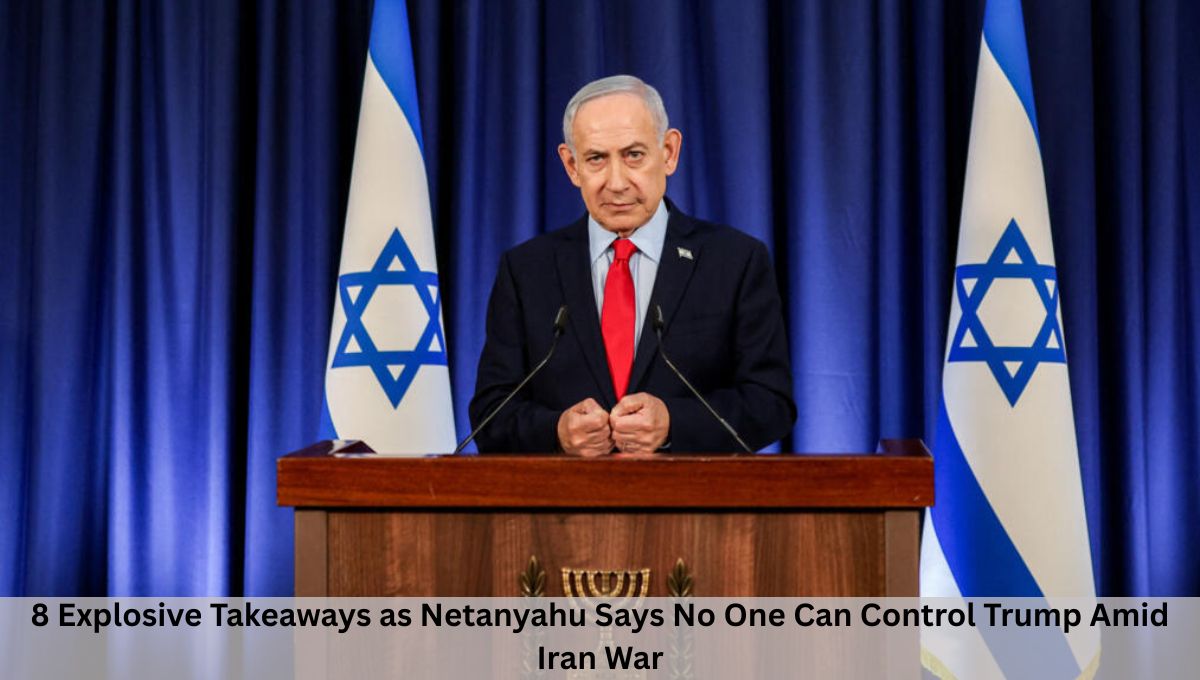
8 Explosive Takeaways as Netanyahu Says No One Can Control Trump Amid Iran War, emphasising his independence. As the conflict between Israel, the United States, and Iran intensifies, the battlefield is no longer limited to missiles, drones, and airstrikes. It has expanded into messaging, perception, and political signaling.
At the center of this narrative war is Israeli Prime Minister Benjamin Netanyahu, who has forcefully rejected claims that Israel dragged the United States into the ongoing conflict with Iran.
His remarks — particularly his assertion that “no one can tell President Donald Trump what to do” — highlight both the strength and complexity of the US-Israel relationship during one of the most volatile geopolitical crises in recent years. This is not just a diplomatic statement.
It is a strategic message aimed at multiple audiences:
Washington, Tehran, Gulf allies, and the global community.
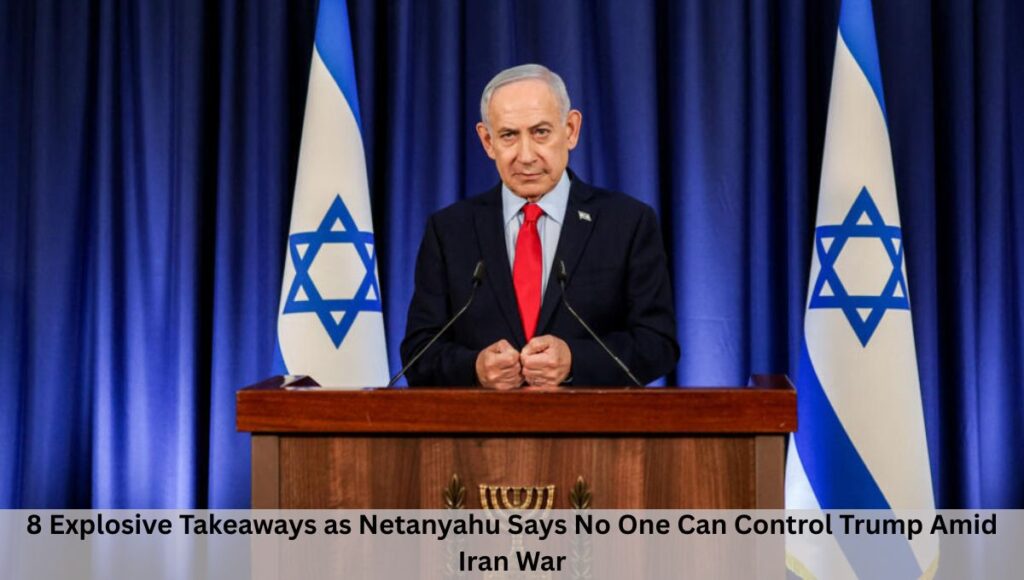
8 Explosive Takeaways as Netanyahu Says No One Can Control Trump Amid Iran War
The Core Statement: “No One Can Tell Trump What To Do”
During a high-profile press briefing, Netanyahu addressed growing speculation that Israel had influenced or pressured the United States into escalating its military involvement.
His response was blunt:
“Does anyone really think that someone can tell President Trump what to do? Come on.”
What This Statement Signals
This remark carries several layers of meaning:
- Reinforcing Trump’s autonomy: Netanyahu is emphasizing that US decisions are driven by American interests, not Israeli pressure
- Deflecting criticism: Addressing accusations that Israel is escalating the conflict by pulling in Washington
- Strengthening alliance optics: Presenting US-Israel coordination as voluntary and strategic
In essence, Netanyahu is trying to reshape the narrative — from one of influence to one of alignment.
Did Israel Act Alone? The Gas Field Strike Controversy
One of the most contentious developments in the conflict has been Israel’s strike on Iran’s Assaluyeh gas complex.
Netanyahu’s Confirmation
Netanyahu made two key points:
- Israel carried out the strike independently
- Trump later asked Israel to hold off on further attacks
This dual acknowledgment is significant.
Why It Matters
- Confirms Israel’s operational independence
- Acknowledges US influence without conceding control
- Highlights coordination despite differences
The strike itself triggered Iranian retaliation, including attacks on energy infrastructure across the Gulf — a move that escalated the conflict dramatically.
The Bigger Question: Who Is Driving the War?
The issue of control is central to global perceptions of the conflict.
Two Competing Narratives
Narrative 1: Israel Leading, US Following
Critics argue that Israel’s aggressive strategy is setting the pace of the war, forcing the US into deeper involvement.
Supporters say both countries are aligned in their objectives, particularly regarding Iran’s nuclear ambitions.
Netanyahu’s remarks clearly support the second narrative.
US-Israel Coordination: Close, But Not Identical
Netanyahu repeatedly emphasized strong coordination with the United States.
Key Areas of Cooperation
- Intelligence sharing
- Military operations
- Strategic planning
He described the partnership as involving:
“The two most amazing air forces… the two most amazing intelligence services.”
But Differences Exist
Despite this alignment, subtle differences are emerging:
- The US appears more cautious about escalation
- Israel is pursuing more aggressive targets
- Washington is sensitive to global economic fallout
This creates a dynamic where coordination coexists with divergence.
Trump’s Position: Strategic but Cautious
Donald Trump has taken a nuanced stance.
Key Elements of Trump’s Approach
- Focus on preventing Iran from acquiring nuclear weapons
- Avoiding deeper ground involvement
- Managing domestic economic pressures
Trump has also publicly stated that he advised Israel against certain strikes, particularly on energy infrastructure.
What This Reveals
- The US is balancing military objectives with economic stability
- There is concern about oil prices and global markets
- Washington is trying to prevent uncontrolled escalation
Netanyahu’s Confidence: “We Are Winning”
Netanyahu struck an optimistic tone about the war’s progress.
Key Claims
- Iran is being “decimated”
- Its missile capabilities are severely degraded
- Nuclear infrastructure has been significantly damaged
However, these claims have been contested by independent observers.
Reality Check
- Iran continues to launch missiles and drones
- Its nuclear knowledge base remains intact
- Full verification of damage is lacking
This gap between claims and verified facts is shaping global perceptions.
Iran’s Internal Situation: “Cracks” in Leadership?
Netanyahu suggested that Iran’s leadership is under strain.
What He Claimed
- Internal tensions among top officials
- Uncertainty about leadership structure
- Potential for political instability
Strategic Messaging
By highlighting “cracks,” Israel aims to:
- Undermine Iran’s image of strength
- Encourage internal dissent
- Justify continued military pressure
But Is Regime Change Likely?
Netanyahu himself acknowledged uncertainty:
“It may survive, it may not.”
This reflects the unpredictable nature of internal political dynamics in Iran.
The Strait of Hormuz: A Global Flashpoint
One of the most critical elements of the conflict is the Strait of Hormuz.
Why It Matters
- Handles roughly 20% of global oil supply
- Key route for LNG shipments
- Vital for global trade
Netanyahu’s Position
He dismissed Iran’s threats to close the strait, calling it “blackmail” that “won’t work.”
Global Implications
Any disruption could:
- Spike oil prices
- Trigger global inflation
- Disrupt supply chains
Energy and Geopolitics: A New Strategy Emerges
Netanyahu proposed an alternative vision for energy transport.
Pipeline Proposal
He suggested building pipelines:
- Across the Arabian Peninsula
- Directly to Israeli Mediterranean ports
Strategic Significance
- Reduces dependence on Hormuz
- Positions Israel as an energy hub
- Alters regional economic dynamics
This idea reflects long-term strategic thinking beyond the current conflict.
War Timeline: Could It End Soon?
Netanyahu expressed confidence that the war could end sooner than expected.
Why He Believes This
- Rapid military gains
- Pressure on Iran’s leadership
- Effective US-Israel coordination
Counterarguments
- Iran still has military capabilities
- Conflict is expanding geographically
- No clear diplomatic off-ramp
The timeline remains highly uncertain.
Ground War Possibility: A New Phase?
While the conflict has been largely aerial, Netanyahu hinted at a potential ground component.
What He Said
- A revolution cannot come from air power alone
- Ground action may be necessary
- Details remain undisclosed
Implications
- Increased risk of escalation
- Greater casualties
- Broader regional involvement
Global Reactions: Allies and Critics
Gulf States
- Concerned about energy infrastructure attacks
- Worried about economic fallout
- Seeking de-escalation
Europe
- Focused on energy security
- Concerned about inflation
- Monitoring diplomatic developments
Asia
- Watching oil and gas supply disruptions
- Preparing for potential shortages
Economic Impact: Oil, Gas, and Inflation
The war is already affecting global markets.
Key Effects
- Rising oil prices
- Increased gas costs
- Pressure on global economies
India’s Position
Countries like India are temporarily shielding consumers from price shocks, but sustained increases could lead to:
- Fuel price hikes
- Inflationary pressure
- Economic slowdown
Who Benefits from the Conflict?
Potential Winners
- Defense industries
- Energy exporters outside the conflict zone
- Political leaders gaining domestic support
Potential Losers
- Energy-importing nations
- Global consumers
- Economies dependent on stability
The Political Dimension: Trump vs Netanyahu?
While both leaders emphasize coordination, their priorities differ.
Trump’s Focus
- Economic stability
- Controlled escalation
- Domestic political considerations
Netanyahu’s Focus
- Military objectives
- Long-term regional strategy
- Political positioning within Israel
These differences shape the trajectory of the conflict.
Media, Messaging, and Perception Warfare
This conflict is as much about narrative as it is about military outcomes.
Key Themes
- Who is in control?
- Who is winning?
- What are the risks?
Netanyahu’s remarks are part of a broader effort to shape these perceptions.
What Happens Next? Key Scenarios
Scenario 1: Rapid De-escalation
- Diplomatic resolution
- Stabilization of markets
Scenario 2: Prolonged Conflict
- Continued strikes
- Economic strain
Scenario 3: Major Escalation
- Ground war
- Regional expansion
Conclusion: A Complex Alliance Under Pressure
The statement that “no one can tell Trump what to do” is more than rhetoric.
It reflects the intricate balance of power, influence, and coordination between two key allies navigating a high-stakes conflict.
Benjamin Netanyahu is asserting independence while reinforcing partnership. Donald Trump is balancing military objectives with economic realities.
Together, they are shaping the course of a conflict with global consequences.
Final Takeaway
This is not just a war between nations.
It is a test of alliances, leadership, and global stability.
And the outcome will resonate far beyond the Middle East.
Also Read: 9 Shocking Truths Behind Netanyahu Death Rumors and the Viral “Six-Finger” AI Video
Also Read: Netanyahu says Iran is being ‘decimated’ but revolution requires ‘ground component’
Related Posts:
- 11 Explosive Warnings as Trump Vows to ‘Knock the…

- 3 Explosive Conditions Iran Sets to End War with US…
- 10 Explosive Warnings as Donald Trump Calls Iran…
- 10 Explosive Signals: Trump Rates Iran War “15/10”…
- 9 Explosive Claims as Trump Says US Winning Iran War
- 10 Explosive Signals Trump Says Iran War Could End…