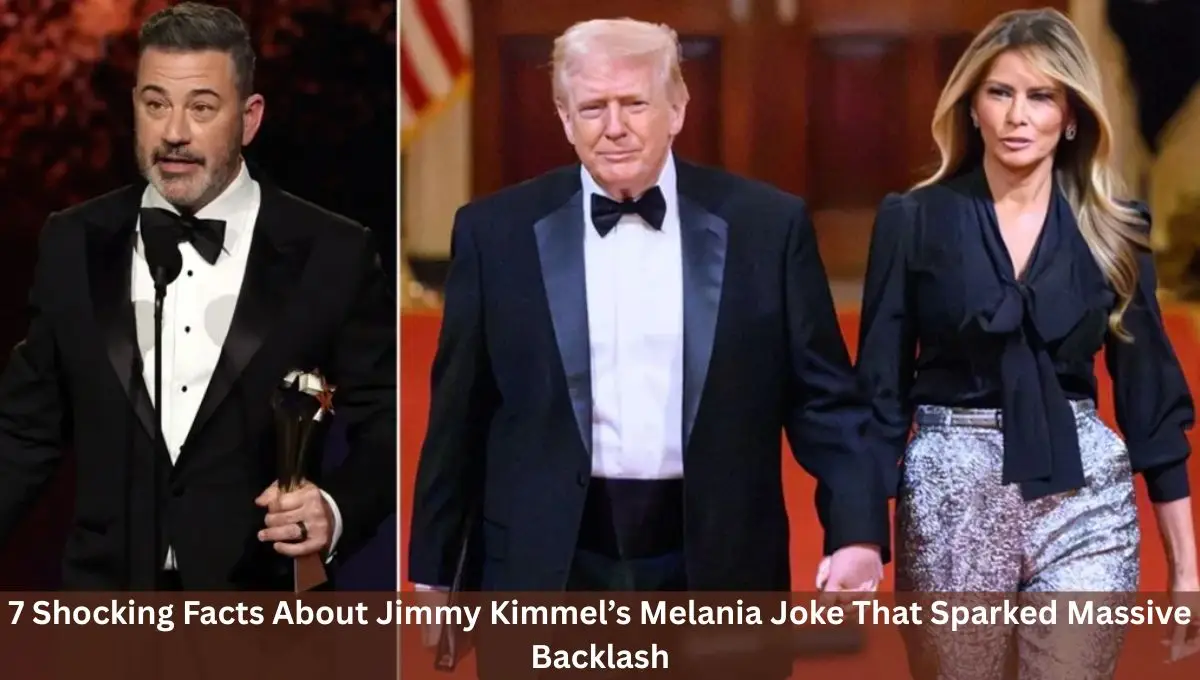
7 Shocking Facts About Jimmy Kimmel’s Melania Joke That Sparked Massive Backlash from Donald and Melania Trump. What began as a late-night comedy monologue quickly escalated into a full-blown political controversy. American television host Jimmy Kimmel found himself at the center of intense backlash after a joke about Melania Trump sparked outrage—particularly in the wake of a reported assassination attempt targeting Donald Trump.
The incident has reignited debates over free speech, the role of comedians in political discourse, and whether humor can cross dangerous lines during sensitive moments.
So what exactly did Kimmel say? Why did it trigger such a strong reaction? And what does it reveal about today’s political and media climate?
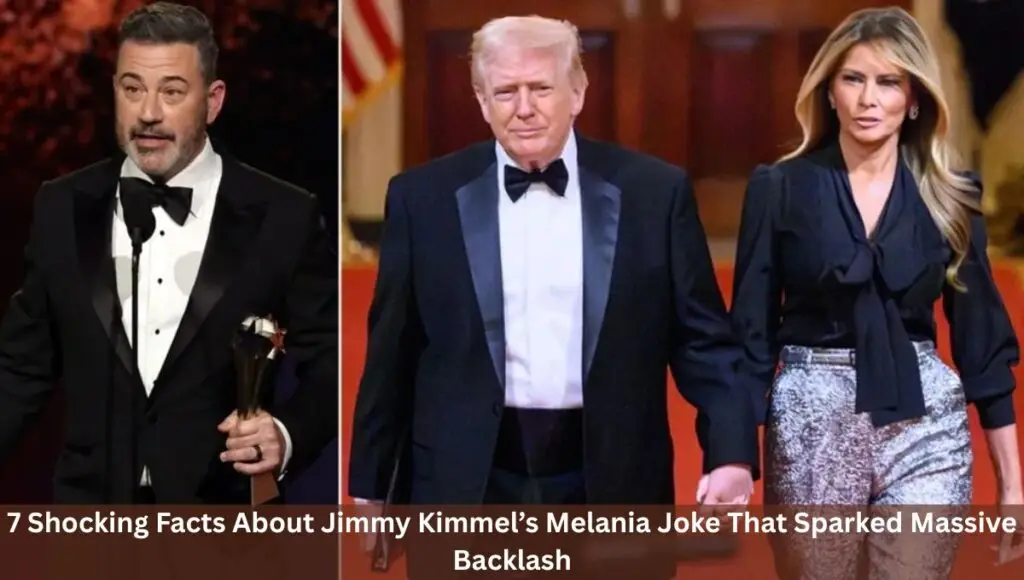
7 Shocking Facts About Jimmy Kimmel’s Melania Joke That Sparked Massive Backlash
What Did Jimmy Kimmel Say About Melania Trump?
The controversy centers on a line delivered during a mock segment imagining Kimmel hosting the White House Correspondents’ Dinner.
In that monologue, Kimmel joked:
“Our First Lady, Melania, is here. Look at Melania—so beautiful… Mrs. Trump, you have a glow like an expectant widow.”
The phrase “expectant widow” quickly became the focal point of criticism.
While Kimmel later explained that the joke was meant to highlight the age difference between the Trumps, critics interpreted it as implying harm toward the president.
The joke also included references to Trump’s past associations and public image, adding to the already provocative tone of the segment.
Timing Intensifies the Controversy
Although the joke aired days before the incident, its timing became crucial after a security scare involving President Trump at a high-profile Washington event.
Following the attempted attack, critics began linking Kimmel’s remarks to a broader climate of political hostility.
The result was a rapid escalation—from a late-night joke to a national controversy involving the White House, media networks, and regulatory bodies.
Jimmy Kimmel Defends Himself: “It Was a Joke”
Facing mounting criticism, Kimmel addressed the backlash directly during his show.
He firmly rejected accusations that his joke encouraged violence:
- He described it as a “very light roast”
- Emphasized it was about age difference
- Denied any connection to the attack
“It was not, by any stretch of the definition, a call to assassination,” Kimmel said.
He also highlighted that the joke was made before the incident, dismissing suggestions that it could have influenced events.
A Strong Defense of Free Speech
Kimmel didn’t stop at defending the joke—he broadened the conversation to include constitutional rights.
Invoking the First Amendment, he stated:
- Everyone has the right to express opinions
- Political figures are not exempt from satire
- Comedy is part of democratic discourse
“Donald Trump is allowed to say whatever he wants… as are you, as am I,” he noted.
This framing shifted the debate from a single joke to a broader issue of freedom of expression in modern America.
Melania Trump’s Reaction: “Hateful and Dangerous”
The response from Melania Trump was swift and strongly worded.
In a public statement, she accused Kimmel of contributing to what she described as:
- “Political sickness”
- “Hateful rhetoric”
- Division within the country
She also criticized the network airing his show, calling for accountability and questioning why such content is allowed into American homes.
Her remarks reflected a growing concern among political figures about the tone of public discourse.
Donald Trump Calls for Kimmel’s Firing
President Donald Trump took an even more aggressive stance.
In a social media post, he described Kimmel’s remarks as:
- “Despicable”
- A “call to violence”
- “Far beyond the pale”
He also urged major media companies to take action:
“Jimmy Kimmel should be immediately fired by Disney and ABC.”
Trump’s response added significant political weight to the controversy, turning it into a broader confrontation between media and government.
A Long-Running Feud Between Trump and Kimmel
This is not the first clash between Kimmel and Trump.
Their relationship has been marked by years of tension, largely driven by Kimmel’s frequent criticism of Trump on his show.
Key moments in their feud include:
- Regular political satire targeting Trump
- Trump’s repeated criticism of late-night hosts
- Past calls for network intervention
The latest controversy is simply the most intense chapter in an ongoing battle between entertainment and politics.
The Role of Late-Night Comedy in Politics
Late-night television has long played a role in shaping political narratives. Hosts like Jimmy Kimmel often blend humor with commentary, influencing public perception.
However, the current climate raises important questions:
- Where is the line between satire and offense?
- Should comedians be held accountable for political impact?
- Does humor contribute to polarization?
These questions have no easy answers—but they are increasingly central to public debate.
Did the Joke Cross a Line?
Opinions remain deeply divided.
Critics Argue:
- The joke was inappropriate given the circumstances
- It could be interpreted as insensitive or harmful
- Public figures should be more cautious
Supporters Say:
- It was clearly satire
- Free speech must be protected
- Political figures are fair targets for comedy
The divide reflects broader ideological differences about media, power, and responsibility.
The Assassination Attempt: A Critical Context
The controversy cannot be separated from the attempted attack on President Trump.
Even though no casualties were reported, the incident heightened sensitivity around political rhetoric.
Kimmel acknowledged this, expressing sympathy:
- He called the event “traumatic and scary”
- Emphasized unity in the face of violence
- Rejected any connection between his joke and the attack
This dual stance—empathy combined with defiance—defined his response.
Media Pressure and FCC Involvement
The situation also drew attention to regulatory pressures on broadcasters.
The Federal Communications Commission has previously signaled potential action against networks over controversial content.
In past incidents involving Kimmel:
- His show was briefly suspended
- Broadcasters faced threats of penalties
- Debates over licensing intensified
This raises concerns about government influence on media freedom.
ABC and Disney Under the Spotlight
As the network behind Kimmel’s show, ABC—and its parent company Disney—found themselves in a difficult position.
They face competing pressures:
- Political demands for action
- Public expectations of free speech
- Business considerations
So far, no immediate action has been taken, but the situation remains fluid.
Free Speech vs Responsibility: A Growing Debate
At the heart of the controversy lies a fundamental question:
How far should free speech go?
Supporters of Kimmel argue that:
- Comedy must remain unrestricted
- Political satire is essential in democracies
Critics counter that:
- Words can have consequences
- Public figures must exercise restraint
This debate extends far beyond one joke—it reflects a global struggle over expression and accountability.
Why This Story Matters Globally
While the controversy is rooted in the United States, its implications are global.
Across democracies, similar issues are emerging:
- The role of media in politics
- The limits of satire
- The balance between freedom and responsibility
The Kimmel-Trump clash serves as a case study in how these tensions play out in real time.
The Power of Narrative in Modern Politics
In today’s media environment, perception often matters as much as reality.
A single joke can:
- Trigger political reactions
- Influence public opinion
- Shape international narratives
The “expectant widow” remark is a prime example of how quickly narratives can evolve—and escalate.
Public Reaction: A Divided Audience
Public response to the controversy has been sharply divided.
Supporters of Kimmel:
- Defend his right to joke
- Criticize political overreaction
- Emphasize satire’s role
Supporters of Trump:
- Condemn the joke as offensive
- Call for accountability
- Highlight concerns about media bias
This polarization reflects broader divisions in society.
A Broader Trend: Media vs Political Power
The clash between Kimmel and Trump is part of a larger trend:
- Increasing tension between media and governments
- Growing scrutiny of journalists and entertainers
- Rising political influence over broadcasting
These dynamics are reshaping the relationship between power and communication.
What Happens Next?
The future of this controversy remains uncertain.
Possible outcomes include:
- Continued public debate
- Potential regulatory action
- Shifts in media practices
Regardless of the outcome, the incident has already left a lasting impact.
Conclusion: More Than Just a Joke
What started as a single line in a comedy monologue has evolved into a major political and cultural moment.
The clash between Jimmy Kimmel and Donald Trump highlights the complexities of modern discourse—where humor, politics, and public perception collide.
At its core, the controversy raises enduring questions:
- What are the limits of free speech?
- How should public figures be treated in satire?
- Can humor coexist with responsibility in a polarized world?
As debates continue, one thing is clear:
in today’s media landscape, even a joke can have global consequences.
Also Read: 10 Shocking Moments from Trump White House Dinner Shooting Scare
Also Read: George Clooney Defends Jimmy Kimmel After Trump’s ‘Heated’ Call for His Firing: ‘Jokes Are Jokes’
Related Posts:
- 7 Surprising Moments from Trump's Children's Podcast…
- Melania Trump’s Viral Reaction Overshadows Donald…

- 7 Shocking Reasons FIFA’s Peace Prize for Trump…

- Donald Trump’s Lavish UK State Visit: From Kate…
- 9 Explosive Revelations as Trump Declares His Health…
- Trump Stole the Show at 2025 Gaza Peace Summit in Egypt