
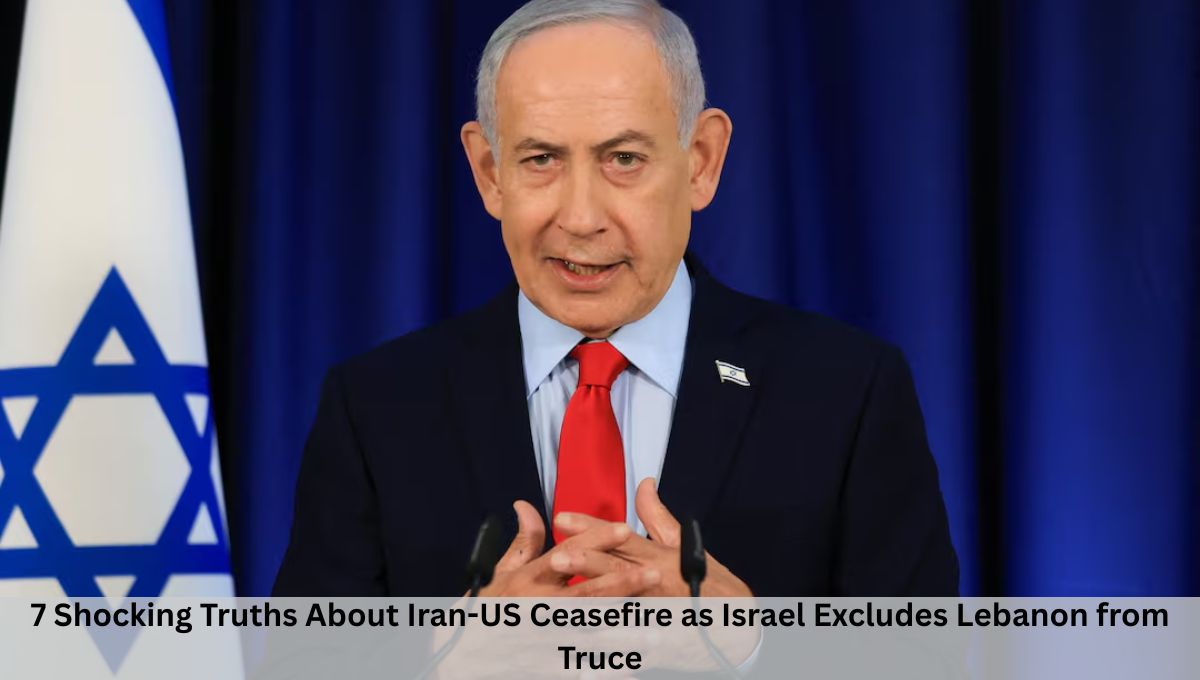
7 Shocking Truths About Iran-US Ceasefire as Israel Excludes Lebanon from Truce, sparking serious questions. After weeks of intense conflict, the announcement of a two-week ceasefire between the United States and Iran initially appeared to be a turning point toward peace in the Middle East.
However, within hours of the declaration, conflicting statements emerged—especially regarding Lebanon’s role in the truce.
Israel has publicly supported the ceasefire but made one critical clarification:
Lebanon is not included.
This single statement has reshaped the geopolitical narrative, raising a crucial question—is the war really pausing, or simply shifting fronts?
7 Shocking Truths About Iran-US Ceasefire as Israel Excludes Lebanon from Truce
What the Iran-US Ceasefire Actually Includes
A Temporary Pause, Not a Peace Deal
The ceasefire is structured as a two-week suspension of hostilities, designed to create diplomatic space for negotiations.
It comes after a 40-day conflict marked by:
- Airstrikes on critical infrastructure
- Missile and drone attacks across the region
- Disruption of global oil supply routes
- Rising fears of a wider regional war
The agreement includes:
- Suspension of US strikes on Iran
- Conditional halt to Iranian military operations
- Planned diplomatic talks in Islamabad
- Temporary reopening of key trade routes
However, the ceasefire is conditional and fragile, with both sides warning that hostilities could resume instantly.
Strategic Goals Behind the Ceasefire
While publicly framed as a peace effort, the ceasefire also serves tactical purposes:
- The US aims to push negotiations on Iran’s nuclear and missile programs
- Iran seeks sanctions relief and reconstruction support
- Regional actors want to stabilize energy markets
Yet, the agreement leaves several fronts unresolved—most notably Lebanon.
Israel’s Position — Support With a Major Exception
Netanyahu Backs the Ceasefire, But With Limits
Israel has expressed support for the ceasefire, aligning with US strategic objectives.
However, it has drawn a clear red line:
The ceasefire does not apply to Lebanon.
This position reflects Israel’s ongoing military campaign against Hezbollah, which it considers a direct and immediate threat.
Why Lebanon Is Excluded
Israel’s decision is rooted in several factors:
- Hezbollah’s active involvement in the conflict
- Ongoing rocket attacks from southern Lebanon
- Strategic goal of weakening Hezbollah’s military capabilities
From Israel’s perspective, including Lebanon in the ceasefire would:
- Allow Hezbollah to regroup
- Undermine military progress
- Increase long-term security risks
Conflicting Claims — A Diplomatic Breakdown?
Pakistan’s Statement vs Israel’s Position
One of the most confusing aspects of the ceasefire is the contradiction between key players:
- Pakistan claimed the ceasefire applies “everywhere, including Lebanon”
- Israel directly rejected this interpretation
- The US has not clearly clarified the issue
This inconsistency highlights a deeper problem—lack of unified messaging among mediators and participants.
Why This Confusion Matters
Diplomatic ambiguity in conflict zones can have serious consequences:
- Misinterpretation by military forces
- Increased risk of accidental escalation
- Loss of trust between negotiating parties
In this case, it has created uncertainty on the ground in Lebanon, where strikes have reportedly continued.
The Lebanon Front — War Within a War
How Lebanon Got Pulled Into the Conflict
Lebanon became part of the conflict after Hezbollah launched attacks on Israel in support of Iran.
This triggered:
- Israeli airstrikes across southern Lebanon
- Ground operations aimed at creating a buffer zone
- Mass displacement of civilians
The situation escalated rapidly, turning Lebanon into a secondary battlefield.
Human and Economic Impact
The consequences for Lebanon have been severe:
- Over 1,500 reported deaths
- More than 1.2 million people displaced
- Significant infrastructure damage
- Economic losses estimated at 5–7% of GDP
The country, already struggling economically, now faces a humanitarian crisis.
Hezbollah’s Role and Strategic Calculations
Why Hezbollah Entered the War
Hezbollah’s involvement was driven by:
- Alliance with Iran
- Retaliation against Israeli actions
- Desire to maintain regional influence
However, its actions have also:
- Drawn Lebanon deeper into conflict
- Increased domestic pressure within Lebanon
- Complicated diplomatic negotiations
Will Hezbollah Respect the Ceasefire?
As of now:
- Hezbollah has reduced attacks
- No formal commitment to ceasefire terms has been confirmed
- The group remains militarily active
This uncertainty adds another layer of instability.
Global Reactions — Support Mixed With Concern
Gulf Countries and Regional Stakeholders
Many regional powers are cautiously optimistic but concerned:
- They support de-escalation
- They fear prolonged instability
- They demand clear guarantees for security
International Community’s View
Globally, the ceasefire is seen as:
- A positive step toward diplomacy
- A fragile and temporary solution
- Insufficient without broader agreements
Economic Impact — Markets React to Uncertainty
Oil Prices and Global Markets
The ceasefire has had immediate economic effects:
- Oil prices dropped sharply after the announcement
- Stock markets showed positive movement
- Energy supply concerns temporarily eased
However, uncertainty over Lebanon keeps markets volatile.
Why Lebanon Matters for Global Stability
Although not a major oil route, Lebanon’s instability can:
- Trigger wider regional conflict
- Disrupt trade routes
- Increase geopolitical risk premiums
Can the Ceasefire Hold? Key Risk Factors
Several factors threaten the stability of the ceasefire:
- Continued Israeli operations in Lebanon
- Hezbollah’s unpredictable response
- Lack of clarity in agreements
- Ongoing mistrust between major players
Even a minor incident could quickly escalate into renewed conflict.
The Bigger Picture — Is the War Really Ending?
A Tactical Pause, Not a Resolution
The current ceasefire appears to be:
- A diplomatic pause
- A chance to negotiate
- Not a definitive end to hostilities
Possible Scenarios Ahead
- Successful Negotiations
A broader agreement could bring long-term peace - Partial Breakdown
Fighting continues in Lebanon while Iran-US tensions ease - Full Escalation
Ceasefire collapses, leading to a wider regional war
Why This Ceasefire Is Different
Unlike previous agreements, this ceasefire:
- Involves multiple indirect actors
- Includes conflicting interpretations
- Leaves active battle zones untouched
This makes it inherently unstable and complex.
Conclusion: A Fragile Pause With High Stakes
The Iran-US ceasefire marks a critical moment in Middle Eastern geopolitics—but it is far from a complete solution.
Israel’s decision to exclude Lebanon from the truce fundamentally changes the equation.
Instead of a full pause in hostilities, the region now faces a split reality:
- Diplomacy between the US and Iran
- Continued conflict between Israel and Hezbollah
This dual-track situation increases the risk of miscalculation and escalation. The coming two weeks will be decisive.
Whether this ceasefire evolves into a lasting peace or collapses into renewed war will depend on clarity, coordination, and compromise—all of which remain uncertain.
Also Read: 7 Critical Moves as 22 Nations Pressure Iran to Reopen Strait of Hormuz
Also Read: Countries call for Lebanon inclusion in US–Iran truce as Israel continues large wave of air strikes
Related Posts:
- 10 Powerful Developments in Israel–Lebanon Ceasefire…

- 7 Explosive Developments as Netanyahu Pushes Lebanon…
- 7 Shocking Strikes That Expose Gaza Ceasefire Fragility

- Trump’s 20-Point Gaza Peace Plan Gains Urgent Global…

- 3 Explosive Conditions Iran Sets to End War with US…
- Israel–Hamas Ceasefire Under Strain: 4 More Hostage…
