7 Shocking Facts Behind Shehbaz Sharif’s ‘Draft’ Blunder Amid US–Iran Ceasefire Deal that sparked global debate. In a moment that perfectly captures the intersection of high-stakes diplomacy and social media missteps, Pakistan Prime Minister Shehbaz Sharif found himself at the center of global attention—not just for helping facilitate a ceasefire between the United States and Iran, but for an embarrassing “draft” label mistakenly left in a public post.
The incident unfolded just hours before a dramatic geopolitical breakthrough:
a two-week ceasefire agreement between the United States and Iran, brokered with significant involvement from Pakistan.
While the ceasefire itself marked a crucial pause in escalating tensions, Sharif’s social media blunder quickly went viral, raising questions about diplomatic messaging, transparency, and the mechanics of modern statecraft.
7 Shocking Facts Behind Shehbaz Sharif’s ‘Draft’ Blunder Amid US–Iran Ceasefire Deal
The ‘Draft’ Blunder That Sparked Global Attention
What Exactly Happened?
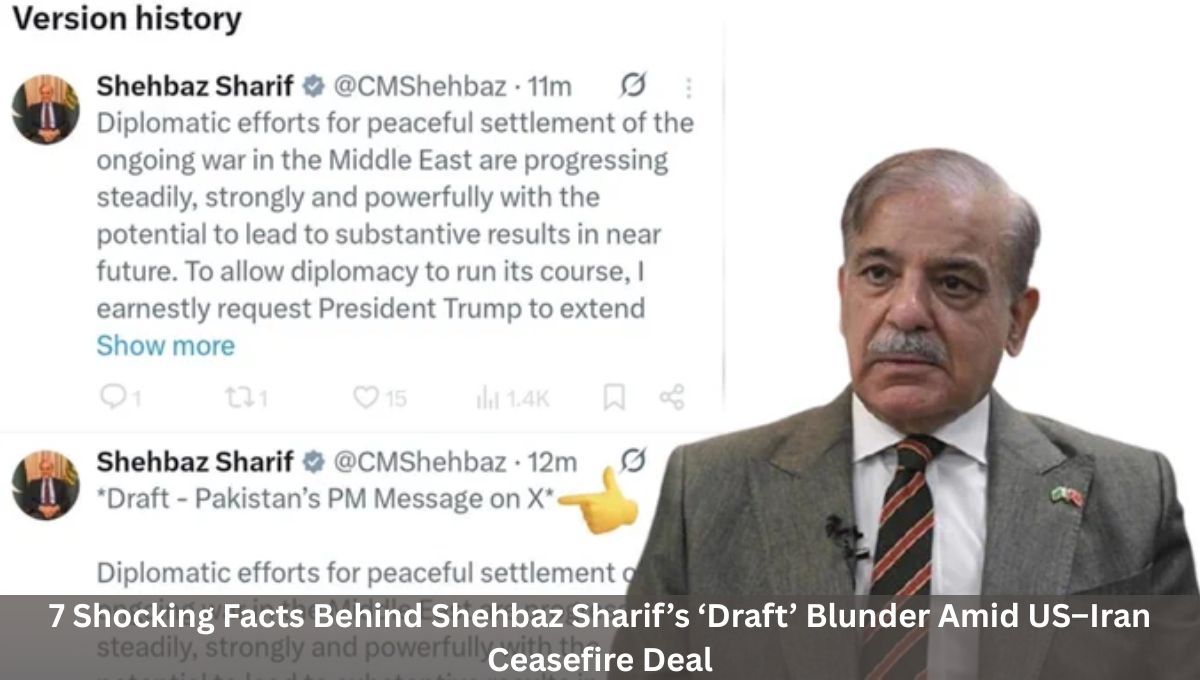
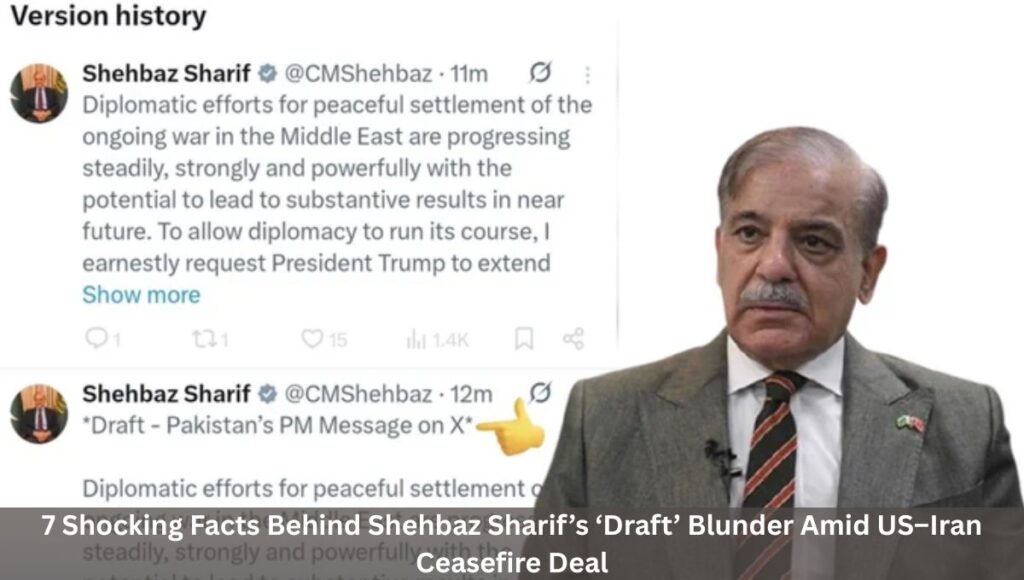
On Wednesday, Sharif posted a message on X (formerly Twitter) urging diplomacy in the ongoing Middle East conflict.
However, the post initially appeared with the header:
“Draft – Pakistan’s PM Message on X”
Although the label was quickly removed, screenshots had already circulated widely.
The content of the message remained unchanged even after editing, which fueled speculation that the post may have been prematurely published or copied from an internal or external draft.
Why It Matters
In diplomatic communication, precision and timing are critical.
A visible “draft” label suggests:
- Internal miscommunication
- Possible external coordination
- Lack of message vetting before publication
While no official confirmation supports claims of external authorship, the optics alone triggered intense debate across political and media circles.
Timeline: From Draft Post to Ceasefire Deal
1. Pre-Ceasefire Tensions Escalate
The crisis had reached a boiling point, with Donald Trump warning of devastating strikes against Iran if demands were not met.
2. Pakistan’s Last-Minute Appeal
Sharif publicly urged:
- A two-week extension of Trump’s deadline
- Reopening of the Strait of Hormuz
- A temporary ceasefire to enable diplomacy
3. The ‘Draft’ Post Appears
The now-viral message was briefly posted with the “draft” label before being edited.
4. Ceasefire Announcement
Within hours:
- The US and Iran agreed to a two-week ceasefire
- Military escalation was paused
- Diplomatic talks were scheduled in Islamabad
Inside the US–Iran Ceasefire Agreement
The ceasefire agreement represents a temporary but critical de-escalation.
Key Features of the Deal
- Duration: Two weeks
- Military Pause: Suspension of offensive operations
- Diplomatic Talks: Planned in Islamabad
- Hormuz Access: Conditional reopening of the oil transit route
The Strait of Hormuz plays a vital role in global energy supply, handling roughly 20% of the world’s oil shipments. Its partial closure had already triggered global economic concerns.
Pakistan’s Role: Mediator or Facilitator?
Diplomatic Positioning
Pakistan emerged as a key intermediary between Washington and Tehran. However, according to journalist Hamid Mir, its role was more nuanced.
“Pakistan was not a full mediator—it acted as a facilitator due to limited diplomatic access.”
Why Limited?
- Pakistan lacks diplomatic relations with Israel
- Access was restricted to the US and Iran
- True mediation requires engagement with all parties
Key Figures Behind the Diplomacy
Ishaq Dar
Widely regarded as the central figure in the diplomatic effort:
- Initiated early outreach
- Coordinated with multiple stakeholders
- Maintained communication channels
Asim Munir
Played a strategic role through:
- Military-to-military communication
- Direct engagement with US leadership
Abbas Araghchi
- Represented Iran in negotiations
- Publicly acknowledged Pakistan’s efforts
Why Both the US and Iran Trusted Pakistan
Strategic Advantages
- Strong ties with both Washington and Tehran
- Geographic proximity to Iran
- Neutral stance in regional conflicts
Geopolitical Balance
Pakistan’s ability to maintain relations across rival blocs made it a credible intermediary during the crisis.
The Bigger Picture: Why the Ceasefire Happened
1. Imminent Military Escalation
Trump’s warnings suggested a major conflict was imminent.
2. Economic Pressures
Disruption in oil supply via the Strait of Hormuz threatened global markets.
3. Diplomatic Window
Backchannel negotiations created a narrow opportunity for de-escalation.
Uncertainty Still Looms
Despite the ceasefire, tensions remain high:
- Continued missile alerts in the region
- Conflicting interpretations of the agreement
- Disputes over nuclear provisions
Even Trump himself shifted tone, initially supporting parts of Iran’s proposal before later dismissing elements of it.
Is This Ceasefire Sustainable?
Experts remain cautious.
Temporary Pause, Not Resolution
According to analysts:
- The deal is a short-term tactical pause
- Long-term peace requires structural agreements
Key Challenges Ahead
- Nuclear negotiations
- Regional proxy conflicts
- Israel’s involvement
The Social Media Factor in Modern Diplomacy
Sharif’s “draft” incident highlights a broader issue:
Digital Diplomacy Risks
- Instant global scrutiny
- Viral amplification of minor errors
- Blurred lines between official and informal communication
In today’s environment, even a small oversight can:
- Undermine credibility
- Fuel misinformation
- Distract from substantive achievements
Conclusion: A Breakthrough Clouded by a Blunder
Pakistan’s role in facilitating the US–Iran ceasefire marks a significant diplomatic moment.
However, the episode involving Shehbaz Sharif’s “draft” post demonstrates how fragile public perception can be in the digital age.
While the ceasefire offers a critical pause in hostilities, its long-term success will depend on sustained diplomatic engagement and trust-building between deeply divided powers.
For now, the world watches closely as talks move to Islamabad—where the next phase of this high-stakes geopolitical drama will unfold.
Also Read: Lebanon, Iran, UAE under attack. Will Pakistan-brokered ceasefire last?
Related Posts:
- 7 Powerful Facts About Ayatollah Ali Khamenei’s…
- 9 Explosive Claims as Trump Says US Winning Iran War

- 3 Explosive Conditions Iran Sets to End War with US…
- 5 Major Takeaways from the US Supreme Court's…

- 10 Explosive Warnings as Donald Trump Calls Iran…
- 7 Heartbreaking Facts About Venezuela's Earthquake Disaster