
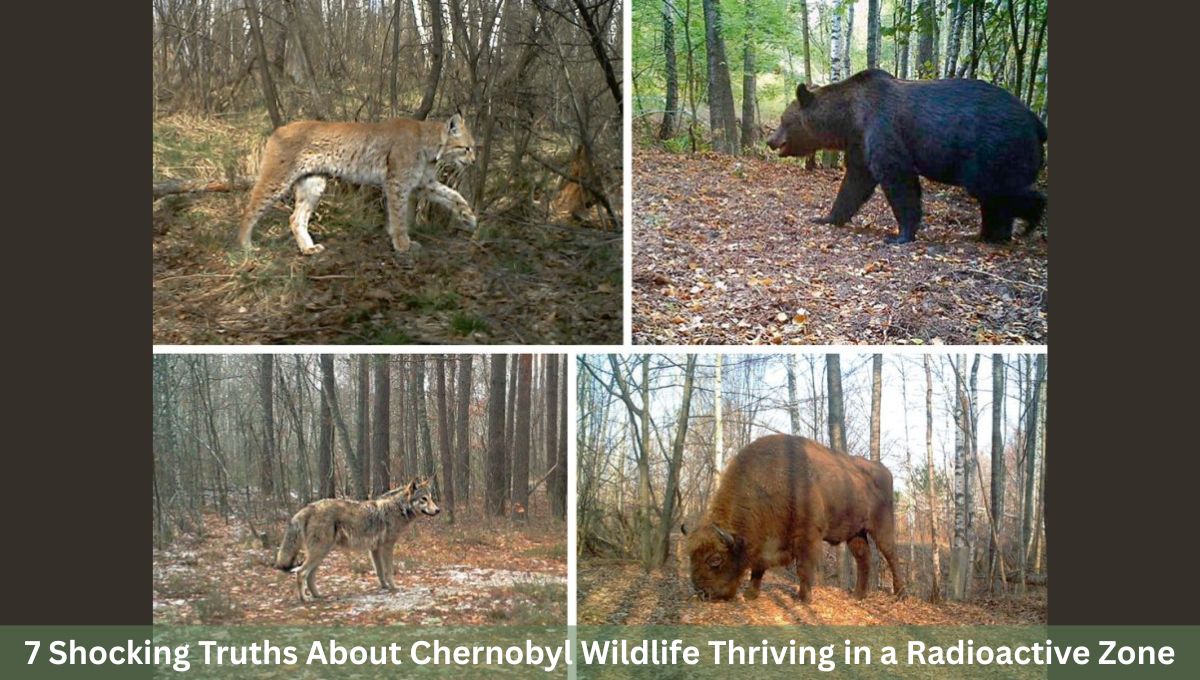
7 Shocking Truths About Chernobyl Wildlife Thriving in a Radioactive Zone decades after the nuclear disaster. For decades, the name Chernobyl disaster has symbolized catastrophe—an event that unleashed a radioactive cloud across Europe and forced mass evacuations. The surrounding region, known as the Chernobyl Exclusion Zone (CEZ), was long viewed as a lifeless wasteland.
But nearly 40 years later, that perception is being dramatically overturned.
Today, scientists and remote cameras reveal a surprising reality:
wolves roam freely, rare birds nest undisturbed, and even radiation-tolerant fungi flourish in the ruins.
What was once considered uninhabitable is now one of the most unusual wildlife sanctuaries on Earth.
So, what exactly happened here? And why are animals thriving in a place humans still consider dangerous?
7 Shocking Truths About Chernobyl Wildlife Thriving in a Radioactive Zone
What Created the Chernobyl Exclusion Zone?
The CEZ was established in 1986 after Reactor No. 4 at the Chernobyl Nuclear Power Plant exploded during a failed safety test.
The blast released massive amounts of radioactive material into the atmosphere, contaminating vast regions of Ukraine, Belarus, and beyond.
Around 115,000 people were evacuated immediately, and eventually more than 300,000 were displaced.
A restricted area of approximately 2,600 square kilometers was declared off-limits to human habitation.
Why the Zone Was Sealed Off
Authorities banned:
- Residential settlements
- Agriculture and farming
- Logging and industrial activity
- Hunting
The goal was simple: limit human exposure to radiation.
Ironically, this absence of human activity would later become the key to nature’s unexpected revival.
The Great Return: Wildlife Reclaims the Land
Large Mammals Make a Comeback
Over time, researchers observed something astonishing—wildlife populations did not collapse. In many cases, they increased.
Animals now thriving in the CEZ include:
- Wolves
- Foxes
- Eurasian lynx
- Elk and deer
- Wild boars
- Beavers
Even more surprising, species that had disappeared long before the disaster have returned.
The Return of Giants
- Brown bears have reappeared after decades of absence
- European bison now roam the forests again
This phenomenon is often described as “extreme rewilding”—nature reclaiming land without human management.
Wolves: The Symbol of Resilience
Studies suggest wolf populations in the CEZ are significantly higher than in nearby non-contaminated areas.
Why?
Because:
- No hunting pressure
- No roads or urban development
- Abundant prey
In short, the absence of humans outweighs the risks posed by radiation.
Birdlife Flourishes in Silence
The skies above Chernobyl are no longer empty.
Bird species that have returned include:
- Black storks
- White storks
- White-tailed eagles
Most notably, the endangered greater spotted eagle is now breeding successfully in the region.
Scientists have recorded multiple nesting pairs, making this one of the few places globally where its population is growing.
Adaptation in Action: How Animals Survive Radiation
While the resurgence of wildlife is remarkable, it does not mean radiation has no effect.
Instead, nature appears to be adapting.
Darker Frogs: A Natural Shield
Tree frogs in the CEZ are noticeably darker than those outside the zone.
This is linked to increased melanin levels, which may:
- Protect against radiation damage
- Reduce DNA harm
It’s a rare example of rapid evolutionary adaptation.
Wolves and Possible Genetic Resistance
Research suggests wolves in the CEZ may be developing:
- Enhanced DNA repair mechanisms
- Lower susceptibility to cancer
While still under study, these findings hint at long-term evolutionary changes.
Radiation-Eating Fungi: Nature’s Most Bizarre Survivor
Perhaps the most astonishing discovery is a type of black fungus found inside the damaged reactor.
This fungus:
- Contains high levels of melanin
- Appears to use radiation as an energy source
- Grows faster in radioactive environments
Scientists believe it may convert radiation into chemical energy—a process somewhat similar to photosynthesis.
This discovery has sparked interest in:
- Space research
- Radiation protection technologies
Plants Evolve Too
It’s not just animals adapting.
Plants in the CEZ have shown:
- Improved DNA repair systems
- Resistance to heavy metals
- Tolerance to high radiation levels
These traits allow vegetation to survive and even thrive under extreme conditions.
The Real Reason Wildlife Thrives: Humans Are Gone
Despite the fascination with radiation-resistant species, most scientists agree on one key point:
The absence of humans is the biggest factor behind the ecosystem’s recovery.
Without human activity:
- Habitats regenerate
- Pollution decreases
- Wildlife moves freely
In many ways, Chernobyl has become a large-scale experiment demonstrating how damaging human presence can be compared to environmental disasters.
Not a Perfect Paradise: The Hidden Costs
It would be misleading to call Chernobyl a perfect ecosystem.
Radiation still causes:
- Genetic mutations
- Reduced fertility in some species
- Shorter lifespans
Some bird species show:
- Sperm abnormalities
- Lower antioxidant levels
- Reduced reproduction rates
So while populations may grow, individual health can still be compromised.
A Global Pattern: Fukushima and Beyond
Chernobyl is not unique. After the Fukushima disaster, a similar trend emerged.
Wildlife returning to evacuated areas includes:
- Wild boars
- Bears
- Raccoons
These cases suggest a broader pattern:
Nature rebounds quickly when humans leave—even in contaminated environments.
The War Threat: A New Danger to Chernobyl
Just as the region was stabilizing, new risks emerged due to geopolitical tensions.
The 2022 Invasion and Its Impact
During Russia’s invasion of Ukraine:
- The plant was occupied
- Workers were forced to operate under extreme conditions
- Radiation safety protocols were disrupted
The 2025 Drone Strike
In February 2025:
- A drone struck the New Safe Confinement (NSC)
- A fire broke out
- Structural damage occurred
Although radiation levels did not rise significantly, the incident raised serious concerns.
The New Safe Confinement: A Critical Shield
The NSC, completed in 2019, is a massive steel structure designed to contain radioactive material.
Built with international cooperation and costing over $2 billion, it:
- Covers the damaged reactor
- Prevents radiation leaks
- Enables safe dismantling of the old sarcophagus
However, damage from the drone strike could:
- Shorten its lifespan
- Delay cleanup efforts by years
Why Chernobyl Still Matters Globally
The story of Chernobyl is not just about the past—it’s deeply relevant today.
Lessons for Nuclear Safety
Organizations like the International Atomic Energy Agency emphasize:
- Strict safety protocols
- Transparency in reporting
- Protection of nuclear facilities during conflicts
The Energy Debate
Despite disasters, nuclear energy is seeing renewed interest:
- Lower carbon emissions compared to fossil fuels
- Increasing global energy demand
But Chernobyl remains a powerful reminder of the risks involved.
A Living Laboratory for Science
Scientists continue to study the CEZ as a unique research environment.
Key areas of research include:
- Evolution under radiation
- Ecosystem recovery
- Climate resilience
The zone offers insights that could shape:
- Environmental conservation strategies
- Space exploration technologies
- Medical research
Human Stories: Life After Disaster
While wildlife thrives, human stories from Chernobyl remain deeply emotional.
Former residents:
- Lost homes and communities
- Suffered long-term health effects
- Still carry psychological scars
Workers who maintain the site today face ongoing risks but continue their roles to prevent further catastrophe.
The Paradox of Chernobyl
Chernobyl represents a profound contradiction:
- A place of immense human tragedy
- A thriving sanctuary for wildlife
It challenges assumptions about:
- Environmental damage
- Human impact on ecosystems
- Nature’s resilience
Conclusion: Nature’s Comeback—But at a Cost
Chernobyl’s transformation from disaster zone to wildlife haven is both inspiring and unsettling.
It shows that:
- Nature can recover—even under extreme conditions
- Human absence can be more beneficial than expected
- Radiation still poses real and lasting risks
Ultimately, the story of Chernobyl is not just about survival—it’s about balance.
A world without humans may allow ecosystems to flourish, but it comes at a price no society would willingly pay.
Final Thought
Chernobyl stands as one of the most powerful environmental lessons in modern history:
Nature is resilient—but it should never have to recover from disasters we create.
Also Read: 7 Alarming Facts About Iran’s Bushehr Nuclear Strike Risk
Also Read: We can make sure another Chornobyl disaster does not happen, here is how
Related Posts:
- 5 Major Takeaways from the US Supreme Court's…

- 7 Heartbreaking Facts About Venezuela's Earthquake Disaster

- 7 Powerful Facts About Ayatollah Ali Khamenei’s…

- In 8 Moves, EU Targets China-Linked Refineries and…

- Trump’s 20-Point Gaza Peace Plan Gains Urgent Global…

- Afghanistan–Pakistan War 2025: Inside the 48-Hour Ceasefire
