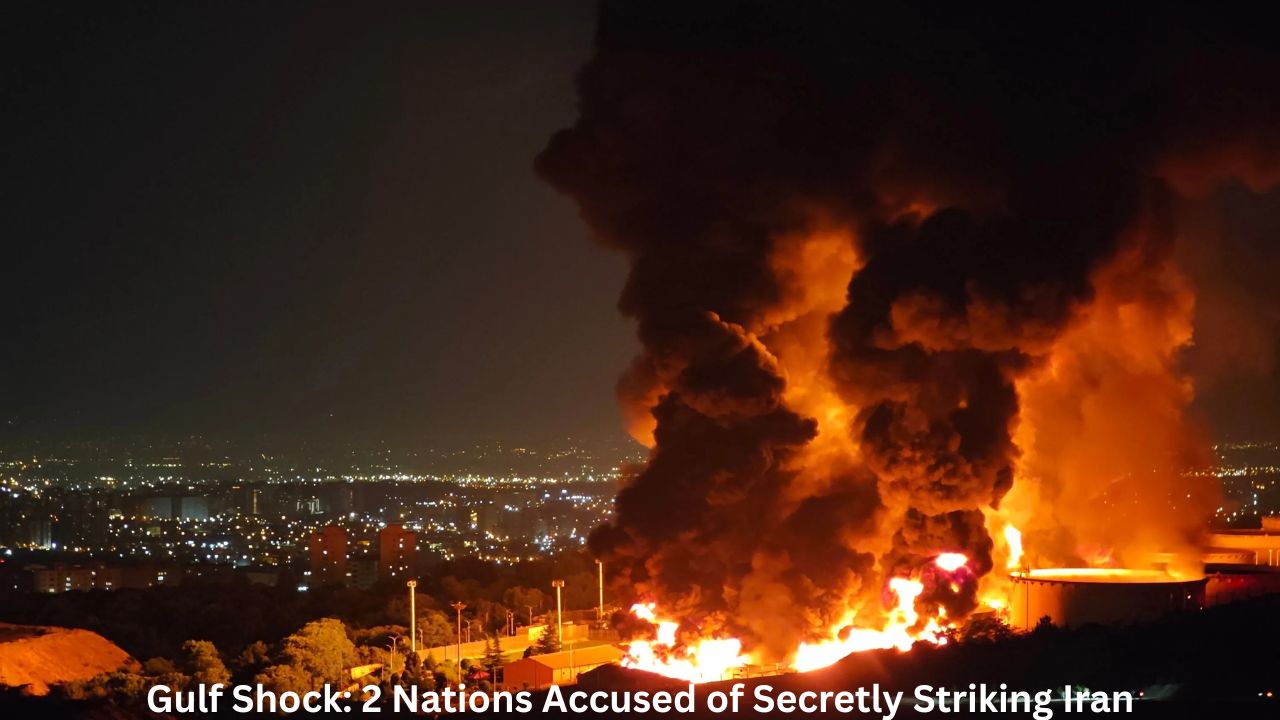
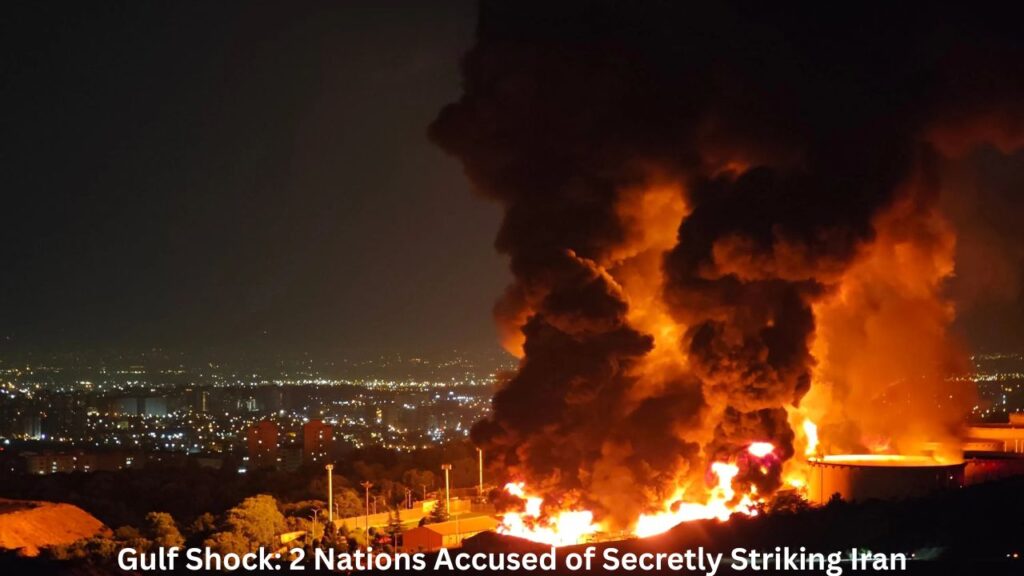
Gulf Shock: 2 Nations Accused of Secretly Striking Iran earlier this month with alleged UAE intelligence support. A bombshell report from The Wall Street Journal has thrown a new and contested twist into the widening Middle East conflict, claiming that Kuwait and Bahrain secretly launched fighter jets against targets inside Iran earlier this month, marking the first time either Gulf state has taken direct military action against Tehran.
The report says the operation was backed by intelligence and defensive air cover from the United Arab Emirates.
Within hours, Kuwait issued a forceful, unambiguous denial, setting up a rare public standoff between one of America’s most respected financial newspapers and a sovereign Gulf government. The dispute lands at a delicate moment.
The wider US-Iran conflict has now stretched past 13 consecutive nights of American strikes, a ceasefire framework agreed in June has largely unraveled, and Gulf states that once tried to stay on the sidelines are increasingly being drawn into the fighting, whether by choice or by Iranian missiles landing on their soil.
Gulf Shock: 2 Nations Accused of Secretly Striking Iran
The WSJ Report: What It Claims Happened
According to the Wall Street Journal, citing people familiar with the matter, Kuwaiti and Bahraini warplanes struck Iranian drone and missile storage depots, along with other military sites, earlier this month.
The strikes were reportedly carried out in direct retaliation after both countries came under sustained Iranian missile and drone attacks.
Neither Kuwait nor Bahrain operates anything close to a large air force — both fly relatively modest fleets of American- and European-made aircraft — but officials cited in the report said the two governments concluded they could no longer absorb Iranian strikes without responding.
If accurate, the operation would represent a striking departure from the cautious, largely defensive posture both nations have maintained throughout the conflict, and a meaningful broadening of direct Gulf Arab involvement in the war against Iran.
UAE’s Alleged Support Role
Central to the WSJ’s account is the claimed role of the UAE, which the report says provided targeting intelligence and defensive air cover for the operation.
The UAE took a considerably more aggressive posture earlier in the conflict, launching dozens of its own strikes on Iranian targets alongside Saudi Arabia in the war’s opening days, before Riyadh pivoted toward supporting Pakistani-led mediation efforts.
The UAE’s Foreign Ministry has publicly called for de-escalation and the full reopening of the Strait of Hormuz, while separately condemning Iranian attacks on both Kuwait and Bahrain — a position consistent with, but not confirmation of, the alleged intelligence-sharing role described in the WSJ report.
Kuwait Fires Back: “Entirely False”
Kuwait’s response to the report was swift and unequivocal.
The country’s ambassador to the United States, Sheikha Al-Zain Al-Sabah, sent an official letter to the Wall Street Journal’s editorial board rejecting the claims outright.
According to Kuwait’s state news agency KUNA, the ambassador described the report as “utterly and completely baseless,” stressing that Kuwait had not participated in any military operations against Iran and had not permitted its territory, airspace, or territorial waters to be used to launch offensive strikes against any neighboring country.
Al-Sabah went further, framing Kuwait’s position throughout the broader regional crisis as consistently rooted in respect for international law, protection of state sovereignty, and a preference for resolving disputes through dialogue rather than escalation.
She also called on the Journal to formally correct its reporting, arguing that accuracy during periods of heightened regional tension is essential not just for journalistic integrity but for regional stability itself.
Bahrain’s Silence Speaks Volumes
Unlike Kuwait, Bahrain has offered no public comment at all, neither confirming nor denying its involvement.
Government spokespeople for Manama reportedly did not respond to the Journal’s requests for comment before publication, and that silence has persisted since the story broke.
Analysts have noted that Bahrain’s quiet could mean any number of things:
genuine non-involvement, deliberate operational secrecy around a real mission, or simply institutional caution about wading into a story that has already triggered one government’s public fury.
Without independent confirmation from flight-tracking data, satellite imagery, or Iranian officials, there’s currently no way to resolve which explanation is correct.
Why This Claim Matters: The Bigger Picture in the Gulf
Whether or not the specific strikes described by the Journal actually took place, the underlying tension driving the story is very real.
Kuwait and Bahrain have each faced direct Iranian attacks in recent weeks, a marked shift from earlier in the conflict, when Tehran concentrated most of its retaliation on the larger, wealthier Gulf powers of Saudi Arabia and the UAE.
Kuwait and Bahrain’s Exposure to Iranian Attacks
Geography has made both countries especially vulnerable.
Bahrain is a small island kingdom connected to the outside world only by a causeway to Saudi Arabia, and it hosts the US Navy’s 5th Fleet, making it a natural target for anyone seeking to strike at American military presence in the region.
Kuwait, sitting at the northern tip of the Strait of Hormuz and bordered by Iraq, hosts thousands of American service members across several facilities.
Kuwait’s Foreign Ministry has said Iran struck a power-generation and water-desalination facility on its territory, calling the attack on civilian infrastructure a dangerous escalation and a violation of international law.
Iran has also claimed drone strikes against US installations inside Kuwait, including facilities identified as Camp Doha, Camp Udairi, and Camp Arifjan, as well as the Ali Al Salem Air Base, though these claims have not been independently verified.
Bahrain, for its part, activated air raid sirens across the kingdom over the weekend, urging residents to shelter in designated safe areas.
A War That’s Already 13 Nights Old
The disputed Gulf strikes come against the backdrop of an already extraordinary run of US military action against Iran.
US Central Command confirmed that Friday marked the 13th consecutive night of American strikes, targeting Iranian military command centers, drone storage facilities, communications networks, coastal surveillance sites, and maritime capabilities in an effort to protect commercial shipping through the Strait of Hormuz.
A ceasefire extension reached in June has largely collapsed, with Iran continuing to target Gulf states and vessels transiting the strait, and Tehran has repeatedly warned that any facility used by American forces to strike Iranian territory will be treated as a legitimate target for retaliation.
The UAE’s Wider Role in the Conflict
The UAE’s alleged involvement in supporting Kuwaiti and Bahraini operations, even if unconfirmed, fits a broader pattern of Emirati engagement in the conflict.
Abu Dhabi took the most aggressive stance of any Gulf state early in the war, conducting dozens of strikes against Iranian targets as it came under sustained missile and drone fire itself.
That contrasts with the more cautious approach taken by Oman and Qatar, both of which have spent years trying to maintain balanced relationships with Tehran and the West, and have shown little appetite for direct confrontation with Iran throughout the current crisis.
Markets and Region on Edge
The uncertainty created by dueling claims and denials has itself become a source of market anxiety.
With no independent, third-party confirmation available to settle the dispute, financial markets — already jittery over months of Gulf tension and Strait of Hormuz disruptions — have been left to price in genuine uncertainty rather than a clear-cut fact.
A credible confirmation of the strikes would likely be read as a significant escalation, while a convincing debunking could offer at least modest relief.
For now, traders, diplomats, and regional watchers alike are left waiting for evidence neither side has yet produced.
What We Still Don’t Know
Even setting aside the dispute over whether the strikes happened, the Journal’s original report left significant gaps.
No details have emerged about how many aircraft may have been involved, what munitions were used, what flight paths were taken, or what damage, if any, resulted from the alleged strikes.
Without that operational detail, and without any independent verification from satellite imagery, flight-tracking services, or Iranian statements acknowledging an attack, the story remains firmly in contested territory — serious enough to warrant coverage, but far from settled fact.
Conclusion
The clash between the Wall Street Journal’s reporting and Kuwait’s categorical denial captures something larger about the fog surrounding this stage of the Iran conflict:
even basic questions about who is fighting whom have become genuinely difficult to answer with confidence.
What is clear is that Kuwait and Bahrain have both endured real Iranian attacks in recent weeks, that regional tensions show no sign of easing, and that the broader war has now stretched well beyond two weeks of nightly strikes with no resolution in sight.
Whether or not Kuwaiti and Bahraini jets actually crossed into Iranian airspace this month, the fact that such a claim is even plausible says a great deal about how far this conflict has already spread — and how much further it could still go before any lasting de-escalation takes hold.
Also Read: 7 Critical Facts About Iran’s Strait of Hormuz Warning to Oil Tankers