
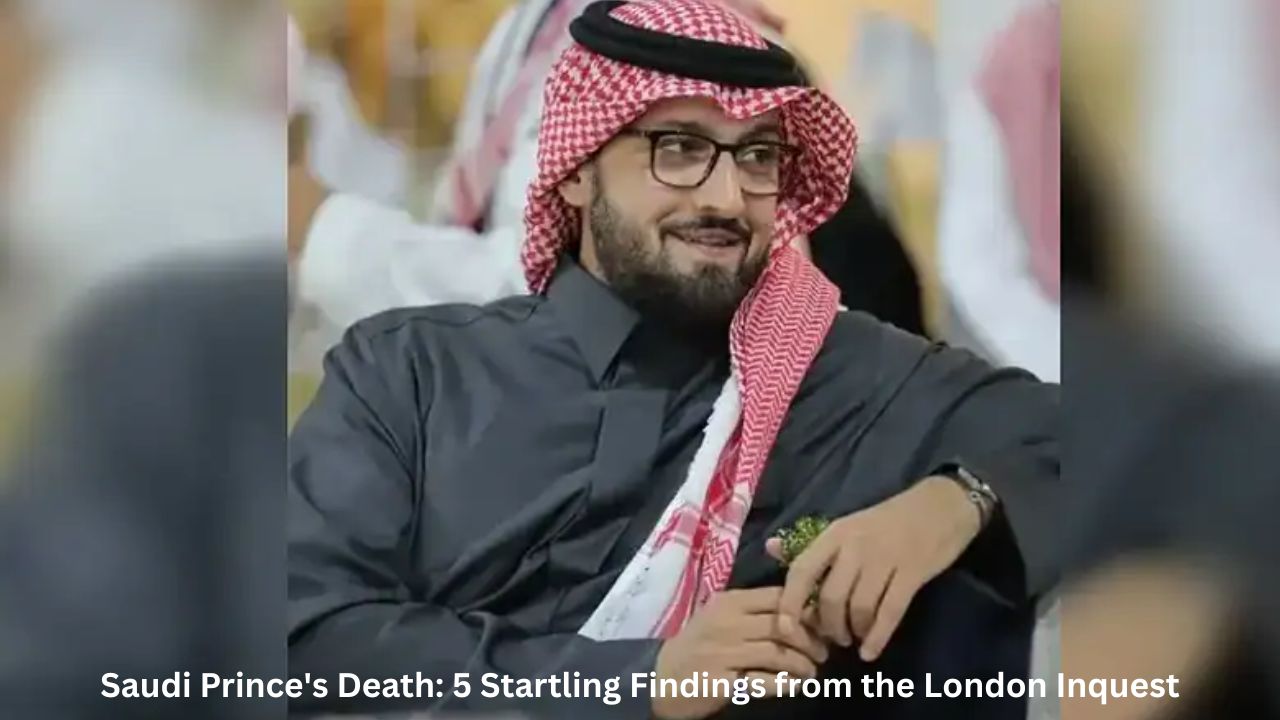
Saudi Prince’s Death: 5 Startling Findings from the London Inquest that ruled Prince Abdullah bin Fahad Al Saud died of cardiac arrest. A UK coroner’s inquest has finally answered the questions that have swirled for months around the death of a young member of the Saudi royal family in a London hotel.
Investigators concluded that Abdullah bin Fahad bin Abdullah bin Abdulaziz bin Jalawi Al Saud, 29, died of cardiac arrest brought on by a dangerous combination of alcohol and multiple drugs, ending months of speculation that had ranged from foul play to suicide.
The case has drawn attention well beyond Saudi Arabia and the United Kingdom, in part because it involves a member of one of the world’s most prominent royal families, and in part because it puts a spotlight on the very real dangers of mixing alcohol with sedative medications and recreational drugs — a risk that public health experts warn about in every country, regardless of wealth or status. Here is what the inquest actually found, and what it means.
Saudi Prince’s Death: 5 Startling Findings from the London Inquest
Who Was Prince Abdullah bin Fahad Al Saud
Prince Abdullah bin Fahad bin Abdullah bin Abdulaziz bin Jalawi Al Saud was a member of the Saudi royal family, connected to the kingdom’s current ruling line.
He had been staying at a hotel in the upscale Kensington district of London for what was intended to be a week-long visit when he was found unresponsive.
His death was first reported months ago, but it took a formal UK inquest — the legal process used in England and Wales to establish the cause of an unexplained or sudden death — to determine exactly what happened.
What the Inquest Found
According to evidence presented in court, toxicology testing showed a combination of substances in the prince’s system at the time of his death, including alcohol, the central nervous system depressant GHB (gamma-hydroxybutyrate), cannabis, the anti-anxiety medication Xanax, and other sedative drugs.
The coroner concluded that it was the interaction of these substances, rather than any single one, that triggered the fatal cardiac arrest.
A Lethal Toxicology Report
Court evidence reportedly put the prince’s blood alcohol level at more than double the amount that some medical guidelines associate with a risk of coma on its own, with investigators noting it was several times over the UK’s legal drink-driving limit — a marker used here purely to illustrate the scale of intoxication involved, not as a measure of the drink-driving offence itself.
Combined with GHB, Xanax, and cannabis in his system, health professionals say this kind of mix places extreme strain on the heart and breathing, and is widely recognised in medical literature as capable of causing sudden cardiac arrest even in an otherwise healthy young adult.
The Prince’s Private Battle With Addiction
Perhaps the most poignant detail to emerge from the inquest is that the prince had reportedly been receiving treatment for substance addiction in the months before his death.
He is said to have completed a period of detoxification and followed it with a stay at a rehabilitation clinic, where he was also treated for an unrelated respiratory infection.
By most accounts, he had appeared to be making progress in his recovery in the weeks before his London trip.
His death, according to reporting on the case, appears to reflect a relapse — a pattern that addiction specialists say is tragically common and can be especially dangerous, since a body that has reduced its tolerance during treatment is far more vulnerable to a return to previous levels of substance use.
Medical researchers who study addiction recovery frequently point out that the period immediately following treatment is often the highest-risk window, precisely because a person’s physical tolerance has dropped even if their psychological cravings have not.
A dose that might once have felt manageable can, after a period of abstinence, place a far greater strain on the body than the person expects.
That gap between expectation and physical reality is one of the leading explanations offered for why relapse deaths, tragically, are not uncommon even among people who have genuinely engaged with treatment programmes.
No Evidence of Foul Play
For months after the prince’s death, unconfirmed reports and online speculation suggested darker possibilities, including the theory that he may have taken his own life or that a third party could have been involved. The inquest put those theories to rest.
Investigators said CCTV footage and other evidence from the hotel showed no indication of anyone else being involved in the circumstances leading up to his death, and the medical evidence pointed clearly to an accidental cause rooted in the interaction of the substances found in his system.
Verdict: Misadventure
Coroners in the UK system return one of a limited set of formal conclusions at the end of an inquest, and in this case the finding is understood to be one of misadventure — a legal term used when a death results unintentionally from a risk that the person voluntarily took, as opposed to an intentional act or a death caused by someone else.
That distinction matters both legally and for the family, drawing a clear line between an accidental tragedy and either self-harm or a criminal act.
How the Saudi Royal Family Responded
Following the conclusion of the inquest, the Saudi Royal Court formally acknowledged the prince’s death, with funeral prayers held at the Imam Turki bin Abdullah Mosque in Riyadh, one of the capital’s prominent mosques often used for state and royal family services.
The public acknowledgment, coming after the private and often opaque handling of such matters within royal families, reflects an effort to bring closure to what had become an increasingly public and speculative story in international media.
Deaths involving senior royal or political families often attract intense scrutiny precisely because so little official information is typically released, leaving a vacuum that speculation tends to fill.
In this instance, the involvement of the UK’s independent coronial system — a process separate from both the Saudi state and the family itself — meant that the eventual findings carried a degree of independent verification that purely internal statements might not have offered international observers.
A Wider Conversation About Substance Misuse
While the case involves a high-profile royal family, medical experts say the underlying danger is universal and not limited by wealth, status, or nationality.
Mixing alcohol with sedative medications or other depressant drugs is one of the most common causes of accidental overdose deaths worldwide, precisely because each substance amplifies the sedating and breathing-suppressing effects of the others.
Public health bodies in multiple countries have long warned that this kind of combination can be fatal even for people who have used the individual substances safely before, because the combined effect on the heart and respiratory system is unpredictable and can escalate quickly.
The case has also renewed attention on the pressures facing young members of prominent families who battle addiction, often privately, amid intense public scrutiny and limited room to be seen struggling.
Addiction specialists frequently note that stigma, secrecy, and the pressure to maintain a public image can make it harder for people in high-profile positions to seek and sustain treatment, even when resources are readily available to them.
What This Means Globally
For readers around the world, this story resonates beyond royal intrigue. It is a reminder that addiction and its risks do not respect borders, wealth, or family lineage, and that the dangers of combining alcohol with sedative drugs are a genuine global public health concern, not a niche issue.
The case is likely to be referenced in future discussions of substance misuse awareness, particularly regarding relapse risk after treatment — a topic that healthcare systems in many countries are still working to address more effectively.
It also illustrates how modern inquest and toxicology processes in countries like the UK provide transparency in high-profile deaths that might otherwise remain shrouded in rumour, offering families, the public, and international observers a factual account rather than continued speculation.
Conclusion
The inquest into the death of Prince Abdullah bin Fahad Al Saud brings a measure of clarity to a case that had generated months of speculation across international media.
The official finding — cardiac arrest caused by a dangerous combination of alcohol and multiple drugs, with no evidence of foul play — closes one chapter of the story while opening another about the pressures of addiction, relapse, and recovery, even among those with access to the best available care.
As his family mourns privately following a public acknowledgment from the Saudi Royal Court, the case stands as a sober reminder of how quickly a battle with substance misuse can turn fatal, regardless of who is fighting it.
If you or someone you know is struggling with substance misuse or addiction, support is available through local health services and addiction helplines in your country.
Also Read: 7 Explosive Impacts of El Mencho’s Death on the Global Drug Trade
Also Read: How murder by a drunken prince made Saudi Arabia go dry for 70 years
Related Posts:
- 9 Powerful Signals Behind Saudi Arabia Honoring…

- Saudi Arabia's 'Sleeping Prince' Dies After 20-Year Coma

- Prince Harry Reunites with King Charles After…

- Donald Trump’s Lavish UK State Visit: From Kate…

- 11 Powerful Shifts in New US Dietary Guidelines That…

- Trump’s 2025 Health Check — Cardiac Age 14 Years Younger
