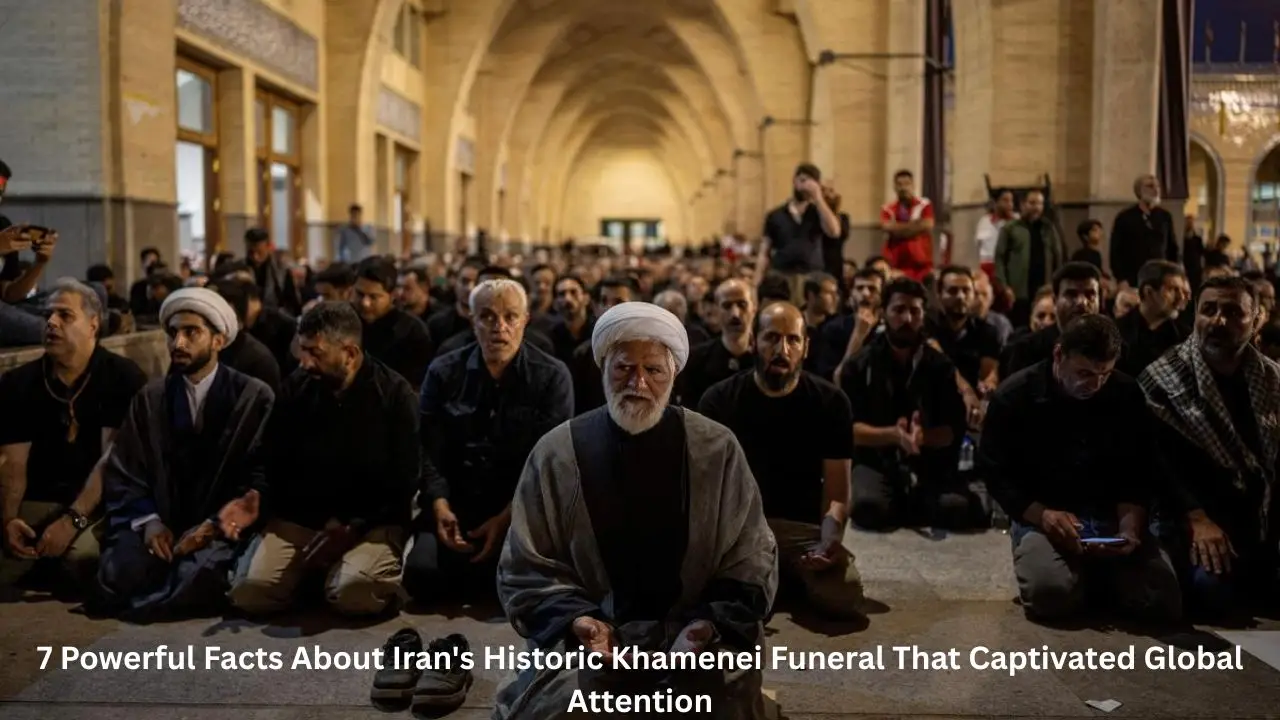
7 Powerful Facts About Iran’s Historic Khamenei Funeral That Captivated Global Attention amid Donald Trump’s warning and regional tensions. Iran is witnessing one of the most significant state ceremonies in its modern history following the death of Supreme Leader Ayatollah Ali Khamenei.
Millions of mourners have gathered across multiple cities, foreign delegations have arrived from around the world, and the event has become far more than a funeral—it is now a defining geopolitical moment for the Middle East.
Stretching over several days and across numerous religious sites in Iran and Iraq, the funeral ceremonies have unfolded under extraordinary security measures amid continuing tensions between Iran, Israel, and the United States.
The proceedings have also generated intense international attention after U.S. President Donald Trump made controversial remarks about Iran’s leadership during the mourning period.
Here are seven major facts explaining why this funeral has become one of the most closely watched global events of 2026.
7 Powerful Facts About Iran’s Historic Khamenei Funeral That Captivated Global Attention
1. One of the Largest State Funerals in Modern Iranian History
Iran has organized an unprecedented week-long funeral procession honoring Ali Khamenei, who led the Islamic Republic for more than three decades.
The ceremonies began in Tehran before moving through important Shiite religious centers including Qom, Najaf and Karbala, ultimately concluding with Khamenei’s burial in Mashhad, his birthplace and one of Iran’s holiest cities.
State media described the event as a national farewell involving millions of participants, with extensive public infrastructure, transportation arrangements, food distribution and security deployed throughout the ceremonies.
Officials say the procession reflects both religious traditions and national mourning following Khamenei’s death during the recent Iran-Israel-U.S. conflict.
2. Massive Crowds Filled Tehran Despite Global Tensions
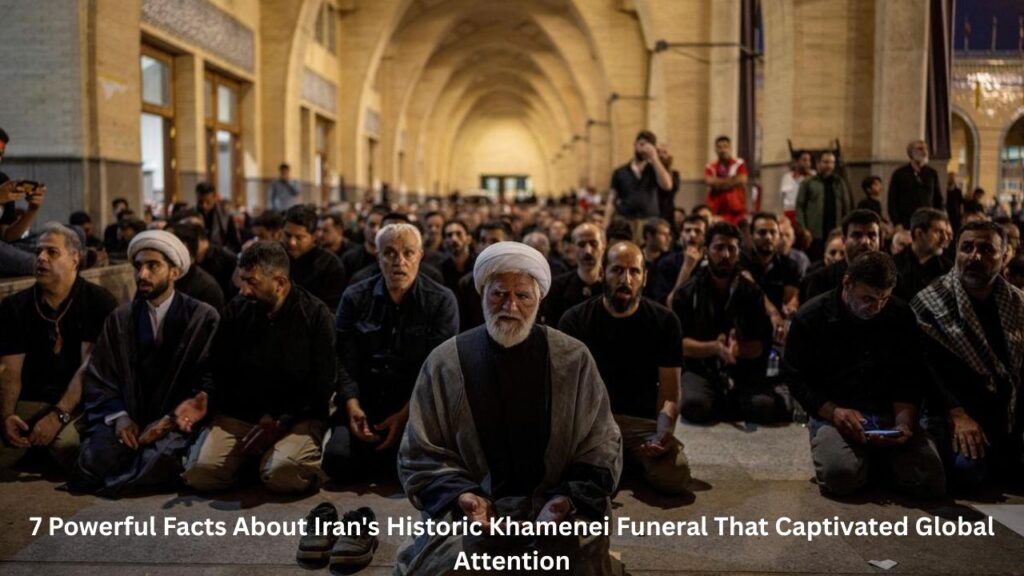
Images from Tehran showed enormous crowds dressed in black, carrying Iranian flags, portraits of Khamenei and religious banners.
Thousands gathered at the Imam Khomeini Grand Mosalla prayer complex while others lined major streets waiting for the funeral procession.
Many participants described attending as both a religious obligation and a patriotic duty.
Observers note that the funeral became a highly symbolic demonstration of national unity following months of conflict and instability, although analysts caution that the size of state-organized events does not necessarily reflect the views of every Iranian citizen.
3. Trump’s “One Shot” Warning Sparked International Debate
The funeral drew additional global attention after U.S. President Donald Trump said that Iran’s senior leadership gathered at the funeral could theoretically be eliminated with “one shot.”
Trump added that such military action would not be taken because it would eliminate potential negotiating partners for future diplomatic talks.
He also remarked that he was surprised to see many Iranians mourning Khamenei, suggesting he had expected greater public opposition.
His comments immediately generated widespread international discussion and highlighted the continuing tensions between Washington and Tehran despite an ongoing pause in hostilities.
4. Extraordinary Security Measures Dominated the Funeral
Security around the funeral reached levels rarely seen in Iran.
Authorities deployed large numbers of military personnel, police officers and intelligence units throughout Tehran and along the procession route.
The heightened security reflected concerns about potential attacks, sabotage or unrest during one of the country’s most sensitive political moments.
Road closures, restricted access zones and extensive surveillance were reported throughout the ceremonies as officials sought to ensure the funeral proceeded without incident.
5. Mojtaba Khamenei’s Role Remains Closely Watched
One of the biggest questions surrounding the funeral has been the role of Ali Khamenei’s son, Mojtaba Khamenei.
Reports indicate he has remained largely out of public view due to security concerns after reportedly being injured during the attack that killed his father.
His limited public visibility has fueled speculation regarding Iran’s future leadership and succession, although Iranian authorities continue to project institutional continuity.
Analysts say the funeral itself has become an opportunity for Iran’s political establishment to demonstrate stability during a period of regional uncertainty.
6. International Delegations Highlight Iran’s Diplomatic Importance
Despite international sanctions and years of geopolitical tensions, the funeral attracted numerous foreign delegations and religious representatives.
Officials and dignitaries from several countries attended ceremonies or sent condolences, reflecting Iran’s continued diplomatic relationships across parts of Asia, the Middle East and beyond.
For many observers, the attendance underscored that Iran remains an influential regional power whose political developments continue to affect global diplomacy, energy markets and regional security.
The presence of foreign representatives also emphasized that the funeral carried significance beyond Iran’s domestic politics.
7. The Funeral Carries Deep Religious and Political Symbolism
For many Shiite Muslims, the funeral has drawn powerful historical parallels with the tradition of martyrdom associated with Imam Hussain and Karbala.
Religious ceremonies have emphasized sacrifice, resistance and continuity of leadership—core themes in Shiite political and religious identity.
Iranian officials have used the commemorations to reinforce messages of national resilience following the recent conflict, while mourners repeatedly called for unity and remembrance.
The ceremonies therefore represent not only the burial of a longtime leader but also an attempt to project continuity for the Islamic Republic during a period of profound regional change.
Why the World Is Closely Watching
The funeral comes at an exceptionally sensitive geopolitical moment.
Although active fighting has paused, tensions between Iran, Israel and the United States remain extremely high.
Questions surrounding Iran’s future leadership, nuclear negotiations, regional alliances and security posture continue to influence diplomatic discussions across the Middle East.
Energy markets are also monitoring developments closely because of Iran’s strategic location and its influence over regional shipping routes.
The funeral therefore represents not only a major national event but also a significant international diplomatic milestone.
What Happens Next?
Following the conclusion of the funeral ceremonies in Mashhad, attention is expected to shift toward several critical developments:
- Iran’s long-term political leadership and succession.
- The future of Iran-U.S. diplomatic negotiations.
- Regional security following the recent conflict.
- Iran’s relations with neighboring countries and global powers.
- The broader strategic balance across the Middle East.
How Tehran manages these issues in the coming weeks will likely shape regional politics for years to come.
Conclusion
Ali Khamenei’s funeral has evolved into one of the defining international events of 2026. Massive public participation, extensive security operations, international diplomatic attendance and renewed geopolitical tensions have transformed what began as a state funeral into a major global news story.
At the same time, Donald Trump’s controversial remarks, ongoing questions surrounding Iran’s future leadership and the uncertain path of regional diplomacy ensure that international attention will remain firmly focused on Tehran long after the funeral concludes.
As Iran enters a new political chapter, the legacy of Ali Khamenei—and the future direction of the Islamic Republic—will continue to influence the Middle East and international relations for years ahead.
Also Read: 7 Powerful Facts About Ayatollah Ali Khamenei’s State Funeral and Global Response
Also Read: Three sons of Iran’s slain leader Khamenei appear at funeral, not his successor
Related Posts:
- 7 Powerful Facts About Ayatollah Ali Khamenei’s…
- 3 Explosive Conditions Iran Sets to End War with US…
- 7 Heartbreaking Facts About Venezuela's Earthquake Disaster
- 10 Explosive Warnings as Donald Trump Calls Iran…
- 5 Major Takeaways from the US Supreme Court's…

- 9 Explosive Claims as Trump Says US Winning Iran War