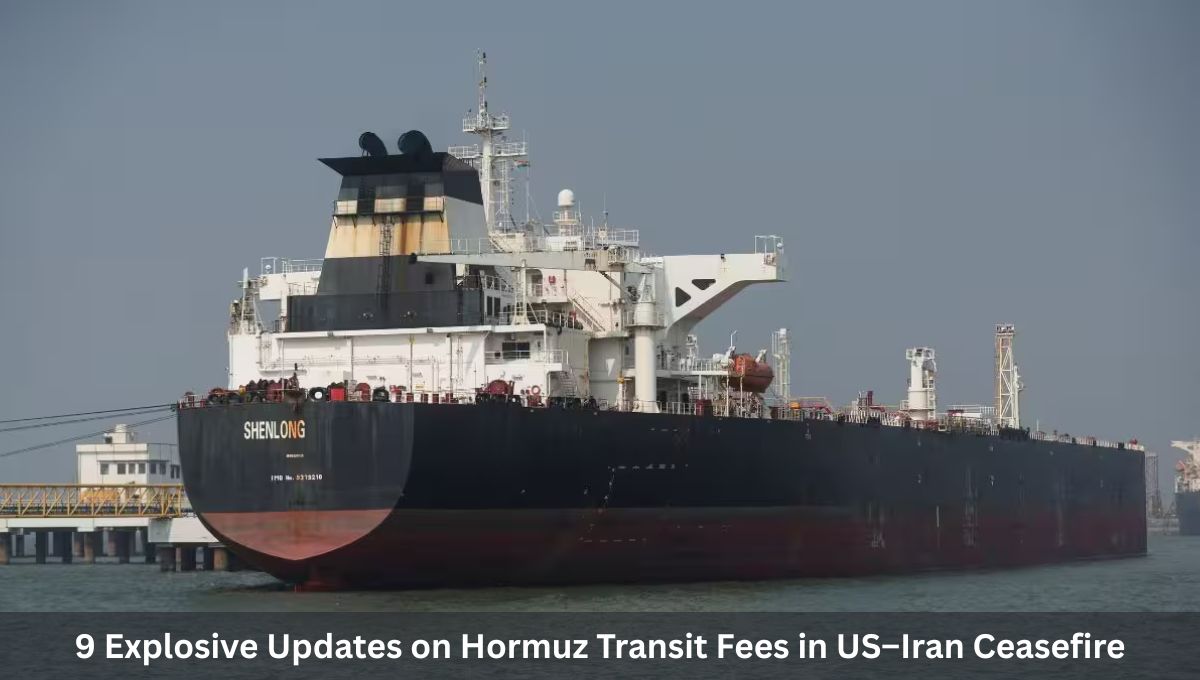
9 Explosive Updates on Hormuz Transit Fees in US–Iran Ceasefire – A game-changing proposal.
A controversial and potentially precedent-setting proposal has emerged from the fragile ceasefire between the United States and Iran:
the possibility of transit fees on ships passing through the Strait of Hormuz.
Under the two-week truce framework announced by Donald Trump, Iran—alongside Oman—may begin charging vessels for passage through one of the world’s most critical maritime chokepoints.
This move, if implemented, could reshape global shipping economics, challenge international maritime law, and trigger geopolitical tensions far beyond the Middle East.
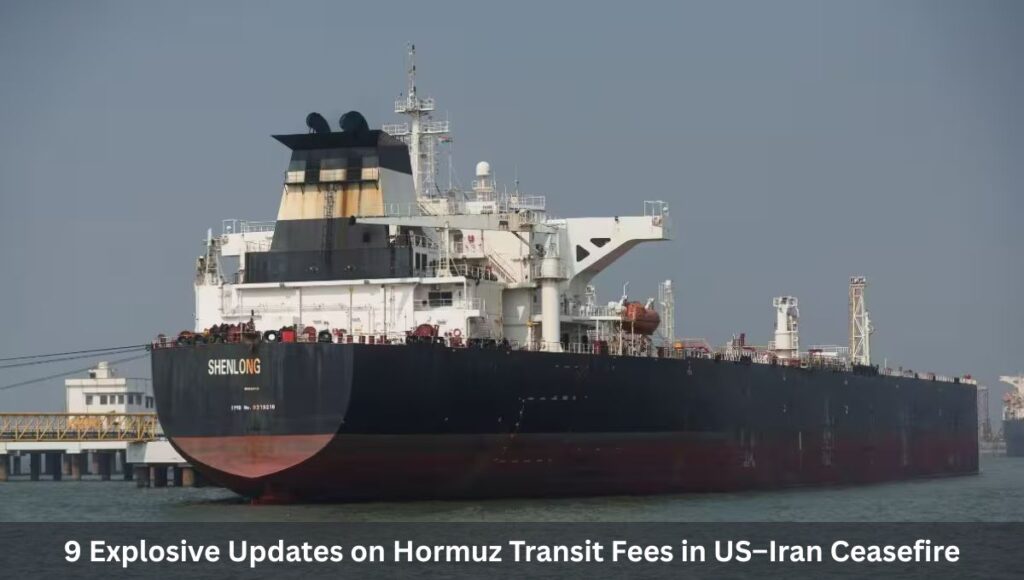
9 Explosive Updates on Hormuz Transit Fees in US–Iran Ceasefire
Why the Strait of Hormuz Matters So Much
The Strait of Hormuz is not just another shipping route—it is the backbone of the global energy system.
- Roughly 20% of the world’s oil supply passes through it
- Connects the Persian Gulf to the Indian Ocean
- Essential for exports from major oil producers like Saudi Arabia, Iraq, and the UAE
At just 34 km wide, it is both geographically narrow and economically indispensable.
Any disruption—or monetisation—of this route sends immediate shockwaves across global markets.
What the Transit Fee Proposal Includes
According to multiple reports, the ceasefire framework allows Iran and Oman to impose fees on vessels transiting the strait.
Key Details of the Proposed Fee System
- Fees may vary based on:
- Ship type
- Cargo (especially oil and LNG)
- Operational conditions
- Some reports suggest charges could reach up to $2 million per vessel
- Payments may be shared between Iran and Oman
- Transit would be “controlled” and coordinated with Iranian armed forces
Iran has indicated that the funds would be used for post-war reconstruction, following extensive damage to infrastructure.
A Historic Shift in Maritime Practice
Traditionally, no country has charged transit fees for passage through natural international straits like Hormuz.
This proposal represents a major departure from established norms.
Comparison with Other Global Waterways
- Suez Canal – Charges fees (man-made waterway)
- Panama Canal – Charges fees (man-made waterway)
- Singapore Strait – Free passage
- Turkish Straits – Limited service-based charges only
Unlike canals, natural straits are governed differently under international law.
What International Law Says
The legal framework governing such waterways comes from the United Nations Convention on the Law of the Sea.
Key Legal Principles
- Countries cannot charge fees simply for passage
- They may impose limited service-based charges:
- Pilotage
- Tug assistance
- Port services
- Fees must be:
- Non-discriminatory
- Reasonable
- Service-related
This raises a critical question:
Would Iran’s proposed transit fees violate international law?
Most legal experts suggest that broad transit tolls would likely breach UNCLOS provisions, unless framed as legitimate service charges.
Iran’s Strategic Rationale
Iran has framed the proposal not as a restriction, but as a structured system to “facilitate” safe transit.
Officials, including Deputy Foreign Minister Kazem Gharibabadi, have indicated that:
- A formal protocol is being drafted with Oman
- Ships may require permits or licences
- Coordination aims to ensure security and order
From Tehran’s perspective, the plan serves multiple goals:
- Generate reconstruction funding
- Assert sovereignty and control
- Leverage strategic influence over global trade
Oman’s Role in the Plan
Oman, which shares control of the strait, is a critical partner in the proposal.
Its involvement provides:
- Diplomatic legitimacy
- Operational feasibility
- Regional balance
However, Muscat has remained cautious, signaling discussions rather than full endorsement.
Global Opposition and Concerns
The proposal has already drawn resistance from key Gulf nations.
Regional Reactions
Countries like the UAE and Qatar have:
- Opposed any transit fees
- Called for free and open navigation
- Warned against politicising global trade routes
Their concerns are clear:
Any monetisation of Hormuz could set a dangerous precedent.
Impact on Global Oil Markets
Even the possibility of transit fees has significant implications.
Immediate Effects
- Oil prices surged during the conflict
- Markets stabilised after ceasefire announcement
- Uncertainty remains high
Long-Term Risks
If fees are implemented:
- Shipping costs could rise sharply
- Energy prices may increase globally
- Inflationary pressures could intensify
- Supply chains may face disruption
For energy-importing nations, especially in Asia, the stakes are enormous.
The Ceasefire Context
The transit fee proposal is part of a broader two-week ceasefire agreement.
The deal includes:
- Suspension of US strikes
- Conditional reopening of the Strait of Hormuz
- Negotiations based on Iran’s 10-point proposal
Trump described the plan as a “workable basis” for peace, suggesting that most major disputes have already been addressed in principle.
A Fragile and Conditional Arrangement
Despite the ceasefire, tensions remain high.
Iran has made it clear:
- The war is not over
- The ceasefire is conditional
- Military readiness remains intact
Officials warned:
“Our hands remain upon the trigger.”
This underscores the fragility of the current arrangement.
What Happens Next?
Key Developments to Watch
- Negotiations in Islamabad
- Finalisation of the transit fee framework
- Legal challenges under UNCLOS
- Reactions from global shipping companies
- Possible countermeasures by major powers
The next two weeks will determine whether this proposal evolves into policy—or collapses under international pressure.
Could This Redefine Global Trade?
If implemented, the Hormuz transit fee system could:
- Set a precedent for other strategic chokepoints
- Shift control dynamics in global shipping
- Increase geopolitical leverage for coastal states
It may also trigger:
- Legal disputes
- Diplomatic confrontations
- Potential military responses
Conclusion: A High-Risk, High-Impact Proposal
The idea of charging transit fees in the Strait of Hormuz represents a bold and controversial shift in global maritime practice.
While framed as part of a ceasefire and reconstruction effort, it raises profound questions about:
- International law
- Economic stability
- Geopolitical power
For now, the proposal remains uncertain—caught between diplomacy, legality, and global resistance.
But one thing is clear:
What happens in the Strait of Hormuz over the next two weeks could reshape the future of global trade.
Also Read: 7 Explosive Claims: Iran Charging $2M to Ships in Strait of Hormuz Crisis
Also Read: “No Tolls Can Be Imposed For Crossing Hormuz”: Oman Contradicts Iran’s Demand