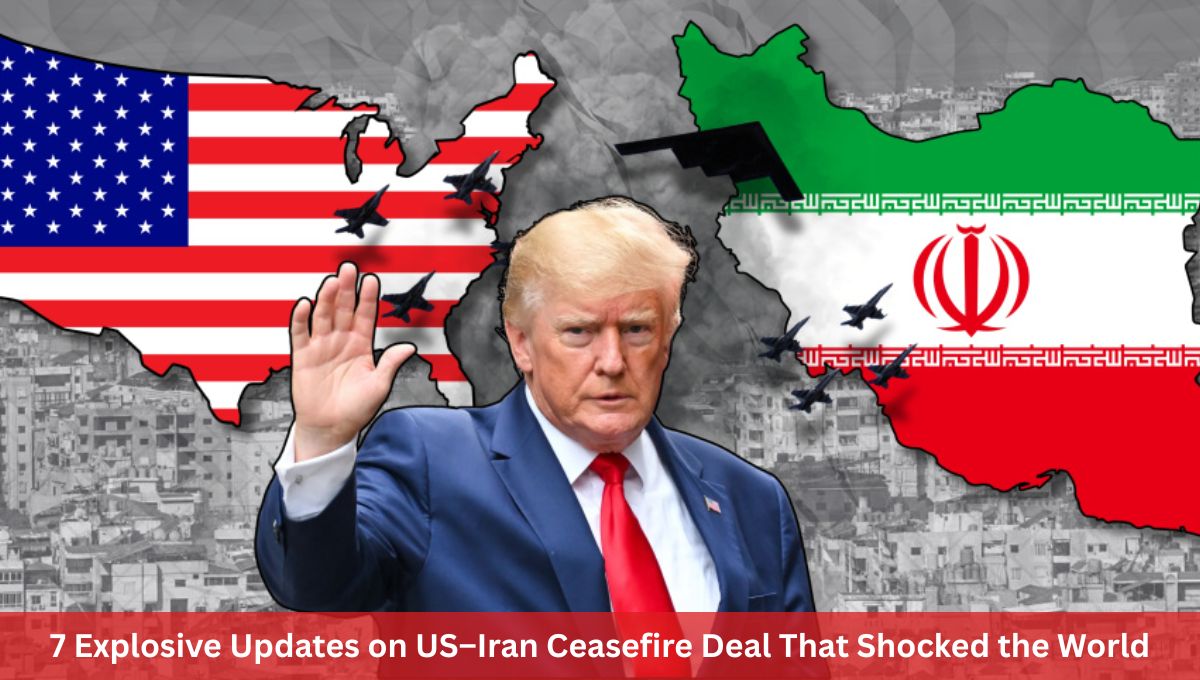
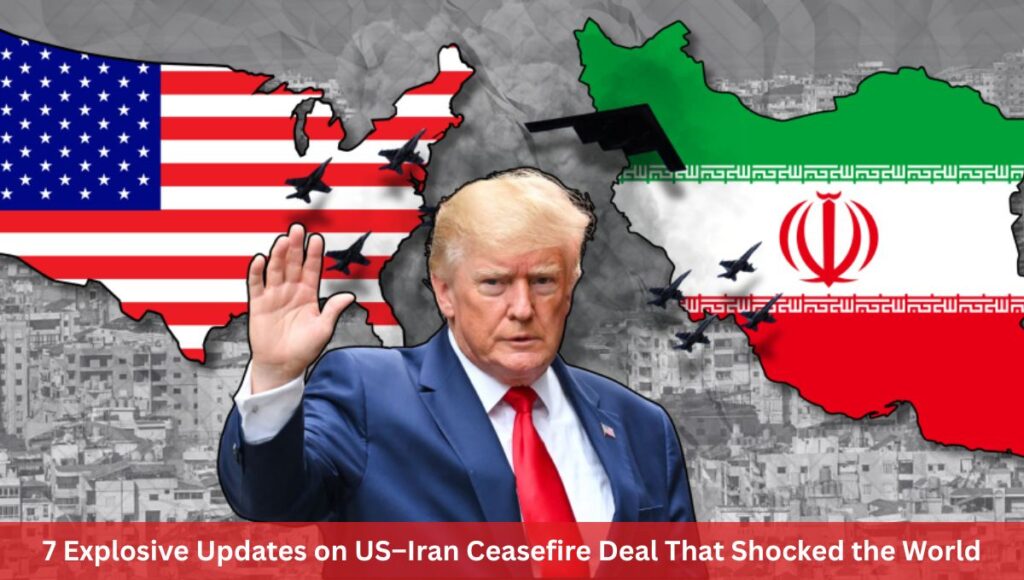
7 Explosive Updates on US–Iran Ceasefire Deal That Shocked the World – A dramatic pause in an escalating conflict. A fragile but consequential pause has emerged in one of the most dangerous geopolitical flashpoints in recent years. The United States and Iran have agreed to a two-week ceasefire, halting what appeared to be an imminent escalation into full-scale war.
The agreement, announced by Donald Trump, comes after days of aggressive rhetoric, military threats, and global anxiety centered around the strategically vital Strait of Hormuz.
This temporary truce—brokered with the help of Shehbaz Sharif—has created a narrow diplomatic window that could determine whether the region moves toward peace or plunges deeper into conflict.
7 Explosive Updates on US–Iran Ceasefire Deal That Shocked the World
What Triggered the Ceasefire?
The ceasefire was announced less than two hours before a self-imposed deadline set by Trump, who had warned of devastating strikes on Iranian infrastructure, including power plants and bridges.
His earlier statement—that “a whole civilization will die tonight”—sparked global outrage and raised alarms among legal experts, who warned such actions could constitute war crimes under international law.
However, in a sudden pivot, Trump declared a suspension of military action:
“Subject to the Islamic Republic of Iran agreeing to the COMPLETE, IMMEDIATE, and SAFE OPENING of the Strait of Hormuz, I agree to suspend the bombing.”
This marked a dramatic shift from escalation to de-escalation.
Iran’s Conditional Acceptance
Iran responded cautiously but constructively.
Foreign Minister Abbas Araghchi confirmed that Tehran would allow limited maritime passage through the Strait of Hormuz during the two-week period.
However, the ceasefire is not unconditional.
Iran emphasized:
- The pause is temporary
- Military readiness remains intact
- Any violation would trigger immediate retaliation
Iran’s leadership framed the ceasefire as a “strategic pause,” not a surrender or conclusion to the war.
The 10-Point Proposal at the Heart of Negotiations
At the center of the ceasefire lies Iran’s sweeping 10-point proposal, which it claims Washington has accepted as a basis for negotiations.
Key Elements of Iran’s Proposal
- Permanent cessation of war against Iran
- End to regional conflicts (Iraq, Lebanon, Yemen)
- Reopening of the Strait of Hormuz
- Guaranteed maritime security protocols
- Full sanctions relief
- Release of frozen Iranian assets
- Compensation for war damages
- Withdrawal of US forces from the region
- Recognition of Iran’s nuclear rights
- Commitment to no nuclear weapons development
These demands reflect not just ceasefire conditions but a broader restructuring of regional power dynamics.
Pakistan’s Crucial Mediation Role
The diplomatic breakthrough was largely credited to Pakistan’s leadership, particularly Prime Minister Shehbaz Sharif and Army Chief Asim Munir.
Islamabad is now set to host critical negotiations between US and Iranian delegations, signaling its emergence as a key diplomatic intermediary in global conflict resolution.
Political Reactions in the United States
The ceasefire triggered sharply divided reactions across the American political spectrum.
Democratic Leaders Criticize Trump
Senate Majority Leader Chuck Schumer welcomed the de-escalation but criticized Trump’s approach:
“I’m glad Trump backed off and is desperately searching for any sort of exit ramp.”
House Minority Leader Hakeem Jeffries called Trump’s behavior “unhinged” and lacking strategy.
Meanwhile, progressive leader Alexandria Ocasio-Cortez renewed calls for Trump’s removal, citing the risks posed by his decision-making.
Former Speaker Nancy Pelosi also joined calls for accountability.
Republican Responses Mixed but Supportive
Some Republicans backed Trump’s move.
Senator Rick Scott described it as:
“A strong first step toward peace through strength.”
Longtime Iran hawk Lindsey Graham supported diplomacy but warned against rewarding Iran.
Others, like Congressman Dan Crenshaw, defended Trump’s rhetoric as strategic:
“He speaks in terms of power—the only language adversaries understand.”
Global Stakes: Why the Strait of Hormuz Matters
The Strait of Hormuz is one of the most critical chokepoints in the global economy.
- Handles roughly 20% of global oil shipments
- Vital for energy supply chains
- Any disruption impacts global fuel prices and inflation
Iran’s control over the strait during the conflict amplified fears of a worldwide energy crisis.
The temporary reopening has already triggered relief in global markets, with oil prices dropping sharply after the announcement.
Conflicting Narratives and Uncertainty
Despite the ceasefire, significant ambiguity remains:
- Iran claims the US has accepted key demands
- Washington has not confirmed these claims
- Different versions of the proposal are circulating
Additionally, disagreements persist over whether the ceasefire applies to conflicts in Lebanon and other regions.
Israel’s position, represented by Prime Minister Benjamin Netanyahu, adds another layer of complexity, as it supports the pause in Iran but not necessarily in other theaters.
Human and Military Cost of the Conflict
The war has already inflicted heavy losses:
- Over 1,900 deaths in Iran
- More than 1,500 killed in Lebanon
- Millions displaced
- Casualties reported in Israel and among US forces
These figures underscore the urgency of a diplomatic resolution.
A Strategic Pause, Not Peace
Both sides have made it clear:
this ceasefire is temporary.
Iran warned:
“Our hands remain upon the trigger.”
Similarly, Trump framed the deal as an opportunity to finalize a broader agreement, not as an end to hostilities.
What Happens Next?
Key Developments to Watch
- Talks in Islamabad between US and Iranian officials
- Clarification of the 10-point proposal
- Compliance with Strait of Hormuz reopening
- Reactions from regional powers like Israel and Gulf states
- Market response to continued uncertainty
The next two weeks will be decisive.
Conclusion: A Narrow Window for Diplomacy
The US–Iran ceasefire represents a rare moment of restraint in an otherwise volatile conflict.
It reflects both the dangers of escalation and the enduring importance of diplomacy—even at the brink of war.
While the agreement has temporarily reduced tensions, it remains fragile, conditional, and deeply contested.
Whether this pause leads to lasting peace or merely delays further conflict will depend on what happens next in the negotiation rooms of Islamabad—and the strategic calculations of leaders on both sides.
For now, the world watches closely, aware that the stakes extend far beyond the Middle East.
Also Read: 11 Stark Warnings: Why the US Could Run Low on Missiles if the Iran War Continues
Related Posts:
- 3 Explosive Conditions Iran Sets to End War with US…
- 10 Explosive Warnings as Donald Trump Calls Iran…
- Pakistan PM Shehbaz Sharif Tells Putin: “We Respect…

- 10 Explosive Signals Trump Says Iran War Could End…
- 9 Explosive Claims as Trump Says US Winning Iran War

- Trump Stole the Show at 2025 Gaza Peace Summit in Egypt