
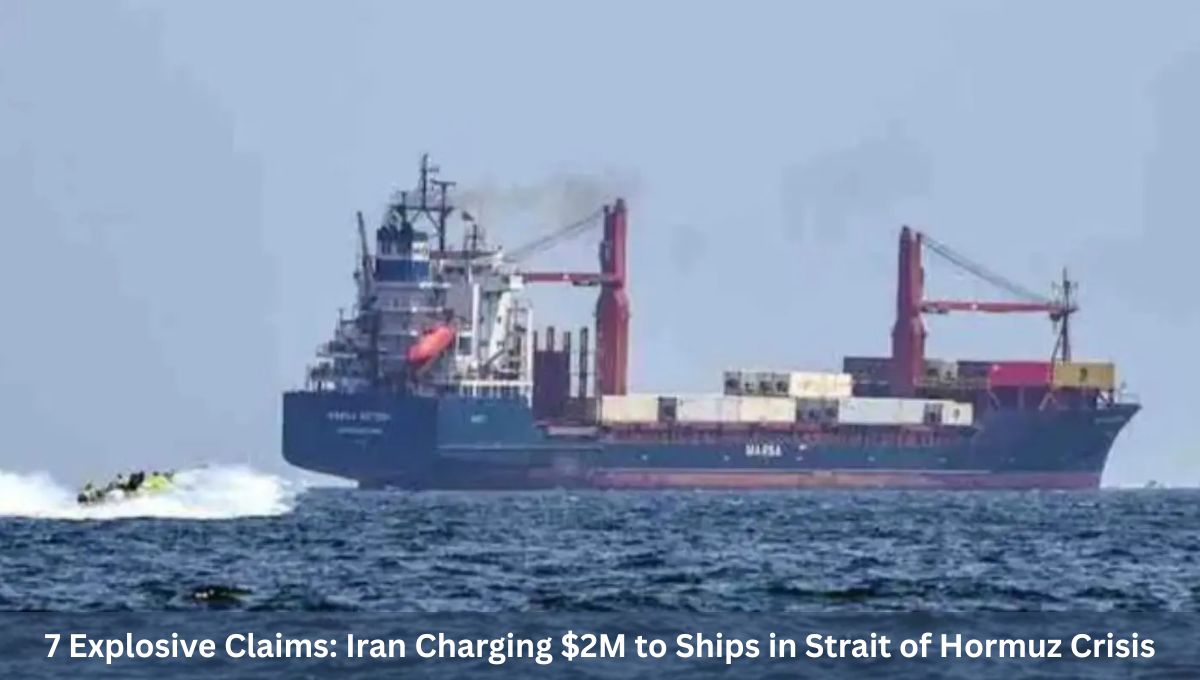
7 Explosive Claims: Iran Charging $2M to Ships in Strait of Hormuz Crisis — flashpoint in the global energy crisis. The escalating conflict in the Middle East has taken a dramatic economic turn, with reports claiming that Iran is charging as much as $2 million per vessel to allow safe passage through the Strait of Hormuz.
This development, if confirmed, signals a major shift in how Tehran is leveraging its geographic advantage amid its ongoing confrontation with the United States and Israel.
With global oil markets already under stress, the introduction of such transit fees could reshape international shipping, energy pricing, and geopolitical dynamics.
The Strait of Hormuz, through which roughly one-fifth of the world’s oil supply passes, has effectively become the epicenter of a growing global crisis.
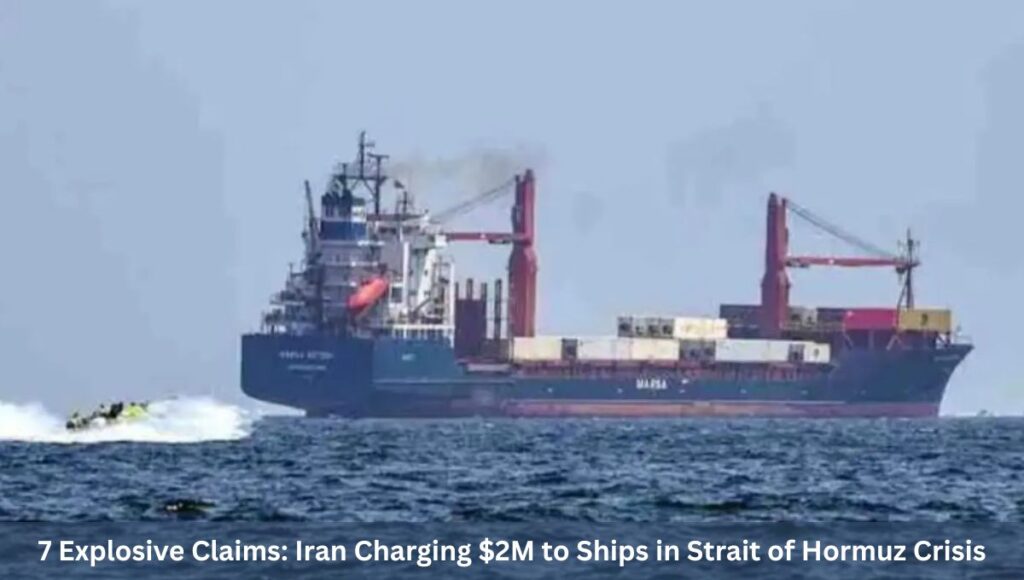
7 Explosive Claims: Iran Charging $2M to Ships in Strait of Hormuz Crisis
7 Explosive Developments in the Hormuz Crisis
1. Iran Reportedly Charging $2 Million Per Ship
According to reports citing Iranian lawmaker Alaeddin Boroujerdi, Tehran is imposing hefty transit fees on merchant vessels navigating the strait.
He described the move as:
- A reflection of Iran’s “authority”
- A necessary step given the “costs of war”
This marks a significant departure from established norms of free navigation in international waters.
2. Selective Access: Not All Ships Allowed
Iran has not fully closed the strait but is enforcing a selective blockade:
- Ships linked to the U.S. and Israel are restricted
- “Friendly” nations may be granted passage
- Vessels must coordinate directly with Iranian authorities
This selective approach gives Tehran strategic control without triggering a complete shutdown.
3. Global Oil Supply Under Threat
The Strait of Hormuz is critical to global energy flows:
- Around 20% of global oil passes through it
- A major share of liquefied natural gas (LNG) is transported via this route
Any disruption—even partial—has immediate consequences for:
- Fuel prices
- Supply chains
- Energy security
4. Oil Prices Surge Amid Uncertainty
The crisis has already triggered:
- Oil prices crossing $100 per barrel
- Volatility in global energy markets
- Rising inflation concerns worldwide
Analysts warn that continued disruption could lead to one of the worst energy shocks in decades.
5. Hundreds of Ships Stranded
Reports indicate:
- Over 300 vessels stuck inside the Persian Gulf
- More than 700 waiting outside in the Gulf of Oman
This bottleneck is:
- Delaying global trade
- Increasing shipping costs
- Straining supply chains
6. Iran Using Hormuz as Strategic Leverage
By controlling access to the strait, Iran is:
- Pressuring global powers
- Responding to military actions by the U.S. and Israel
- Strengthening its negotiating position
This transforms the waterway into both a military and economic weapon.
7. Rising Risk of Maritime Conflict
Recent developments include:
- Attacks on oil tankers
- Reports of explosive-laden boats
- Increased military presence in the region
The risk of escalation at sea is growing rapidly.
Why the Strait of Hormuz Is So Critical
The Strait of Hormuz is one of the most strategically important waterways in the world.
Key Facts:
- Connects the Persian Gulf to the Arabian Sea
- Only maritime route for Gulf oil exports
- Handles roughly 20 million barrels of oil per day
Its narrow geography makes it:
- Easy to control
- Difficult to secure
- Highly vulnerable during conflict
How Iran Is Enforcing Control
Iran appears to be using a mix of:
- Military patrols
- Drone surveillance
- Missile threats
- Direct warnings to shipping companies
Ships seeking passage must:
- Coordinate with Iranian authorities
- Avoid links to adversarial nations
- Possibly pay transit fees
This effectively places the strait under partial Iranian control.
Impact on Global Shipping Industry
1. Rising Costs
Shipping companies face:
- Increased insurance premiums
- Additional transit fees
- Longer routes if avoiding Hormuz
2. Operational Risks
Vessels risk:
- Being denied entry
- Facing attacks
- Becoming stranded
3. Supply Chain Disruptions
Industries affected include:
- Energy
- Manufacturing
- Logistics
India, Asia, and Energy Dependence
Countries heavily dependent on Gulf energy—such as India, China, and Japan—are particularly vulnerable.
For India:
- High reliance on imported oil
- Exposure to rising fuel prices
- Pressure on currency and inflation
Even limited disruption can have:
- Nationwide economic impact
- Policy implications
Sanctions Complicate Payments
Iran is under multiple international sanctions, making any financial transactions:
- Legally complex
- Operationally risky
- Potentially non-compliant with global banking systems
Shipping firms paying such fees could face:
- Legal consequences
- Secondary sanctions
Trump’s Ultimatum Raises Stakes
Donald Trump issued a 48-hour ultimatum demanding:
- Full reopening of the Strait of Hormuz
- Unrestricted navigation
Failure to comply could result in:
- U.S. strikes on Iranian power plants
- Escalation into broader conflict
Iran’s Response: Defiance and Warning
Iranian officials have responded by:
- Rejecting pressure
- Threatening retaliation
- Warning of complete closure of the strait
Statements emphasize:
- Sovereignty over the waterway
- Retaliation against energy infrastructure
- Continued resistance
Environmental Risks: A ‘Ticking Time Bomb’
Environmental groups warn of:
- Oil spills from stranded tankers
- Risk of attacks on fuel ships
- Long-term ecological damage
With billions of liters of oil in the region, even a single major incident could have:
- Devastating environmental consequences
- Global ecological impact
Military Buildup Around the Strait
The region is witnessing increased military activity:
- Naval deployments
- Surveillance operations
- Air patrols
Potential threats include:
- Mines in shipping lanes
- Drone attacks
- Missile strikes
Can the Strait Be Secured?
Securing the Strait of Hormuz is extremely complex due to:
- Narrow geography
- High traffic density
- Proximity to Iranian coastline
Efforts would require:
- International naval cooperation
- Continuous monitoring
- Significant military resources
Economic Fallout: A Global Ripple Effect
1. Inflation Surge
Higher oil prices drive:
- Transport costs
- Food prices
- Manufacturing expenses
2. Financial Market Volatility
Markets are reacting with:
- Stock fluctuations
- Currency instability
- Investor uncertainty
3. Trade Disruptions
Shipping delays affect:
- Global supply chains
- Delivery timelines
- Trade costs
Diplomatic Efforts and Global Response
Countries and organizations are calling for:
- De-escalation
- Protection of shipping routes
- Diplomatic resolution
However, progress remains limited due to:
- Deep geopolitical tensions
- Ongoing military operations
What Happens Next? Key Scenarios
Scenario 1: Controlled Access Continues
- Iran allows selective passage
- Fees remain in place
- Markets remain volatile
Scenario 2: Full Closure
- Strait completely shut
- Severe global energy crisis
- Military intervention likely
Scenario 3: Diplomatic Breakthrough
- Negotiations reopen
- Passage restored
- Tensions ease
Conclusion: A Crisis Reshaping Global Energy Dynamics
The reported decision by Iran to charge ships for passage through the Strait of Hormuz represents a significant escalation—not just militarily, but economically.
Whether viewed as a wartime necessity or a strategic maneuver, the move underscores how control over critical infrastructure can influence global markets and geopolitics.
As tensions continue to rise, the Strait of Hormuz remains the most critical pressure point in the global energy system.
What happens next will not only determine the course of the conflict but also shape the future of international trade, energy security, and global stability.
Also Read: 10 Explosive Signals as Donald Trump Urges Nations to Secure Strait of Hormuz Amid Iran War
Also Read: Iran chokes Strait of Hormuz with reported $2M tanker toll, regime threatens global oil supply
Related Posts:
- 9 Explosive Updates on Hormuz Transit Fees in…
- 7 Critical Ways Iran’s Yuan Oil Plan Could Shake the…
- 3 Explosive Conditions Iran Sets to End War with US…

- 10 Powerful Revelations from the Trump–Putin Call on…

- 10 Explosive Warnings as Donald Trump Calls Iran…
- 7 Critical Reasons Kharg Island Is Iran’s Oil “Crown…
