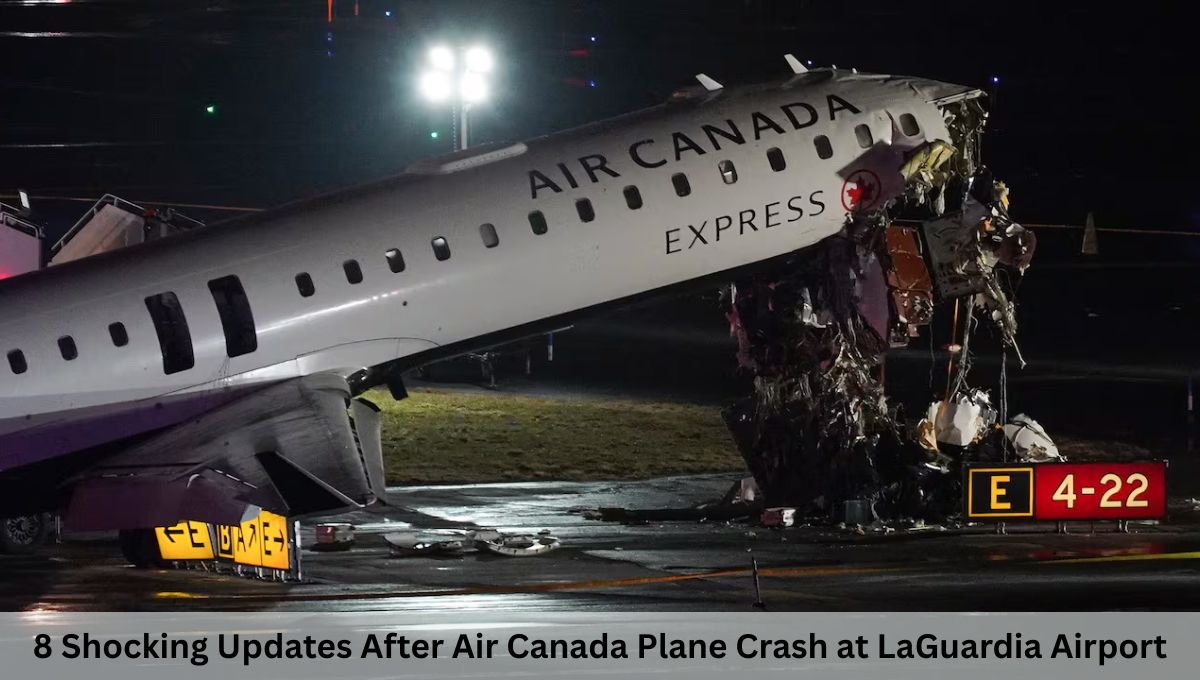
8 Shocking Updates After Air Canada Plane Crash at LaGuardia Airport — major aviation emergency. A serious aviation incident at LaGuardia Airport has triggered global concern after an Air Canada Express flight collided with a ground vehicle on the runway late Sunday night.
The crash, involving a regional jet operated by Jazz Aviation, has left pilots critically injured and multiple emergency personnel hurt, while forcing a complete shutdown of one of the busiest airports in the United States.
Early visuals and unverified footage show severe damage to the aircraft’s nose, while dramatic air traffic control (ATC) audio captures the tense moments leading up to the collision.
8 Shocking Updates After Air Canada Plane Crash at LaGuardia Airport
8 Shocking Developments From the LaGuardia Crash
1. Mid-Runway Collision With Fire Truck
The incident involved a Bombardier CRJ-900 aircraft colliding with a fire truck on Runway 4.
The truck was reportedly:
- Responding to another emergency
- Cleared to cross the runway
- Positioned directly in the aircraft’s path
The impact occurred as the plane was landing or taxiing at approximately 39 km/h.
2. Pilots Critically Injured, Conflicting Reports Emerge
Initial reports suggested:
- Pilot and co-pilot critically injured
- Some sources later claimed fatalities (unconfirmed officially)
Emergency responders transported injured personnel to nearby hospitals, including firefighters from the Port Authority.
3. Nearly 80 People On Board
According to preliminary data:
- 72 passengers
- 4 crew members
All passengers were safely evacuated, though their conditions continue to be evaluated.
4. ATC Audio Reveals Final Moments Before Impact
One of the most dramatic aspects of the incident is the ATC audio, where controllers can be heard shouting:
“Stop, stop, stop… Truck 1, stop!”
Despite repeated warnings, the collision appears to have occurred seconds later, suggesting:
- Possible miscommunication
- Delayed response
- Visibility or weather-related issues
5. Emergency Ground Stop Issued by FAA
The Federal Aviation Administration immediately issued:
- A ground stop for all flights
- Diversions of incoming aircraft
- Potential extended closure notice
Flights were either:
- Redirected to nearby airports
- Returned to their origin
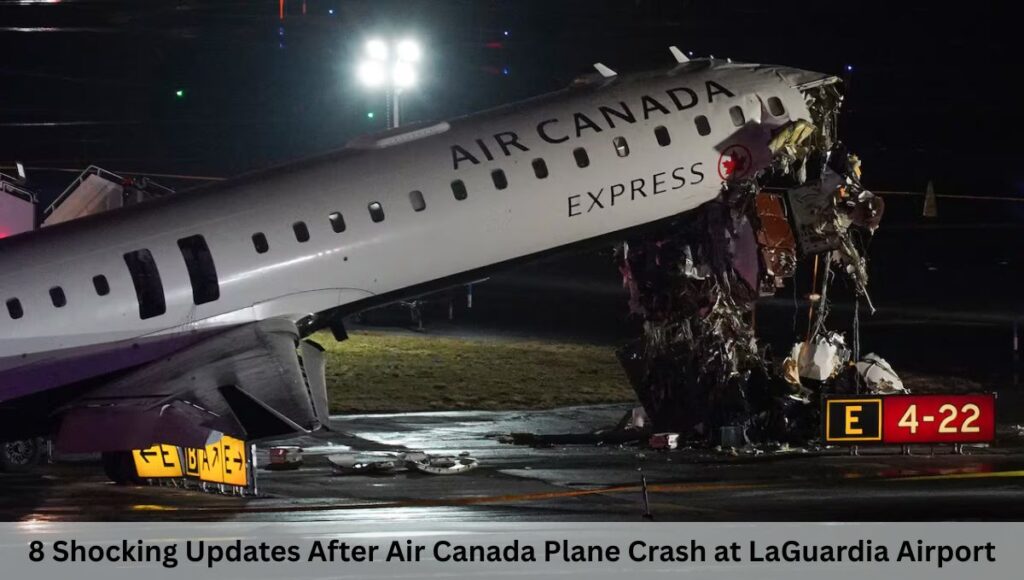
6. Severe Damage to Aircraft Nose
Visual evidence shows:
- Crushed cockpit section
- Nose tilted upward
- Structural deformation of the front fuselage
The damage suggests a significant forward impact, despite the relatively low speed.
7. Secondary Emergency Triggered Incident
The fire truck involved was reportedly responding to:
- A Boeing 737 MAX flight
- A reported strange odour onboard
- Possible medical emergency among crew
This indicates the crash occurred during an already active emergency response.
8. Airport Shutdown Causes Travel Chaos
The closure of LaGuardia led to:
- Mass flight cancellations
- Diversions across New York airspace
- Passenger delays and disruptions
Authorities warned of:
- Traffic congestion
- Road closures near the airport
- Extended delays
What Happened: Timeline of Events
Late Night Landing Turns Dangerous
The Air Canada Express flight originated from Montreal and approached LaGuardia under:
- Adverse weather conditions
- Active runway operations
- Ongoing emergency response on ground
Runway Crossing Clearance
The fire truck was reportedly granted permission to cross Runway 4.
ATC Intervention
Controllers quickly identified a conflict and issued urgent stop commands.
Collision Occurs
Despite warnings, the aircraft struck the vehicle.
Immediate Shutdown
Authorities:
- Closed Runway 4
- Suspended all airport operations
- Activated emergency response teams
Weather Conditions: A Contributing Factor?
Reports indicate:
- Rain and low visibility
- Wet runway conditions
- Possible fog
These factors may have:
- Reduced pilot visibility
- Delayed vehicle response
- Complicated ATC coordination
Weather remains a critical factor under investigation.
Aircraft Details: CRJ-900 Regional Jet
The aircraft involved was a Bombardier CRJ-900, a commonly used regional jet known for:
- Capacity of up to 76 passengers
- Short-haul efficiency
- Use by regional carriers
Despite its safety record, runway incidents remain a risk in congested airports.
Why This Incident Is So Serious
Runway Incursions Are High-Risk Events
A runway incursion occurs when:
- Aircraft and vehicles occupy the same runway
- Separation protocols fail
Such incidents are among the most dangerous in aviation due to:
- Limited reaction time
- High potential for catastrophic outcomes
Investigation Begins: Key Questions
Authorities, including aviation regulators, are expected to examine:
1. Communication Breakdown
- Was the truck properly cleared?
- Did the driver receive or understand ATC instructions?
2. ATC Procedures
- Were warnings issued in time?
- Was runway coordination adequate?
3. Human Factors
- Fatigue
- Stress during emergency response
- Reaction delays
4. Weather Impact
- Visibility conditions
- Runway surface state
Air Traffic Control Under Scrutiny
The ATC audio suggests:
- Immediate recognition of danger
- Rapid escalation of warnings
- Attempt to divert other aircraft
However, the inability to prevent the crash raises questions about:
- Response timing
- Communication clarity
- System redundancies
Impact on Global Aviation
This incident has broader implications:
1. Airport Safety Protocols
Airports worldwide may:
- Review runway crossing procedures
- Enhance vehicle tracking systems
2. Emergency Coordination
The crash highlights risks when:
- Multiple emergencies occur simultaneously
- Ground and air operations overlap
3. Passenger Confidence
Such events can:
- Impact airline reputation
- Increase passenger anxiety
- Trigger regulatory reviews
Passenger Experience: Chaos and Evacuation
Passengers reported:
- Sudden halt after landing
- Emergency evacuation procedures
- Presence of rescue teams
Despite the severity, evacuation appears to have been:
- Quick
- Organized
- Effective
Infrastructure Pressure at Major Airports
LaGuardia handles:
- Tens of millions of passengers annually
- Dense flight schedules
- Limited runway capacity
Such conditions increase:
- Operational complexity
- Risk of coordination errors
Emergency Response: Rapid but Challenged
Emergency teams:
- Reached the site within minutes
- Evacuated passengers
- Secured the runway
However, the fact that:
- The fire truck was already responding to another emergency
- The incident escalated during that response
shows how quickly situations can compound.
Conflicting Reports: What We Know vs What’s Unclear
Confirmed
- Collision between aircraft and ground vehicle
- Airport shutdown
- Multiple injuries
Unclear
- Exact number of casualties
- Cause of miscommunication
- Full extent of aircraft damage
Authorities have yet to release official detailed findings.
Economic and Travel Impact
The shutdown caused:
- Airline losses
- Passenger disruptions
- Increased operational costs
Ripple effects include:
- Delayed global connections
- Increased congestion at nearby airports
Safety Lessons From the Incident
This crash reinforces key aviation safety principles:
1. Clear Communication Is Critical
Even seconds of delay can result in disaster.
2. Runway Discipline Must Be Absolute
No margin exists for error when aircraft are landing.
3. Technology Can Reduce Risk
Advanced systems like:
- Ground radar
- Collision avoidance alerts
can help prevent similar incidents.
What Happens Next?
Short-Term
- Airport operations resume gradually
- Injured receive treatment
- Preliminary investigation released
Long-Term
- Detailed accident report
- Possible policy changes
- Industry-wide safety reviews
Conclusion: A Wake-Up Call for Aviation Safety
The collision at LaGuardia Airport is a stark reminder of how quickly routine operations can turn into life-threatening emergencies.
While the aviation industry maintains one of the highest safety standards globally, incidents like this highlight the importance of:
- Precision
- Communication
- Coordination
As investigations continue, the findings will likely shape future safety protocols—not just in the United States, but across the global aviation system.
Also Read: 9 Chilling Details as Libyan Army Chief Dies in Turkey Plane Crash
Also Read: “Stop, Stop, Stop”: Air Traffic To Truck Before New York Plane Crash
Related Posts:
- 7 Shocking Moments: Congo Minister’s Plane Bursts…
- 7 Dramatic Moments as Buddha Air Plane Overshoots…

- Southend Plane Crash: Jet to Netherlands Explodes…

- 7 Key Details About Deadly UPS Cargo Plane Crash in Kentucky

- 11 Explosive Revelations From Ted Cruz’s Leaked…

- Drone Sightings Shut Copenhagen and Oslo Airports,…