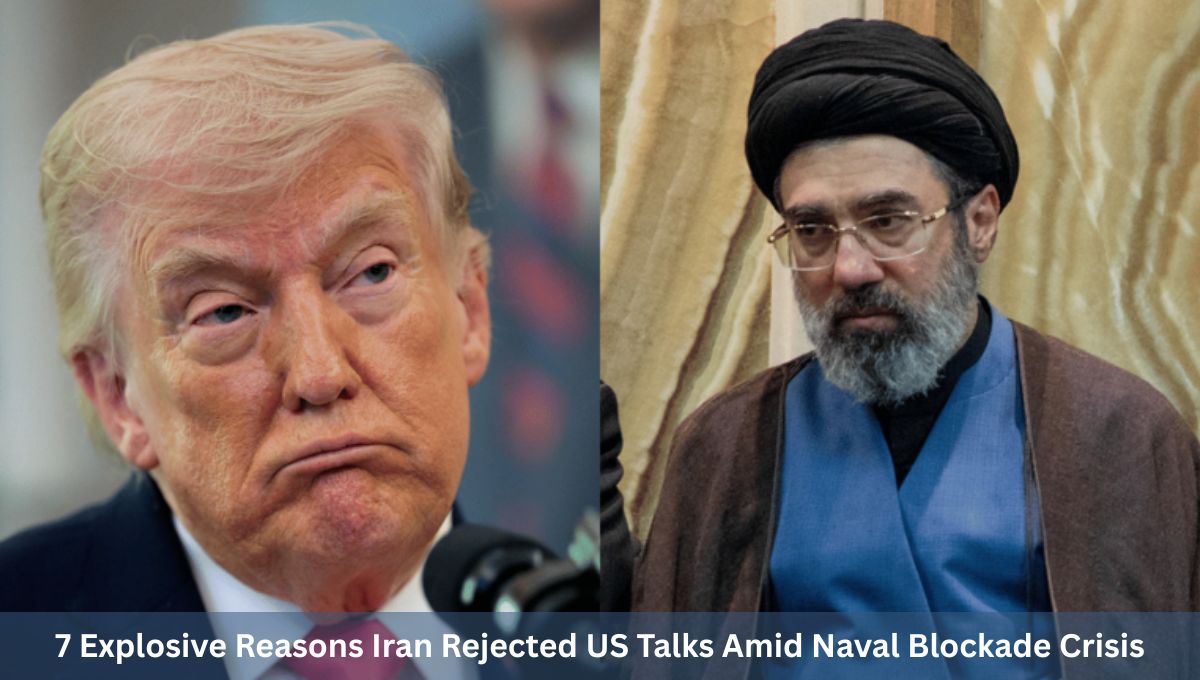
7 Explosive Reasons Iran Rejected US Talks Amid Naval Blockade Crisis and global oil disruption. Iran’s decision to reject participation in a second round of peace talks with the United States has dramatically escalated tensions in an already volatile geopolitical landscape. What was once seen as a fragile pathway toward de-escalation now appears increasingly uncertain, as both nations exchange accusations, military warnings, and strategic posturing.
At the heart of the dispute lies a complex mix of military confrontation, economic pressure, and deep-rooted mistrust.
Tehran has made it clear that under current conditions—particularly the ongoing US naval blockade and what it calls “excessive demands”—there is little room for meaningful diplomacy.
This development not only threatens to derail ceasefire efforts but also risks destabilizing global energy markets and intensifying conflict across the Middle East.
Why Iran Rejected the Second Round of Talks
“Excessive Demands” and Shifting Positions
Iranian officials have pointed to what they describe as inconsistent and unrealistic expectations from Washington.
According to state media, the United States has repeatedly shifted its negotiating stance, making it difficult to establish a stable framework for dialogue.
Tehran argues that meaningful negotiations require clarity and mutual respect—conditions it claims are currently absent.
The perception that Washington is changing its demands mid-process has fueled skepticism about the sincerity of US diplomatic efforts.
A major sticking point remains the US naval blockade of Iranian ports. Iran has characterized this move as both illegal and a violation of the ceasefire agreement.
From Tehran’s perspective, engaging in negotiations while under blockade undermines the very premise of diplomacy.
Officials argue that economic strangulation through restricted oil exports and maritime control amounts to coercion rather than negotiation.
The blockade has also become symbolic—a representation of broader tensions and a test of sovereignty that Iran is unwilling to compromise on without concessions.
Breakdown of Trust
Trust between the two nations has long been fragile, but recent developments have deepened the divide.
Iranian leaders accuse the United States of pursuing a dual strategy:
engaging in talks publicly while applying pressure through military and economic means.
This perceived contradiction has led Tehran to conclude that current negotiations lack credibility, making participation in further talks politically and strategically untenable.
Escalation in the Strait of Hormuz
A Critical Global Chokepoint
The Strait of Hormuz is one of the most strategically significant waterways in the world, handling roughly one-fifth of global oil shipments.
Any disruption here has immediate and far-reaching consequences for global energy markets.
Recent tensions have turned the strait into a flashpoint.
Iran has intermittently restricted access, while the United States has enforced inspections and interceptions of vessels suspected of violating sanctions.
Maritime Incidents Raise the Stakes
The situation intensified after reports that a US warship intercepted and damaged an Iranian-flagged cargo vessel.
Washington justified the action by citing sanctions violations, while Tehran condemned it as “armed piracy.”
Iran has warned of retaliation, signaling that further incidents could lead to direct military confrontation.
Such developments significantly increase the risk of escalation, especially in a region already on edge.
Shipping Disruptions and Global Impact
The uncertainty surrounding the strait has forced shipping companies to reconsider routes, delay cargo, or halt operations entirely.
Tankers have reportedly turned back, and insurance costs for maritime transport in the region have surged.
This disruption has had a ripple effect across global markets, contributing to rising oil prices and increased volatility in financial systems worldwide.
The Ceasefire Under Threat
A Fragile Agreement Near Collapse
The current ceasefire between Iran, the United States, and regional actors is set to expire soon, and its future remains uncertain.
With Iran refusing to engage in further talks, the likelihood of extending the ceasefire appears slim.
Both sides have accused each other of violations, further eroding confidence in the agreement.
Accusations and Counter-Accusations
The United States has accused Iran of firing on vessels in the Strait of Hormuz, calling it a “total violation” of the ceasefire.
Iran, in turn, claims that the US blockade itself constitutes a breach of the agreement.
These conflicting narratives highlight the absence of a shared understanding of the ceasefire’s terms, making enforcement and continuation increasingly difficult.
US Strategy and Pressure Tactics
Diplomatic Push Coupled with Threats
While the United States has expressed optimism about reaching a deal, its approach has included strong rhetoric and explicit threats.
Statements warning of potential strikes on Iranian infrastructure have raised concerns about escalation.
Such messaging, intended to pressure Tehran into compliance, may instead be reinforcing Iran’s resistance.
Delegation to Pakistan
The US had planned to send a high-level delegation to Pakistan for the second round of talks.
Preparations were reportedly underway, including heightened security measures in Islamabad.
However, Iran’s refusal to participate has cast doubt on whether these efforts will proceed as planned.
Iran’s Strategic Calculations
Leveraging the Strait of Hormuz
Iran appears to be using its control over the Strait of Hormuz as a strategic bargaining chip.
By restricting access, Tehran can exert pressure not only on the United States but also on global markets.
This tactic underscores the broader geopolitical stakes, as disruptions affect multiple countries reliant on energy imports.
Domestic and Regional Messaging
Iran’s stance also serves a domestic purpose, signaling strength and resistance to external pressure.
Regionally, it reinforces alliances and demonstrates a willingness to challenge US influence.
Impact on Global Energy Markets
Oil Prices Surge
The standoff has already led to a sharp increase in oil prices, reflecting fears of supply disruptions.
Markets are reacting not just to current conditions but also to the potential for further escalation.
Economic Ripple Effects
Higher energy costs have implications far beyond the Middle East. From inflation to supply chain disruptions, the impact is being felt globally.
The Broader Geopolitical Context
A War Entering Its Eighth Week
The conflict that led to the current crisis has already caused significant casualties and displacement.
Military actions, including strikes and counterstrikes, have intensified tensions across the region.
Role of Regional Actors
Other countries, including Pakistan, have attempted to mediate between the two sides.
However, the success of such efforts depends on both parties’ willingness to engage—a condition currently unmet.
What Happens Next?
Possibility of Renewed Conflict
With diplomacy stalled and the ceasefire nearing expiration, the risk of renewed hostilities is high. Military escalation could have severe consequences, both regionally and globally.
Diplomatic Alternatives
While formal talks have been rejected, back-channel negotiations may still continue. These less visible efforts could play a crucial role in preventing further escalation.
Conclusion
Iran’s rejection of a second round of talks with the United States marks a critical turning point in an already tense situation.
The combination of a naval blockade, disputed ceasefire terms, and rising maritime tensions has created a complex and volatile environment.
As the deadline for the ceasefire approaches, the world watches closely.
The decisions made in the coming days will not only shape the future of US-Iran relations but also have profound implications for global stability and energy security.
For now, the path to peace remains uncertain, overshadowed by mistrust, strategic maneuvering, and the ever-present risk of conflict.
Also Read: 10 Crucial Developments in US–Iran Talks That Could Reshape Global Power Dynamics
Also Read: “Can’t Forget Attacks”: Why Iran Is Not Ready To Come To Negotiating Table
Related Posts:
- 3 Explosive Conditions Iran Sets to End War with US…
- 9 Explosive Claims as Trump Says US Winning Iran War

- 7 Powerful Facts About Ayatollah Ali Khamenei’s…

- 5 Major Takeaways from the US Supreme Court's…

- 7 Heartbreaking Facts About Venezuela's Earthquake Disaster
- 10 Explosive Warnings as Donald Trump Calls Iran…