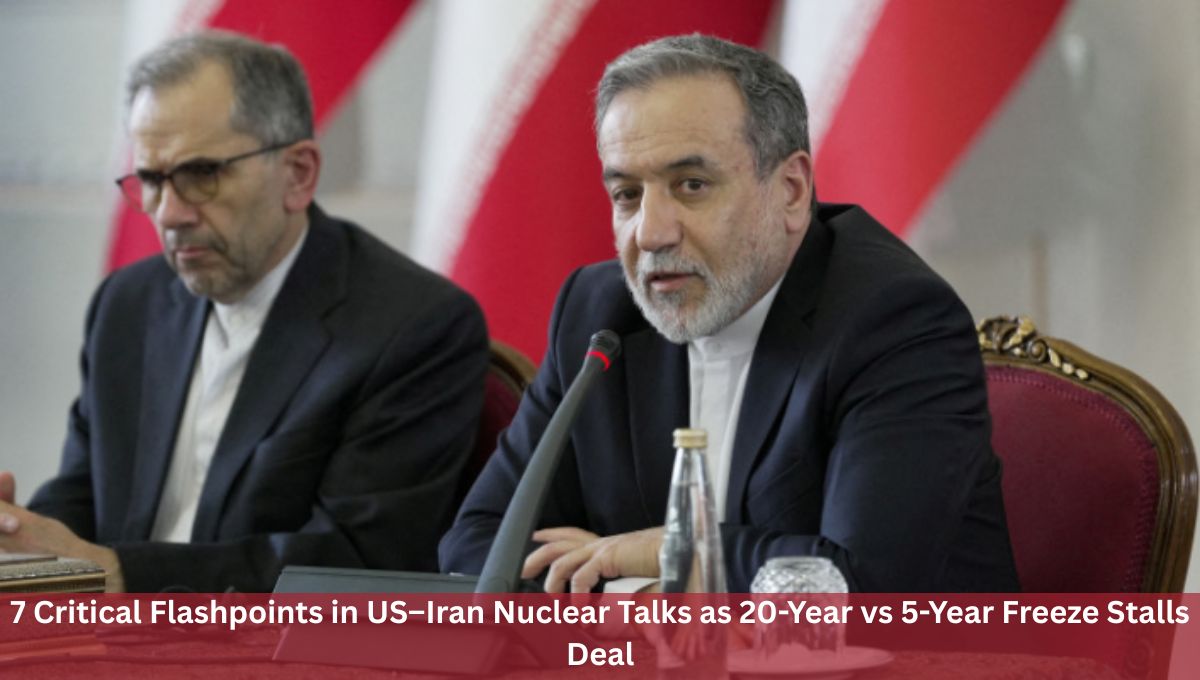
7 Critical Flashpoints in US–Iran Nuclear Talks as 20-Year vs 5-Year Freeze Stalls Deal, fuelling geopolitical tensions. The latest round of high-stakes negotiations between the United States and Iran has once again underscored the complexity of nuclear diplomacy in the modern geopolitical landscape.
Thank you for reading this post, don't forget to subscribe!Despite signs of progress and reports suggesting the two sides were close to a breakthrough, the talks ultimately stalled over a fundamental disagreement:
how long Iran should halt its uranium enrichment program.
At the heart of the impasse lies a stark contrast in positions. Washington is pushing for a 20-year suspension of Iran’s nuclear activities, while Tehran insists it can only agree to a five-year pause.
This gap, though seemingly technical, reflects deeper issues of trust, sovereignty, and strategic intent.
This article explores the key developments, underlying tensions, and global implications of the stalled negotiations.
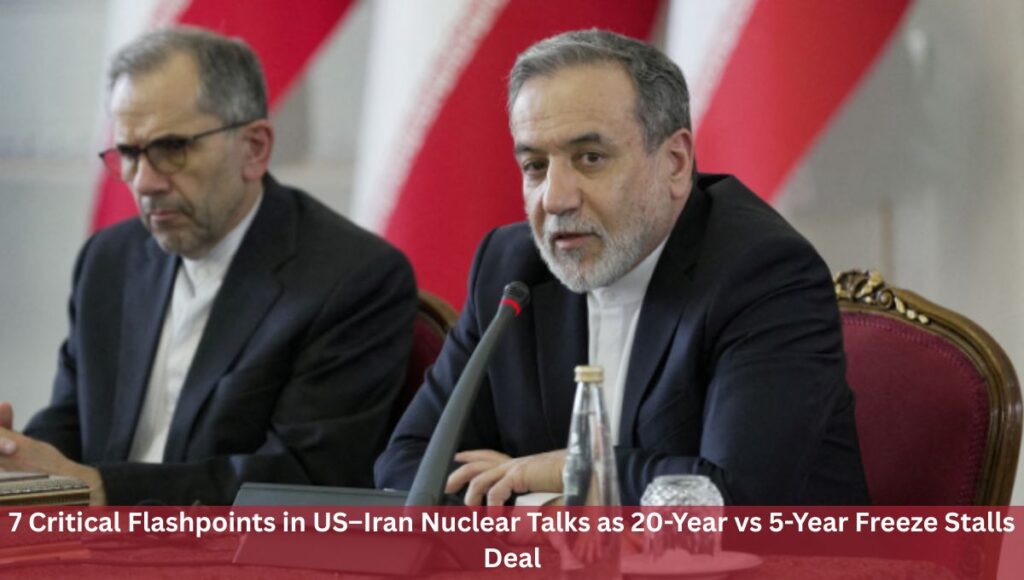
7 Critical Flashpoints in US–Iran Nuclear Talks as 20-Year vs 5-Year Freeze Stalls Deal
Background: Why These Talks Matter
The US–Iran nuclear issue has been a central point of international concern for decades.
At its core is the fear that Iran’s nuclear program, while officially for civilian purposes, could be used to develop nuclear weapons.
For the United States and its allies, preventing Iran from acquiring nuclear weapons is a top strategic priority.
For Iran, maintaining its nuclear program is seen as a matter of national sovereignty and technological independence.
The latest talks in Islamabad were particularly significant because they represented one of the most direct and high-level engagements between the two nations in years.
The Core Dispute: 20 Years vs 5 Years
US Position: Long-Term Suspension
The United States proposed a 20-year moratorium on Iran’s uranium enrichment activities.
This proposal marks a shift from earlier demands for a permanent ban, suggesting some flexibility in Washington’s stance.
However, the 20-year timeline still reflects deep concerns about Iran’s long-term nuclear ambitions.
US officials argue that a multi-decade freeze is necessary to ensure that Iran cannot develop nuclear weapons capability in the foreseeable future.
Additionally, the US has demanded:
- Removal of highly enriched uranium from Iran
- Strict monitoring mechanisms
- Long-term guarantees against re-enrichment
Iran’s Counteroffer: Short-Term Pause
Iran, on the other hand, has proposed a five-year suspension of nuclear activities.
This shorter timeframe aligns with Tehran’s consistent position that it will not permanently give up its nuclear rights.
Iran’s counterproposal includes:
- Temporary halt to enrichment
- Retention of nuclear infrastructure
- Down-blending (dilution) of enriched uranium instead of removal
From Tehran’s perspective, a longer freeze would undermine its sovereignty and technological progress.
Why the Duration Matters
At first glance, the difference between five and twenty years may seem like a negotiable detail. In reality, it represents a fundamental divide.
Strategic Concerns
- For the US: A shorter freeze could allow Iran to resume enrichment relatively quickly, maintaining a pathway to nuclear weapons.
- For Iran: A longer freeze effectively delays its nuclear ambitions for a generation, which is politically and strategically unacceptable.
Trust Deficit
Iranian officials have repeatedly expressed skepticism about US commitments, citing past instances where diplomatic engagements were followed by military actions or sanctions.
This lack of trust makes it difficult to agree on long-term commitments.
The Uranium Stockpile Dispute
Another major sticking point in the negotiations is what should happen to Iran’s existing stockpile of enriched uranium.
US Demand: Complete Removal
The United States insists that Iran must remove all highly enriched uranium from its territory. This would eliminate any immediate risk of weaponization.
Iran’s Proposal: Down-Blending
Iran has rejected this demand, offering instead to dilute the uranium under international supervision.
While this reduces its immediate usability for weapons, it allows Iran to retain control over the material.
Why This Matters
The disagreement highlights a key issue:
- Removal is irreversible (from Iran’s perspective)
- Down-blending is reversible (from the US perspective)
This difference has made compromise difficult.
Inside the Islamabad Talks
The negotiations in Islamabad were intense and highly structured.
How Talks Were Conducted
- Delegations were housed in separate areas
- Mediators facilitated communication
- Direct interactions were limited
- Talks lasted over 20 hours
Atmosphere and Tensions
Reports suggest the atmosphere was tense and at times confrontational.
Raised voices were reportedly heard during key moments, particularly when discussions turned to guarantees and sanctions.
Despite this, there were moments when a deal seemed within reach.
“80% Done”: Why the Deal Collapsed
Several sources indicate that the agreement was nearly finalized, with negotiators claiming the deal was “80% complete.”
What Went Wrong
- Disagreement over enrichment duration
- Deadlock on uranium stockpile handling
- Differences over sanctions relief
- Diverging expectations on the scope of the deal
The collapse highlights how even small gaps can derail complex negotiations.
Role of Mediators
Countries like Pakistan, Egypt, and Turkey have played a crucial role in facilitating the talks.
Mediation Efforts
- Hosting negotiations
- Bridging communication gaps
- Proposing compromise solutions
Possible Middle Ground
Some analysts suggest a compromise of around 10–15 years could be acceptable to both sides. However, this would require significant political will.
The Strait of Hormuz Factor
Beyond nuclear issues, the Strait of Hormuz has emerged as another critical point of contention.
Why It Matters
- Handles a significant portion of global oil shipments
- Vital for global energy security
Current Situation
- Iran has restricted access
- The US has pledged to reopen it
- Tensions have led to increased military presence
This adds another layer of complexity to the negotiations.
The United States has implemented a naval blockade targeting Iranian-linked shipping.
Objectives
- Increase pressure on Iran
- Strengthen negotiating leverage
Consequences
- Rising oil prices
- Heightened military tensions
- Strained relations with allies
The blockade has complicated diplomatic efforts and increased the urgency of reaching a deal.
Iran’s Hardline Position
Statements from Iranian officials indicate a firm stance on nuclear rights.
Key Messages
- No abandonment of uranium enrichment
- Emphasis on sovereignty
- Resistance to external pressure
This suggests limited room for concessions on core issues.
US Strategic Goals
The United States remains focused on preventing nuclear proliferation.
Core Objectives
- Ensure Iran cannot develop nuclear weapons
- Maintain regional stability
- Protect global energy routes
These goals shape Washington’s negotiating position.
Global Implications
The outcome of these talks has far-reaching consequences.
Energy Markets
- Oil prices are highly sensitive to developments
- Disruptions in the Strait of Hormuz affect global supply
Regional Stability
- Escalation could trigger broader conflict
- Neighboring countries are closely monitoring the situation
International Relations
- Involvement of multiple global powers
- Potential shifts in alliances
Possibility of Future Talks
Despite the breakdown, there are indications that negotiations may resume.
Signs of Continued Engagement
- Reports of ongoing communication
- Interest from both sides in reaching a deal
- Mediators pushing for another round
Challenges Ahead
- Bridging the trust gap
- Finding acceptable compromises
- Managing external pressures
What a Deal Could Look Like
If negotiations succeed, a potential agreement might include:
- A compromise on enrichment duration (e.g., 10–15 years)
- Partial removal or monitored storage of uranium
- Phased sanctions relief
- Security guarantees
Such a deal would require significant concessions from both sides.
Conclusion: A Fragile Path Forward
The US–Iran nuclear talks represent a delicate balancing act between diplomacy and strategic interests.
While the gap between a 20-year and a 5-year freeze may seem narrow, it reflects deeper issues that cannot be easily resolved.
The fact that negotiators came close to a deal suggests that a breakthrough is possible. However, achieving it will require flexibility, trust-building, and sustained diplomatic effort.
As global tensions remain high and the ceasefire deadline approaches, the stakes could not be higher.
The world will be watching closely to see whether diplomacy can prevail over division.
Also Read: 9 Shocking Developments as Pakistan Guarantees US–Iran Ceasefire Till April 21
Also Read: US eyes potential second round of in-person talks with Iran as blockade takes hold
Related Posts:
- 11 Explosive Warnings as Trump Vows to ‘Knock the…

- Iran-US Nuclear Talks Get Another Chance Amidst…
- 3 Explosive Conditions Iran Sets to End War with US…

- 9 Explosive Claims as Trump Says US Winning Iran War

- 7 Powerful Facts About Ayatollah Ali Khamenei’s…

- Iran Defiant on Nuclear Enrichment Despite US-Israel…