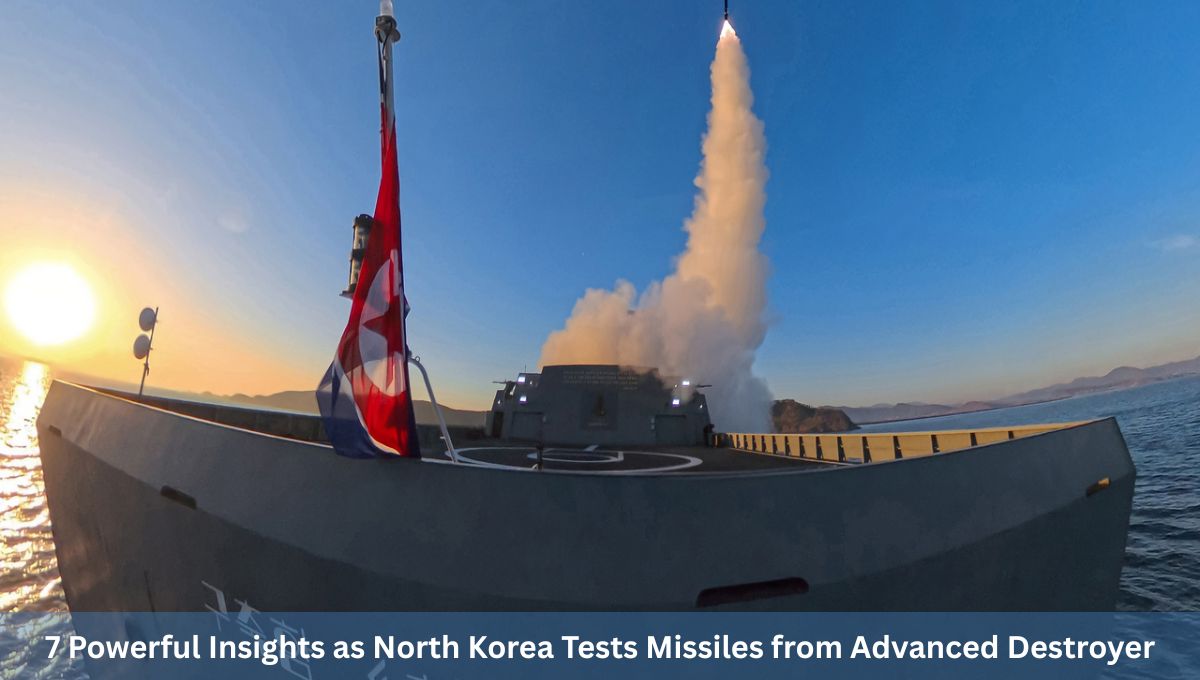
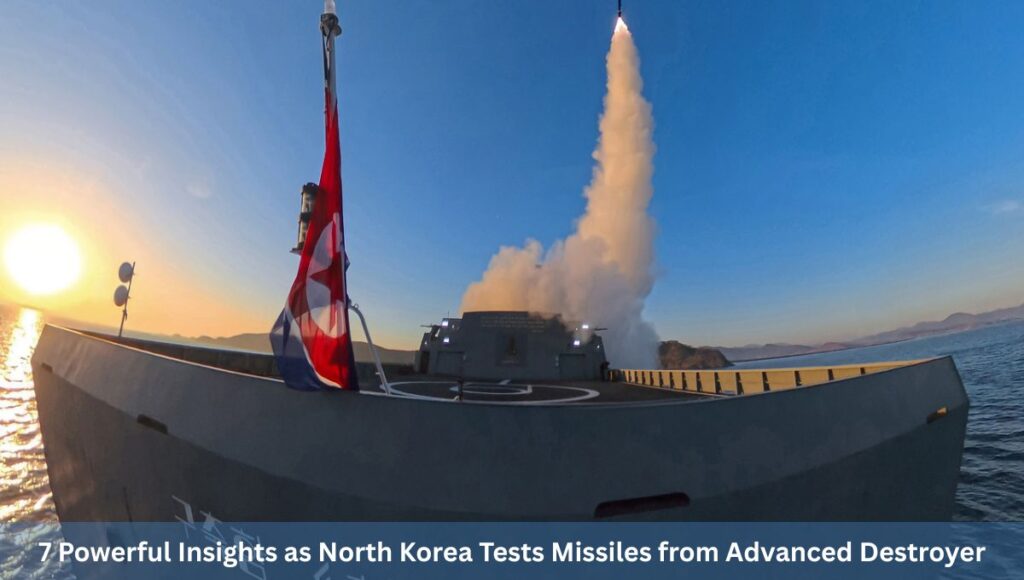
7 Powerful Insights as North Korea Tests Missiles from Advanced Destroyer, signaling rapid naval buildup. In a move that underscores rising geopolitical tensions and accelerating military development, North Korea has conducted another round of missile tests from its newest naval asset—the Choe Hyon-class destroyer.
The tests, personally observed by Kim Jong Un, highlight Pyongyang’s growing emphasis on maritime strike capabilities and nuclear deterrence.
The launches included both strategic cruise missiles and anti-ship missiles, signaling a dual-purpose capability:
striking land targets and engaging naval threats.
These developments come at a time when global attention is divided due to multiple international crises, creating what analysts describe as a “strategic window” for North Korea to advance its military ambitions.
This article breaks down the significance of the test, the evolving capabilities of North Korea’s navy, and what it means for regional and global security.
7 Powerful Insights as North Korea Tests Missiles from Advanced Destroyer
1. What Happened: Details of the Missile Test
A Combined Weapons Trial
According to state media reports from the Korean Central News Agency, North Korea conducted a coordinated test involving:
- Two strategic cruise missiles
- Three anti-ship (anti-warship) missiles
These were launched from the 5,000-ton Choe Hyon-class destroyer as part of an “operational efficiency trial.”
Performance Metrics
The missiles reportedly demonstrated:
- Cruise missile flight duration: 7,869 to 7,920 seconds (over 2 hours)
- Anti-ship missile flight duration: 1,960 to 1,973 seconds
- “Ultra-precision” strike accuracy
- Enhanced resistance to electronic jamming
The test aimed to validate the warship’s integrated weapons command system, crew readiness, and upgraded navigation technologies.
2. The Choe Hyon Destroyer: A Game-Changer
North Korea’s Most Advanced Warship
The Choe Hyon is widely regarded as the most sophisticated surface combatant ever deployed by North Korea.
Unlike older vessels focused on coastal defense, this destroyer represents a shift toward blue-water naval capabilities.
Key features include:
- Multi-role missile systems (cruise, anti-ship, possibly ballistic)
- Advanced radar and navigation systems
- Integrated command-and-control architecture
- Potential nuclear delivery capability
Strategic Implications
This platform allows North Korea to:
- Launch strikes from mobile sea-based positions
- Extend operational reach beyond its coastline
- Complicate detection and interception by adversaries
For regional defense planners, this represents a significant escalation in complexity.
3. Kim Jong Un’s Military Vision
Nuclear Deterrence as Top Priority
During the test, Kim emphasized that strengthening the country’s nuclear war deterrent remains the top national priority.
His directives included:
- Expanding strategic strike capabilities
- Enhancing tactical responsiveness
- Improving rapid-response readiness
This aligns with North Korea’s long-standing doctrine of asymmetric deterrence, where nuclear and missile capabilities offset conventional military disadvantages.
“Limitless Expansion” of Nuclear Forces
Recent statements from Kim suggest an intent to pursue:
- Continuous weapons development
- Deployment across multiple platforms (land, sea, and potentially air)
- Greater survivability of nuclear assets
Expansion of the Destroyer Fleet
North Korea is not stopping at a single warship.
Plans are underway for:
- A third and fourth destroyer in the same class
- Annual commissioning of advanced vessels
- Continuous upgrades to naval systems
This indicates a shift from isolated platforms to a cohesive destroyer flotilla.
Industrial Momentum
Experts suggest that once initial testing proves successful, production accelerates rapidly.
This appears to be happening now, signaling:
- Improved shipbuilding capacity
- Streamlined weapons integration
- Greater emphasis on naval warfare
5. Technological Advancements in Missile Systems
Cruise Missiles with Strategic Capability
The term “strategic cruise missiles” typically implies:
- Long-range strike capability
- Potential nuclear payload delivery
- Low-altitude flight paths to evade radar
These missiles are designed for precision strikes against high-value targets.
Anti-Ship Missiles: Maritime Dominance
The anti-ship missiles tested serve a different purpose:
- Target enemy naval vessels
- Protect North Korean waters
- Disrupt adversary naval operations
Combined with cruise missiles, they create a multi-layered offensive and defensive system.
6. Regional Security Implications
Rising Tensions in East Asia
The tests come amid:
- Ongoing military exercises by the United States and South Korea
- Stalled diplomatic engagement
- Increasing militarization across the region
North Korea often responds to joint exercises with missile tests, viewing them as threats.
Challenges for South Korea and Allies
For South Korea and its allies, the implications include:
- Greater difficulty tracking mobile launch platforms
- Increased risk to naval assets
- Expanded threat radius
The introduction of sea-based missile systems adds a new dimension to deterrence calculations.
7. Global Context: Timing and Strategic Opportunism
Exploiting Global Distractions
Analysts believe North Korea is accelerating its weapons program while global attention is focused elsewhere, including:
- Conflicts in the Middle East
- Strategic competition between major powers
- Economic and political instability worldwide
This allows Pyongyang to advance capabilities with relatively limited immediate backlash.
Alignment with Broader Strategic Trends
North Korea’s actions mirror broader global trends:
- Militarization of maritime domains
- Expansion of nuclear deterrence strategies
- Emphasis on mobility and survivability
8. The Role of International Partnerships
Possible Russian Influence
Some experts suggest the Choe Hyon destroyer may have benefited from:
- Technical assistance
- Design inputs
- Military cooperation
from Russia, especially amid deepening ties.
China’s Strategic Position
Meanwhile, China remains a key economic and diplomatic partner, supporting:
- Stability on the Korean Peninsula
- A multipolar global order
- Resistance to Western-led pressure
9. From Coastal Defense to Power Projection
A Transformational Shift
Historically, North Korea’s navy focused on:
- Coastal patrol
- Small missile boats
- Submarine operations
The introduction of destroyers signals a move toward:
- Long-range strike capability
- Open-sea operations
- Strategic deterrence at sea
Operational Advantages
Sea-based platforms offer:
- Mobility
- Concealment
- Flexibility in deployment
This makes them harder to neutralize compared to fixed land-based systems.
10. Future Outlook: What Comes Next?
Continued Testing
Expect further:
- Missile trials
- System refinements
- Integration of new technologies
Fleet Expansion
North Korea is likely to:
- Commission additional destroyers
- Enhance naval training programs
- Develop supporting infrastructure
Increased Tensions
The combination of:
- Advanced weapons
- Aggressive rhetoric
- Strategic ambiguity
will likely sustain elevated tensions in the region.
Conclusion: A New Phase in North Korea’s Military Strategy
North Korea’s latest missile tests from the Choe Hyon destroyer mark a significant milestone in its military evolution.
By combining advanced naval platforms with strategic missile systems, Pyongyang is building a more flexible, survivable, and potent deterrent.
Under the leadership of Kim Jong Un, the country is clearly pursuing a long-term strategy centered on nuclear capability, technological advancement, and strategic autonomy.
For the global community, this development is a reminder that even as attention shifts across crises, North Korea continues to reshape the security landscape—quietly, steadily, and with increasing sophistication.
The implications will be felt far beyond the Korean Peninsula, influencing defense strategies, alliances, and geopolitical calculations worldwide.
Also Read: 7 Alarming Signals as Kim Jong Un Oversees Hypersonic Missile Tests
Also Read: North Korea tests cruise and anti-ship missiles from naval destroyer