
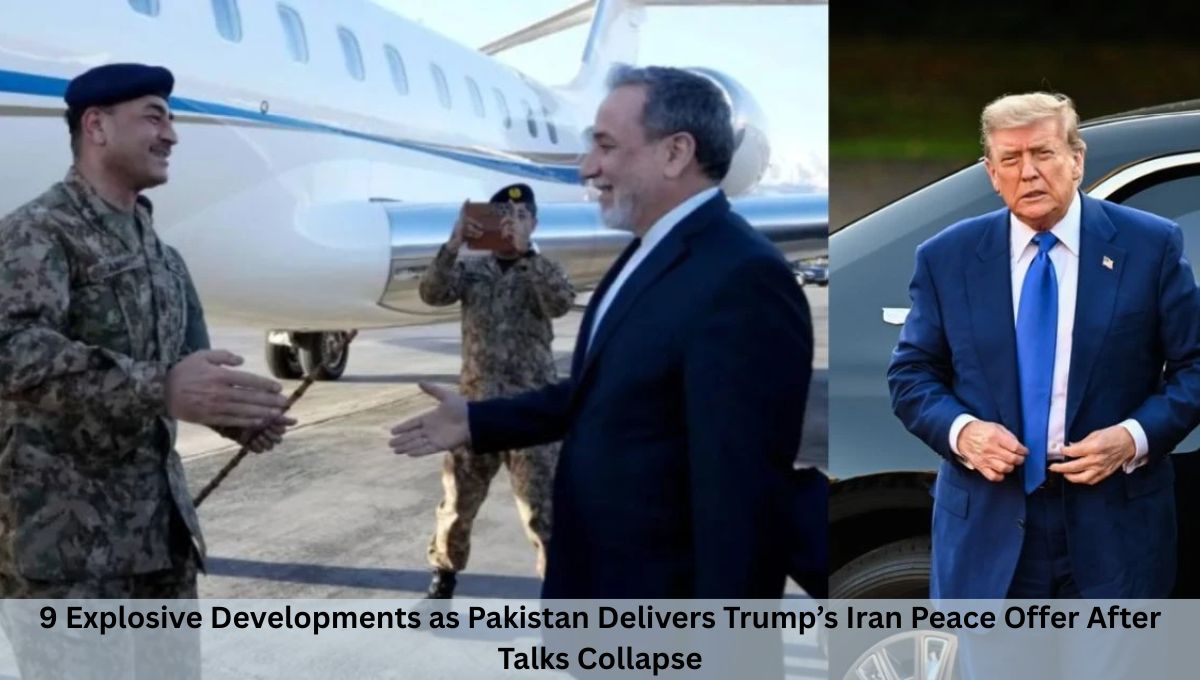
9 Explosive Developments as Pakistan Delivers Trump’s Iran Peace Offer After Talks Collapse in Islamabad. Pakistan has emerged as an unexpected yet central diplomatic force in one of the most volatile geopolitical crises in recent years.
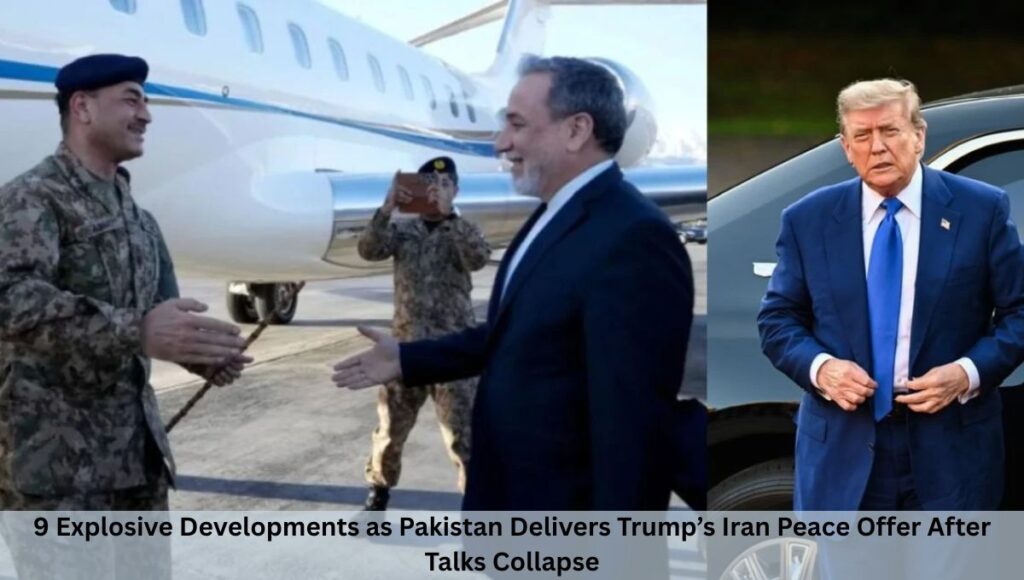
Thank you for reading this post, don't forget to subscribe!Following the collapse of high-stakes negotiations between the United States and Iran in Islamabad, Pakistan’s Army Chief Field Marshal Asim Munir has arrived in Tehran carrying a fresh peace proposal reportedly backed by US President Donald Trump.
The visit signals an urgent attempt to salvage a fragile ceasefire and prevent a broader regional escalation that could destabilize global energy markets and deepen geopolitical divisions.
With tensions still high and deadlines looming, the next few days may determine whether diplomacy prevails or conflict intensifies.
9 Explosive Developments as Pakistan Delivers Trump’s Iran Peace Offer After Talks Collapse
Pakistan’s Expanding Role as a Power Broker
From Host to Mediator
Pakistan’s role has evolved rapidly—from hosting negotiations to actively shaping them.
Islamabad leveraged its strategic relationships across multiple geopolitical blocs, including the United States, Iran, Gulf nations, and China, to position itself as a trusted intermediary.
Officials from both Washington and Tehran have acknowledged Pakistan’s role in maintaining communication even after talks failed.
This ongoing “backchannel diplomacy” has helped prevent a complete breakdown in negotiations.
A Dual-Track Strategy
Pakistan’s mediation is not limited to a single channel.
While Asim Munir engages directly with Iranian leadership in Tehran, Prime Minister Shehbaz Sharif is simultaneously conducting a regional diplomatic tour involving Saudi Arabia, Qatar, and Turkiye.
This dual-track approach aims to:
- Build regional consensus
- Reduce resistance from rival stakeholders
- Align broader geopolitical interests with a potential peace deal
Why the Islamabad Talks Failed
Despite 21 hours of intense negotiations, the initial round of talks ended without agreement. Three major sticking points continue to divide the United States and Iran.
1. Iran’s Nuclear Programme
The most contentious issue remains Iran’s uranium enrichment activities.
- The US demands long-term restrictions, reportedly up to 20 years
- Iran insists on its sovereign right to enrich uranium for peaceful purposes
A compromise may lie somewhere in between, with discussions ranging from a 5-year to a phased enrichment freeze.
2. Control of the Strait of Hormuz
The Strait of Hormuz is one of the world’s most critical energy chokepoints, responsible for a significant portion of global oil transit.
- Iran has effectively restricted access
- The US has responded with a naval blockade
This standoff has already disrupted shipping and driven volatility in global oil prices.
3. Regional Conflict Spillover
The war has extended beyond Iran, particularly into Lebanon, where clashes involving Israeli forces and Hezbollah continue.
The US seeks de-escalation across all fronts, while Iran links broader regional dynamics to any final agreement.
Asim Munir’s Mission in Tehran
Delivering Trump’s Peace Offer
Munir’s visit is widely seen as a critical diplomatic intervention.
His mission includes:
- Delivering a fresh US proposal to Iranian leadership
- Narrowing differences on nuclear and strategic issues
- Preparing groundwork for a second round of talks
The presence of senior Pakistani officials alongside Munir underscores the seriousness of the initiative.
Shuttle Diplomacy in Action
Pakistan is effectively acting as a communication bridge, relaying messages between Washington and Tehran.
This form of shuttle diplomacy is particularly crucial given the lack of direct trust between the two nations.
Reports suggest that multiple messages have already been exchanged through Islamabad since the talks collapsed.
Signs of a Possible Breakthrough
Optimism from Multiple Sides
Despite the deadlock, there are increasing signs of cautious optimism:
- US officials describe discussions as “productive and ongoing”
- Iranian representatives have indicated openness to negotiation on enrichment levels
- Pakistani mediators expect a “major breakthrough”
Key Areas of Progress
Emerging compromises may include:
- A middle-ground timeline for uranium enrichment restrictions
- Alternative arrangements for Iran’s enriched uranium stockpile
- Conditional reopening of maritime routes in the Strait of Hormuz
The Strait of Hormuz Crisis
Global Economic Implications
The ongoing blockade and restricted shipping through the Strait of Hormuz have far-reaching consequences:
- Disruption of global oil supply chains
- Rising transportation and commodity costs
- Increased inflation risks worldwide
Even partial restrictions have already impacted energy markets, highlighting the strategic importance of the waterway.
Military Tensions Escalate
The US naval blockade has further complicated the situation, with reports of vessels being turned away and warnings issued to commercial shipping.
Iran has responded with threats to expand disruptions to other key maritime routes.
The Fragile Ceasefire
Countdown to Expiry
The ceasefire between the US and Iran, established earlier in April, is set to expire soon. While it has temporarily halted large-scale attacks, it remains under significant strain.
Key challenges include:
- Continued military posturing
- Ongoing regional skirmishes
- Lack of formal agreement on extension
Risk of Renewed Conflict
Without a breakthrough, the expiration of the ceasefire could trigger:
- Renewed military operations
- Wider regional escalation
- Severe economic repercussions
Global Stakes: Why This Matters
Energy Markets and Inflation
The conflict has already demonstrated its ability to influence global markets.
Oil price fluctuations linked to Hormuz disruptions have ripple effects across economies, impacting fuel, food, and transportation costs.
Geopolitical Realignment
Pakistan’s growing role as a mediator reflects shifting geopolitical dynamics.
Traditional power structures are being challenged, with regional players taking on more active roles in conflict resolution.
Security Concerns
The potential for escalation involving multiple countries raises concerns about broader instability in the Middle East and beyond.
Challenges Ahead
Deep Mistrust Between Parties
Decades of hostility between the US and Iran complicate negotiations. Even minor disagreements can derail progress.
Internal Political Pressures
Both governments face domestic constraints that limit flexibility in negotiations, particularly on sensitive issues like nuclear policy.
Regional Opposition
Certain regional actors remain skeptical of a peace deal, fearing it may alter the balance of power.
What Comes Next
Possible Second Round of Talks
There is strong indication that a second round of negotiations may take place soon, likely again in Islamabad.
Preparations are already underway, with Pakistan actively coordinating between both sides.
Short-Term Scenarios
- Breakthrough Agreement – A compromise is reached, stabilizing the region
- Extended Negotiations – Ceasefire is prolonged to allow further talks
- Collapse of Talks – Conflict resumes with increased intensity
Conclusion: A Narrow Window for Peace
The arrival of Asim Munir in Tehran marks a pivotal moment in a high-stakes diplomatic effort that could shape the future of the Middle East.
With global markets watching and tensions simmering, the success or failure of Pakistan’s mediation could have consequences far beyond the region.
The coming days will be decisive.
Whether this effort leads to a historic agreement or another missed opportunity depends on the willingness of all sides to compromise on deeply entrenched positions.
For now, the world waits as diplomacy races against time.
Also Read: 9 Explosive Revelations: Did Netanyahu’s Call Derail US–Iran Peace Talks?
Also Read: Pakistan delivers US messages to Iran as Trump says end to war is ‘close’
Related Posts:
- 7 Shocking Reasons US Sees Asim Munir as a Strategic…
- 9 Powerful Signals Behind Saudi Arabia Honoring…

- 11 Explosive Warnings as Trump Vows to ‘Knock the…

- 9 Critical Pressures Trapping Pakistan’s Army Chief…

- Trump Keeps Pakistan PM Shehbaz Sharif & Army Chief…

- 5 Powerful Highlights as Trump Lands Second Nobel…
