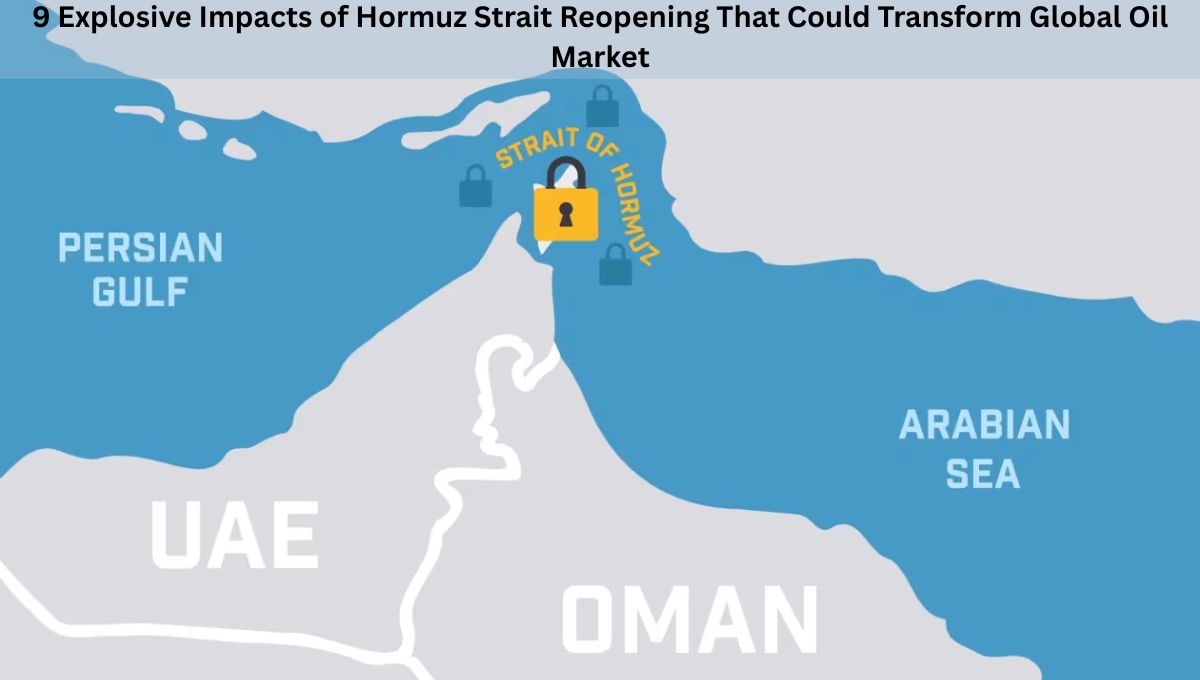
9 Explosive Impacts of Hormuz Strait Reopening That Could Transform Global Oil Markets — yet uncertainty remains. The reopening of the Strait of Hormuz marks a pivotal moment for global trade, energy markets, and geopolitical stability.
After weeks of disruption triggered by military conflict and strategic blockades, the narrow but critical maritime corridor is once again allowing commercial vessels to pass—albeit under conditions.
This development has triggered immediate reactions across industries—from oil companies and exporters to governments and shipping firms.
Yet beneath the optimism lies a complex and fragile reality shaped by political tensions, security risks, and uncertain enforcement on the ground.
9 Explosive Impacts of Hormuz Strait Reopening That Could Transform Global Oil Markets
Why the Strait of Hormuz Matters
The Strait of Hormuz is one of the most strategically vital waterways in the world.
Roughly 20% of global oil supply flows through this narrow 36-kilometer passage connecting the Persian Gulf to international markets.
Any disruption here has immediate ripple effects:
- Oil prices spike
- Shipping routes are delayed
- Energy-importing nations face supply risks
- Global inflationary pressures increase
The recent closure—lasting over 45 days—highlighted just how dependent the global economy remains on this single chokepoint.
Immediate Market Reaction: Oil Prices Drop
One of the first visible impacts of the reopening was a sharp fall in oil prices.
- Brent crude dropped to $87.9 per barrel
- Prices declined by over 11% in a short span
This correction reflects renewed confidence in supply continuity. Markets had previously priced in worst-case scenarios, including prolonged disruption or escalation.
Why Prices Fell
- Resumption of supply routes
- Reduced risk premium
- Improved trader sentiment
Lower oil prices directly translate into reduced costs for transportation, manufacturing, and logistics globally.
Relief for India’s Energy and Trade Sectors
India, heavily reliant on energy imports, stands among the biggest beneficiaries.
Key Developments:
- 41 India-bound ships waiting near the strait
- Cargo includes:
- Crude oil
- LPG (cooking fuel)
- LNG
- Fertilisers
Of these:
- 10 ships carry crude oil
- 4 are LPG tankers
- 3 carry LNG
This backlog reflects how severely the closure disrupted supply chains.
Fertiliser Imports Critical
Over a dozen vessels are carrying fertilisers essential for India’s kharif sowing season. Any further delay could have impacted agricultural productivity and food security.
Shipping and Freight Costs Set to Decline
Freight rates surged dramatically during the crisis, in some cases rising 4–5 times above normal levels.
Impact of Reopening:
- Lower insurance premiums (if risks ease)
- Reduced war-risk surcharges
- Improved container availability
Exporters had been struggling with extreme logistics costs.
Example:
- Shipping costs to West Asia surged beyond $700 per container baseline
- In some cases, freight exceeded the value of goods like onions
With the reopening, these distortions are expected to gradually correct.
Exporters Regain Momentum
The disruption had nearly halted exports to West Asia—a key market for many countries.
Sectors Affected:
- Agricultural exports (onions, bananas)
- Basmati rice
- Processed foods
Perishable goods were especially impacted:
- Banana exports were suspended
- Onion shipments became unviable
Now, exporters expect:
- Resumption of shipments
- Revival in demand
- Improved trade flows
Example:
A major rice exporter has 18,000 tonnes of basmati rice stranded, now expected to move as conditions stabilize.
Shipping Bottlenecks Still Persist
Despite the reopening announcement, operations are far from normal.
Current Situation:
- Ships require authorization and coordination
- Passage limited to designated routes
- Military oversight remains
Many shipping companies are still cautious.
Why?
- Risk of mines
- Conflicting statements from authorities
- Uncertainty over enforcement
Some vessels have already:
- Attempted passage
- Turned back due to lack of clearance
Geopolitical Tensions Continue to Cloud Outlook
The reopening is tied to a fragile ceasefire and ongoing negotiations.
Key Issues:
- US naval blockade still in place
- Iran warning of potential re-closure
- Disagreement over nuclear negotiations
Conflicting narratives have emerged:
- One side claims full reopening
- The other imposes conditions and warnings
This creates a “false dawn” scenario, where markets react positively, but operational realities lag.
Hormuz as a Strategic “Deterrent”
Experts increasingly view the Strait of Hormuz as more than just a trade route.
It is now seen as:
- A geopolitical lever
- A deterrence tool
- A bargaining chip in negotiations
Control over access effectively gives leverage over:
- Global oil supply
- Shipping insurance markets
- Economic stability worldwide
This dynamic is likely to persist even after the current crisis ends.
Impact on Global Supply Chains
The disruption exposed vulnerabilities in global logistics systems.
Consequences:
- Delayed shipments
- Supply shortages in Asia
- Pressure on refinery outputs
Asian economies are particularly exposed due to heavy dependence on Middle Eastern oil.
Emerging Risks:
- Inventory depletion
- Production cuts
- Rising fuel shortages in downstream markets
Even with reopening, it may take months for full normalization.
Insurance and Risk Pricing Still Elevated
Marine insurers remain cautious.
Key Concerns:
- Potential mines in shipping lanes
- Military escalation risks
- Unclear navigation rules
War-risk premiums—one of the biggest cost drivers—may remain elevated until:
- Security guarantees improve
- Traffic stabilizes
- Confidence returns among major carriers
India’s Strategic Response
During the closure, India took proactive steps:
Measures Taken:
- Diversified oil sourcing
- Diplomatic engagement
- Secured safe passage for LPG vessels
This highlights the importance of:
- Energy security planning
- Strategic reserves
- Supply diversification
Short-Term Gains vs Long-Term Uncertainty
While the reopening offers immediate relief, deeper uncertainties remain.
Positive Signals:
- Falling oil prices
- Resuming trade
- Improved sentiment
Ongoing Risks:
- Political tensions
- Conditional access
- Military presence
The situation remains fluid and highly sensitive to developments on the ground.
What Happens Next?
The coming days will be crucial.
Key Indicators to Watch:
- Volume of ships successfully crossing
- Stability of oil prices
- Changes in freight rates
- Policy signals from involved nations
Shipping companies are expected to:
- Observe early movers
- Gradually re-enter the route
- Adjust risk calculations
Conclusion
The reopening of the Strait of Hormuz is a major turning point—but not a full resolution.
It has:
- Eased immediate pressure on global energy markets
- Revived trade expectations
- Provided relief to import-dependent economies like India
However, the situation remains fragile.
The strait is open—but controlled.
Trade is resuming—but cautiously.
Markets are optimistic—but wary.
In today’s interconnected global economy, even a narrow waterway can shape the fate of nations.
The Strait of Hormuz has once again proven just how critical—and volatile—it truly is.
Also Read: 7 Explosive Claims: Iran Charging $2M to Ships in Strait of Hormuz Crisis
Also Read: Iran Shuts Hormuz Again, Accuses US Of Violating Deal To Reopen It
Related Posts:
- 5 Major Takeaways from the US Supreme Court's…

- 7 Powerful Measures: Trump Sanctions Russian Oil…

- 7 Heartbreaking Facts About Venezuela's Earthquake Disaster

- In 8 Moves, EU Targets China-Linked Refineries and…

- 7 Powerful Facts About Ayatollah Ali Khamenei’s…

- 9 Explosive Claims as Trump Says US Winning Iran War