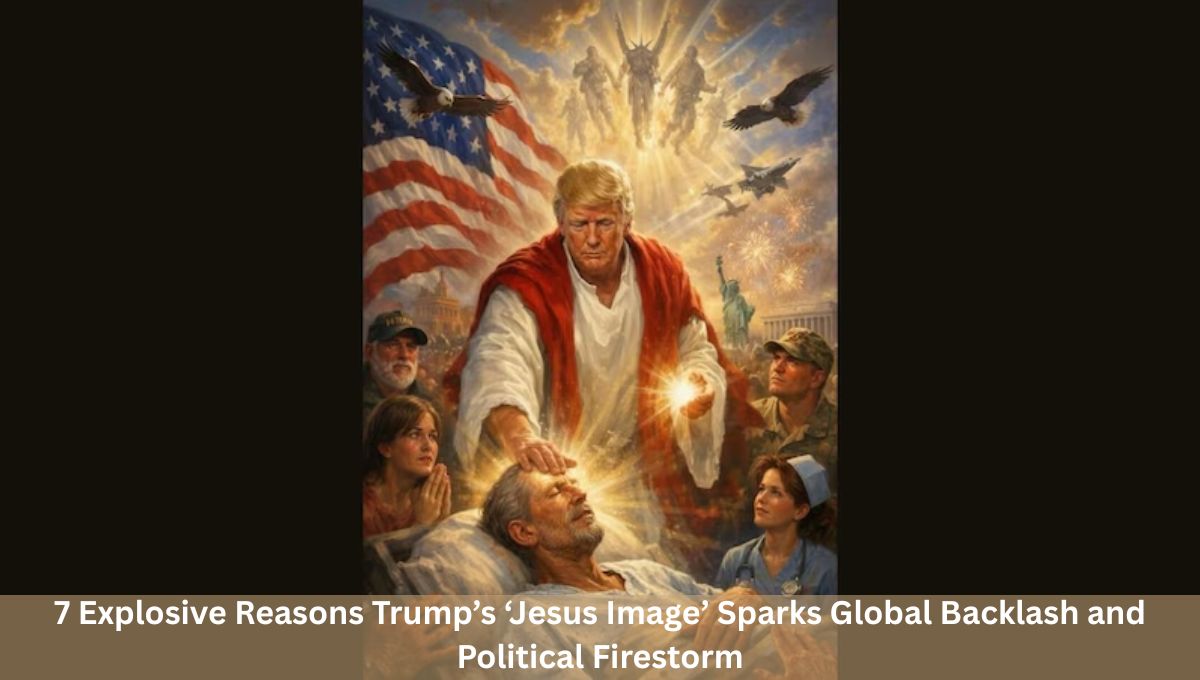
7 Explosive Reasons Trump’s ‘Jesus Image’ Sparks Global Backlash and Political Firestorm exposing deep tensions. In a moment that blurred the already fragile boundary between politics and religion, former U.S. President Donald Trump ignited a global controversy by posting an AI-generated image depicting himself in a Christ-like pose—only hours after launching a blistering public attack on Pope Leo XIV.
The backlash was swift, intense, and unusually bipartisan. Religious leaders, political commentators, and even members of Trump’s own conservative base condemned the move, calling it everything from “deeply inappropriate” to outright blasphemous.
What might have once been dismissed as a fringe social media episode has instead evolved into a significant geopolitical and cultural flashpoint—one that underscores deeper fractures in global politics, faith communities, and Trump’s own support base.
7 Explosive Reasons Trump’s ‘Jesus Image’ Sparks Global Backlash and Political Firestorm
The Image That Sparked Global Outrage
A “Messianic” Visual
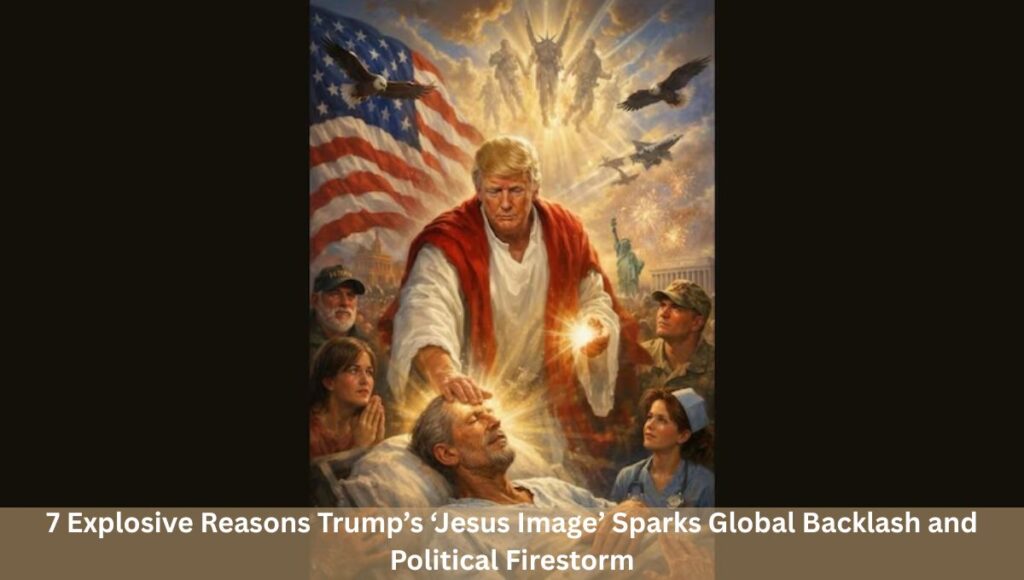
The controversy began when Trump posted an AI-generated image on his Truth Social platform.
The image portrayed him:
- Wearing flowing robes
- Radiating divine light
- Placing his hand on a man as if performing a healing
The imagery closely resembled traditional depictions of Jesus Christ, complete with symbolic lighting and reverent onlookers.
While Trump later claimed the image was meant to depict him as a “doctor” associated with the Red Cross, critics found that explanation implausible.
Why It Triggered Backlash
The reaction wasn’t just about aesthetics—it touched a sensitive nerve at the intersection of:
- Religious symbolism
- Political power
- Personal branding
For many, the issue wasn’t humor—it was perceived self-deification.
Trump vs Pope Leo XIV: The Feud Explained
Origins of the Conflict
The clash between Trump and Pope Leo XIV didn’t emerge in isolation.
It is rooted in fundamental disagreements over:
- The Iran war
- U.S. foreign policy
- Immigration policies
- The moral framing of global conflict
Pope Leo has consistently positioned himself as a voice for peace, openly criticizing militarization and warning against what he called a “delusion of omnipotence” driving global wars.
Trump, in response, accused the Pope of being:
- “Weak on crime”
- “Terrible for foreign policy”
- Politically aligned with the “radical left”
Escalation Through Social Media
Trump’s rhetoric escalated rapidly, culminating in:
- Direct personal criticism of the Pope
- Claims that the Pope’s election was politically motivated
- Suggestions that he himself influenced Vatican decisions
The AI image was posted shortly after these attacks—amplifying tensions dramatically.
Global Reaction: From Outrage to Alarm
Religious Leaders Speak Out
Prominent Christian figures—many traditionally aligned with conservative politics—publicly condemned the post.
Criticism focused on:
- Misuse of sacred imagery
- Blurring of political and religious authority
- Perceived lack of humility
Some called for an apology, not just to the public, but to religious communities worldwide.
Political Reactions Across the Spectrum
The backlash wasn’t confined to religious circles.
- Conservative commentators labeled the act “blasphemous”
- Liberal leaders described it as “egomaniacal”
- International figures called it “unacceptable”
Even traditional allies expressed discomfort, highlighting the unusual breadth of criticism.
The Vatican’s Response: Measured but Firm
Pope Leo’s Position
In contrast to Trump’s aggressive rhetoric, Pope Leo adopted a restrained tone.
He emphasized:
- Commitment to peace
- The spiritual mission of the Church
- The importance of dialogue over confrontation
He made it clear he would not engage in political mudslinging, stating that the Church’s role is fundamentally different from that of political leadership.
A Strategic Silence
Rather than escalating the conflict, the Vatican’s approach appeared deliberate:
- Avoid legitimizing the controversy
- Maintain moral authority
- Reaffirm spiritual priorities
This contrast further sharpened the perception of a clash between two fundamentally different worldviews.
Trump’s Defense: “It Was a Joke”
The “Doctor” Explanation
Trump defended the image by claiming:
- It depicted him as a doctor
- It symbolized healing and leadership
- Critics misinterpreted the intent
However, critics pointed out that:
- The visual cues strongly aligned with religious iconography
- The timing—amid attacks on the Pope—undermined the explanation
Supporters Push Back
Some Trump loyalists defended the post, arguing:
- It was satire or humor
- Critics were overreacting
- The Pope had politicized religion first
This divide reflects a broader polarization in how public figures are interpreted.
Religion and Politics: A Dangerous Intersection
Historical Sensitivities
The controversy taps into longstanding tensions:
- Separation of church and state
- Political use of religious imagery
- The role of faith in governance
Historically, leaders invoking religious symbolism have faced scrutiny—especially when perceived as elevating themselves to divine status.
Modern Amplification Through Social Media
In today’s digital landscape:
- Messages spread instantly
- Visual symbolism carries amplified impact
- Misinterpretations escalate rapidly
Trump’s post exemplifies how quickly a single image can trigger global consequences.
Impact on Trump’s Political Base
Cracks Within Conservative Support
One of the most notable aspects of this controversy is internal criticism from Trump’s base.
Concerns include:
- Alienation of Catholic voters
- Discomfort among evangelical leaders
- Growing unease over tone and messaging
Will It Affect Support?
Despite backlash, analysts suggest:
- Core supporters remain largely loyal
- Criticism may not translate into political loss
- However, moderate religious voters could be affected
This incident may not collapse support—but it introduces new vulnerabilities.
The Iran War Context: A Deeper Layer
Why the Pope Spoke Out
Pope Leo’s criticism stems from:
- Civilian suffering in the Iran conflict
- Concerns over escalating violence
- Ethical objections to military action
Trump’s Strategic Framing
Trump, meanwhile, frames the conflict in terms of:
- National security
- Preventing nuclear threats
- Strong leadership
This fundamental difference in worldview fuels the broader conflict.
A Pattern of Controversy
Not an Isolated Incident
Trump has previously:
- Shared religious-themed imagery
- Been compared to biblical figures by supporters
- Embraced symbolic narratives of destiny and survival
Post-Assassination Attempt Narrative
After surviving an assassination attempt in 2024, Trump increasingly adopted language suggesting:
- Divine purpose
- National salvation
- Personal destiny
The “Jesus image” controversy fits within this evolving narrative.
Global Implications: Beyond the U.S.
Diplomatic Tensions
The controversy has:
- Strained U.S.–Vatican relations
- Drawn reactions from global leaders
- Added complexity to international diplomacy
Religious Sensitivities Worldwide
In a global context:
- Christianity spans over a billion followers
- Religious symbolism carries deep emotional weight
- Missteps can trigger cross-cultural backlash
Conclusion: A Moment That Reflects a Larger Divide
The Trump “Jesus image” controversy is more than a viral moment—it is a reflection of deeper global tensions.
It highlights:
- The fragile boundary between faith and power
- The risks of political theatrics in a digital age
- The growing divide between moral authority and political ambition
Whether this episode fades as another headline or marks a turning point remains to be seen.
But one thing is clear:
in today’s interconnected world, even a single image can ignite a global conversation about leadership, belief, and the limits of both.
Also Read: 7 Explosive Claims: Putin’s Sacred War Rhetoric Shocks the World
Also Read: Why Donald Trump’s AI Jesus Post and Attack on Pope Leo XIV Are Sparking Global Debate