
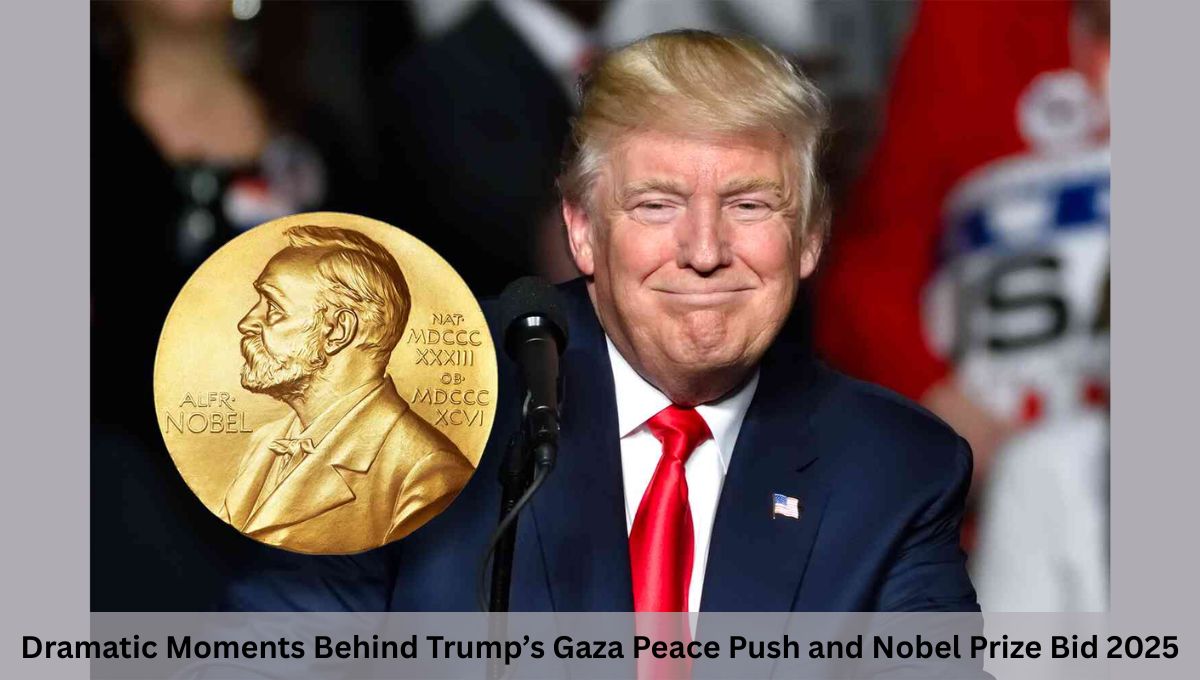
Israel – Hamas Conflict: Dramatic Moments Behind Trump’s Gaza Peace Push and Nobel Prize Bid 2025. On October 8, 2025, the world watched as US President Donald Trump announced a historic first-phase Gaza ceasefire agreement with Israel and Hamas, brokered with significant US and Qatari involvement.
The announcement came moments after US Secretary of State Marco Rubio handed Trump a handwritten note during a White House roundtable with conservative influencers.
The note, captured by photographers, read:
“You need to approve a Truth Social post soon so you can announce the deal first.”
Shortly after, Trump shared the news on Truth Social, declaring:
“I am very proud to announce that Israel and Hamas have both signed off on the first Phase of our Peace Plan. This means that ALL of the Hostages will be released very soon, and Israel will withdraw their Troops to an agreed-upon line as the first steps toward a Strong, Durable, and Everlasting Peace.”
The White House further highlighted the moment with a post on X (formerly Twitter), calling Trump “The Peace President,” signaling a strategic push for the Nobel Peace Prize.
Dramatic Moments Behind Trump’s Gaza Peace Push and Nobel Prize Bid 2025
Behind the Scenes: The Role of Marco Rubio
Marco Rubio’s note to Trump underscored the urgency and secrecy of the deal. While the public announcement was theatrical, much of the diplomacy had unfolded behind closed doors. Trump had pressed Israeli Prime Minister Benjamin Netanyahu and secured Arab state support to bring both sides to agreement.
Rubio, a seasoned diplomat, played a pivotal role in the last-minute push to finalize the announcement, demonstrating the delicate balancing act between timing and global perception.
The Framework of Trump’s Gaza Peace Plan
Trump’s 20-point Gaza framework, developed over months, aimed to end the conflict that erupted after Hamas’s October 7, 2023, attack on Israel. Key elements of the first phase included:
- Hostage Release: All living hostages and the remains of deceased hostages to be returned.
- Israeli Withdrawal: Troops to pull back to the agreed “yellow line” boundary.
- Prisoner Exchange: Israel would release 250 Palestinian prisoners and 1,700 Gazans detained since 2023.
- Transitional Governance: Preparations for an international transitional authority to oversee Gaza’s security and governance.
These provisions represented tangible progress toward a broader ceasefire after two years of ongoing hostilities.
International Reactions to the Ceasefire
Israel
Prime Minister Benjamin Netanyahu praised the agreement, framing it as a diplomatic victory and crediting Trump’s leadership in securing cooperation from multiple parties.
Hamas
Hamas confirmed the agreement while urging the US and guarantor states to ensure Israel fully implements the ceasefire. The group emphasized that any delays in fulfilling obligations would be unacceptable.
Qatar and Other Arab States
Qatar, Egypt, Jordan, Turkey, Saudi Arabia, Pakistan, and Indonesia backed the deal, highlighting the necessity of multilateral cooperation to secure hostages’ release and maintain stability in Gaza.
Global Leaders
French President Emmanuel Macron commented that the US has the influence needed to stop the war and called Trump the pivotal figure in the negotiations. Other international observers expressed cautious optimism, noting that enforcement and implementation remained critical.
The White House Push for Nobel Peace Prize Recognition
The timing of the announcement appeared to coincide with the 2025 Nobel Peace Prize, scheduled for October 10. The White House leveraged the first-phase Gaza deal to reinforce Trump’s image as a global peacemaker.
Trump’s Social Media Strategy
Trump repeatedly highlighted the deal on Truth Social and through White House posts. Exclamatory statements like “BLESSED ARE THE PEACEMAKERS!” amplified the perception of his central role.
Past and Present Nobel Campaigns
Trump has publicly claimed to have resolved multiple conflicts, including the India-Pakistan standoff, the Thailand-Cambodia border clash, and the Armenia-Azerbaijan peace initiative. However, experts caution that some claims lack independent verification and have been disputed by involved nations.
Despite being nominated during his first term, Trump has not yet won the Nobel Peace Prize. Current campaigning efforts involve direct lobbying from allies and foreign leaders, including nominations from Pakistan, Cambodia, and Israeli leadership.
Also Read: Israel, Hamas agree to Gaza truce: Is Trump now closer to a Nobel Peace Prize?
Behind the Nobel Curtain: How Winners Are Decided
The Norwegian Nobel Committee, responsible for selecting recipients, has maintained strict confidentiality. In 2025, the committee allowed limited media access to highlight the deliberation process, which emphasizes:
- Fraternity between nations
- Reduction or abolition of standing armies
- Promotion of peace congresses and global cooperation
The committee receives thousands of nominations annually, but a candidate’s lobbying efforts are typically frowned upon. Historical examples show that external pressure rarely influences final decisions.
Key Challenges for Trump’s Nobel Ambitions
Experts argue that several factors may hinder Trump’s chances for the 2025 prize:
- Short-Term vs. Long-Term Peace: The committee favors lasting multilateral solutions over immediate, high-profile agreements.
- Policy Record: Withdrawal from international institutions and controversial domestic policies may work against him.
- Nomination Deadlines: While some nominations arrived post-deadline, others, like New York Congresswoman Claudia Tenney’s for the Abraham Accords, were valid.
Observers suggest that while 2025 may not see Trump as the recipient, successful implementation of his Gaza plan could make him a contender for 2026.
Global Context: Wars and Peace in 2025
Trump’s Gaza plan is only one element of his broader peace ambitions, which also include conflict mediation in:
- Ukraine: Ongoing negotiations involve security guarantees, military support from NATO, and potential territorial arrangements.
- Gaza: The 20-point plan emphasizes hostages’ release, Israeli troop withdrawal, and long-term governance reforms.
- Other Conflicts: India-Pakistan, Thailand-Cambodia, Armenia-Azerbaijan, and Israel-Iran tensions remain regional flashpoints.
Success in Gaza and Ukraine would mark significant diplomatic achievements, reinforcing Trump’s claims to global peacemaking credentials.
Key Figures Behind the Peace Efforts
- Steve Witkoff: US envoy coordinating regional negotiations.
- Jared Kushner: Senior adviser contributing to strategy and international outreach.
- Marco Rubio: Secretary of State ensuring coordination and timely announcements.
- Qatari Leadership: Brokered discussions and facilitated hostage exchanges.
- Arab States: Provided crucial support for enforcement and implementation.
These actors collectively contributed to stabilizing Gaza and demonstrating multilateral cooperation under US leadership.
Public Perception and Controversy
While Trump celebrates the Gaza deal and promotes his Nobel Peace Prize campaign, public opinion remains divided:
- Supporters: Praise his direct involvement, timing of announcements, and global recognition efforts.
- Critics: Highlight ego-driven motives, questionable claims about prior conflicts, and the need for durable outcomes beyond headlines.
Students and analysts in Oslo University’s Peace Studies Program emphasize that the Nobel Prize celebrates enduring contributions to humanity, not self-promotion.
Also Read: Trump Deserves Nobel Peace Prize, Says White House, After Brokering Six Global Ceasefires
The Historical Context of US Presidents and the Nobel Peace Prize
Four previous US presidents have won the Nobel Peace Prize:
- Theodore Roosevelt (1906): Negotiated Russo-Japanese War peace.
- Woodrow Wilson (1919): Founded the League of Nations.
- Jimmy Carter (2002): Mediated Middle East conflicts and promoted human rights.
- Barack Obama (2009): Recognized for diplomacy and international cooperation.
Trump seeks to become the fifth, claiming achievements across multiple conflicts. Analysts caution that historical precedent favors quiet diplomacy and demonstrable peace outcomes.
Speculation and Contenders for 2025
While Trump garners attention, the Nobel Peace Prize 2025 also considers candidates such as:
- Sudan’s Emergency Response Rooms
- Yulia Navalnaya, widow of Russian opposition leader Alexei Navalny
- UN Secretary-General António Guterres
- UNHCR and UNRWA
- International courts and press watchdog organizations
The committee may also surprise with an unexpected recipient, continuing historical trends of honoring impactful but lesser-known individuals or organizations.
Implementation and the Path Forward
The first-phase Gaza plan sets the stage for long-term peace, but significant steps remain:
- Enforcement of ceasefire terms
- Hamas disarmament and transition from governance
- International oversight to ensure hostages’ release and prisoner exchanges
- Rebuilding infrastructure and restoring economic stability in Gaza
Trump and his team, including US and Arab leaders, must remain vigilant to ensure the agreement transitions from announcement to actionable reality.
Conclusion: Trump, Gaza, and the Nobel Question
The announcement of the Gaza ceasefire represents a pivotal moment in Trump’s presidency and his pursuit of the Nobel Peace Prize. While the deal’s immediate effects are promising, lasting peace will depend on sustained diplomacy, multilateral cooperation, and adherence to agreed terms by all parties.
Regardless of the Nobel outcome, the first-phase Gaza agreement marks a significant achievement in US-led diplomacy, offering hope for broader stabilization in the Middle East.
Trump’s campaign for recognition, the involvement of global leaders, and the high-profile nature of the announcement illustrate the intersection of media, diplomacy, and personal ambition in contemporary geopolitics.
As the Nobel Committee prepares to announce the 2025 recipient on October 10, the world watches not only the Gaza ceasefire but also the symbolic and tangible implications of international peacemaking in the 21st century.
Related Posts:
- Trump’s 2025 Nobel Peace Prize Snub: Politics Over…

- Rubio’s Urgent Note to Trump Before Gaza Peace Deal…
- 5 Powerful Highlights as Trump Lands Second Nobel…

- 7 Shocking Reasons FIFA’s Peace Prize for Trump…

- Trump’s Nobel Peace Prize Bid: Gaza Peace Plan, 8…
- Trump’s 2025 Gaza Peace Plan Signing and Historic…
