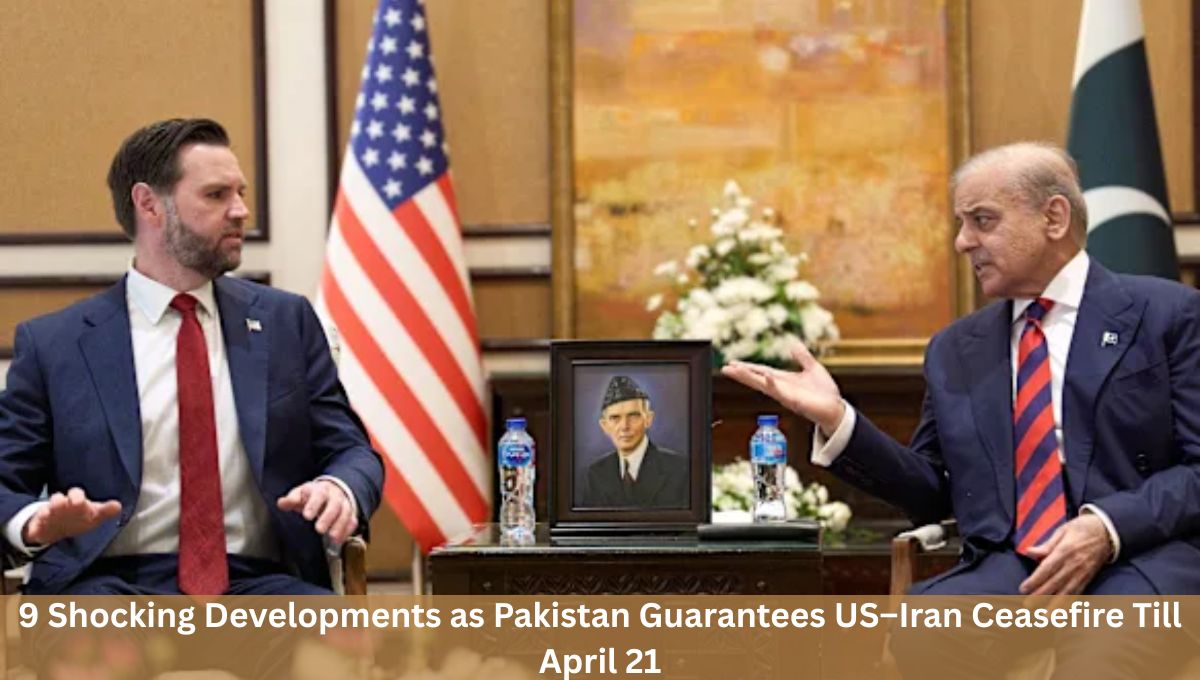
9 Shocking Developments as Pakistan Guarantees US–Iran Ceasefire Till April 21 amid rising tensions. In a dramatic turn in one of the most volatile geopolitical crises of 2026, Pakistan has emerged as a key stabilizing force, effectively acting as a guarantor of a fragile ceasefire between the United States and Iran.
Despite the collapse of high-stakes peace talks in Islamabad, sources indicate that an informal but significant understanding remains in place—ensuring no war between the two adversaries until at least April 21.
This temporary calm comes after six weeks of intense conflict that rattled global markets, disrupted energy supplies, and raised fears of a broader regional war.
While diplomacy has yet to deliver a breakthrough agreement, the current pause in hostilities offers a narrow window for de-escalation.
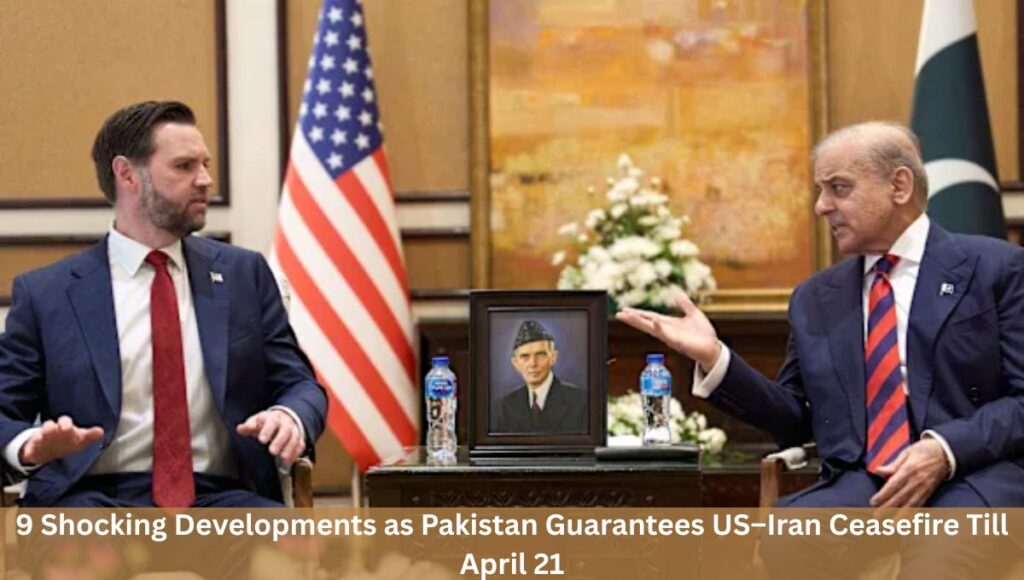
9 Shocking Developments as Pakistan Guarantees US–Iran Ceasefire Till April 21
A Ceasefire That Holds—For Now
According to high-level sources, a 15-day ceasefire that began on April 7 is still intact and expected to continue without violations until April 21.
This arrangement, though unofficial, is being respected by both Washington and Tehran.
The understanding reflects a mutual recognition of the risks associated with immediate escalation, especially in a region already under immense strain.
Key Takeaways:
- Ceasefire duration: April 7 to April 21
- No expected violations during this period
- Informal agreement still guiding both sides
- Pakistan playing a central enforcement role
The absence of direct hostilities during this period is not accidental—it is the result of calculated restraint, strategic pressure, and diplomatic balancing.
Pakistan’s Emergence as a Strategic Guarantor
Pakistan’s role in this crisis marks a significant shift in its global diplomatic standing.
Once seen as a peripheral player, Islamabad has now positioned itself at the center of a high-stakes geopolitical negotiation.
Why Pakistan Matters:
1. Mediator Turned Enforcer
Pakistan didn’t just host the talks—it actively shaped the ceasefire environment.
By maintaining military readiness in the Gulf and facilitating negotiations, it has become a de facto guarantor of peace.
2. Dual Pressure Strategy
Sources suggest Pakistan is applying a “two-front pressure” approach:
- Military posture near the Gulf region
- Diplomatic engagement through mediation
This strategy has limited Iran’s room for maneuver and increased the cost of any escalation.
3. Regional Influence
Pakistan’s coordination with Gulf actors, including Saudi Arabia, has added weight to its role, making it a credible enforcer of the ceasefire.
What Happened in the Islamabad Talks?
The much-anticipated talks in Islamabad on April 12 lasted over 21 hours but ultimately ended without a deal.
Key Participants:
- US delegation led by Vice President JD Vance
- Iranian delegation led by senior political leadership
- Pakistani officials facilitating discussions
Despite the marathon session, the negotiations reached a deadlock.
Core Issues Behind the Breakdown
1. Nuclear Dispute
The most significant sticking point was Iran’s nuclear program.
- The US demanded “zero enrichment”
- Iran refused to give up its nuclear capabilities
- Disagreement over uranium stockpile removal
For Washington, preventing Iran from acquiring nuclear weapons remains non-negotiable. For Tehran, nuclear capability is tied to national sovereignty and security.
2. Sanctions and Economic Pressure
Iran presented a 10-point proposal that included:
- Lifting of all US sanctions
- Release of frozen assets
- Economic normalization
These demands directly conflicted with US policy, making compromise difficult.
3. Control of the Strait of Hormuz
The Strait of Hormuz remains a critical flashpoint.
- Iran seeks control and potential transit fees
- The US insists on free navigation
- Global stakes are extremely high
With around 20% of the world’s oil passing through this narrow waterway, any disagreement here has global implications.
Iran in De-escalation Mode
Despite the failure of talks, Iran appears to be exercising restraint.
Why Iran Is Holding Back:
- Avoiding Isolation: Escalation could alienate key partners
- Economic Pressure: Sanctions and oil disruptions are already severe
- Strategic Calculation: Waiting for diplomatic leverage
Sources indicate that Iran is carefully balancing its actions to avoid triggering further international backlash.
The Saudi–Pakistan Axis: A New Factor
One of the most critical developments is the emergence of a Saudi-Pakistan strategic alignment.
Impact on Iran:
- Increased military pressure
- Reduced strategic flexibility
- Higher cost of aggression
Sources suggest that any Iranian move beyond April 21 could strengthen this axis permanently, creating long-term strategic challenges for Tehran.
Global Reactions to the Failed Talks
Pakistan’s Position
Pakistan has urged both sides to maintain the ceasefire and continue dialogue.
“It is imperative that the parties continue to uphold their commitment to ceasefire.”
Islamabad has also committed to facilitating future negotiations.
United Kingdom
The UK has expressed support for continued diplomacy, emphasizing the importance of a long-term resolution.
European Union
EU officials have highlighted diplomacy as the only viable path forward and praised Pakistan’s mediation efforts.
Russia
Russia has offered to mediate, signaling its continued interest in shaping the regional balance.
Australia and Others
Global leaders have echoed a common message: maintain the ceasefire and return to negotiations.
Atmosphere of Mistrust
One of the defining features of the talks was deep mutual distrust.
From Iran’s Perspective:
- History of broken agreements
- Concerns over US intentions
- Resistance to imposed terms
From the US Perspective:
- Skepticism about Iran’s nuclear ambitions
- Demand for verifiable commitments
- Concern over regional activities
This trust deficit remains the biggest obstacle to any lasting agreement.
Military Posturing Across the Region
Even as diplomacy continues, military readiness remains high.
Key Developments:
- US forces preparing operations near Strait of Hormuz
- Iranian forces maintaining strategic positions
- Pakistan deploying assets in the Gulf
This dual-track approach—talks alongside military preparedness—adds complexity to the situation.
Economic Stakes: A Global Concern
The conflict has already impacted global markets.
Key Effects:
- Rising oil prices
- Supply chain disruptions
- Increased energy costs worldwide
For global audiences, the stakes extend beyond geopolitics into everyday economic realities.
The April 21 Deadline: A Critical Turning Point
The ceasefire’s expiration date looms large.
Possible Outcomes:
Scenario 1: Extension of Ceasefire
- Continued diplomatic engagement
- Gradual de-escalation
Scenario 2: Renewed Conflict
- Breakdown of talks
- Military escalation
Scenario 3: Partial Agreement
- Limited concessions
- Continued negotiations
April 21 is likely to determine the trajectory of the conflict.
Pakistan’s Diplomatic Gamble
Pakistan’s decision to act as a guarantor carries both opportunity and risk.
Opportunities:
- Enhanced global influence
- Stronger regional partnerships
- Recognition as a key mediator
Risks:
- Being drawn into conflict
- Strained relations with one side
- Increased security challenges
This balancing act will test Islamabad’s diplomatic capabilities.
The Bigger Picture: A Conflict Defining a Generation
Many analysts believe this conflict could shape global geopolitics for years to come.
Why It Matters:
- Redefines power dynamics in the Middle East
- Tests international diplomatic frameworks
- Impacts global economic stability
As one leader noted, this crisis may “define a generation.”
What to Watch Next
As the situation evolves, several key indicators will be critical:
- Iran’s response to the US proposal
- Any signs of ceasefire violations
- Movement in global oil markets
- Diplomatic engagement from major powers
These factors will determine whether the current pause leads to peace—or merely delays further conflict.
Conclusion
The current ceasefire between the United States and Iran, guaranteed informally by Pakistan, represents a fragile but crucial pause in a highly volatile conflict.
While the failure of talks in Islamabad highlights deep divisions, the absence of immediate hostilities offers a glimmer of hope.
Pakistan’s emergence as a guarantor underscores a shifting geopolitical landscape, where regional players are taking on more prominent roles in global diplomacy.
However, with the April 21 deadline approaching, the world remains on edge.
Whether this moment leads to lasting peace or renewed confrontation will depend on the decisions made in the coming days.
For now, the ceasefire holds—but the future remains uncertain.
Also Read: 11 Shocking Developments as Israel Slams Pakistan Over Ceasefire Row
Also Read: Door not closed yet: Mediators hopeful of US-Iran talks before truce ends
Related Posts:
- 3 Explosive Conditions Iran Sets to End War with US…
- 7 Powerful Facts About Ayatollah Ali Khamenei’s…
- 9 Explosive Claims as Trump Says US Winning Iran War

- 10 Explosive Warnings as Donald Trump Calls Iran…
- Afghanistan–Pakistan War 2025: Inside the 48-Hour Ceasefire

- 5 Major Takeaways from the US Supreme Court's…