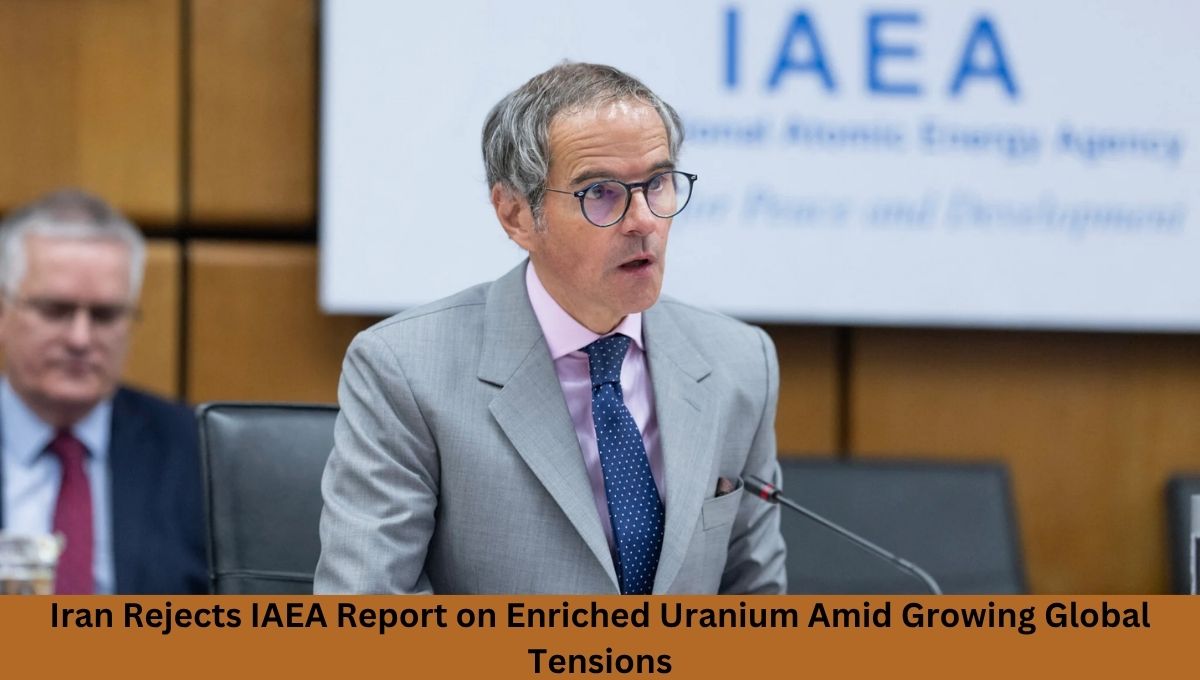
Citing the report as “Politically Motivated” Iran Rejects IAEA Report on Enriched Uranium Amid Growing Global Tensions. In a heated response to the latest IAEA report 2025, Iran has forcefully rejected allegations that it has significantly increased its stockpile of highly enriched uranium a charge Tehran calls “biased, baseless, and politically driven.”
According to the International Atomic Energy Agency, Iran now possesses 408.6 kilograms of uranium enriched up to 60% purity, a nearly 50% increase from February. The report, which has sparked global alarm, claims that this quantity brings Iran dangerously close to possessing weapons-grade uranium, a level defined at 90%.
Iran’s Foreign Ministry, backed by the Atomic Energy Organization of Iran, condemned the findings and accused the IAEA of using “forged documents provided by the Zionist regime [Israel],” further arguing that the report was influenced by external political pressure particularly from Western nations.
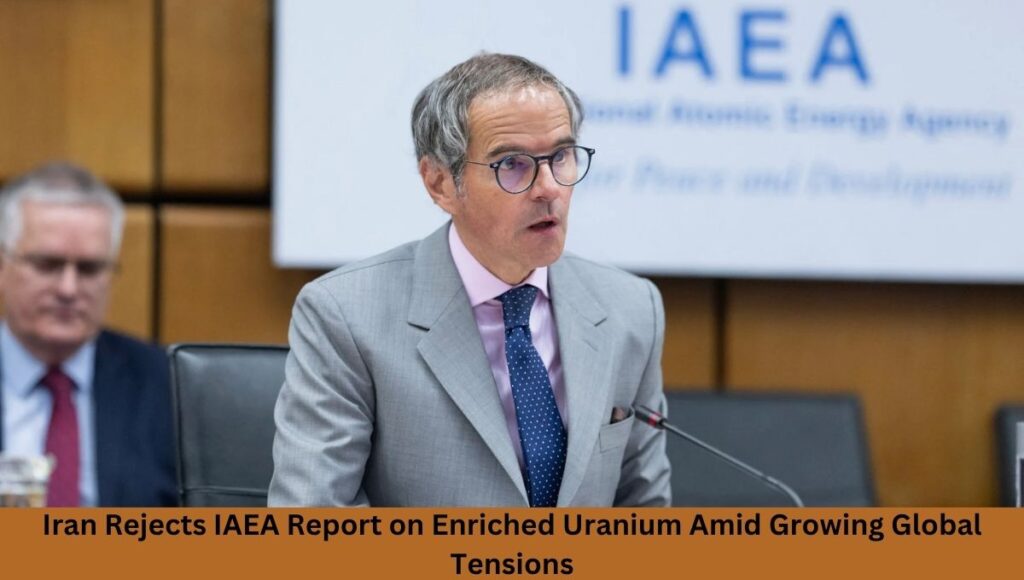
Iran Rejects IAEA Report on Enriched Uranium Amid Growing Global Tensions
IAEA Raises Alarm Over Weapons-Grade Threshold
The IAEA uranium report highlights that Iran is now the only non-nuclear-armed state to be enriching uranium to 60% purity. Experts caution that as little as 42 kilograms at this level, if further refined, would be sufficient to build a single nuclear bomb.
IAEA Director General Rafael Grossi called the development a “serious concern” and noted that Iran’s uranium enrichment rate now amounts to nearly one nuclear weapon’s worth of material per month. The report also states that Iran’s total uranium stockpile has reached a staggering 9,247.6 kilograms across all enrichment levels.
This significant increase in enriched uranium comes amid fragile diplomatic negotiations between the United States and Iran, with Oman acting as a key mediator.
Undeclared Nuclear Sites Spark Deeper Concerns
Beyond the sheer volume of enriched uranium, the IAEA’s findings detail alarming activities at three previously undisclosed nuclear sites: Lavisan-Shian, Varamin, and Turquzabad. These sites are believed to be part of a secret weapons program Iran operated in the early 2000s.
At Lavisan-Shian, inspectors found that Iran used a uranium metal disc in neutron source testing—technology associated with nuclear weapons detonation. The report accuses Iran of failing to declare this material and questions its willingness to cooperate fully with international inspectors.
Iran Reaffirms Peaceful Intentions, Citing Religious Edict
In a televised address, Iran’s lead nuclear negotiator Abbas Araghchi reiterated that Iran considers nuclear weapons “unacceptable.” He pointed to a religious decree issued by Supreme Leader Ayatollah Ali Khamenei, which bans the development of nuclear weapons.
“If the issue is nuclear weapons, yes, we too consider this type of weapon unacceptable,” Araghchi said, reaffirming that Iran’s nuclear program is peaceful and aimed at energy production and scientific development not weaponization.
US-Iran Nuclear Talks at a Crossroads
Amid the IAEA revelations, diplomatic efforts between Tehran and Washington continue, albeit with rising tension. Over the weekend, Omani Foreign Minister Badr al-Busaidi delivered a new proposal from the Biden administration during a visit to Tehran.
Iranian officials have promised to respond in line with “national interests and the rights of the Iranian people.”
The United States, backed by Britain, France, and Germany, is now preparing to present a draft resolution at the upcoming IAEA Board of Governors meeting on June 9. The resolution could formally declare Iran in violation of its nuclear non-proliferation obligations, potentially triggering a referral to the UN Security Council.
Israel Demands Urgent Action
Reacting strongly to the IAEA report, Israeli Prime Minister Benjamin Netanyahu urged immediate international intervention, stating, “Such a level of enrichment exists only in countries actively pursuing nuclear weapons and has no civilian justification whatsoever.”
Netanyahu stressed that Iran’s increasing stockpile and refusal to allow full inspections are proof of its “determination to complete its nuclear weapons program.” Israel, which has repeatedly threatened preemptive action, now appears to be escalating its calls for global pressure.
Trump Warns Against Military Escalation, Pushes for Deal
Former US President Donald Trump, in a rare show of support for diplomacy, advised against a military strike on Iranian facilities, warning that it could derail potential progress.
“They don’t want to be blown up. They would rather make a deal,” Trump said Friday. “That would be a great thing.”
However, Trump also reiterated that “Iran cannot have a nuclear weapon,” signaling bipartisan consensus in Washington that containment of Iran’s nuclear program is non-negotiable.
Experts See Uranium Enrichment as Leverage
Iranian political analyst Hamed Mousavi, speaking to Al Jazeera, believes Iran’s rapid uranium enrichment is likely a negotiating tactic. “An advancement in the nuclear programme is going to bring them leverage at the negotiation table with the Americans,” he said.
While the West sees this as a breach of trust, Iran views its actions as a reaction to the US withdrawal from the JCPOA in 2018, a deal that originally restricted Iran’s enrichment in exchange for sanctions relief.
What’s Next? A Diplomatic Tipping Point
The IAEA uranium report 2025 underscores a deepening nuclear crisis that could soon reach a point of no return. With Iran holding enough 60% enriched uranium for multiple bombs and global powers divided on strategy, the path forward remains uncertain.
The June 9 IAEA meeting could mark a critical turning point. A resolution against Iran may lead to further sanctions or Security Council involvement, while failure to act decisively risks emboldening Iran and fueling broader Middle East tensions.
Conclusion: Clock Ticking on Iran Nuclear Crisis
The IAEA report is not merely a technical assessment it’s a warning siren for the international community. Iran’s enriched uranium stockpile, secret nuclear sites, and limited cooperation with inspectors raise legitimate fears that Tehran is nearing nuclear weapons capability.
While Iran insists on peaceful intentions, the global consensus particularly from the US, EU, and Israel is that decisive action must be taken. Whether diplomacy can still succeed, or whether a new phase of confrontation is inevitable, remains to be seen. The world watches anxiously as Iran’s nuclear standoff edges ever closer to a dangerous climax.
Also read: Trump Declares ‘No Uranium Enrichment’ as Iran Nuclear Talks Falter
Also Read: Damning IAEA report spells out past secret nuclear activities in Iran
Related Posts:
- 3 Explosive Conditions Iran Sets to End War with US…
- 10 Explosive Signals Trump Says Iran War Could End…
- 10 Explosive Warnings as Donald Trump Calls Iran…
- 7 Explosive Signs Russia Is Quietly Backing Iran in…
- 7 Explosive Impacts of Trump’s 25% Iran Tariff on…
- 12 Explosive Claims as Donald Trump Says Iran War…