
7 Explosive Facts About Donald Trump’s Gold Coin Plan for US 250th Anniversary amid legal debate and political backlash. The United States is preparing to mark one of the most significant milestones in its history—the 250th anniversary of independence.
Thank you for reading this post, don't forget to subscribe!However, what was expected to be a celebratory moment has quickly evolved into a political and legal controversy. At the center of this debate is a proposal to feature Donald Trump on a 24-karat gold commemorative coin.
Approved in principle by the U.S. Commission on Fine Arts, the coin design has triggered intense discussions about legality, democratic values, and presidential legacy.
7 Explosive Facts About Donald Trump’s Gold Coin Plan for US 250th Anniversary
What Is the Trump Gold Coin Proposal?
The proposed coin is part of a broader initiative to commemorate the United States’ Semiquincentennial—the 250th anniversary of independence in 2026.
Key Features of the Coin
- 24-karat gold composition
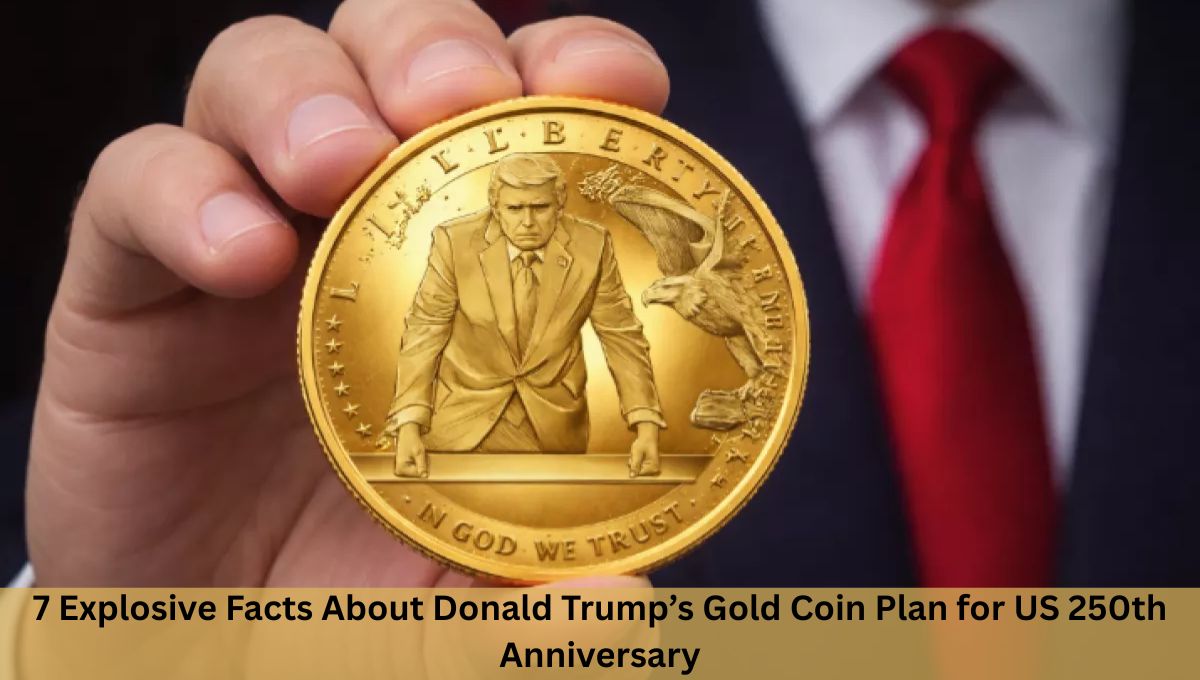
- Portrait of Donald Trump leaning on the Resolute Desk
- Inscription “LIBERTY” and dual date “1776–2026”
- Expected large diameter (up to 3 inches)
The coin will be produced by the United States Mint and is intended as a collector’s item, not standard circulating currency.
Why Is This Move Controversial?
The controversy stems from a long-standing principle in American governance:
living individuals—especially sitting presidents—do not appear on US currency.
Legal Framework
US federal law traditionally prohibits depicting living persons on currency. Critics argue that this proposal challenges that principle.
However, supporters claim:
- The coin is commemorative, not legal tender
- Authority lies with the Treasury Secretary
- Special legislation allows flexibility for anniversary coins
Brandon Beach defended the move, stating that commemorative coins fall outside the restrictions applied to circulating currency.
Historical Precedent: Has This Happened Before?
Only once in US history has a sitting president appeared on a coin:
- Calvin Coolidge (1926 commemorative coin)
- Appeared alongside George Washington
- Issued for the 150th anniversary of independence
Even then, the decision was controversial, and many of those coins were later melted down.
This precedent is now being revisited in the Trump coin debate.
Political Reactions: Sharp Divide Emerges
The proposal has ignited a fierce political response across party lines.
Criticism from Democrats
Jeff Merkley strongly criticized the idea, stating:
“Monarchs and dictators put their faces on coins, not leaders of a democracy.”
Opponents argue that:
- It undermines democratic traditions
- It creates a perception of personality cults
- It politicizes national symbols
Support from Trump Allies
Supporters counter that:
- Trump represents the current leadership during the milestone
- Commemorative coins often reflect historical significance
- The president’s role justifies inclusion
The Role of the Treasury and Legal Authority
The decision ultimately rests with the US Treasury, led by Scott Bessent.
Key Legal Arguments
- Treasury Secretary has discretionary authority
- Commemorative coins are not bound by standard currency rules
- A 2020 law allows special designs for the 250th anniversary
Still, legal experts warn that:
- The issue could face court challenges
- Interpretation of “currency” vs “commemorative items” remains contested
Design Approval and Artistic Direction
The design was approved by the U.S. Commission on Fine Arts on March 19.
Design Details
- Based on a portrait displayed at the National Portrait Gallery
- Shows Trump leaning forward with clenched fists
- Intended to convey strength and leadership
Some members of the commission even suggested making the coin as large as possible for visual impact.
A Broader Plan: More Trump-Themed Currency?
The gold coin is not the only proposal under discussion.
Additional Possibilities
- A $1 coin featuring Trump for circulation
- Limited-edition anniversary coins with special markings
- One-year redesigns of existing coins
These plans have further intensified the debate, particularly regarding the $1 coin, which would enter everyday use.
Critics Warn of “Monarchical Symbolism”
One of the strongest objections comes from those who see the move as contrary to American founding principles.
Historically:
- George Washington opposed featuring leaders on currency
- The US sought to distinguish itself from monarchies
Critics argue that placing a sitting president on coins:
- Echoes practices of monarchies
- Risks elevating individuals above institutions
- Conflicts with the spirit of the Declaration of Independence
Trump’s Broader Legacy Strategy
The coin proposal is part of a wider pattern of initiatives linked to Trump’s presidency.
Notable Developments
- Renaming of the John F. Kennedy Center for the Performing Arts
- Addition of his name to the United States Institute of Peace
- Proposed redesigns of White House infrastructure
These efforts have fueled criticism that Trump is attempting to leave a lasting imprint on national institutions.
Public Reaction and Cultural Impact
Public opinion is deeply divided.
Supporters Say:
- The coin celebrates leadership during a historic milestone
- It reflects contemporary American identity
- It is comparable to other commemorative traditions
Critics Say:
- It politicizes national symbols
- It risks setting a precedent for future leaders
- It undermines institutional neutrality
Globally, the move has also drawn attention, as many democracies avoid depicting current leaders on currency.
Economic and Collector Value
From a financial perspective, the coin could become highly valuable.
Potential Market Impact
- Likely priced in the thousands of dollars
- Strong demand among collectors
- Limited production could increase rarity
The coin may appeal to:
- Numismatists (coin collectors)
- Political memorabilia buyers
- Investors in precious metals
Global Context: How Other Countries Handle Currency
Most democratic nations follow similar principles:
- Avoid featuring living political leaders
- Emphasize historical figures or cultural symbols
- Maintain political neutrality in currency design
In contrast:
- Monarchies often feature reigning rulers
- Authoritarian regimes may highlight current leaders
This comparison has intensified criticism of the Trump coin proposal.
What Happens Next?
The proposal is not yet final.
Next Steps
- Final design approval by the Treasury
- Determination of size and production details
- Possible legal challenges
- Public rollout ahead of July 4, 2026
The timeline suggests decisions will be finalized in the coming months.
Why the Straitforward Debate Matters Globally
Although this is a US-specific issue, its implications are global.
Key Global Impacts
- Sets precedent for democratic norms
- Influences perception of US institutions
- Reflects broader political polarization
For international observers, the debate highlights how symbolism and governance intersect in modern democracies.
Conclusion: Symbolism, Law, and Politics Collide
The proposal to feature Donald Trump on a gold coin marking America’s 250th anniversary is more than a design decision—it is a test of legal boundaries, democratic traditions, and political identity.
Supporters see it as a fitting tribute during a historic milestone. Critics view it as a troubling departure from long-standing norms.
As the United States approaches its Semiquincentennial, this controversy underscores a deeper question:
What should national symbols represent—individual leadership or enduring democratic ideals?
The answer will shape not just a coin, but the narrative of America’s 250-year legacy.
Also Read: 10 Explosive Strikes That Forced Trump to Rethink Iran War Strategy
Also Read: Trump gold coin for US 250th anniversary sparks row: Is this legal?
Related Posts:
- 7 Shocking Reasons FIFA’s Peace Prize for Trump…

- 11 Explosive Revelations From Ted Cruz’s Leaked…

- 9 Explosive Revelations as Trump Declares His Health…

- Donald Trump’s 24-Karat Gold White House Makeover:…

- Trump’s 20-Point Gaza Peace Plan Gains Urgent Global…

- Can the EU and NATO Impose Tariffs on India and…
