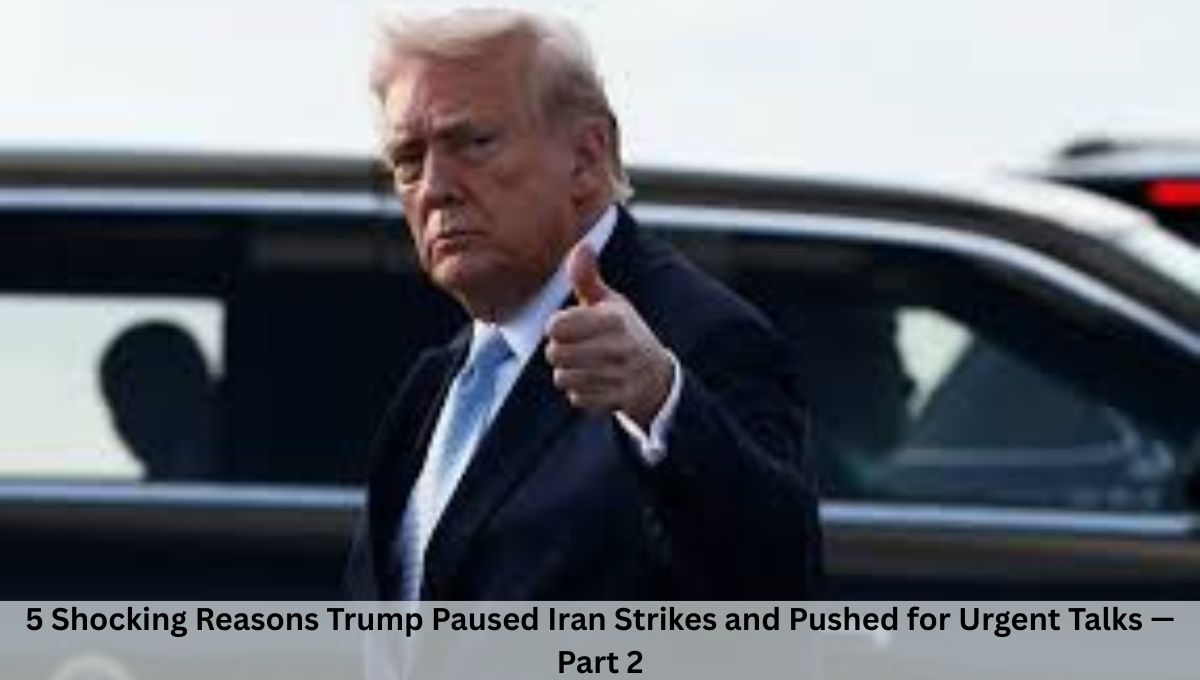
5 Shocking Reasons Trump Paused Iran Strikes and Pushed for Urgent Talks amid dangerous escalation. In a conflict marked by rapid escalation and high-stakes rhetoric, U.S. President Donald Trump’s decision to pause planned strikes on Iran’s power plants and energy infrastructure for five days came as a surprise to many observers around the world.
Just days earlier, Trump had issued a stark ultimatum:
reopen the Strait of Hormuz within 48 hours or face devastating attacks on critical Iranian infrastructure.
The warning raised fears of a major regional war, with potential consequences for global energy markets and economic stability.
Yet by Monday, the tone had shifted dramatically. Trump announced that the United States had engaged in “very good and productive conversations” with Iranian authorities and that military action would be temporarily halted to allow diplomacy a chance.
The move triggered immediate reactions—from market rallies to geopolitical skepticism—highlighting how fragile and complex the situation remains.
5 Shocking Reasons Trump Paused Iran Strikes and Pushed for Urgent Talks — Part 2
Trump’s Announcement: Pause and Possibility
Trump revealed the decision in a post on Truth Social, stating that the U.S. military would postpone strikes on Iran’s power plants and energy infrastructure for five days.
Speaking shortly afterward, he emphasized the administration’s intent:
- The United States is “very intent on making a deal”
- Talks had been “very intense”
- “Major points of agreement” had already been reached
He suggested that if the pause leads to progress, the conflict could move toward resolution.
However, he also issued a stark warning:
if diplomacy fails, military action would resume.
This dual message—hope for peace paired with the threat of force—captures the delicate balance currently defining U.S. strategy.
Iran’s Response: Denial and Defiance
Despite Trump’s claims of progress, Iran publicly rejected the idea that any talks had taken place.
State media, citing a senior security official, stated:
- No direct or indirect negotiations had occurred
- Claims of talks were described as “psychological warfare”
- The Strait of Hormuz would not return to normal conditions
Iranian officials also suggested that U.S. statements were aimed at stabilizing volatile oil markets rather than reflecting genuine diplomacy.
This sharp contradiction highlights a key challenge:
uncertainty over whether meaningful negotiations are actually underway.
The Strait of Hormuz: The Crisis Epicenter
Why the Strait Matters
The Strait of Hormuz is one of the world’s most critical maritime chokepoints:
- Roughly 20% of global oil and gas supply passes through it
- It connects the Persian Gulf to international markets
- It is vital for energy security across Asia, Europe, and beyond
Current Situation
Since the conflict intensified:
- Shipping traffic has slowed dramatically
- Iran has targeted vessels linked to adversaries
- Oil prices surged past $100 per barrel
The disruption has created ripple effects across global markets, making the strait a central focus of both military and diplomatic strategies.
Market Reactions: Immediate Global Impact
Trump’s announcement had a swift and visible impact on global financial markets.
Positive Signals
- U.S. stock futures rallied
- Major indices showed strong gains
- Investor confidence improved
Energy Market Response
- Oil prices dropped sharply
- Brent crude fell below $100 per barrel
- Inflation concerns temporarily eased
These reactions underscore how closely global markets are tied to geopolitical developments in the Middle East.
1. Backchannel Diplomacy Changed the Equation
One of the most significant factors behind Trump’s shift appears to be intense behind-the-scenes diplomacy.
Key Players
Several countries have stepped in as mediators:
- Egypt
- Turkey
- Oman
- Pakistan
- Saudi Arabia
- India (limited but notable role)
Diplomatic Breakthrough
Egypt reportedly established contact with Iran’s Islamic Revolutionary Guard Corps (IRGC), proposing a five-day pause in hostilities.
This initiative may have directly influenced Trump’s decision, providing a potential pathway toward de-escalation.
2. The Threat of Regional Escalation
The proposed strikes on Iran’s energy infrastructure carried enormous risks.
Potential Consequences
Iran warned it would retaliate by targeting:
- Power plants in Israel
- Energy facilities across the Gulf
- Infrastructure supporting U.S. military bases
Wider Impact
Such escalation could have:
- Disrupted electricity across multiple countries
- Damaged water desalination systems
- Triggered a broader regional war
The scale of potential damage likely forced a reassessment in Washington.
3. Economic Pressure and Domestic Politics
The economic fallout from the conflict has been significant.
Rising Costs
- Fuel prices surged globally
- Inflation fears intensified
- Supply chains faced disruption
Domestic Impact
In the United States:
- Higher fuel costs affected consumers
- Political pressure increased
- Concerns grew over prolonged conflict
Trump’s pivot toward diplomacy may reflect an effort to stabilize both domestic and global economic conditions.
4. Military Strategy: Pressure Without Commitment
Despite the pause on energy infrastructure strikes, military operations continue.
Ongoing Actions
- U.S. forces remain active in the region
- Additional Marines have been deployed
- Strikes on non-energy targets continue
Strategic Approach
This suggests a dual-track strategy:
- Maintain military pressure
- Keep diplomatic options open
Such an approach allows flexibility while avoiding full-scale escalation.
5. The Nuclear Issue Remains Central
At the core of the conflict is Iran’s nuclear program.
U.S. Position
Trump reiterated key demands:
- Iran must never develop nuclear weapons
- Enriched uranium must be surrendered
- Strict limits must be enforced
Iran’s Stance
Iran maintains that:
- Its program is for peaceful purposes
- It has the right to nuclear development
- External control is unacceptable
This fundamental disagreement remains the biggest obstacle to any lasting agreement.
Conflicting Narratives: Truth vs Reality
A major challenge in assessing the situation is the stark difference in narratives.
U.S. Claims
- Talks are ongoing
- Agreements are close
- Progress is being made
Iran’s Claims
- No talks have occurred
- U.S. statements are misleading
- Resistance will continue
Likely Reality
Analysts suggest:
- Indirect communication is happening
- Formal negotiations have not begun
- Both sides are testing positions
Israel’s Role: A Parallel Agenda
Israel continues its military campaign despite diplomatic developments.
Current Position
- Ongoing strikes in Iran and Lebanon
- Commitment to long-term operations
- Skepticism about negotiations
Strategic Divergence
Israel’s objectives may not fully align with U.S. diplomatic efforts, adding complexity to the situation.
Global Diplomatic Push Intensifies
The scale of international involvement reflects the seriousness of the crisis.
Key Developments
- High-level meetings in Riyadh
- Increased communication between governments
- Proposals for neutral oversight of the Strait
Challenges
- Lack of trust between parties
- Absence of clear Iranian leadership interlocutors
- Deep strategic disagreements
The Five-Day Window: What It Means
Trump’s five-day pause is a critical moment.
Possible Outcomes
- Breakthrough Agreement
- Ceasefire established
- Strait of Hormuz reopened
- Markets stabilize
- Extended Negotiations
- Talks continue beyond deadline
- Temporary calm maintained
- Renewed Escalation
- Talks fail
- Strikes resume
- Conflict intensifies
The Role of Leadership in Tehran
Uncertainty over Iran’s leadership adds another layer of complexity.
Key Questions
- Who has authority to negotiate?
- Is there internal consensus?
- How will hardliners respond?
The emergence of a more hardline leadership could complicate diplomatic efforts.
Energy Security and Global Stakes
The crisis has highlighted vulnerabilities in global energy systems.
Immediate Risks
- Supply disruptions
- Price volatility
- Economic instability
Long-Term Implications
- Increased focus on energy diversification
- Strategic reserves gaining importance
- Shifts in global energy alliances
The Human and Regional Cost
Beyond geopolitics, the conflict has had a significant human impact.
Casualties and Displacement
- Thousands killed across the region
- Large-scale displacement in Lebanon
- Civilian infrastructure damaged
Humanitarian Concerns
- Access to water and electricity at risk
- Potential for wider humanitarian crisis
Trump’s Strategy: Escalate to Negotiate
Trump’s approach appears to follow a familiar pattern.
Key Elements
- Apply maximum pressure
- Create urgency through threats
- Shift to diplomacy at peak tension
Outcome So Far
This strategy has:
- Forced international attention
- Triggered diplomatic engagement
- Created an opening for talks
What Comes Next?
Short-Term Outlook
- Continued diplomatic efforts
- Ongoing military presence
- Market volatility
Medium-Term Risks
- Breakdown of talks
- Renewed escalation
- Expanded regional conflict
Long-Term Possibilities
- Comprehensive agreement
- Prolonged stalemate
- Reshaping of Middle East geopolitics
Conclusion: A Fragile Moment of Opportunity
Trump’s decision to pause strikes on Iran’s energy infrastructure marks a critical turning point in the conflict—but not necessarily a resolution.
The situation remains highly fluid, shaped by:
- Conflicting narratives
- Strategic interests
- Economic pressures
- Diplomatic efforts
While the five-day pause offers a window for de-escalation, the underlying tensions remain unresolved.
Whether this moment leads to lasting peace or renewed conflict will depend on what happens next—both at the negotiating table and on the ground.
For now, the world watches closely as diplomacy and military strategy continue to unfold side by side.
Also Read: 10 Shocking Developments as Iran Strikes Near Israel Nuclear Site, over 100 Injured
Also Read: Trump Halts Iran Energy Strikes for 5 Days as Talks Emerge, Oil Prices Drop