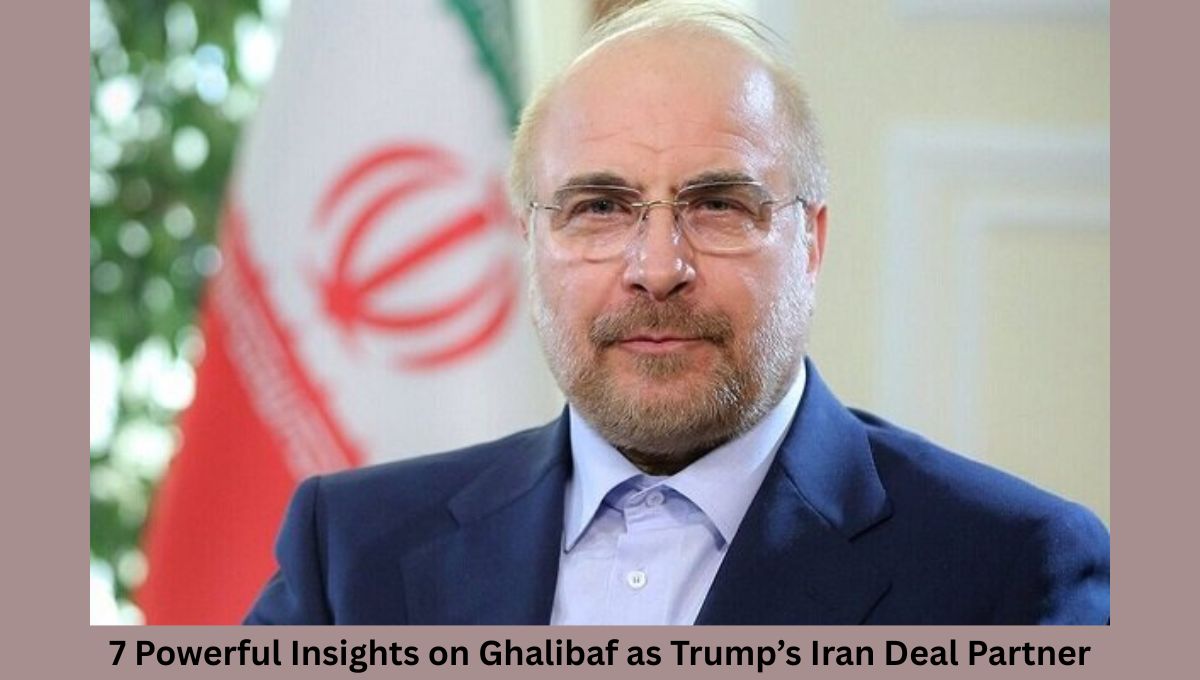
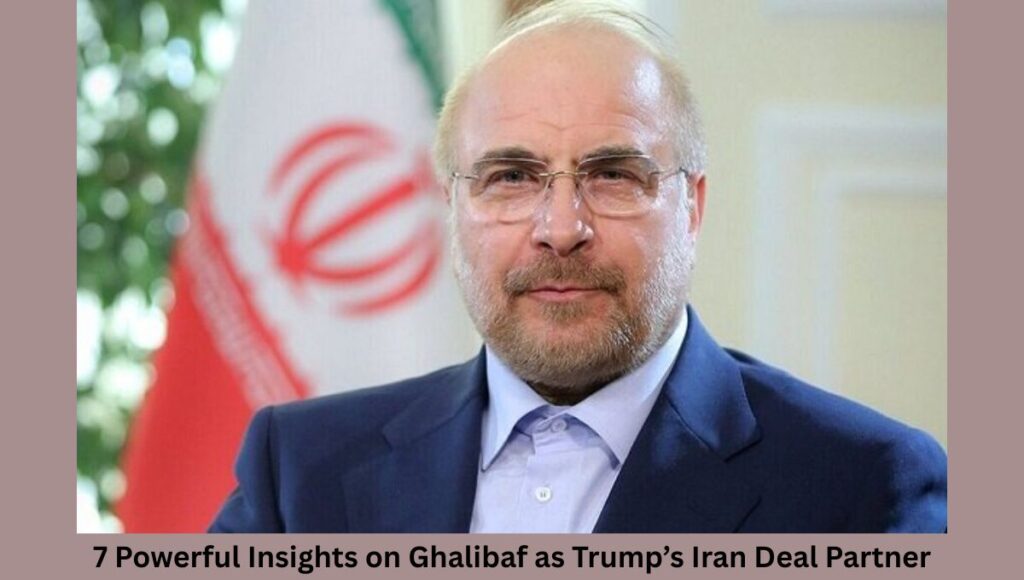
7 Powerful Insights on Ghalibaf as Trump’s Iran Deal Partner — A new face in high-stakes diplomacy.
Thank you for reading this post, don't forget to subscribe!As tensions between the United States and Iran enter a volatile phase, a surprising name has emerged at the center of potential diplomacy:
Mohammad Bagher Ghalibaf.
Once known primarily as a hardline insider within Iran’s political and military establishment, he is now being quietly evaluated by the Trump administration as a possible negotiating partner—and even a future leader.
This development signals a significant shift in Washington’s strategy. After weeks of military escalation, economic shock waves, and geopolitical uncertainty, the focus appears to be turning toward negotiation and managed de-escalation.
But who exactly is Ghalibaf? Why is he being considered now? And what does this mean for the future of US-Iran relations and global stability?
7 Powerful Insights on Ghalibaf as Trump’s Iran Deal Partner
The Strategic Shift in Washington
From Military Pressure to Diplomatic Exploration
The Trump administration’s evolving posture reflects a broader recalibration.
Initially characterized by threats of strikes on Iran’s energy infrastructure and ultimatums over the Strait of Hormuz, US policy is now exploring diplomatic off-ramps.
Officials suggest that identifying a credible interlocutor within Iran is critical to any negotiated outcome.
Rather than engaging with exiled opposition figures, Washington appears focused on insiders who hold real power within Tehran’s system.
This is where Ghalibaf enters the picture.
Who is Mohammad Bagher Ghalibaf?
A Product of Iran’s Revolutionary System
Born in 1961, Ghalibaf rose through the ranks of Iran’s Islamic Revolutionary Guard Corps (IRGC), one of the most powerful institutions in the country.
His career spans multiple domains:
- IRGC commander
- National police chief
- Mayor of Tehran (12 years)
- Presidential candidate (multiple times)
- Current Speaker of Parliament
This diverse background gives him rare influence across military, political, and bureaucratic structures.
A Dual Identity: Hardliner and Pragmatist
Ghalibaf presents a complex profile:
Hardline Credentials
- Deep ties to IRGC leadership
- Role in suppressing protests
- Strong anti-US rhetoric
Pragmatic Image
- Administrative experience as Tehran mayor
- Attempts to modernize governance
- Reputation for managerial efficiency
This duality is precisely why some in Washington see him as a “workable partner.”
Why the US Sees Ghalibaf as a Potential Partner
1. Insider Legitimacy
Unlike exiled figures, Ghalibaf operates within Iran’s power structure. Any agreement brokered through him would carry greater credibility domestically.
2. Military and Political Connectivity
His IRGC background ensures he has influence over key security institutions—critical for implementing any deal.
3. Pragmatic Flexibility
Despite his hardline stance, Ghalibaf has shown an ability to adapt when necessary, especially in administrative roles.
Skepticism Within Washington
Not everyone in the US administration is convinced.
Concerns Include:
- Ideological Commitment: Ghalibaf remains deeply loyal to Iran’s Islamic system
- Limited Flexibility: Major concessions may be politically impossible
- Institutional Constraints: Iran’s power structure could restrict his actions
Analysts warn that viewing him as a reformist or pro-Western figure would be a miscalculation.
Iran’s Official Denial and Strategic Messaging
Interestingly, Ghalibaf has publicly denied any negotiations with the United States.
This contradiction highlights a familiar pattern in international diplomacy:
- Public denial for domestic audiences
- Quiet backchannel engagement through intermediaries
Such dual messaging is common in high-stakes geopolitical negotiations, especially in regions where public perception is tightly controlled.
The Role of Backchannel Diplomacy
Regional Mediators Step In
Countries like Turkey, Pakistan, and Oman are reportedly facilitating indirect communication between Washington and Tehran.
This reflects a broader diplomatic architecture where:
- Direct talks are politically sensitive
- Intermediaries enable plausible deniability
- Incremental trust-building becomes possible
The Strait of Hormuz: The Core Strategic Issue
At the heart of the crisis lies the Strait of Hormuz, through which roughly 20% of global oil supply passes.
Why It Matters
- Critical for global energy security
- Direct impact on oil prices
- Strategic leverage for Iran
Any negotiation involving Ghalibaf would likely prioritize:
- Reopening shipping lanes
- Ensuring maritime security
- Stabilizing energy markets
Oil, Economics, and the Realpolitik Factor
Energy as the Driving Force
Behind the political rhetoric lies a fundamental economic concern:
oil.
The Trump administration’s interest in preserving Iran’s oil infrastructure suggests a long-term strategy:
- Avoid destroying key assets
- Enable future energy agreements
- Stabilize global markets
This pragmatic approach mirrors previous US strategies in other resource-rich regions.
Global Market Reactions
The mere prospect of negotiations has already had significant effects:
- Oil prices have shown volatility
- Stock markets have responded positively
- Currency fluctuations indicate shifting risk perceptions
This underscores how geopolitical developments directly influence global economic systems.
Could Ghalibaf Become Iran’s Next Leader?
A Realistic Possibility?
While speculation exists, several factors complicate this scenario:
- Iran’s leadership selection is highly complex
- Supreme authority lies beyond elected offices
- Internal factions influence outcomes
However, Ghalibaf’s rising prominence suggests he could play a major role in shaping Iran’s future direction.
Comparison with Other US Strategies
Some analysts compare the current approach to US actions in Venezuela, where Washington engaged with insiders rather than external opposition.
Key Similarities
- Focus on internal power brokers
- Economic incentives as leverage
- Gradual transition strategies
Key Differences
- Iran’s political system is more rigid
- Regional stakes are significantly higher
- Military escalation risk is greater
Challenges Ahead
1. Deep Mistrust
Years of hostility mean both sides remain highly skeptical of each other’s intentions.
2. Domestic Pressures
- US political landscape
- Iranian internal dynamics
3. Regional Complications
Israel, Gulf states, and other actors have their own strategic interests.
Possible Scenarios
Scenario 1: Successful Negotiation
- Ceasefire achieved
- Hormuz reopened
- Gradual normalization
Scenario 2: Stalled Diplomacy
- Continued indirect talks
- Limited progress
- Ongoing tensions
Scenario 3: Escalation
- Talks collapse
- Military actions resume
- Global economic shock intensifies
The Human Element in High Politics
Amid strategic calculations, it’s important to recognize the human dimension:
- Civilians affected by conflict
- Economic hardship globally
- Uncertainty shaping everyday lives
Diplomatic breakthroughs, if achieved, could have far-reaching humanitarian benefits.
Conclusion: A Defining Moment in Global Politics
The emergence of Mohammad Bagher Ghalibaf as a potential negotiating partner represents more than just a tactical shift—it signals a broader transformation in how the US is approaching the Iran crisis.
Whether this leads to a breakthrough or becomes another missed opportunity depends on multiple variables:
- Political will on both sides
- Effectiveness of intermediaries
- Ability to balance power with pragmatism
What remains clear is that the stakes are enormous—not just for the United States and Iran, but for the entire global order.
As the situation evolves, one thing is certain:
the world will be watching closely.
Also Read: 10 Explosive Facts About Mojtaba Khamenei’s Rise as Iran’s Supreme Leader After His Father’s Death
Also Read: Is the US talking to Iran’s Mohammad Bagher Ghalibaf, and who is he?
Related Posts:
- 11 Explosive Warnings as Trump Vows to ‘Knock the…

- 3 Explosive Conditions Iran Sets to End War with US…
- 9 Explosive Claims as Trump Says US Winning Iran War

- 10 Explosive Warnings as Donald Trump Calls Iran…
- Trump's 3 Blunt Warnings to China and Russia Over…
- 7 Powerful Facts About Ayatollah Ali Khamenei’s…