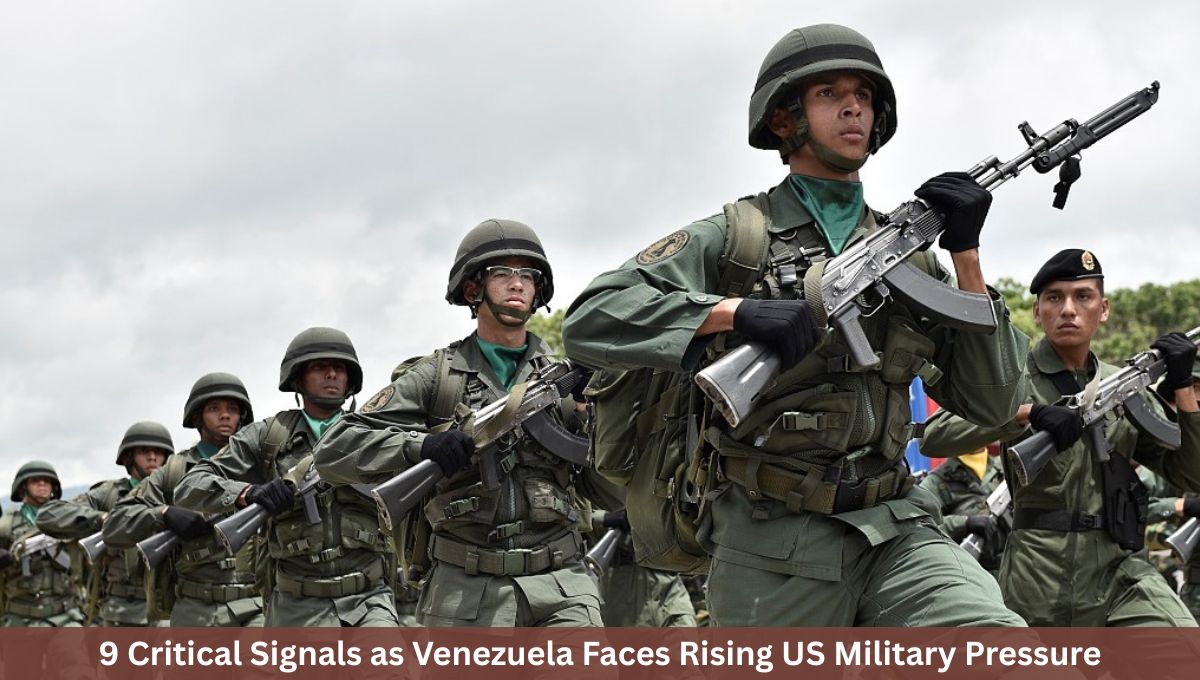
9 Critical Signals as Venezuela Faces Rising US Military Pressure — sparking fears of a possible confrontation. Tensions between the United States and Venezuela are spiraling at the fastest pace in years, raising fears across Latin America that Washington’s rapidly expanding military presence could be a prelude to direct conflict.
With the arrival of the USS Gerald R Ford, the world’s largest aircraft carrier, and the launch of Operation Southern Spear, the United States is projecting unprecedented military power into the Caribbean. Venezuela has responded with a nationwide mobilization of 200,000 troops, mass drills, and increasingly urgent rhetoric from President Nicolás Maduro and his ministers.
The central question now gripping the region is stark: Is Venezuela prepared for a US attack?
Below is a comprehensive, 2400-word, human-tone analysis of the military, political, and strategic landscape shaping this dangerous standoff.
9 Critical Signals as Venezuela Faces Rising US Military Pressure
1. How the Current US–Venezuela Crisis Escalated
Over the past several weeks, the Trump administration has dramatically expanded its military activity across the Caribbean and Pacific. Officially, Washington says these operations are aimed at disrupting “narco-terrorists” and drug-trafficking networks.
But US officials have not presented evidence that the vessels they have bombed—killing at least 80 people—were carrying drugs or heading toward the United States. Nor has the administration articulated a legal justification, prompting international-law experts to warn that the actions may violate global norms.
At the center of the US narrative is a long-standing, unsubstantiated claim that President Nicolás Maduro is coordinating narcotics smuggling operations alongside criminal cartels.
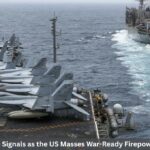
As tensions grew, the US Navy dispatched the USS Gerald R Ford carrier strike group into Caribbean waters, dramatically increasing its military firepower and raising speculation about the administration’s true objectives.
2. The Role of the USS Gerald R Ford: A Signal of Power, Not Policing
The arrival of the Ford represents a transformation in the scale of US presence in the region.
A Floating Airbase
The Ford is not just another warship—it is a nuclear-powered supercarrier capable of:
- Launching and recovering military aircraft
- Conducting sustained air operations
- Deploying dozens of fighter jets
- Operating with 4,000+ personnel onboard
It is accompanied by:
- Guided-missile destroyers
- Support vessels
- Electronic warfare systems
- Enhanced radar and surveillance capabilities
This strike group alone exceeds the total military strength of most Latin American nations.
Experts Challenge US Explanations
Mark Cancian, senior adviser at CSIS, notes that the Ford is not a counter-drug platform:
“The Ford is not well suited for counter-drug operations… It’s well suited to attack adversaries either at sea or on land.”
Its presence suggests a broader strategic intention that goes beyond narcotics interdiction.
3. Operation Southern Spear: The Official US Line vs. Real Capabilities
Washington has formally named its expanded posture Operation Southern Spear, framing it as a mission to protect the Western Hemisphere from drug traffickers.
Secretary of State Marco Rubio has emphasized:
- The operation targets “organized criminal narcoterrorists”
- It aims to stop drugs entering the United States
- The US does not recognize Nicolás Maduro as Venezuela’s legitimate leader
However, even US allies note the mismatch between the goals and the assets deployed:
- Nuclear-powered aircraft carrier
- US Navy destroyers
- Submarines
- F-35 and F-18 fighter jets
- Thousands of troops
These forces are designed for warfare, not narcotics patrols.
4. Venezuela’s Massive Mobilization: A Show of Strength or a Sign of Fear?
On Tuesday, Venezuela announced a “massive” nationwide military deployment intended to deter potential US aggression. Defense Minister Vladimir Padrino López activated a “higher phase” of Independence Plan 200—a defense mechanism created specifically in response to US military activity.
The Numbers Venezuela Claims
Officials say:
- 200,000 troops are mobilized
- Forces deployed across the entire territory
- Civilians participating in the exercises
- Air, land, and naval units on heightened alert
Padrino López insists the Venezuelan armed forces remain united and loyal to the Chavista doctrine: patriotic, anti-imperialist, and ideologically aligned with the ruling government.
He dismissed opposition groups as “minority, subversive, fascist”—claiming they no longer play any meaningful role in national politics.
Political Cohesion as a Military Tool
Analysts agree that the Venezuelan military is deeply intertwined with:
- The Chavista political movement
- State institutions
- Economic networks
- Civilian militias
Elias Ferrer of Orinoco Research argues:
“The Venezuelan government and the military are not going to fracture only because of threats.”
This unity could become a key strategic asset if a conflict erupts.
5. Venezuela’s Real Military Strength: More Complex Than Numbers Suggest
Venezuela ranks 50th globally and 7th in Latin America in Global Firepower’s 2025 Military Strength Index. But this ranking masks several underlying weaknesses.
Air Force: Small and Partially Functional
According to CSIS:
- Only 30 of 49 aircraft are operational
- Only 3 F-16s can fly due to US sanctions
- Spare parts are extremely limited
However, Venezuela’s key advantage lies in its Russian-made Su-30 fighters, at least 21 of which remain operational.
These aircraft can carry:
- Supersonic anti-ship missiles
- Kh-31A missiles capable of threatening US naval vessels
Ground Forces: Large but Lightly Equipped
Venezuela has:
- 337,000 total military personnel
- 109,000 active
- 220,000 paramilitary
- 8,000 reserve
- Extensive territorial militia networks
- Strong urban warfare capability
- Experience in internal security operations
But analysts caution:
- Training is limited
- Resources are strained
- Many units are under-equipped
- Operational readiness varies widely
Venezuela’s navy is incapable of challenging US dominance at sea:
- Aging vessels
- Minimal blue-water capability
- Limited anti-submarine systems
If conflict erupted, US forces would control the maritime domain immediately.
The Asymmetric Warfare Scenario
Despite the US military’s overwhelming edge, experts believe Venezuela could still impose serious costs.
Ferrer notes:
“They can make it so costly that it’s not worth it; that’s how you win in asymmetric warfare.”
Urban warfare, guerrilla tactics, and a loyal paramilitary base could prolong any conflict and complicate US objectives.
6. Is the US Preparing to Attack Venezuela? What We Know So Far
Multiple indicators suggest Washington is weighing options—some political, some military.
ABC News Confirms: Trump Has Been Briefed on Military Options
Senior US officials say President Donald Trump received a high-level briefing on Venezuela operations immediately after the arrival of the Ford carrier strike group.
Options presented included:
- Doing nothing
- Airstrikes on ports, airfields, and military installations
- Special operations to capture or kill Maduro (less likely but discussed)
Officials stress that none of this means an attack is imminent.
Strategic Pressure Is the Real Goal—for Now
Political scientist Carlos Piña argues:
“The main option for the US is not to carry out any armed attack, but to apply enough pressure for Maduro to resign.”
But the escalating troop buildup also creates pressure on Trump:
- Pulling back without action could appear weak
- Domestic political narratives emphasize toughness
- The Pentagon typically avoids deploying major assets without purpose
Expect More Escalation, Not Less
Piña warns:
“After sending so much military equipment to the Caribbean, it would be a political and diplomatic defeat for Trump to do nothing.”
Thus, US pressure is likely to continue building.
7. Maduro’s Message to Washington: “No More Forever Wars”
In a CNN interview, President Nicolás Maduro addressed the American people directly:
“No more forever wars… Yes, peace.”
Maduro compared potential US action to past conflicts in:
- Afghanistan
- Libya
- Iraq
He urged Washington to avoid triggering another long-term, costly war—one that Venezuela could resist through asymmetric strategies even if it cannot win conventionally.
8. Colombia Complicates the Crisis, Tensions Rise on Multiple Fronts
The situation is further complicated by tensions between the US and Colombian President Gustavo Petro. Trump has accused Petro of being “a thug,” and Colombia has temporarily suspended intelligence sharing with the United States in protest of boat strikes.
Petro argues that anti-drug operations must respect:
- Human rights
- Regional sovereignty
- International law
The US, meanwhile, has continued strikes and increased operations, leaving regional diplomacy strained.
9. Is a War Likely? The Strategic Calculus for Both Sides
While fears of conflict are rising, several factors shape the probability of war.
Why the US Might Avoid War
- No clear public support
- Opposition in Latin America
- High cost of occupation
- Risk of prolonged insurgency
- Lack of international legal basis
Why the US Might Still Consider Force
- Perception of Maduro as illegitimate
- Political pressure on Trump
- Expanding military footprint already in place
- Hardline cabinet and national security advisers
- Narrative of stopping “narco-terrorists”
Why Venezuela Might Resist Even Against Overwhelming Force
- Strong ideological unity
- Geography favoring guerrilla warfare
- Russian and Iranian weapons systems
- Loyal militias and paramilitary groups
- Strong anti-US sentiment to mobilize population
But Would the US Actually Invade?
Full-scale invasion remains unlikely.
However:
- Limited airstrikes
- Targeted operations
- Covert actions
- Blockades
- Special forces raids
…are all possible.
The situation is fluid, dangerous, and unprecedented in recent decades.
Conclusion: A Region on Edge as US–Venezuela Standoff Deepens
Venezuela’s ability to withstand a direct US attack remains questionable. Its military strength is real but limited, its air force partly functional, and its navy no match for the United States. Yet its capacity for asymmetric warfare, ideological unity, paramilitary networks, and defensive posture make a US intervention—if it happens—potentially far more costly than Washington might expect.
Meanwhile, the United States continues to escalate through Operation Southern Spear, deploying assets designed for far more than drug interdiction. Neither side has backed down. Both sides face political pressure. And the arrival of the USS Gerald R Ford marks a turning point that could reshape regional dynamics for years.
The world now watches:
Is this a pressure campaign—or the prelude to something far more dangerous?
Also Read: Russia Reiterates Support for Venezuela, Maduro Gov’t Requests Military Assistance