
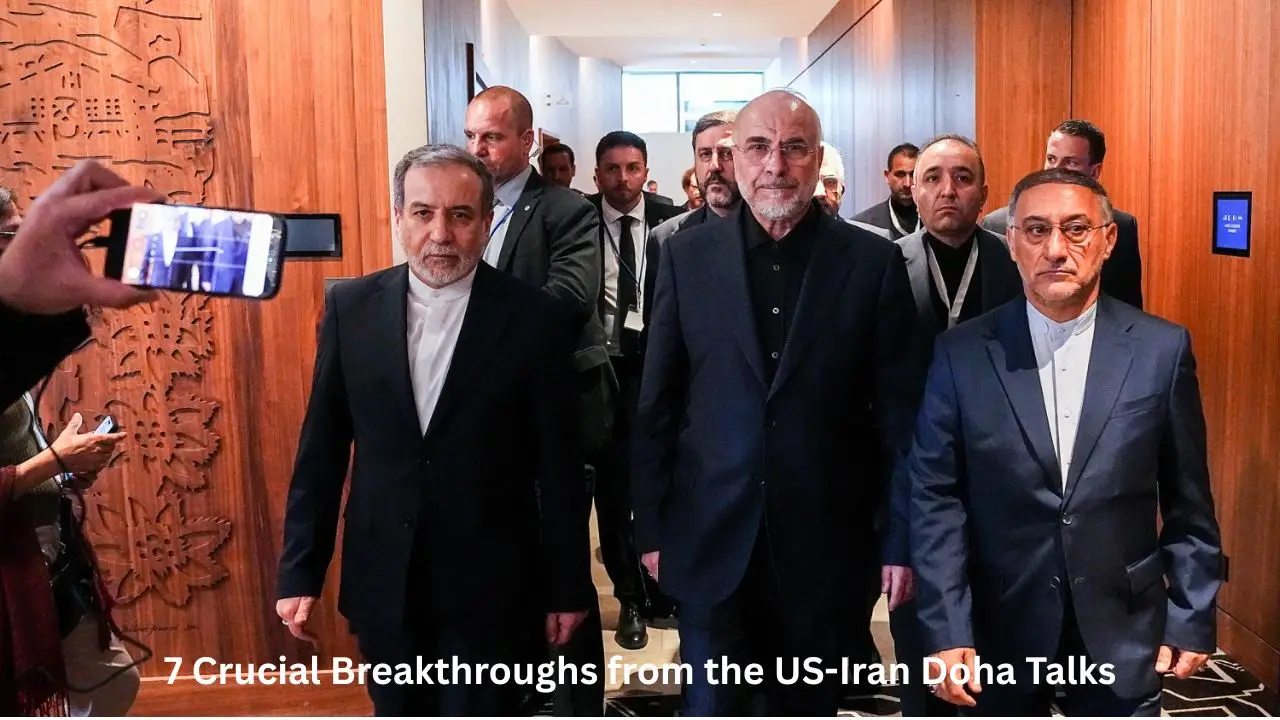
7 Crucial Breakthroughs from the US-Iran Doha Talks as nuclear negotiations remain unresolved. The United States and Iran have taken another cautious step toward reducing tensions after concluding two days of indirect negotiations in Doha, Qatar.
Thank you for reading this post, don't forget to subscribe!Mediated primarily by Qatari officials—with Pakistan also facilitating communications—the talks marked the latest attempt to build on a fragile ceasefire reached after weeks of heightened regional tensions.
Although negotiators stopped short of announcing a comprehensive agreement, both sides described the discussions as constructive. The negotiations focused on implementing an earlier memorandum of understanding (MoU), improving maritime security in the Strait of Hormuz, addressing frozen Iranian assets, and establishing mechanisms to prevent renewed military escalation.
Qatar described the discussions as showing “positive progress,” while both Washington and Tehran agreed to continue negotiations after ceremonies marking the funeral of Iran’s former Supreme Leader on July 9.
For governments, energy markets, investors, and millions of people across the Middle East, the outcome signals cautious optimism—but also highlights the many challenges that remain before a lasting diplomatic breakthrough can be achieved.
7 Crucial Breakthroughs from the US-Iran Doha Talks
Why the Doha Talks Matter
The latest negotiations come after one of the most volatile periods in US-Iran relations in recent years. Military exchanges, disputes over shipping in the Strait of Hormuz, and concerns over Iran’s nuclear ambitions had pushed the region closer to a wider conflict.
Rather than meeting face-to-face, American and Iranian officials communicated through mediators in Doha, reflecting the deep mistrust that continues to define relations between the two countries.
Despite the indirect format, the discussions were viewed as an important confidence-building exercise designed to preserve the current ceasefire and reduce the risk of accidental escalation.
1. Indirect Diplomacy Continues to Keep Communication Alive
One of the biggest outcomes of the Doha meetings was the confirmation that diplomatic engagement remains active despite months of confrontation.
Iran reiterated that it did not hold direct meetings with US officials, insisting that all messages were exchanged through Qatari and Pakistani mediators. This approach allowed both governments to continue negotiations while avoiding politically sensitive direct engagement.
US Vice President JD Vance described the discussions as progressing well and suggested that technical-level diplomacy remains the best path toward addressing broader disputes in the future.
2. Progress on Frozen Iranian Assets
Perhaps the most closely watched issue involved billions of dollars in Iranian funds frozen overseas.
Iranian officials said the talks produced progress on creating a mechanism for accessing part of these assets, particularly funds intended for humanitarian and essential imports.
Reports indicated discussions involving an initial release of around $3 billion, though US officials stressed that no money had actually been transferred and that implementation would depend on future negotiations.
The differing public statements illustrate the continuing gap between the two governments even as diplomacy advances.
3. A New Crisis Communication Channel Could Reduce Risks
One of the most practical achievements from the Doha negotiations was agreement to establish a formal communication mechanism for reporting alleged violations of the ceasefire and the existing memorandum of understanding.
The proposed channel aims to:
- Report military incidents quickly.
- Prevent misunderstandings from escalating.
- Address disputes before they trigger retaliation.
- Improve coordination through mediators.
Security analysts view such communication channels as valuable confidence-building measures, particularly in regions where military forces operate in close proximity.
4. Strait of Hormuz Remains the Biggest Immediate Challenge
A major focus of the talks was the Strait of Hormuz, one of the world’s most strategically important shipping routes.
The narrow waterway carries a significant share of global oil exports, making any disruption a concern for international energy markets.
Iran has maintained that vessels should follow routes approved by its authorities and has floated plans related to charges or controls on commercial shipping. The United States and several Gulf countries oppose any unilateral measures that could threaten freedom of navigation.
Although no final agreement emerged, negotiators reportedly discussed practical arrangements to improve maritime safety and reduce tensions while commercial traffic gradually returns to normal.
5. Nuclear Negotiations Are Still Ahead
Despite public attention surrounding Iran’s nuclear programme, it was not the primary subject of the latest round.
Instead, negotiators concentrated on implementing earlier commitments before moving toward more politically sensitive discussions on uranium enrichment, sanctions relief, and long-term verification measures.
President Donald Trump said discussions regarding Iran’s denuclearisation were moving in the right direction, while officials acknowledged that substantive nuclear negotiations would likely begin in a later phase if confidence continues to grow. (Akashvani News)
6. Qatar Strengthens Its Role as a Trusted Mediator
The talks further reinforce Qatar’s growing importance in international diplomacy.
Doha has increasingly positioned itself as a neutral venue capable of facilitating negotiations between governments that lack formal diplomatic relations.
Throughout the latest round, Qatari officials coordinated the exchange of proposals, helped manage technical discussions, and encouraged both sides to continue negotiations despite significant disagreements.
Regional observers say Qatar’s ability to maintain communication with both Washington and Tehran has become one of the country’s most valuable diplomatic assets. (Akashvani News)
7. Markets and the International Community Remain Cautiously Optimistic
Although the talks produced no dramatic breakthrough, they reduced immediate concerns about renewed conflict.
Oil prices remained relatively stable as investors welcomed continued diplomacy, though markets remained sensitive to developments surrounding the Strait of Hormuz.
Analysts caution that investor confidence will depend on whether future negotiations produce tangible agreements rather than positive statements alone. Regional stock markets reflected this cautious mood as traders weighed diplomatic progress against continuing uncertainty.
What Was Discussed During the Talks?
According to officials and media reports, negotiators focused primarily on:
Implementation of the existing Memorandum of Understanding
Both countries reviewed commitments made under the interim agreement designed to reduce military tensions.
Frozen Iranian funds
Discussions explored mechanisms allowing humanitarian access to part of Iran’s overseas assets while broader sanctions remain in place.
Maritime security
Negotiators examined measures to improve navigation and reduce the risk of confrontation in the Strait of Hormuz.
Crisis communication
A new reporting mechanism was discussed to manage future disputes and minimise the risk of escalation.
Future nuclear negotiations
While not the central focus this week, both sides acknowledged that nuclear issues remain essential for any comprehensive agreement. (The Indian Express)
What Still Divides Washington and Tehran?
Despite the positive tone, several major disagreements remain unresolved.
Sanctions relief
Iran continues to seek broader economic relief, while the United States insists that further concessions depend on measurable commitments.
Nuclear programme
Key questions surrounding uranium enrichment, inspections, and long-term safeguards have yet to be addressed in detail.
Regional security
Washington continues to express concerns about Iran’s regional activities, while Tehran argues that sanctions and military pressure must end before wider agreements can be reached.
Strait of Hormuz
Differences over maritime authority and commercial shipping remain among the most immediate sources of tension.
Global Implications
The outcome of the Doha talks extends well beyond the Middle East. For energy-importing nations, stability in the Strait of Hormuz is critical for maintaining global oil supplies.
For international businesses, continued diplomacy reduces the likelihood of disruptions to shipping and trade.
For world powers, the negotiations represent another opportunity to prevent a wider regional conflict while keeping open the possibility of future nuclear diplomacy.
At the same time, the absence of a comprehensive agreement highlights the complexity of resolving decades of mistrust between Washington and Tehran. (Reuters)
What Happens Next?
Both governments have agreed to resume negotiations after Iran’s official mourning ceremonies conclude.
The next phase is expected to examine:
- Implementation of the interim agreement.
- Humanitarian access to frozen Iranian funds.
- Maritime arrangements in the Strait of Hormuz.
- Confidence-building measures.
- Eventually, broader negotiations over Iran’s nuclear programme.
Diplomats caution that future progress will likely be gradual, with technical agreements laying the foundation for more politically difficult discussions later this year.
Conclusion
The latest round of indirect US-Iran talks in Doha did not produce a landmark peace agreement, but they succeeded in preserving diplomatic momentum at a critical moment. By advancing discussions on frozen Iranian assets, maritime security in the Strait of Hormuz, and a new crisis communication mechanism, the negotiations have reduced immediate tensions and strengthened the fragile framework established under the interim memorandum of understanding.
Significant obstacles remain, particularly on sanctions, nuclear policy, and regional security. Yet the willingness of both sides to continue engaging through mediators underscores a shared interest in avoiding renewed conflict.
As negotiations resume in the coming weeks, the international community will be watching closely to see whether these incremental confidence-building measures can evolve into a broader and more durable diplomatic settlement.
Also Read: 5 Major Takeaways from the US Supreme Court’s Transgender Sports Ruling
Also Read: Indirect talks between Iran and US through mediator concluded in Doha


