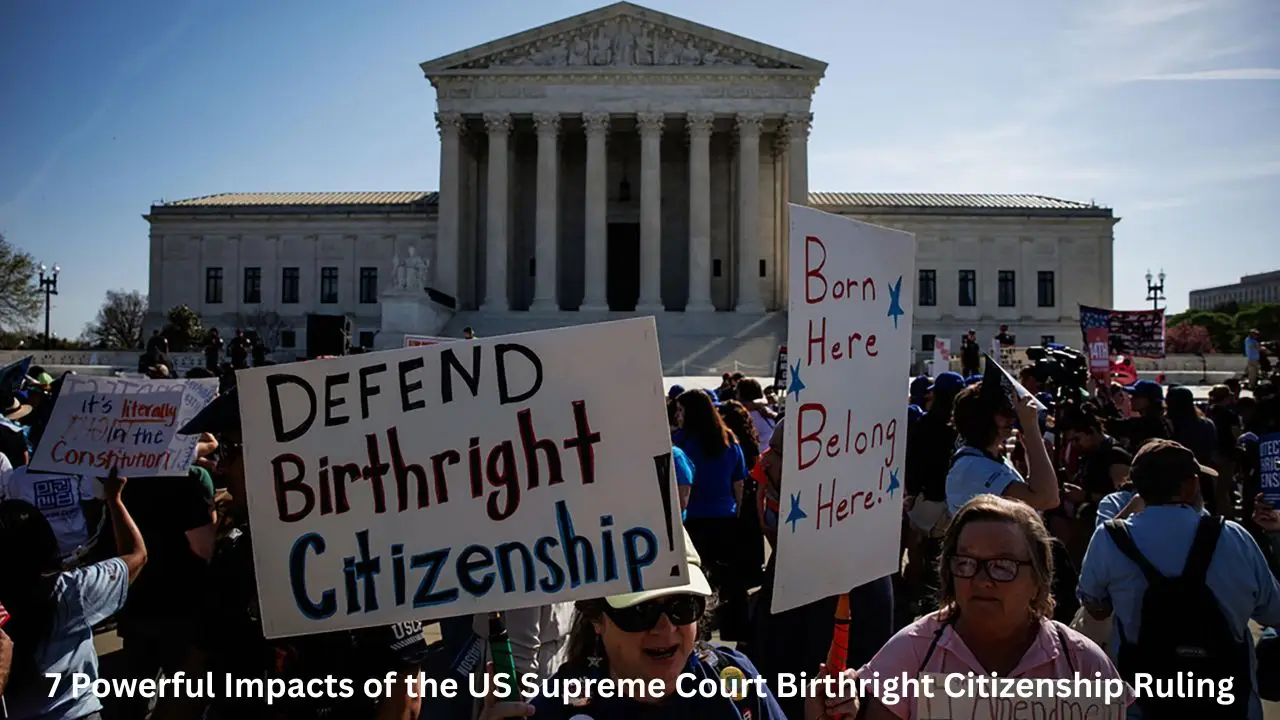
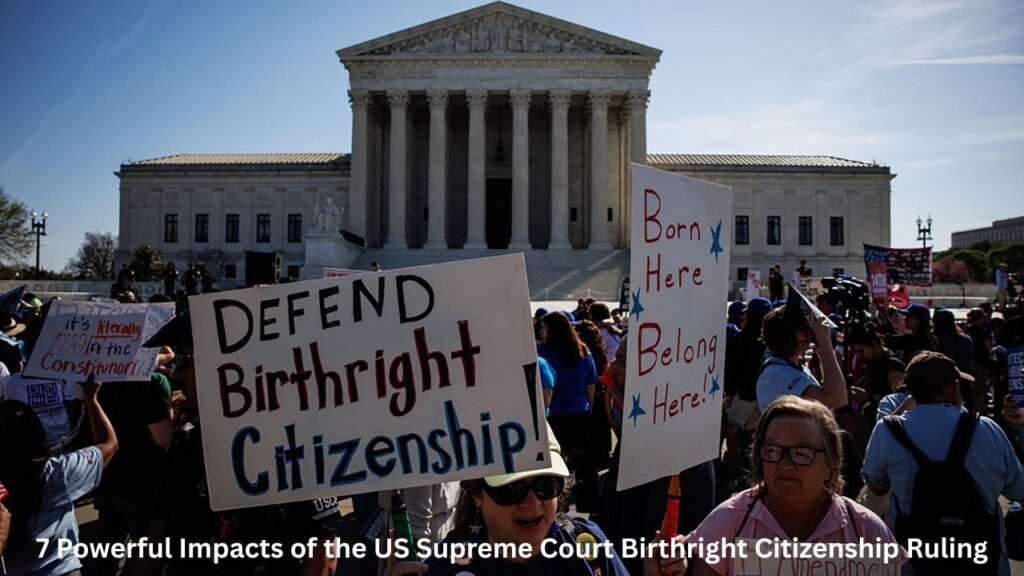
7 Powerful Impacts of the US Supreme Court Birthright Citizenship Ruling — What it means. The United States Supreme Court has delivered one of the most significant constitutional rulings on immigration in decades, rejecting President Donald Trump’s executive order that sought to end automatic birthright citizenship for many children born on American soil.
Thank you for reading this post, don't forget to subscribe!The landmark judgment not only preserves a long-standing interpretation of the Fourteenth Amendment but also carries profound implications for millions of immigrants, foreign workers, international students, and governments around the world.
While the ruling represents a major legal setback for the Trump administration, it has also opened a new political battle over immigration policy.
Even before the court’s decision was fully digested, administration officials began exploring alternative ways to discourage what they describe as “birth tourism” while continuing efforts to restrict automatic citizenship through legislation and tighter immigration enforcement.
For Indian professionals, international students, multinational companies, and global migration experts, the judgment removes immediate uncertainty but does not entirely end the political debate. Here’s what the decision means and why it matters worldwide.
7 Powerful Impacts of the US Supreme Court Birthright Citizenship Ruling
What Did the Supreme Court Decide?
In a 6-3 decision, the Supreme Court struck down President Donald Trump’s executive order that attempted to deny automatic citizenship to children born in the United States to parents who were either undocumented or in the country temporarily.
The majority held that the executive order violated the Citizenship Clause of the Fourteenth Amendment, reaffirming more than a century of constitutional precedent that individuals born on U.S. soil are American citizens regardless of their parents’ immigration status.
Chief Justice John Roberts wrote for the majority, emphasizing that the Constitution—not executive action—governs citizenship. The ruling effectively blocks the administration from changing birthright citizenship through presidential authority alone.
1. Birthright Citizenship Remains Protected
The biggest outcome is straightforward:
birthright citizenship remains intact.
For over 150 years, the Fourteenth Amendment has guaranteed citizenship to nearly every child born in the United States.
Trump’s executive order sought to narrow this guarantee by excluding children whose parents were:
- Temporary visa holders
- Tourists
- Undocumented immigrants
The Supreme Court ruled that such a sweeping constitutional change cannot be made through executive action.
This preserves one of America’s oldest constitutional principles while reinforcing judicial limits on presidential power.
2. Indian Families Receive Major Relief
Perhaps no immigrant community welcomed the ruling more than Indians living in America.
Hundreds of thousands of Indian professionals work in the United States under:
- H-1B visas
- L-1 visas
- F-1 student visas
Many spend years—or even decades—in employment-based green card backlogs. Without birthright citizenship, children born during these lengthy waiting periods could have faced uncertain legal status.
The ruling ensures these children continue to receive U.S. citizenship automatically at birth, removing a major source of anxiety for families planning long-term careers and lives in America.
3. Trump’s Immigration Agenda Faces a Constitutional Barrier
The decision represents one of the most significant judicial defeats for Trump’s immigration agenda.
Since returning to office, Trump has argued that birthright citizenship encourages illegal immigration and “birth tourism.”
The administration claimed the Constitution had been interpreted too broadly for decades.
The Supreme Court disagreed, reaffirming that constitutional guarantees cannot simply be rewritten through executive orders.
However, Trump has vowed to continue pursuing legislative solutions through Congress, meaning the political debate is far from over.
4. Focus May Shift to ‘Birth Tourism’
Although the constitutional route has been blocked, the administration appears to be shifting its attention toward birth tourism.
Birth tourism refers to foreign nationals traveling to the United States primarily to give birth so their children automatically receive American citizenship.
According to reports, White House officials are exploring several alternatives, including:
Harsher visa scrutiny
Pregnant visitors could face increased questioning during visa interviews.
Investigating organized birth tourism businesses
Federal agencies may prioritize investigations into companies that advertise citizenship through childbirth.
Fraud prosecutions
Authorities could pursue criminal cases where applicants are accused of concealing pregnancy or travel intentions during visa applications.
Entry restrictions
Officials are reportedly considering stricter rules that could prevent pregnant travelers from entering the country under certain circumstances.
5. Global Immigration Policy Debate Intensifies
The ruling extends well beyond U.S. borders.
Countries around the world follow different citizenship models:
Jus Soli
Citizenship based on birthplace.
Jus Sanguinis
Citizenship based on parents’ nationality. The United States remains one of the largest countries that broadly applies birthright citizenship.
As migration increases globally, debates over citizenship laws continue in Europe, North America, and parts of Asia.
The Supreme Court’s decision may influence future legal discussions in other democracies confronting similar immigration challenges.
6. Businesses and Universities Welcome Greater Certainty
Major employers and universities have closely monitored the case because uncertainty over citizenship could affect:
- Recruitment
- Workforce planning
- International education
- Skilled migration
Technology companies employing large numbers of foreign workers—especially H-1B professionals—benefit from greater legal clarity.
Universities also gain reassurance that international students who later build families in America will not face unexpected constitutional changes regarding their children’s citizenship.
This stability could help maintain the United States’ attractiveness for global talent.
7. The Legal Battle May Continue
Although the Supreme Court has spoken, the issue is unlikely to disappear.
Several possibilities remain:
Congressional legislation
Trump has already called on Congress to consider legislation addressing birthright citizenship, although constitutional experts remain divided over whether ordinary legislation could override the Fourteenth Amendment.
New immigration regulations
The administration may pursue stricter visa enforcement without directly challenging citizenship.
Future lawsuits
If Congress passes new immigration laws or the administration adopts tougher travel restrictions targeting birth tourism, additional constitutional challenges could return to federal courts.
Legal scholars note that while the Court strongly reaffirmed birthright citizenship, future disputes over immigration enforcement remain almost certain. (NDTV Profit)
Why the Fourteenth Amendment Matters
Adopted after the American Civil War in 1868, the Fourteenth Amendment was designed to guarantee citizenship to people born in the United States, overturning earlier legal doctrines that denied citizenship based on ancestry or race.
For more than a century, courts have interpreted this constitutional protection broadly, making it one of the foundations of American citizenship law.
The Supreme Court’s latest ruling reinforces that constitutional amendments—not executive orders—remain the highest authority in defining citizenship rights.
What This Means for Global Migration
For immigrants worldwide, the ruling provides renewed confidence in the stability of constitutional protections in the United States.
For Indian professionals, it removes immediate fears affecting thousands of families waiting in employment-based immigration queues.
For governments, policymakers, and migration experts, it highlights how immigration remains one of the defining political and constitutional issues of the 21st century.
At the same time, the administration’s growing focus on birth tourism suggests immigration enforcement will continue evolving even without changes to birthright citizenship itself.
Conclusion
The U.S. Supreme Court’s decision represents far more than a legal victory for supporters of birthright citizenship. It reaffirms the enduring authority of the Fourteenth Amendment, preserves constitutional protections for millions of immigrant families, and reinforces the limits of executive power in redefining citizenship.
For Indian professionals, international students, multinational employers, and immigrant communities across the globe, the ruling offers immediate certainty after months of legal uncertainty.
Yet it also marks the beginning of a new phase in America’s immigration debate. With the Trump administration exploring stricter measures against birth tourism and promising fresh legislative efforts, the political struggle over immigration policy is far from over.
As the United States continues balancing border security, constitutional rights, and global migration, this landmark judgment is likely to shape immigration law and political discourse for years to come.
Also Read: 7 Powerful Takeaways from the US Supreme Court Birthright Citizenship Ruling
Also Read: What is birthright citizenship, and what does the Supreme Court ruling say?