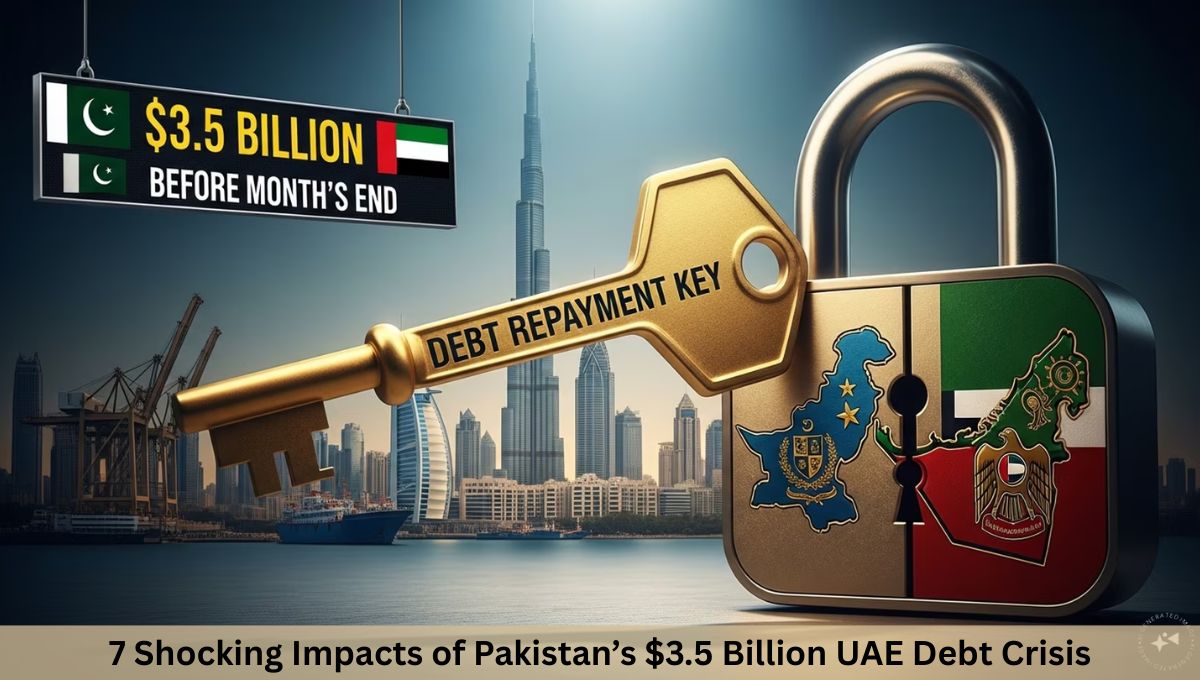
7 Shocking Impacts of Pakistan’s $3.5 Billion UAE Debt Crisis amid IMF risks. Pakistan is once again at the center of global financial scrutiny as it prepares to repay a massive $3.5 billion debt to the United Arab Emirates.
The repayment comes at a precarious moment for Pakistan, whose fragile economy is already grappling with dwindling foreign exchange reserves, rising inflation, and mounting geopolitical pressures.
This development not only highlights Pakistan’s immediate fiscal challenges but also underscores deeper structural vulnerabilities that have long plagued its economy.
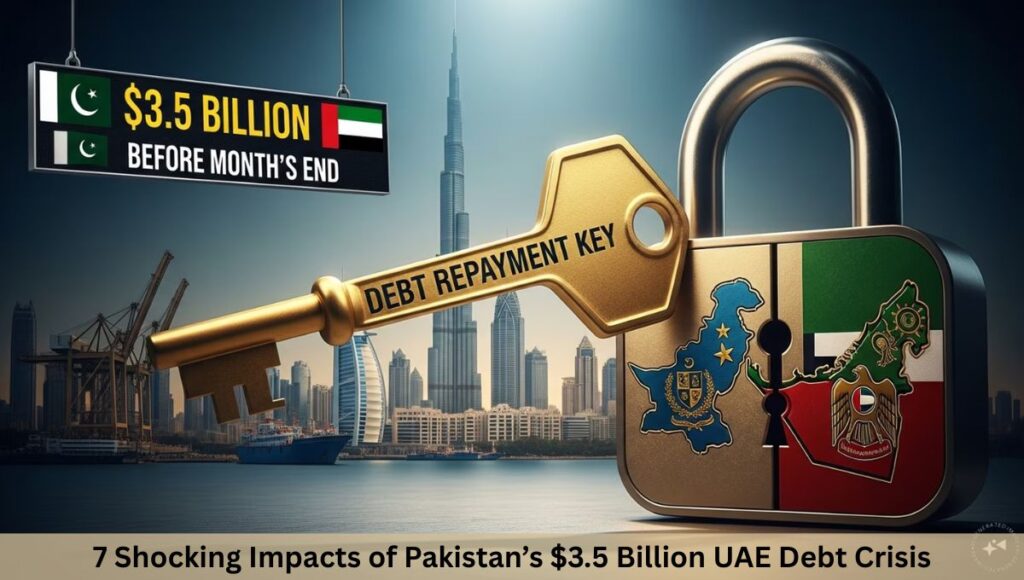
7 Shocking Impacts of Pakistan’s $3.5 Billion UAE Debt Crisis
Why the $3.5 Billion Repayment Matters
The repayment is significant for several reasons:
- It represents nearly 18% of Pakistan’s total foreign exchange reserves
- It comes amid low reserve levels of around $16.3–$16.4 billion
- It coincides with other external debt obligations nearing $4.8 billion
For an economy already under strain, this outflow could severely weaken Pakistan’s ability to:
- Pay for essential imports
- Stabilize its currency
- Maintain investor confidence
Economists warn that such a large repayment could push Pakistan dangerously close to a balance-of-payments crisis.
End of UAE Debt Rollovers: A Major Shift
For years, Pakistan relied heavily on debt rollovers from friendly nations like the UAE, allowing it to delay repayments and manage short-term liquidity pressures.
However, the UAE’s decision to refuse further rollovers marks a significant shift in bilateral financial relations.
This move signals:
- Growing fatigue among Pakistan’s financial backers
- Concerns about Pakistan’s economic management
- Changing geopolitical priorities in the Middle East
The funds were originally provided through the Abu Dhabi Fund for Development, aimed at stabilizing Pakistan’s balance of payments.
Impact on Pakistan’s Foreign Exchange Reserves
Pakistan’s reserves are already at critically low levels, covering only about three months of imports, which is considered the minimum safe threshold.
Key Risks Include:
1. Currency Instability
The Pakistani rupee could face significant downward pressure as reserves shrink.
2. Import Restrictions
The government may be forced to limit imports, affecting industries and consumers alike.
3. Inflation Surge
Higher import costs could drive inflation further, worsening the cost-of-living crisis.
IMF Program at Risk
Pakistan is currently operating under a program with the International Monetary Fund, which requires strict financial discipline and reserve targets.
Potential Consequences:
- Breaching IMF reserve targets
- Delays in receiving future loan tranches
- Loss of international financial credibility
The country is awaiting a $1.2 billion IMF tranche, which is crucial for stabilizing its economy. Any deviation from agreed conditions could jeopardize this support.
Additional Debt Pressures Mount
The UAE repayment is not Pakistan’s only financial burden.
Upcoming Obligations:
- $1.3 billion in Eurobond repayments
- Additional bilateral debts
- Ongoing interest payments
This brings Pakistan’s total near-term external obligations to nearly $4.8 billion, intensifying pressure on an already fragile system.
Geopolitical Factors Complicating the Crisis
The crisis is not purely economic—it is deeply intertwined with geopolitical developments.
Middle East Tensions
The ongoing conflict involving Iran, Israel, and the United States has reshaped alliances and financial priorities.
Strait of Hormuz Disruption
The closure of the Strait of Hormuz has:
- Driven up global oil prices
- Increased Pakistan’s import bill
- Strained its energy-dependent economy
Pakistan imports over 85% of its crude oil, primarily from Gulf nations, making it highly vulnerable to such disruptions.
Market Reactions and Investor Sentiment
Financial markets have already started reflecting the stress:
- The KSE-100 Index has dropped significantly
- Foreign investors are pulling out funds
- Bond prices are declining
Investor confidence is weakening due to uncertainty over Pakistan’s ability to manage its debt and stabilize its economy.
Controversial Remarks Add Diplomatic Tension
The situation has also sparked controversy following remarks by Pakistani Senator Mushahid Hussain.
He described the repayment as a “brotherly gesture” toward the UAE, even calling the Gulf nation “helpless” and suggesting Pakistan was helping it in difficult times.
His comments also touched on:
- UAE’s financial commitments abroad
- Its ties with India
- Demographic concerns related to expatriate populations
These statements have raised eyebrows and could further complicate diplomatic relations.
Can Pakistan Find Alternatives?
Facing limited options, Pakistan is exploring several strategies:
1. Debt-to-Investment Conversion
Negotiations are underway to convert some debt into long-term investments.
2. Seeking Support from Allies
Pakistan is looking to countries like:
- China
- Saudi Arabia
for additional financial assistance or rollovers.
3. Tight Monetary Policies
Possible measures include:
- Raising interest rates
- Imposing import controls
- Currency interventions
However, these steps could slow economic growth and increase public hardship.
Structural Weaknesses Behind the Crisis
Pakistan’s recurring economic crises stem from long-standing structural issues:
Low Export Competitiveness
Exports remain limited and unable to generate sufficient foreign exchange.
High Fiscal Deficits
Government spending continues to exceed revenue.
Dependence on External Financing
Frequent reliance on loans and bailouts has created a cycle of debt dependency.
Global Implications of Pakistan’s Crisis
Pakistan’s financial instability has broader global implications:
Regional Economic Stability
Instability in Pakistan could impact South Asian economic dynamics.
Energy Markets
Disruptions linked to the Middle East crisis affect global oil supply chains.
Investor Confidence in Emerging Markets
Pakistan’s situation may deter investment in similar economies.
The Road Ahead: Crisis or Opportunity?
Pakistan stands at a critical crossroads. The $3.5 billion repayment is more than a financial obligation—it is a test of the country’s economic resilience and policy direction.
Best-Case Scenario:
- Successful IMF engagement
- Fresh inflows from allies
- Gradual stabilization
Worst-Case Scenario:
- Reserve depletion
- Currency collapse
- Economic slowdown or default risk
Conclusion
The looming $3.5 billion repayment to the UAE underscores the fragile state of Pakistan’s economy.
With reserves under pressure, IMF commitments at risk, and geopolitical tensions rising, the country faces a complex and high-stakes financial challenge.
Whether Pakistan can navigate this crisis will depend on:
- Immediate financial management
- Long-term structural reforms
- Strategic geopolitical balancing
The coming weeks will be crucial in determining whether Pakistan stabilizes its economy—or slips deeper into financial uncertainty.
Also Read: Pakistan Opens Mining to US, China & Russia Amid Looming Trade Deal with Trump
Related Posts:
- 7 Alarming Signals: Pakistan Forced to Sell PIA…

- Gita Gopinath to Step Down as IMF’s No. 2 Official in August

- 7 Powerful Impacts as IMF & World Bank Restore Ties…

- Afghanistan–Pakistan War 2025: Inside the 48-Hour Ceasefire

- 9 Strategic Moves as US Pushes Powerful Locomotive…

- Pakistan Slashes Budgets for Health, Environment…