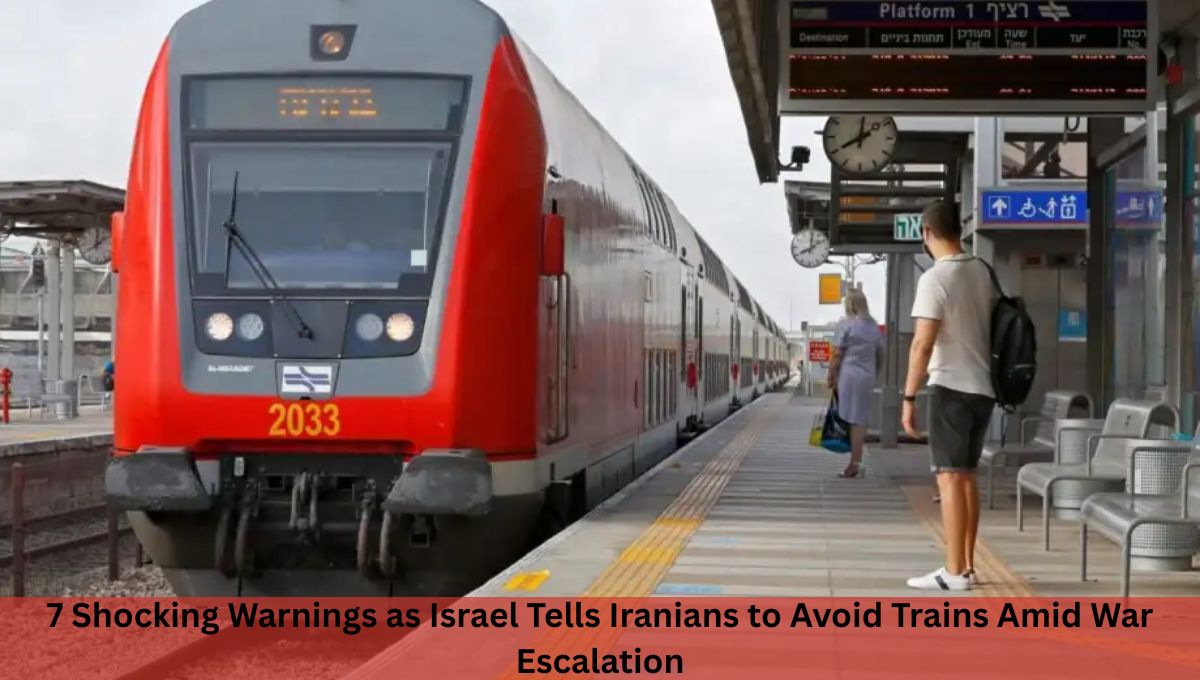
7 Shocking Warnings as Israel Tells Iranians to Avoid Trains Amid War Escalation and rising tensions. In a dramatic escalation of the ongoing conflict in West Asia, the Israel Defense Forces has issued a rare and direct warning to civilians across Iran, urging them to immediately avoid trains and railway infrastructure.
The advisory, delivered via the military’s Persian-language communication channels, signals a potentially dangerous shift in the conflict—one that may bring civilian transport networks into the crosshairs of military operations.
“For the sake of your security… refrain from using and travelling by train,” the message stated, adding that being near railway lines could “endanger your life.”
The warning applies nationwide and remains in effect until late evening local time, creating widespread uncertainty among civilians who rely heavily on rail transport.
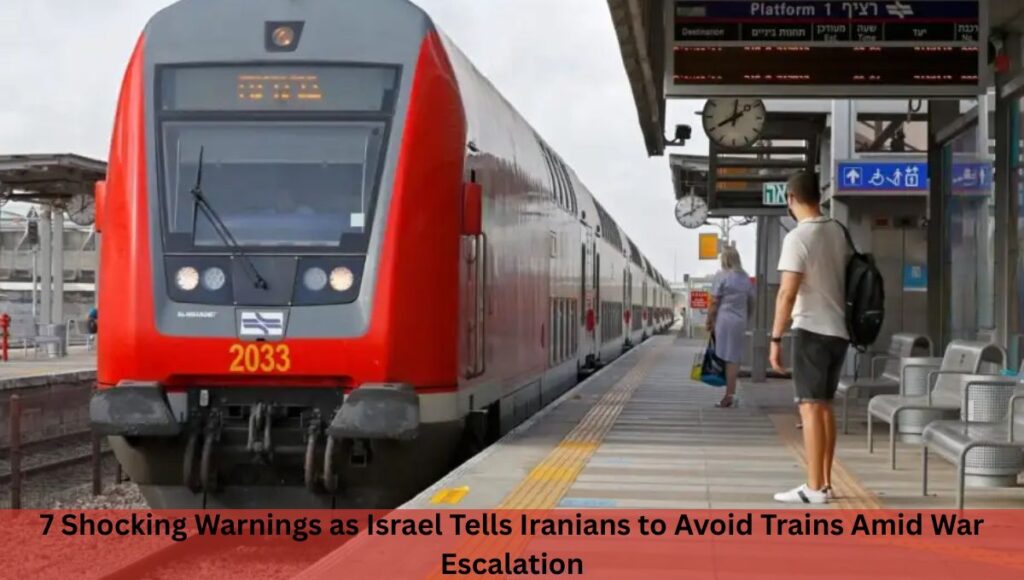
7 Shocking Warnings as Israel Tells Iranians to Avoid Trains Amid War Escalation
Why This Warning Matters: A Potential Turning Point
Military analysts interpret such advisories as more than precautionary—they often precede targeted strikes.
The specificity of this warning suggests that railway infrastructure could be a potential target in upcoming operations.
Historically, similar advisories have been used in conflict zones to reduce civilian casualties before strategic strikes. However, they also serve as signals of imminent escalation.
This development comes amid growing hostilities involving Israel, Iran, and the United States, with tensions reaching one of their highest points in recent years.
Reports of Railway Disruptions Begin to Surface
Shortly after the warning was issued, local reports indicated disruptions in rail operations. Services in cities such as Mashhad were reportedly halted due to safety concerns.
While Iranian authorities have not officially confirmed a nationwide shutdown, the impact of the warning is already visible.
Passengers are canceling journeys, and uncertainty is spreading across major transport hubs.
Iran’s railway system is a critical part of its national infrastructure, carrying millions of passengers annually and connecting key economic and cultural regions.
Any disruption to this network could have significant consequences beyond immediate safety concerns.
Escalation Linked to Trump’s Deadline
The timing of Israel’s warning is closely tied to rising pressure from Donald Trump, who has issued a strict ultimatum to Iran.
Trump has demanded that Iran reopen the strategically vital Strait of Hormuz—a key global oil route—by a fixed deadline or face severe military consequences.
He has openly warned that failure to comply could result in large-scale attacks on Iran’s infrastructure, including power plants, bridges, and transport systems.
“The entire country can be taken out in one night,” Trump said in a recent statement, underlining the seriousness of the threat.
This backdrop makes Israel’s railway warning appear less isolated and more coordinated within a broader strategic framework.
The Strategic Importance of Railways in Iran
Iran’s railway network is not just a transport system—it is a strategic asset. It plays a crucial role in:
- Civilian mobility
- Military logistics
- Economic distribution
- Regional connectivity
The network spans multiple provinces, linking cities like Tehran, Qom, and southern industrial hubs.
Targeting such infrastructure could disrupt supply chains, weaken internal coordination, and increase pressure on the Iranian government.
However, attacks on civilian infrastructure also raise serious legal and ethical concerns under international law.
Growing Concerns Over Civilian Safety
The warning directly addresses civilians—an unusual move that highlights the increasing risks faced by ordinary people in the conflict.
Unlike military bases or strategic installations, railways are heavily used by the general population. This makes any potential strike particularly sensitive.
Experts warn that even with advance notice, such situations can lead to:
- Panic and mass disruption
- Accidental civilian exposure
- Logistical chaos across cities
- Increased humanitarian risks
Additionally, access to information inside Iran has been limited due to internet restrictions, making it difficult for many citizens to even receive such warnings in real time.
Iran’s Response: Silence and Strategic Messaging
So far, Iranian authorities have not issued a formal response to the Israeli advisory.
However, state media and officials have previously dismissed similar warnings as psychological warfare aimed at creating fear and confusion among civilians.
Iran has also warned that any attack on its infrastructure will be met with “devastating retaliation,” raising the stakes further.
Officials argue that targeting civilian systems like railways could constitute a violation of international humanitarian law.
UNESCO Concerns Over Cultural and Infrastructure Damage
The situation has also drawn attention from cultural authorities.
Iran has warned that its national railway system holds historical and engineering significance, with parts of it recognized by UNESCO as a World Heritage site.
Any attack on such infrastructure would not only affect transportation but could also damage globally recognized cultural assets.
Iranian officials have urged international organizations to intervene and prevent attacks on heritage-linked infrastructure, framing it as a shared global responsibility.
A Pattern of Pre-Strike Warnings
This is not the first time such warnings have been issued in the current conflict.
Israel has previously used similar tactics before launching strikes on:
- Petrochemical facilities
- Military installations
- Strategic infrastructure
These warnings serve dual purposes:
- Reducing civilian casualties
- Sending a clear strategic signal to adversaries
The railway warning fits into this broader pattern, suggesting a possible next phase in the conflict.
Regional Impact: Beyond Iran
The implications of this escalation extend far beyond Iran.
Neighboring regions have already begun to feel the effects:
- Missile interceptions reported in Gulf countries
- Temporary closure of key infrastructure like bridges
- Rising tensions in oil markets
- Increased military activity across West Asia
The Strait of Hormuz remains a focal point, with about one-fifth of the world’s oil supply passing through it under normal conditions.
Any disruption here could trigger global economic consequences, including fuel price spikes and supply chain instability.
Global Reactions and Diplomatic Pressure
International observers are closely monitoring the situation, with diplomatic efforts underway to prevent further escalation.
The United Nations Security Council is expected to discuss measures related to the Strait of Hormuz and broader conflict dynamics.
However, divisions among major powers could limit the effectiveness of any resolution.
Meanwhile, analysts suggest that both sides are using a mix of military pressure and psychological signaling to gain leverage ahead of potential negotiations.
Could This Lead to Direct Infrastructure Warfare?
The targeting of civilian infrastructure marks a significant escalation in modern warfare.
If railways are indeed struck, it could set a precedent for:
- Expanded targeting of civilian systems
- Increased humanitarian risks
- Greater international scrutiny
Such actions could also influence global norms around conflict, particularly regarding the protection of non-military assets.
The Human Cost: Civilians Caught in the Middle
At the heart of this crisis are ordinary people.
For millions of Iranians, trains are not just a convenience—they are essential for daily life, work, and family connections.
The sudden warning has created fear and uncertainty:
- Travelers stranded mid-journey
- Families reconsidering movement
- Workers unable to commute
- Students facing disruptions
As tensions escalate, civilians are increasingly becoming indirect participants in a conflict they have little control over.
What Happens Next?
The coming hours are critical.
Key factors to watch include:
- Whether Iran complies with the Strait of Hormuz demands
- Any visible military movement from Israel or the US
- Official responses from Tehran
- Possible infrastructure disruptions or strikes
If the warning is followed by action, it could mark a major turning point in the conflict.
Final Analysis: A Conflict Entering a Dangerous Phase
Israel’s warning to avoid trains is more than a precaution—it is a signal.
It reflects a conflict that is rapidly expanding beyond traditional military targets and moving into areas that directly affect civilian life.
Combined with rising pressure from the United States and Iran’s defiant stance, the situation is becoming increasingly volatile.
The next developments could determine whether the crisis escalates into a broader regional confrontation or shifts toward negotiation.
For now, one thing is clear:
the stakes have never been higher.
Also Read: 10 Explosive Updates as Israel Strikes Iran Nuclear Sites, War Escalates
Also Read: Israel hits railway bridge, threatens trains before Trump deadline expires