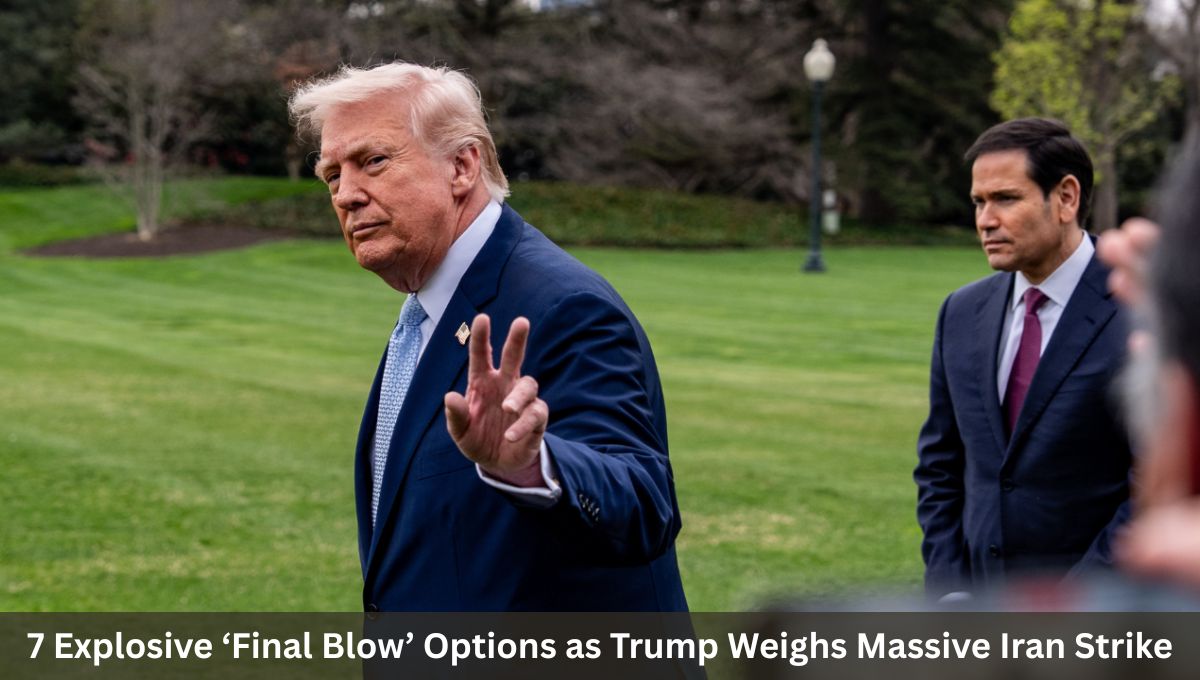
7 Explosive ‘Final Blow’ Options as Trump Weighs Massive Iran Strike if talks fail. The United States appears to be approaching a decisive moment in its escalating conflict with Iran. After weeks of sustained airstrikes, geopolitical maneuvering, and stalled diplomatic efforts, Washington is now reportedly preparing for what officials describe as a potential “final blow.”
Thank you for reading this post, don't forget to subscribe!According to multiple reports, including those citing senior US officials, the administration of Donald Trump is weighing a range of aggressive military options. These include ground invasions, strategic island seizures, and large-scale bombing campaigns aimed at crippling Iran’s military and economic infrastructure.
While the White House continues to publicly emphasize diplomacy, insiders suggest the window for negotiations may be rapidly closing.
If talks fail, the next phase of the conflict could dramatically reshape not only the Middle East but also global energy markets and geopolitical alliances.
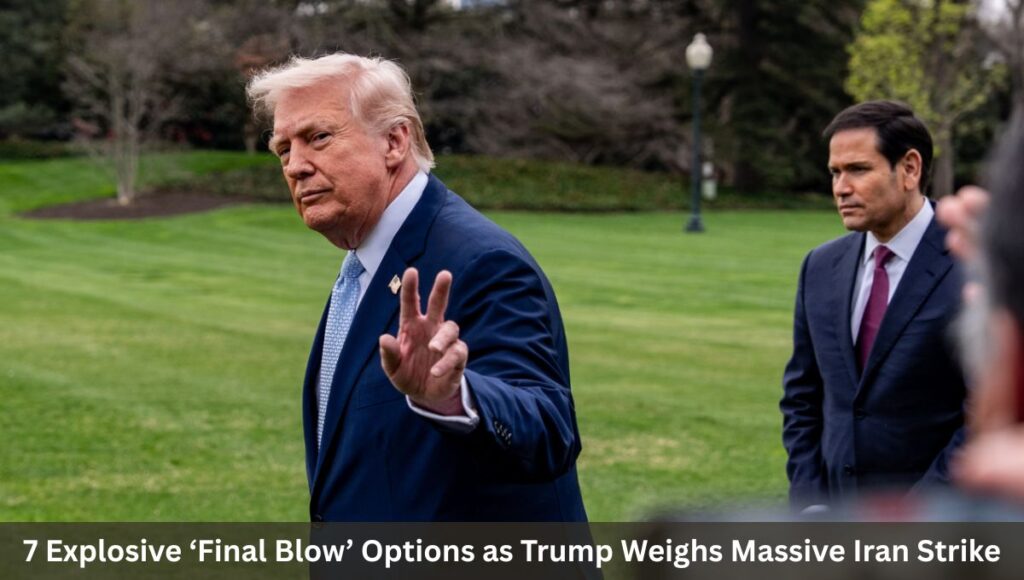
7 Explosive ‘Final Blow’ Options as Trump Weighs Massive Iran Strike
The Strategic Context: Why a ‘Final Blow’ Now?
The concept of a “final blow” reflects mounting pressure on the US administration to bring the war to a decisive conclusion.
Despite thousands of strikes on Iranian targets, Tehran has retained key capabilities and continues to exert control over critical chokepoints like the Strait of Hormuz.
This narrow waterway remains one of the most strategically vital energy corridors in the world, handling a significant portion of global oil shipments.
Iran’s ability to disrupt traffic through the strait has amplified the economic stakes of the conflict.
At the same time, diplomatic efforts have faltered. Iran has reportedly rejected a US-backed ceasefire proposal while presenting its own conditions, which Washington considers unacceptable.
This deadlock has increased the likelihood of military escalation.
Four Major ‘Final Blow’ Options Under Consideration
US officials have outlined four primary strategies that could define the next phase of the war. Each carries significant military and geopolitical implications.
1. Seizing or Blockading Kharg Island
Kharg Island is arguably the most critical economic target in Iran. Located in the Persian Gulf, it handles approximately 90% of Iran’s oil exports.
Capturing or blockading the island could:
- Severely disrupt Iran’s economy
- Cut off a major revenue stream for its military
- Increase pressure on Tehran to negotiate
However, military analysts warn that such an operation would be far from straightforward.
Iranian forces have reportedly fortified the island with layered defenses, including missile systems, naval mines, and drones.
A ground invasion would likely expose US troops to sustained attacks, potentially resulting in heavy casualties.
2. Targeting Larak Island
Larak Island plays a key role in Iran’s control over the Strait of Hormuz. It hosts radar systems, bunkers, and fast-attack boats capable of targeting commercial and military vessels.
Seizing Larak could:
- Weaken Iran’s surveillance capabilities
- Reduce its ability to threaten shipping
- Provide the US with a tactical foothold in the strait
Yet, like Kharg, Larak is heavily defended. Any attempt to capture it would involve amphibious operations under hostile conditions.
3. Capturing Abu Musa and Nearby Islands
The island of Abu Musa, along with two smaller islands, sits near the western entrance of the Strait of Hormuz. While controlled by Iran, they are also claimed by the United Arab Emirates.
Taking control of these islands could:
- Shift the balance of power in the Gulf
- Enhance US and allied control over maritime routes
- Undermine Iran’s strategic positioning
However, this move risks escalating tensions with regional players and could trigger broader conflict involving Gulf nations.
4. Intercepting or Seizing Iranian Oil Shipments
Another option involves targeting Iranian oil exports directly by intercepting or seizing vessels in the eastern Strait of Hormuz.
This approach could:
- Disrupt global oil flows
- Increase economic pressure on Iran
- Avoid immediate ground combat
But it also risks provoking retaliation against commercial shipping and could destabilize global energy markets further.
Ground Operations Inside Iran: A High-Risk Gamble
Beyond these four options, the Pentagon is reportedly exploring plans for ground operations deep in Iran.
The objective:
secure or neutralize highly enriched uranium stored in fortified nuclear facilities.
This mission would be extraordinarily complex due to:
- The depth and protection of nuclear sites
- Iran’s advanced missile and drone capabilities
- The risk of prolonged ground conflict
As an alternative, the US could opt for large-scale airstrikes targeting these facilities.
While less risky in terms of troop deployment, such strikes may not guarantee complete destruction of nuclear assets.
Trump’s Position: Escalation vs Diplomacy
President Donald Trump has not yet made a final decision. Publicly, he continues to signal openness to negotiations while simultaneously warning of severe consequences if talks fail.
White House officials describe ground operations as “hypothetical,” but insiders indicate that preparations are well underway.
Trump has also delayed potential strikes on Iran’s energy infrastructure, suggesting he is giving diplomacy one last chance.
However, his administration has made it clear that patience is limited.
Iran’s Response: Defiance and Preparation
Iran has rejected claims that meaningful negotiations are underway and remains deeply skeptical of US intentions.
Key figures like Mohammad Bagher Ghalibaf have issued stark warnings.
Tehran has indicated that any attempt to seize Iranian territory would trigger retaliation against regional infrastructure.
Iran’s military strategy appears focused on:
- Strengthening defensive positions
- Expanding missile and drone capabilities
- Preparing for asymmetric warfare
Additionally, Iran has hinted at opening new fronts, including potential disruptions in the Red Sea.
The Strait of Hormuz: A Global Flashpoint
The Strait of Hormuz remains central to the conflict. Its closure or disruption has already led to:
- Rising global oil prices
- Shipping delays and rerouting
- Increased insurance costs for tankers
Any escalation in this region could have immediate and severe consequences for the global economy.
Risks of Escalation: Military and Political
While a “final blow” might appear decisive, experts warn of significant risks.
Military Risks
- High casualty rates in ground operations
- Prolonged conflict with no clear end
- Increased vulnerability to drone and missile attacks
Political Risks
- Declining domestic support in the US
- Opposition from lawmakers
- Strained alliances with regional partners
Economic Fallout: A Global Concern
The economic implications of escalation extend far beyond the Middle East.
Potential impacts include:
- Oil price spikes
- Supply chain disruptions
- Inflationary pressures worldwide
Given the interconnected nature of global markets, even localized conflict can trigger widespread economic instability.
Lessons from History: The Shadow of Gallipoli
Military analysts have drawn parallels between potential US operations and the Gallipoli Campaign.
The campaign serves as a cautionary tale of:
- Underestimating terrain and defenses
- Overconfidence in military planning
- High casualty rates with limited gains
A similar miscalculation in Iran could have severe consequences.
Regional Dynamics: Allies and Adversaries
The conflict is not occurring in isolation. Regional actors are closely watching developments.
Countries like the UAE, Saudi Arabia, and Qatar face direct risks from escalation. Meanwhile, mediators such as Pakistan, Turkey, and Egypt continue to push for dialogue.
What Happens Next?
The coming days are likely to be judging.
Key factors to watch include:
- Progress (or failure) of diplomatic talks
- Movement of US troops and naval assets
- Iran’s military posture and responses
If negotiations collapse, the probability of a major escalation will increase significantly.
Conclusion: A Defining Moment in Global Geopolitics
The prospect of a US “final blow” against Iran marks a critical juncture in the conflict.
While the strategies under consideration could deliver tactical advantages, they also carry profound risks.
From potential ground invasions to economic warfare, each option reflects the complexity of modern conflict—where military decisions have far-reaching geopolitical and economic consequences.
As the world watches, the choices made in Washington and Tehran will not only shape the outcome of this war but also redefine the balance of power in the Middle East for years to come.
Also Read: 5 Shocking Reasons Trump Paused Iran Strikes and Pushed for Urgent Talks — Part 2
Related Posts:
- 11 Explosive Warnings as Trump Vows to ‘Knock the…

- 10 Explosive Warnings as Donald Trump Calls Iran…
- 3 Explosive Conditions Iran Sets to End War with US…

- 9 Explosive Claims as Trump Says US Winning Iran War

- Trump's 3 Blunt Warnings to China and Russia Over…

- 7 Explosive Signals as Hegseth Warns Iran and Trump…