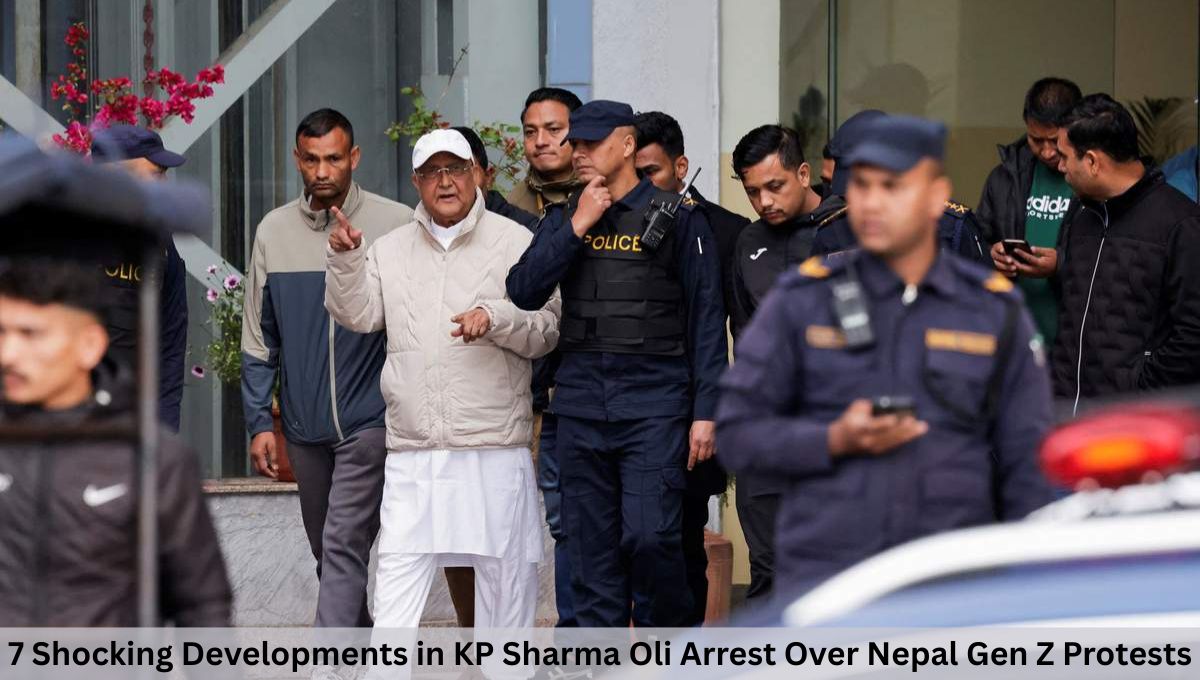
7 Shocking Developments in KP Sharma Oli Arrest Over Nepal Gen Z Protests — A political earthquake. In a dramatic development that has sent shockwaves across South Asia, former Nepal Prime Minister KP Sharma Oli has been arrested over his alleged involvement in the deadly crackdown on the 2025 “Gen Z protests.”
The arrest comes just a day after Balendra Shah—a rapper-turned-politician—was sworn in as Nepal’s new Prime Minister, marking a significant turning point in the country’s volatile political landscape.
Alongside Oli, former Home Minister Ramesh Lekhak has also been detained, signaling a broader accountability push by the new government.
7 Shocking Developments in KP Sharma Oli Arrest Over Nepal Gen Z Protests
Why Was KP Sharma Oli Arrested?
Allegations of Negligence and Failure to Act
The arrest stems from a high-level government investigation into the violent suppression of protests in September 2025.
The probe concluded that while there was no direct order to open fire, Oli and his administration failed to act to prevent the escalation.
The commission report stated that:
- Authorities made no serious attempt to control the firing
- Protesters, including minors, were killed due to administrative negligence
- Leadership failed to intervene despite intelligence warnings
Under Nepal’s legal framework, such negligence can lead to culpable homicide charges, carrying a potential sentence of up to 10 years.
The Gen Z Protests: What Triggered the Uprising?
From Social Media Ban to Nationwide Revolt
The protests began on September 8–9, 2025, initially sparked by a brief social media ban.
However, they quickly evolved into a nationwide movement fueled by deeper frustrations:
- Rising unemployment
- Economic instability
- Allegations of corruption
- Political stagnation
Within days, the protests transformed into a full-scale anti-government uprising.
Escalation and Violence
The situation deteriorated rapidly:
- At least 76–77 people were killed
- Over 2,000 individuals were injured
- Government buildings and parliament offices were set ablaze
- Nationwide unrest led to a collapse of governance structures
The crackdown on the first day alone resulted in the deaths of at least 19 young protesters, many of whom belonged to Gen Z—hence the name of the movement.
The Fall of Oli’s Government
Collapse Under Pressure
The protests ultimately forced KP Sharma Oli to resign, ending his tenure amid widespread public outrage.
The political vacuum led to a transitional phase in Nepal’s governance.
Interim Leadership and Stabilisation
During this period, Nepal’s first female Chief Justice, Sushila Karki, stepped in to lead an interim government.
Her tenure is widely regarded as a stabilizing phase that helped:
- Prevent further escalation
- Restore institutional functioning
- Prepare the country for fresh elections
Rise of Balen Shah: A New Political Era
From Rapper to Prime Minister
The 2025 elections brought a surprising victory for Balendra Shah, a political outsider and youth icon.
His campaign capitalized on:
- Anti-establishment sentiment
- Youth dissatisfaction
- Calls for transparency and reform
Shah’s victory marked a generational shift in Nepalese politics.
First Major Decision: Implementing the Probe Report
In his very first Cabinet meeting, Shah’s government decided to:
- Immediately implement the inquiry commission’s recommendations
- Initiate legal proceedings against those named in the report
- Pursue accountability regardless of political stature
This decision directly led to the arrest of Oli and other officials.
Government’s Stand: “No One Is Above the Law”
New Home Minister Sudan Gurung made the government’s position clear:
- The arrests are not political revenge
- They represent the beginning of justice
- Accountability will extend to all individuals named in the report
Authorities have also placed security forces on high alert, anticipating possible protests from supporters of Oli’s party.
Oli’s Response: Claims of Political Vendetta
Despite the charges, KP Sharma Oli has strongly denied wrongdoing.
He described the arrest as:
- “Vindictive”
- Politically motivated
- An attempt at “character assassination”
Oli has vowed to fight the case legally, setting the stage for a prolonged courtroom battle.
Who Else Is Under Scrutiny?
The investigation has not been limited to political leaders.
Officials Named in the Report Include:
- Chandra Kuber Khapung – Former Inspector General of Police
- Several senior bureaucrats and security officials
- Additional law enforcement personnel involved in the crackdown
A separate committee will examine the role of security forces, while immediate action is being taken against political leaders.
Legal Framework and Possible Charges
The arrests are linked to provisions under Nepal’s National Penal Code dealing with:
- Negligence leading to loss of life
- Failure of duty by public officials
If convicted:
- Oli, Lekhak, and others could face up to 10 years in prison
- The case could set a legal precedent for holding top officials accountable
Public Reaction and Political Implications
Mixed Reactions Across Nepal
The arrests have sparked divided reactions:
Supporters argue:
- Justice is finally being served
- Political accountability is long overdue
Critics claim:
- The move could deepen political polarization
- It risks triggering unrest among party loyalists
Potential for Renewed Unrest
Authorities are preparing for:
- Street protests
- Political mobilization by opposition parties
- Possible clashes between supporters and law enforcement
The situation remains volatile, with security forces on standby nationwide.
Global Significance: Why This Matters Beyond Nepal
This development carries broader implications for global audiences:
1. Rise of Youth-Driven Movements
The Gen Z protests highlight a growing trend of youth-led political movements worldwide.
2. Accountability in Governance
The arrest of a former prime minister underscores increasing demands for accountability—even at the highest levels.
3. Political Transition in South Asia
Nepal’s shift toward a younger leadership reflects changing dynamics across the region.
What Happens Next?
Legal Proceedings
- Oli will be presented before a court
- Authorities will seek remand for further investigation
- Formal charges may follow based on evidence
Political Developments to Watch
- Stability of Balendra Shah’s government
- Public response and protest activity
- Outcomes of the judicial process
Conclusion: A Defining Moment for Nepal
The arrest of KP Sharma Oli marks a historic moment in Nepal’s democratic journey. It reflects a broader shift toward accountability, driven by public demand and political change.
As the country navigates this sensitive phase, the coming weeks will be critical in determining whether Nepal can maintain stability while delivering justice.
For now, one message from the new leadership is unmistakable:
No one—regardless of power or position—is above the law.
Also Read: 9 Explosive Moments as Balen Shah Raps Unity Message Before Becoming Nepal PM
Also Read: Ex-PM Oli’s arrest triggers protests in Kathmandu, supporters clash with police
Related Posts:
- 9 Powerful Reasons Why Balen Shah’s Victory Could…
- 9 Explosive Moments as Balen Shah Raps Unity Message…
- 10 Explosive Shifts: Nepal Votes in First Election…
- Nepal Gen Z Protests Escalate: 112 Indian Tourists…

- Nepal’s Gen Z Protests Push Sushila Karki and Kulman…

- 7 Decisive Shifts: Will Nepal’s New PM Redraw the…