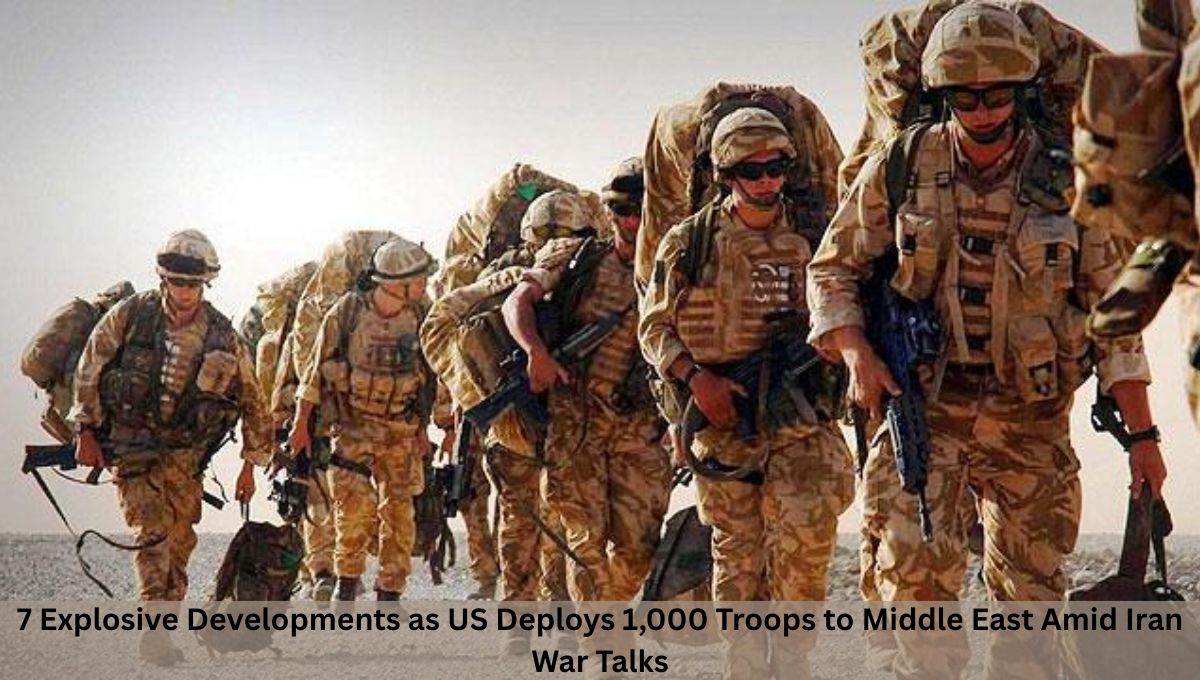
7 Explosive Developments as US Deploys 1,000 Troops to Middle East Amid Iran War Talks at a critical crossroads. The United States is preparing to deploy approximately 1,000 troops to the Middle East in what analysts describe as a decisive escalation phase in the ongoing Iran conflict. This move comes at a time when diplomatic signals suggest possible negotiations, yet military preparations continue at full pace.
At the center of this dual-track strategy is Donald Trump, whose administration is simultaneously pursuing talks with Tehran while expanding military capabilities across the region.
The deployment, primarily involving the elite 82nd Airborne Division, reflects a broader strategy:
maintain maximum operational readiness while keeping diplomatic channels open.
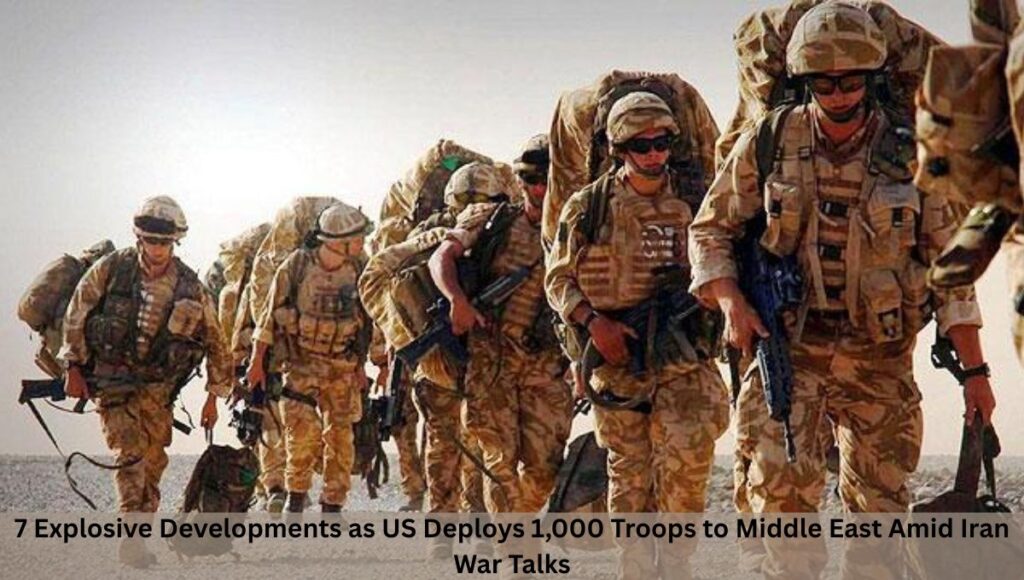
7 Explosive Developments as US Deploys 1,000 Troops to Middle East Amid Iran War Talks
What We Know About the US Troop Deployment
Composition of Forces
According to multiple defense sources, the deployment includes:
- Around 1,000 soldiers from the 82nd Airborne Division
- A battalion from the 1st Brigade Combat Team
- Division leadership led by Brandon Tegtmeier
- Immediate Response Force (IRF) elements
This unit is specifically designed for rapid deployment and can mobilize within hours, making it one of the most flexible military assets in the US arsenal.
Timeline and Readiness
Initial elements are expected to deploy within days, although final orders were still pending at the time of reporting.
The IRF designation means:
- Troops can deploy within 18–24 hours
- They are equipped for rapid-response operations
- Their mission scope can shift quickly based on evolving conditions
This flexibility is crucial given the unpredictable trajectory of the Iran conflict.
Why the 82nd Airborne Division Matters
The 82nd Airborne is not a conventional infantry unit.
It is a rapid-response force trained for high-risk missions such as:
- Airborne assaults
- Securing strategic infrastructure
- Crisis intervention operations
- Emergency evacuations
The division has a proven track record, including deployment following the killing of Qasem Soleimani in 2020.
Its presence signals not just preparedness—but potential intent.
Massive Military Buildup Across the Region
The troop deployment is only one part of a broader military expansion.
The US has already positioned:
- Two Marine Expeditionary Units (MEUs)
- Amphibious Ready Groups including the USS Boxer
- Thousands of Marines and sailors (approx. 4,500 per unit)
These forces bring:
- Air combat capabilities (including fighter jets and helicopters)
- Amphibious assault capacity
- Advanced logistics and supply chains
Strategic Objectives Under Consideration
Military planners are reportedly evaluating several high-risk scenarios:
- Securing the Strait of Hormuz
- Seizing Kharg Island, Iran’s primary oil export hub
- Targeting nuclear infrastructure
- Establishing forward operating bases
Each of these options carries significant geopolitical consequences.
Diplomacy vs Military Pressure
Despite the military buildup, Washington continues to signal openness to negotiations.
Trump’s Claims of Progress
Donald Trump recently stated that:
- The US and Iran have reached “15 points of agreement”
- Iran is willing to negotiate
- A deal may be imminent
However, these claims have been firmly denied by Tehran.
Iran’s Response
Iranian officials maintain:
- No formal negotiations are underway
- US claims are exaggerated or inaccurate
- Any talks must meet strict conditions
Iran’s deep mistrust stems from previous negotiations that coincided with military action.
The Role of Rapid Deployment Forces
What is the Immediate Response Force (IRF)?
The IRF is a specialized brigade designed to:
- Deploy globally at short notice
- Respond to emergencies or conflicts
- Stabilize situations before larger forces arrive
Its deployment suggests the US is preparing for rapid escalation scenarios, not just defensive positioning.
Why This Matters Now
The IRF’s presence indicates:
- The situation could deteriorate quickly
- The US wants maximum flexibility
- Military action remains a real possibility
Potential Ground Operations Explained
Scenario 1 – Kharg Island Operation
Kharg Island handles about 90% of Iran’s oil exports.
A potential operation could involve:
- Marines securing the island
- Engineers repairing damaged infrastructure
- Airborne troops reinforcing positions
This would significantly impact Iran’s economy.
Scenario 2 – Strait of Hormuz Control
The Strait of Hormuz is one of the world’s most critical energy chokepoints.
A US intervention could:
- Reopen global oil supply routes
- Prevent further economic disruption
- Risk direct confrontation with Iranian forces
Scenario 3 – Limited Ground Presence
While full-scale invasion is unlikely, limited operations could include:
- Securing strategic assets
- Intelligence missions
- Targeted strikes
Global Economic Implications
The conflict has already triggered:
- Volatile oil prices
- Supply chain disruptions
- Market instability
The Strait of Hormuz alone accounts for roughly 20% of global oil flow, making it a critical pressure point.
Even the threat of military escalation can move global markets significantly.
Regional Impact and Escalation Risks
Expanding Conflict Zone
The war is no longer confined to Iran and the US.
It now involves:
- Israel
- Gulf states
- Iraq
- Lebanon
Missile and drone attacks have targeted:
- Energy infrastructure
- Airports
- Military bases
Civilian and Strategic Risks
- Rising civilian casualties
- Infrastructure damage
- Risk of wider regional war
The longer the conflict continues, the harder it becomes to contain.
Internal Divisions and Strategic Calculations
Within the US Administration
Reports suggest divisions among US leadership:
- Some favor diplomacy
- Others advocate military victory
This internal tension complicates decision-making.
Within Iran
Iran also faces internal challenges:
- Leadership divisions
- Strategic disagreements
- Pressure to maintain deterrence
These factors influence how Tehran responds to US actions.
Public Opinion and Political Risks
Domestic support in the US appears limited:
- Approval for military action is declining
- War fatigue is growing
- Political risks for leadership are increasing
For Donald Trump, this presents a significant challenge, especially given previous commitments to avoid prolonged conflicts.
What Happens Next?
Possible Outcomes
- Diplomatic Breakthrough
- Ceasefire agreement
- Gradual de-escalation
- Limited Military Action
- Targeted operations
- Strategic containment
- Full Escalation
- Expanded ground operations
- Regional war
Key Indicators to Watch
- Official deployment orders
- Movement of additional forces
- Statements from Tehran
- Activity in the Strait of Hormuz
Conclusion: A Delicate Balance Between War and Peace
The deployment of US troops to the Middle East underscores a fundamental reality: the situation remains highly volatile.
While diplomacy offers a potential path forward, the simultaneous military buildup suggests that all options remain on the table.
The coming days will be critical in determining whether this conflict moves toward resolution—or escalates into a broader regional crisis with global consequences.
Also Read: 10 Shocking Escalations as Iran Threatens Global Tourist Sites Amid US Military Surge
Also Read: Troops and talks: Why US airborne forces are heading to the Middle East
Related Posts:
- 10 Explosive Warnings as Donald Trump Calls Iran…
- 10 Explosive Signals: Trump Rates Iran War “15/10”…
- 12 Explosive Claims as Donald Trump Says Iran War…
- 3 Explosive Conditions Iran Sets to End War with US…
- 10 Explosive Signals Trump Says Iran War Could End…
- 7 Explosive Signs Russia Is Quietly Backing Iran in…