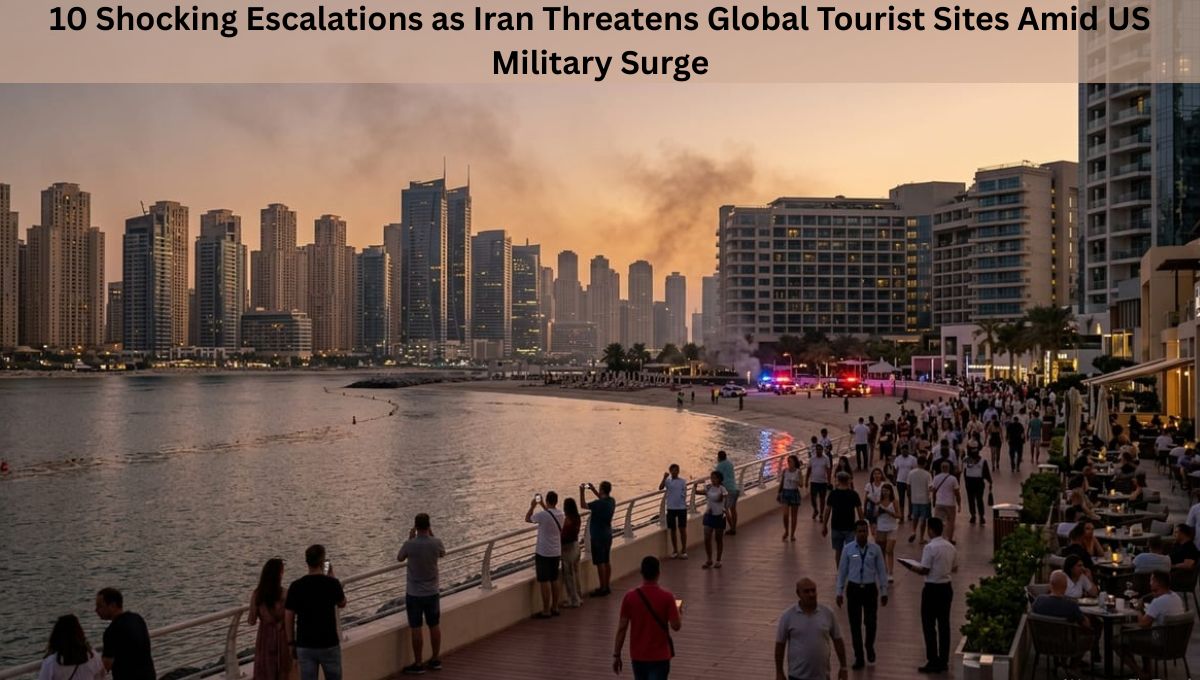
10 Shocking Escalations as Iran Threatens Global Tourist Sites Amid US Military Surge, escalating the conflict worldwide. The ongoing war in the Middle East has entered a dangerous new phase, with Iran issuing one of its most alarming warnings yet—threatening to target tourist and recreational sites worldwide.
This escalation comes as the United States ramps up its military presence in the region, deploying additional warships and thousands of Marines, even as signals from Washington suggest a possible shift toward winding down operations.
Three weeks into the conflict, what began as a regional military confrontation has rapidly evolved into a global crisis with far-reaching implications.
From rising oil prices to fears of international attacks, the situation is now affecting economies, security frameworks, and everyday life across continents.
10 Shocking Escalations as Iran Threatens Global Tourist Sites Amid US Military Surge
Iran’s Global Threat: Tourist Sites in the Crosshairs
A New Dimension of Warfare
Iran’s warning that “parks, recreational areas, and tourist destinations” may no longer be safe marks a significant shift in its military posture.
Traditionally focused on regional targets, this rhetoric suggests a willingness to expand the battlefield far beyond the Middle East.
The statement, issued by Iran’s top military spokesperson, has raised alarms among global security agencies.
Such threats imply a move toward asymmetric warfare—targeting soft civilian locations rather than conventional military infrastructure.
Psychological and Strategic Impact
This type of messaging serves multiple purposes:
- Psychological pressure: Instilling fear among civilians globally
- Economic disruption: Targeting tourism-dependent economies
- Political leverage: Forcing adversaries to reconsider their military stance
Even if not immediately acted upon, the threat alone has the potential to disrupt international travel and security planning.
US Military Build-Up Contrasts With Trump’s ‘Wind-Down’ Signal
Troop Surge in the Region
Despite suggestions of scaling back, the United States has significantly increased its military footprint:
- Deployment of three additional amphibious assault ships
- Around 2,500 Marines sent to the Middle East
- Total US troop presence exceeding 50,000 personnel
This reinforcement indicates preparation for prolonged engagement, contradicting any immediate withdrawal narrative.
Mixed Messaging From Washington
In a surprising move, President Donald Trump stated that the US is “considering winding down” military operations.
This comes amid:
- Requests for $200 billion in additional war funding
- Continued deployment of forces
- Ongoing military operations
The contradiction has created uncertainty among allies and analysts, raising questions about the true direction of US strategy.
Escalation on the Ground: Missiles, Drones, and Airstrikes
Intensified Attacks Across the Region
The conflict continues to escalate with:
- Iranian missile strikes on Israel
- Drone attacks on Gulf oil infrastructure
- Airstrikes targeting Tehran and surrounding areas
A notable incident includes attacks on a major Kuwaiti oil refinery, triggering fires and halting operations in some units.
Expanding Battlefield Geography
The conflict has spread across multiple regions:
- Gulf nations facing drone threats
- Lebanon experiencing displacement due to strikes
- Syria drawn into the conflict through targeted attacks
This widening scope increases the risk of a broader regional war.
Oil Prices Surge and Global Markets React
Energy Markets Under Pressure
One of the most immediate global impacts has been on oil prices:
- Brent crude rising from $70 to over $100 per barrel
- Fears of further spikes toward $150+ levels
- Supply disruptions linked to attacks and shipping risks
The Strait of Hormuz remains a critical chokepoint, with reduced shipping activity adding to uncertainty.
Economic Ripple Effects
The surge in oil prices is already affecting:
- Fuel costs worldwide
- Food prices due to transportation expenses
- Stock market volatility
Countries heavily dependent on energy imports are particularly vulnerable.
Sanctions Eased as US Attempts to Stabilize Markets
Temporary Relief Measures
In response to rising oil prices, the US has:
- Issued a one-month license for Iranian oil exports
- Eased restrictions on certain shipments
- Attempted to increase global supply
This move reflects a pragmatic approach to economic stabilization despite ongoing conflict.
Strategic Implications
While the easing of sanctions may help in the short term, it also:
- Signals flexibility in US policy
- Raises questions about long-term enforcement
- Could shift geopolitical alliances
Iran’s Leadership and Military Capabilities
Leadership Under Pressure
Iran’s leadership structure has faced significant disruption:
- Death of top officials in airstrikes
- Emergence of new leadership
- Limited public appearances by key figures
Despite this, Iran continues to project strength and resilience.
Continued Missile Production
Iran insists it is still producing missiles even during wartime, countering claims that its capabilities have been severely degraded.
This assertion highlights:
- Ongoing industrial capacity
- Determination to sustain long-term conflict
- Potential for continued escalation
NATO and Global Military Positioning
Strategic Withdrawal and Repositioning
NATO has relocated personnel from Iraq, signaling:
- Increased risk to foreign troops
- Shift toward defensive positioning
- Preparation for potential escalation
Reluctance for Direct Involvement
Many allied nations remain cautious:
- Avoiding direct military engagement
- Supporting planning efforts instead
- Emphasizing diplomatic solutions
Human Cost of the Conflict
Rising Casualties
The war has resulted in significant loss of life:
- Over 1,300 deaths in Iran
- More than 1,000 in Lebanon
- Civilian and military casualties across regions
Displacement Crisis
Millions have been displaced, particularly in:
- Lebanon
- Iran
- Border regions affected by strikes
The humanitarian impact continues to worsen.
Cultural and Religious Impact
Holidays Under Shadow of War
The conflict has overshadowed major cultural and religious events:
- Nowruz (Persian New Year) celebrated under airstrikes
- Eid al-Fitr marked amid missile interceptions
These disruptions highlight the deep societal impact of the war.
Tourism Industry Faces Unprecedented Threat
Global Travel Concerns
Iran’s warning has sent shockwaves through the global tourism sector:
- Increased security measures at tourist sites
- Travel advisories issued by multiple countries
- Decline in international travel bookings
Economic Consequences
Tourism-dependent economies may face:
- Revenue losses
- Job cuts
- Reduced investor confidence
Strait of Hormuz: A Critical Flashpoint
Strategic Importance
The Strait of Hormuz remains vital:
- Handles 20% of global oil trade
- Key route for energy supplies
Ongoing Disruptions
Shipping through the strait has slowed significantly due to:
- Security risks
- Military activity
- Threats from Iran
Global Security Implications
Risk of International Attacks
The threat to tourist sites raises concerns about:
- Potential attacks outside the Middle East
- Increased vigilance by global security agencies
- Heightened risk of terrorism
Shifting Warfare Tactics
The conflict demonstrates a shift toward:
- Hybrid warfare
- Psychological operations
- Targeting economic infrastructure
What Comes Next?
Possible Scenarios
The situation could evolve in several ways:
- De-escalation through diplomacy
- Prolonged conflict with regional spillover
- Global escalation involving more countries
Key Factors to Watch
- US military strategy
- Iran’s next moves
- Oil market stability
- International diplomatic efforts
Conclusion: A World on Edge
The Iran-US-Israel conflict has entered a phase where its consequences are no longer confined to the Middle East.
With threats extending to global tourist destinations, rising oil prices, and increasing military deployments, the crisis is reshaping global security and economic landscapes.
While mixed signals from world leaders offer some hope for de-escalation, the reality on the ground suggests that tensions remain dangerously high.
For now, the world watches closely as events unfold, aware that the next move could have far-reaching consequences.
Also Read: 7 Shocking Truths Behind Iran’s Alleged F-35 Strike That Could Change Air Warfare Forever
Also Read: Iran threatens global tourist sites as US boosts forces amid escalating war
Related Posts:
- 3 Explosive Conditions Iran Sets to End War with US…

- 10 Explosive Warnings as Donald Trump Calls Iran…
- 7 Explosive Signs Russia Is Quietly Backing Iran in…
- 10 Explosive Reasons the US Sent 2,500 Marines and…
- 10 Explosive Strikes: Israel Bombs Tehran Oil Depots…

- 9 Explosive Claims as Trump Says US Winning Iran War