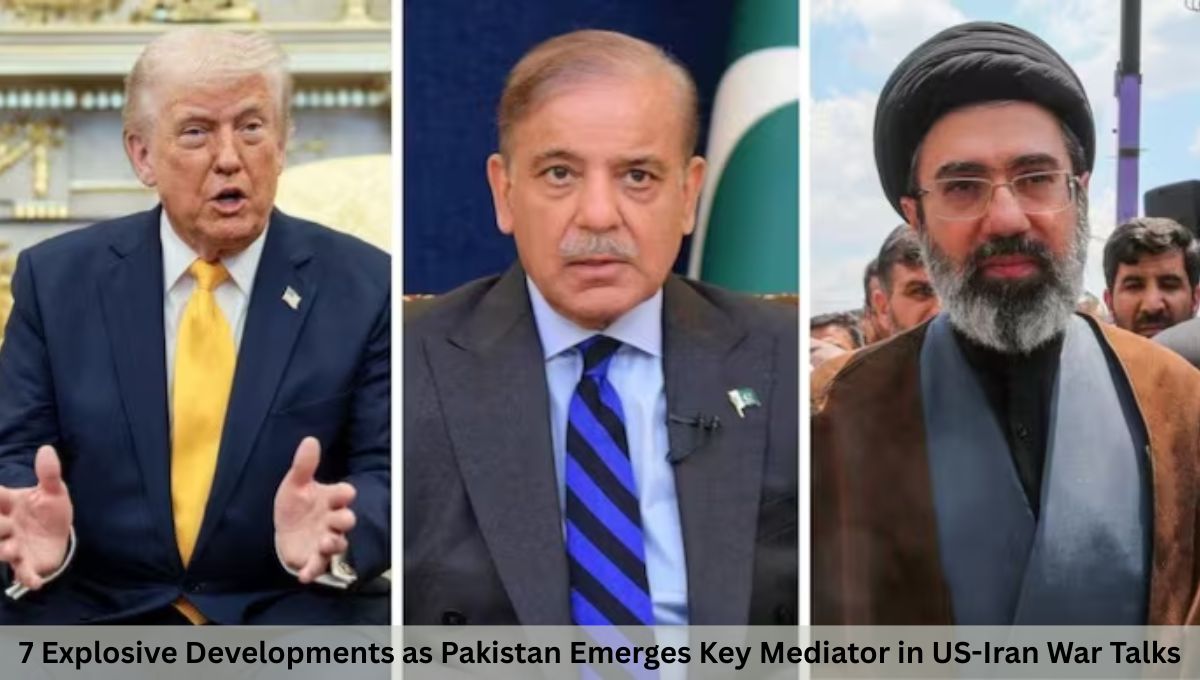
7 Explosive Developments as Pakistan Emerges Key Mediator in US-Iran War Talks as tensions escalate. Nearly a month into one of the most dangerous geopolitical crises in recent history, signs of fragile diplomacy are beginning to surface amid the ongoing US-Iran war. While military escalation continues across the Middle East, a parallel and increasingly complex diplomatic effort is quietly taking shape behind the scenes.
Thank you for reading this post, don't forget to subscribe!At the center of this emerging diplomatic push is Pakistan, a country now positioning itself as a potential mediator between Washington and Tehran. With offers to host peace talks in Islamabad and reports of back channel communications intensifying, Pakistan’s role is drawing global attention.
This development comes at a critical juncture — with energy markets shaken, global trade routes disrupted, and fears mounting of a broader regional war.
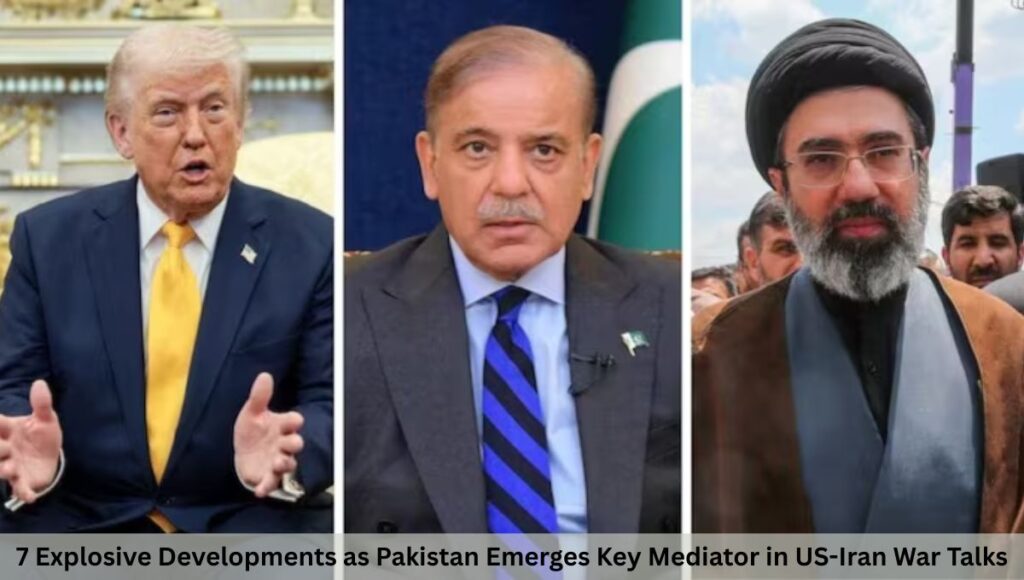
7 Explosive Developments as Pakistan Emerges Key Mediator in US-Iran War Talks
Pakistan Steps Forward as a Diplomatic Bridge
Pakistan’s Prime Minister has publicly declared that the country is ready to host negotiations aimed at ending the conflict. The offer underscores Islamabad’s ambition to serve as a neutral platform capable of facilitating dialogue between two deeply distrustful adversaries.
Officials suggest that Pakistan’s unique position — maintaining ties with both the United States and Iran — gives it a rare diplomatic advantage. Unlike many Gulf states, Pakistan does not host US military bases, which could make it more acceptable to Tehran.
Moreover, Pakistan’s longstanding strategic relationships across the Middle East, including close ties with Saudi Arabia and communication channels with Iran, further strengthen its credentials as a mediator.
Behind the scenes, Pakistani officials have reportedly been shuttling messages between both sides, acting as a conduit for indirect communication at a time when direct talks remain politically sensitive.
JD Vance Emerges as a Key Negotiator
One of the most striking developments in the evolving diplomatic landscape is the emergence of US Vice President JD Vance as a potential chief negotiator. Sources indicate that Iran may be more willing to engage if Vance leads the US delegation.
This reflects Tehran’s deep mistrust of previous negotiators associated with earlier diplomatic efforts, which it now views as deceptive. Vance is widely perceived as more cautious about military entanglements in the Middle East.
His relatively low-profile stance on the conflict has also contributed to his acceptability from the Iranian perspective. If confirmed, his involvement could mark a significant shift in the US negotiating strategy — signaling a possible move away from more hardline diplomatic approaches.
Iran’s Position: Deep Distrust and Firm Conditions
Despite reports of potential talks, Iran has publicly denied that any formal negotiations are currently underway. Officials in Tehran have emphasized that while messages are being exchanged through “friendly states,” there is “zero trust” in Washington.
This distrust stems from ongoing military actions and past negotiations that Iran believes were conducted in bad faith.
Iran has also outlined stringent conditions for any future talks, including:
- Guarantees against future military strikes
- Sanctions relief
- Compensation for damages
- Recognition of its strategic interests
These demands highlight the complexity of reaching any meaningful agreement, even if talks do materialize.
Back channel Diplomacy Intensifies
While official confirmation remains elusive, multiple countries are actively engaged in backchannel diplomacy to prevent further escalation. Pakistan is not alone in this effort. Nations such as Turkey, Egypt, and Oman are also playing intermediary roles, facilitating communication between Washington and Tehran.
This multi-layered diplomatic approach reflects the urgency of the situation.
With direct engagement politically risky for both sides, indirect channels have become the primary means of communication. Such diplomacy, though often opaque, has historically played a critical role in de-escalating conflicts — particularly when formal negotiations are stalled.
Islamabad as a Potential Venue for Talks
Reports suggest that Islamabad could host high-level talks as early as this week, though no official confirmation has been issued.
Pakistan’s appeal as a venue lies in several factors:
- Neutral diplomatic positioning
- Strong ties with both parties
- Absence of overt military alignment in the conflict
- Geographic and political proximity to the region
Iran is reportedly more inclined toward Islamabad than other proposed venues such as Qatar or Turkey, further boosting Pakistan’s chances of hosting any potential negotiations. However, officials caution that the situation remains fluid, and no final decision has been made.
Trump’s Strategic Pause and Mixed Signals
In a surprising move, the US administration has announced a temporary pause in strikes against Iran’s energy infrastructure, citing ongoing diplomatic efforts. This pause has been accompanied by claims of “strong talks” and “major points of agreement,” though these assertions have been firmly rejected by Iranian officials.
The mixed messaging highlights a broader pattern — where public statements often diverge from behind-the-scenes realities.
At the same time, the US has issued a firm ultimatum regarding the reopening of the Strait of Hormuz, threatening severe consequences if its demands are not met. This combination of military pressure and diplomatic outreach underscores a dual-track strategy aimed at forcing negotiations while maintaining leverage.
Global Stakes: Energy Crisis and Economic Fallout
The implications of the US-Iran conflict extend far beyond the Middle East. The Strait of Hormuz, a critical artery for global oil supplies, has become a focal point of the crisis. Any disruption to this route has immediate consequences for global energy markets.
Recent developments have already triggered:
- Sharp fluctuations in oil prices
- Supply chain disruptions
- Increased shipping costs
- Economic uncertainty across multiple regions
Countries heavily dependent on energy imports, including those in South Asia and Europe, are particularly vulnerable. Pakistan itself has felt the impact, facing rising fuel costs and supply shortages — a factor that further incentivizes its push for mediation.
Regional Dynamics and Strategic Calculations
The broader geopolitical landscape adds another layer of complexity to the situation. While some regional powers are pushing for de-escalation, others may have different strategic interests. The involvement of multiple actors — each with its own priorities — makes consensus difficult. Pakistan’s balancing act is especially delicate.
While seeking to mediate peace, it must also navigate:
- Its defense ties with Saudi Arabia
- Its border relationship with Iran
- Its strategic partnership with the United States
This intricate web of relationships both empowers and constrains Islamabad’s diplomatic role.
Challenges to Successful Mediation
Despite growing diplomatic activity, significant obstacles remain.
1. Lack of Trust
Deep-seated mistrust between the US and Iran continues to hinder progress.
2. Diverging Objectives
Both sides have fundamentally different expectations from any agreement.
3. Ongoing Military Actions
Continued strikes undermine the credibility of diplomatic efforts.
4. External Influences
Other regional players may complicate or even obstruct negotiations.
5. Timing
Analysts suggest that the conflict may not yet be “ripe” for resolution, meaning conditions for a successful agreement are still developing.
Historical Context: Pakistan’s Mediation Legacy
Pakistan’s current diplomatic push is not without precedent. Historically, the country has played a role in facilitating major geopolitical shifts, including acting as a bridge in high-stakes international negotiations.
Its experience in managing complex diplomatic relationships gives it a foundation upon which to build its current mediation efforts. However, the stakes in the present conflict are significantly higher, with global consequences hanging in the balance.
The Road Ahead: Fragile Hope Amid Uncertainty
As the conflict enters its fourth week, the situation remains highly volatile. While diplomatic signals offer a glimmer of hope, they are far from a guarantee of peace. The coming days will be critical in determining whether back channel efforts can evolve into formal negotiations.
If talks do materialise — particularly with figures like JD Vance involved — they could mark a turning point in the conflict. However, failure to achieve meaningful progress could lead to further escalation, with potentially devastating consequences for the region and the world.
Conclusion: A Defining Moment for Global Diplomacy
Pakistan’s emergence as a potential mediator in the US-Iran conflict represents a significant shift in the geopolitical landscape. At a time when traditional diplomatic channels are strained, Islamabad’s role highlights the importance of alternative pathways to dialogue.
Whether this effort leads to a breakthrough or becomes another missed opportunity will depend on the willingness of all parties to move beyond entrenched positions.
For now, the world watches closely as diplomacy and conflict unfold side by side — with the outcome poised to reshape global politics for years to come.
Also Read: 7 Alarming Nuclear Threats as China & Pakistan Missiles Could Reach US: Intel Warning
Also Read: Pakistan Army Chief Munir speaks to Trump, steps up mediation to end US-Iran war—FT report
Related Posts:
- 3 Explosive Conditions Iran Sets to End War with US…
- Afghanistan–Pakistan War 2025: Inside the 48-Hour Ceasefire

- 7 Powerful Measures: Trump Sanctions Russian Oil…

- 5 Major Takeaways from the US Supreme Court's…

- Trump’s 20-Point Gaza Peace Plan Gains Urgent Global…

- 7 Powerful Facts About Ayatollah Ali Khamenei’s…