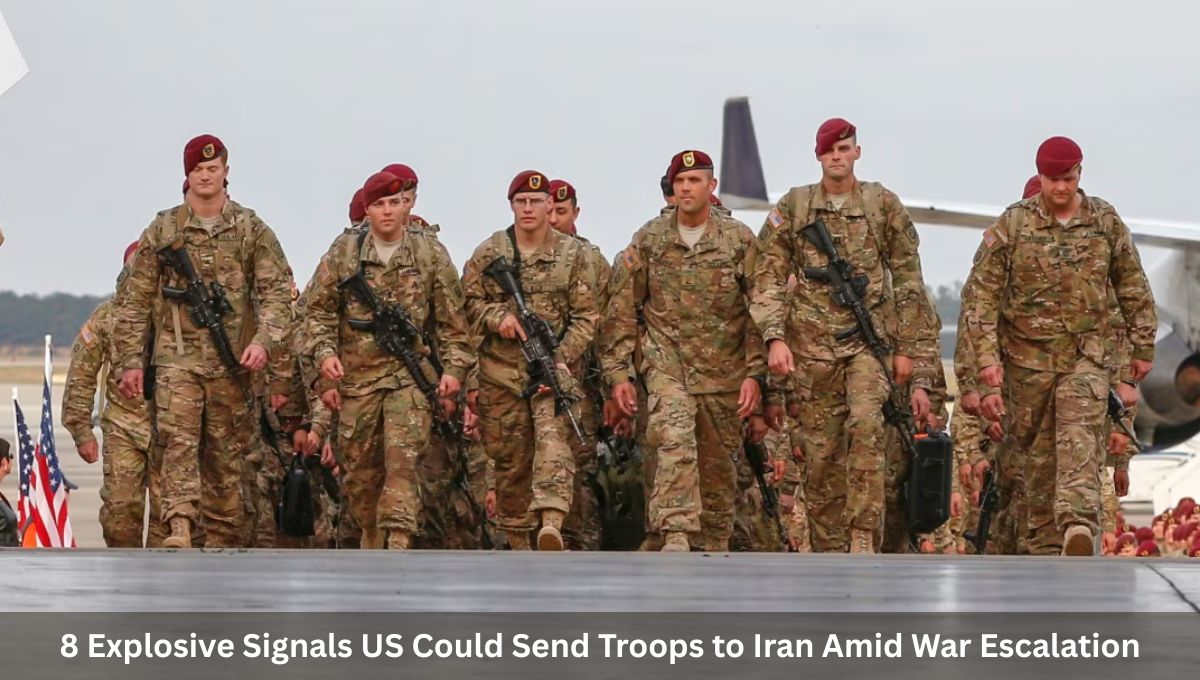
8 Explosive Signals US Could Send Troops to Iran Amid War Escalation — Trump denies immediate plans. The possibility of a full-scale ground invasion of Iran is no longer just theoretical. Behind the scenes, the United States military is preparing for scenarios that could dramatically escalate the ongoing conflict in the Middle East.
While official statements from Washington suggest restraint, a growing body of reports indicates that the Pentagon has drawn up detailed operational plans for deploying US ground troops into Iran.
These preparations come as the war involving the United States, Iran, and Israel enters a critical phase, with rising global consequences.
At the center of the debate is a fundamental question:
Will the conflict remain limited, or is the world on the brink of a major escalation?
8 Explosive Signals US Could Send Troops to Iran Amid War Escalation
Pentagon Drafts Detailed Plans for Ground Operations
According to multiple reports, senior US military officials have developed extensive contingency plans that go far beyond airstrikes or naval operations.
These plans reportedly include:
- Deployment strategies for ground troops
- Logistics for capturing and detaining Iranian personnel
- Identification of detention and processing facilities
- Coordination between elite military units
The level of detail suggests that the US military is not merely preparing hypothetically but ensuring full operational readiness.
Units Being Prepared for Deployment
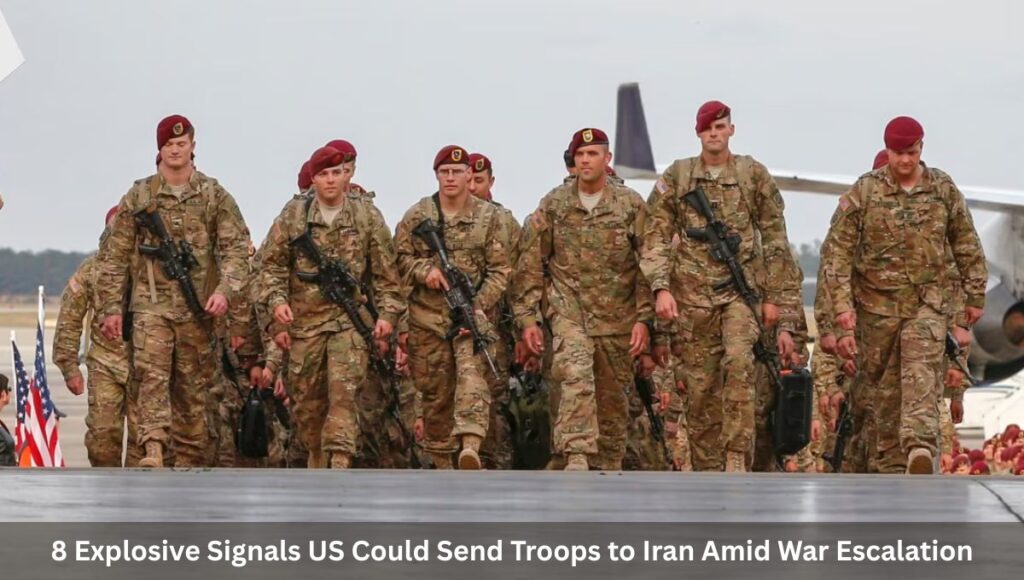
Several elite US military formations are being readied, including:
- 82nd Airborne Division – rapid-response combat force
- Marine Expeditionary Units (MEUs) – specialized amphibious forces
- Global Response Force – capable of deploying anywhere within hours
Additionally, thousands of Marines are already en route to the Middle East aboard naval vessels, signaling a significant military buildup.
This movement reflects a classic escalation ladder—positioning forces close enough to act quickly if political approval is granted.
Trump’s Public Denial vs Strategic Ambiguity
Despite these preparations, US President Donald Trump has publicly denied any immediate plans to deploy troops.
“I’m not putting troops anywhere,” he said, while adding, “If I were, I certainly wouldn’t tell you.” This dual messaging is strategic.
It allows the administration to:
- Avoid alarming the public and allies
- Maintain military surprise
- Keep pressure on Iran
White House Signals ‘Maximum Optionality’
White House Press Secretary Karoline Leavitt reinforced this approach by stating that the Pentagon’s role is to ensure the President has “maximum optionality.”
In military terms, this means:
- Preparing for all possible outcomes
- Keeping escalation tools ready
- Avoiding premature commitment
However, such statements often indicate that serious options—including ground invasion—are actively under consideration.
Why Ground Troops Could Change Everything
A decision to deploy US troops into Iran would mark a historic turning point in the conflict.
Unlike airstrikes, ground operations involve:
- Direct territorial engagement
- Higher casualty risks
- Long-term military presence
- Potential occupation scenarios
Strategic Objectives Behind Ground Deployment
Military planners are reportedly considering several objectives that may require boots on the ground:
1. Securing Nuclear Materials
Iran’s enriched uranium remains buried deep underground. Airstrikes alone cannot guarantee its destruction or capture.
Ground forces may be needed to:
- Locate and secure nuclear stockpiles
- Prevent proliferation
- Ensure long-term containment
2. Capturing Key Infrastructure
Critical assets such as energy hubs and military facilities could become targets for seizure.
3. Forcing Strategic Compliance
A ground presence could pressure Iran to:
- Reopen the Strait of Hormuz
- Halt military operations
- Enter negotiations
The Strait of Hormuz Crisis: A Global Flashpoint
One of the biggest triggers for escalation is Iran’s move to restrict access to the Strait of Hormuz. This narrow waterway handles a significant portion of global oil shipments.
Its disruption has already caused:
- Sharp spikes in oil prices
- Supply chain disruptions
- Economic uncertainty worldwide
Why the Strait Matters
The Strait of Hormuz is:
- A critical energy chokepoint
- Essential for global trade
- Vital for Asian and European economies
US officials acknowledge that reopening the strait is a complex challenge with no easy solution. A ground operation could be seen as a last resort to secure maritime flow.
Kharg Island: The Strategic Target at the Center of War Plans
One of the most discussed options involves Iran’s Kharg Island—a small but highly significant oil export hub.
Why Kharg Island Matters
- Handles up to 90% of Iran’s crude oil exports
- Serves as a financial lifeline for the Iranian government
- Located in deep waters suitable for supertankers
US Strategic Options for Kharg Island
Military planners are reportedly evaluating three primary approaches:
Cutting off access to the island without direct occupation.
2. Limited Ground Invasion
Seizing control of the island’s infrastructure.
3. Total Destruction
Targeting pipelines and storage facilities to cripple exports.
Each option carries significant risks, particularly:
- Escalation into full-scale war
- Massive global oil price spikes
- Environmental and humanitarian consequences
Rising Political Pressure Inside the United States
The possibility of deploying troops has sparked concern among US lawmakers, particularly within Trump’s own political base.
Many Republican leaders have expressed strong opposition to:
- Long-term military engagements
- High casualty risks
- “Endless wars”
Internal Political Risks for Trump
Sending troops could:
- Erode political support
- Complicate midterm elections
- Trigger public backlash
Some allies have urged the President to declare victory and wind down the conflict instead of escalating further.
Diverging US and Israeli War Objectives
Another complication is the growing gap between US and Israeli strategic goals.
United States Objectives
- Neutralize immediate threats
- Avoid prolonged conflict
- Maintain economic stability
Israel’s Objectives
- Weaken or dismantle Iranian leadership
- Pursue long-term strategic dominance
- Continue targeted operations
This divergence creates uncertainty about how—and when—the war might end.
The Nuclear Question: A Problem That Cannot Be Bombed Away
One of the most critical challenges is Iran’s nuclear capability.
Even after extensive strikes:
- Enriched uranium still exists
- Scientific expertise remains intact
- Knowledge cannot be destroyed
As one diplomat noted:
“The fundamental advantage Iran has is that knowledge can’t be bombed away.”
This reality complicates military planning and raises long-term security concerns.
Global Economic Fallout Intensifies
The conflict has already had severe economic consequences:
1. Oil Prices Surge
Prices have crossed major thresholds, impacting:
- Fuel costs
- Transportation
- Inflation
2. Supply Chain Disruptions
Shipping delays and rerouting have affected global trade.
3. Market Uncertainty
Investors are reacting to the risk of prolonged instability.
A ground invasion could amplify all these effects significantly.
Military Movements Signal Growing Readiness
Even without a formal announcement, US military movements suggest increasing preparedness.
Recent Deployments Include:
- Amphibious assault ships
- Marine expeditionary forces
- Reinforced naval presence
These deployments serve multiple purposes:
- Deterrence
- Rapid response capability
- Strategic positioning
Potential Scenarios: What Happens Next?
Several possible paths lie ahead:
Scenario 1: Limited Conflict Continues
- Air and naval strikes persist
- No ground invasion
- Diplomatic pressure increases
Scenario 2: Strategic Strike Escalation
- More aggressive targeting of infrastructure
- Possible blockade of key locations
Scenario 3: Ground Invasion
- Deployment of US troops
- Direct confrontation with Iranian forces
- High-risk, high-impact outcome
Scenario 4: Negotiated De-escalation
- Diplomatic resolution
- Gradual withdrawal of forces
- Economic stabilization
Risks of a Ground Invasion
Experts warn that sending troops into Iran would carry enormous risks:
Military Risks
- Urban warfare challenges
- Strong resistance from Iranian forces
- Potential regional escalation
Political Risks
- Domestic backlash
- Strained alliances
Economic Risks
- Oil prices potentially exceeding $200 per barrel
- Global recession fears
Why the Decision Remains Uncertain
Despite preparations, no final decision has been made.
The hesitation reflects:
- Complexity of the situation
- High stakes involved
- Unpredictable consequences
Trump’s approach appears to balance:
- Military pressure
- Political considerations
- Strategic ambiguity
Conclusion: A War at a Critical Crossroads
The situation surrounding a potential US ground invasion of Iran remains fluid and highly unpredictable.
While the Pentagon’s preparations signal readiness for escalation, official statements continue to emphasize restraint. This contrast highlights the delicate balance between deterrence and action.
At stake is not just a regional conflict, but a global crisis that could reshape geopolitics, energy markets, and international security.
The coming weeks will be crucial in determining whether the world moves toward de-escalation—or steps closer to a wider war.
Also Read: 10 Shocking Escalations as Iran Threatens Global Tourist Sites Amid US Military Surge
Also Read: Trump faces his most difficult Iran war decision: Will he deploy US troops to seize uranium?
Related Posts:
- 3 Explosive Conditions Iran Sets to End War with US…

- 10 Explosive Signals Trump Says Iran War Could End…
- 10 Explosive Signals: Trump Rates Iran War “15/10”…
- 10 Explosive Warnings as Donald Trump Calls Iran…
- 12 Explosive Claims as Donald Trump Says Iran War…
- 7 Explosive Signs Russia Is Quietly Backing Iran in…