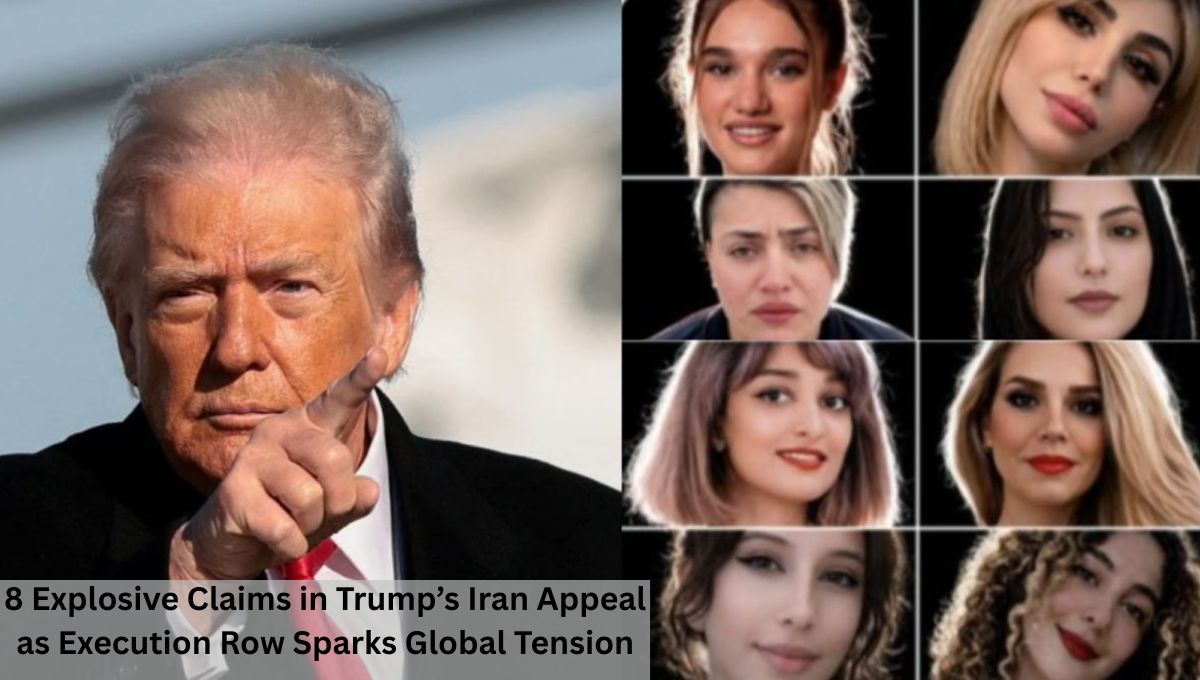
8 Explosive Claims in Trump’s Iran Appeal as Execution Row Sparks Global Tension ahead of US-Iran talks. A dramatic humanitarian appeal by Donald Trump has added a new and deeply emotional dimension to already fragile US-Iran relations. At a moment when diplomacy hangs by a thread and a ceasefire teeters on collapse, Trump publicly urged Iranian authorities to spare eight women reportedly facing execution.
His message, delivered via social media, was brief but loaded with diplomatic intent:
a request framed not only as a moral plea but as a potential opening gesture ahead of high-stakes negotiations.
“Please do them no harm,” Trump wrote, suggesting that releasing the women could serve as “a great start” to talks between Washington and Tehran. Yet within hours, Iran rejected the premise entirely, calling the claims “fake news.”
What began as a humanitarian appeal has now evolved into a geopolitical flashpoint—highlighting the complex intersection of human rights, information warfare, and diplomacy.
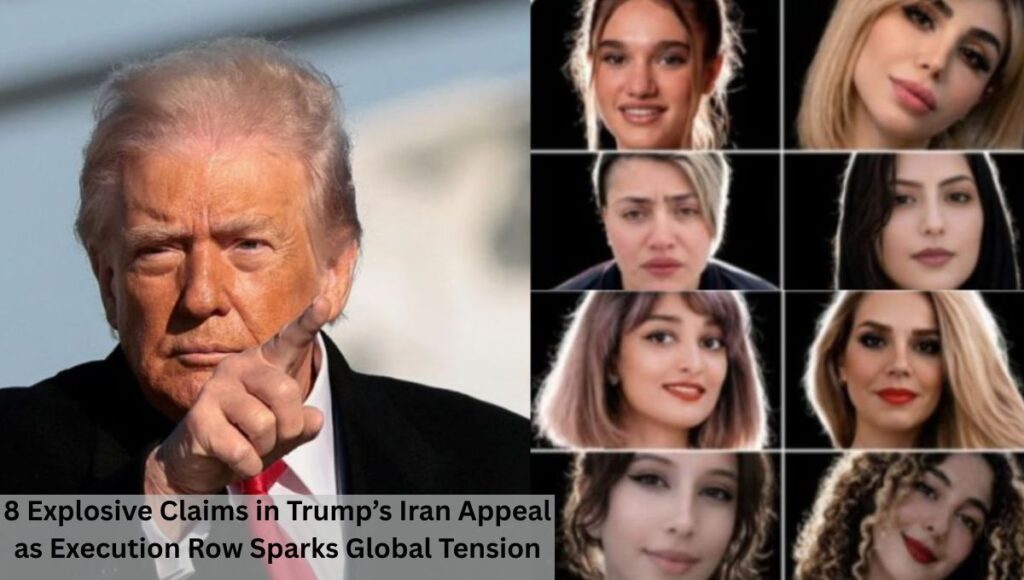
8 Explosive Claims in Trump’s Iran Appeal as Execution Row Sparks Global Tension
A Humanitarian Appeal With Strategic Undertones
Trump’s Message to Tehran
Trump’s appeal was directed explicitly at Iranian leadership, with a tone that blended urgency and diplomacy.
He framed the potential release of the women as a goodwill gesture that could set the tone for negotiations.
The timing is critical. Talks between the United States and Iran are expected to resume in Islamabad, with delegations reportedly being prepared on both sides.
Trump’s message appears calibrated to influence the atmosphere before negotiations even begin.
Rather than issuing a formal diplomatic note, the appeal was made publicly—suggesting a deliberate strategy to internationalize the issue and put pressure on Tehran.
Why This Matters
Humanitarian appeals in geopolitical conflicts are not new, but they are rarely this public or this strategically timed.
Trump’s intervention signals three things:
- A willingness to use human rights narratives as leverage
- An attempt to shape global opinion ahead of talks
- A possible effort to test Iran’s responsiveness to symbolic gestures
In diplomatic terms, such moves can either build trust—or deepen mistrust.
Who Are the 8 Women at the Center of the Crisis?
Fragmented and Unverified Information
The identities and cases of the eight women remain unclear. Much of the information originates from activist networks and social media posts rather than official judicial records.
Names that have surfaced include:
- Bita Hemmati
- Diana Taherabadi
- Mahboubeh Shabani
- Ensieh Nejati
- Ghazal Ghalandari
- Golnaz Naraghi
- Venus Hossein Nejad
- Panah Movahedi
However, there is no unified, independently verified dataset confirming all details about their cases.
Allegations and Charges
Some reports suggest that the women were arrested during anti-government protests earlier this year.
Allegations against them include:
- Participation in protests
- Assisting injured demonstrators
- Disrupting national security
- In some cases, more serious accusations such as “waging war against God”
These charges, if formally applied, can carry severe penalties under Iranian law, including the death sentence.
Gaps in Verification
Critical uncertainties remain:
- No full official confirmation from Iranian authorities
- Limited access to court proceedings
- Reliance on advocacy group reporting
- Lack of transparent legal documentation
This ambiguity has fueled both international concern and skepticism.
Iran’s Firm Rejection: ‘Fake News’ Claim
Official Response From Tehran
Iran’s judiciary responded swiftly and forcefully, rejecting Trump’s claims outright.
Officials stated that:
- Some of the women had already been released
- Others face charges that would result in imprisonment, not execution
- Reports of imminent executions are inaccurate
The response also criticized what it described as misinformation influencing international discourse.
Why Iran Is Pushing Back
Tehran’s denial serves multiple purposes:
- Maintaining Narrative Control
Iran seeks to counter external narratives that portray it as escalating repression. - Avoiding Diplomatic Pressure
Confirming execution cases could intensify international scrutiny ahead of talks. - Discrediting Opponents
Labeling the claims as “fake news” undermines activist networks and foreign criticism.
This reaction highlights the information battle that often accompanies geopolitical conflicts.
The Broader Context: Protests and Crackdown in Iran
Background of the Arrests
The cases of the women are reportedly linked to protests that erupted earlier this year. These demonstrations were part of a broader wave of unrest across Iran.
Human rights organizations claim:
- Tens of thousands were detained
- Crackdowns were widespread
- Legal proceedings were often opaque
Iran, however, has consistently rejected allegations of systemic abuse.
Human Rights Concerns
International groups have raised concerns about:
- Fair trial standards
- Forced confessions
- Use of capital punishment in political cases
Reports suggest that executions in Iran have surged, though exact figures remain contested.
Diplomacy in the Balance: Talks in Islamabad
Upcoming Negotiations
The appeal comes just as both countries prepare for potential talks in Islamabad.
The US delegation is expected to include:
- JD Vance
- Steve Witkoff
- Jared Kushner
Iran has not officially confirmed its participation, citing conditions such as the removal of the US naval blockade.
Ceasefire Nearing Expiry
A fragile two-week ceasefire is set to expire soon, adding urgency to diplomatic efforts.
Trump has warned:
- Extension of the ceasefire is unlikely without a deal
- Military action remains on the table
Iran, in turn, has signaled readiness to respond if attacked.
Humanitarian Gesture or Diplomatic Strategy?
Dual Nature of Trump’s Appeal
Trump’s message can be interpreted in two ways:
1. Genuine Humanitarian Concern
- Focus on saving lives
- Addressing global human rights concerns
- Responding to activist reports
2. Strategic Diplomatic Move
- Setting a tone before negotiations
- Testing Iran’s willingness to compromise
- Influencing global perception
In reality, it is likely a combination of both.
Global Reactions and Implications
Human Rights Community
Activists have welcomed the attention but remain cautious:
- Increased visibility can help detainees
- But misinformation risks undermining credibility
International Observers
Governments and analysts see the episode as:
- A reflection of deep mistrust
- A reminder of the fragile nature of US-Iran relations
- A signal that even humanitarian issues are politicized
Information Warfare in Modern Diplomacy
Role of Social Media
This episode underscores how:
- Social media can elevate local issues to global crises
- Unverified claims can influence diplomatic narratives
- Leaders use digital platforms for strategic messaging
Risks of Misinformation
When claims cannot be independently verified:
- Trust erodes
- Diplomatic tensions increase
- Public perception becomes polarized
What Happens Next? Four Possible Scenarios
1. Gesture Leads to Diplomacy
Iran releases detainees or clarifies cases, easing tensions.
2. Claims Fade, Talks Continue
Issue is sidelined as negotiations proceed.
3. Escalation Through Mistrust
Disputes over facts deepen hostility.
4. Talks Collapse
Combined tensions derail diplomacy entirely.
The Human Cost Behind Geopolitics
Amid strategic calculations and political rhetoric, the core issue remains human.
If even part of the claims is accurate:
- Lives are at stake
- Families are affected
- Justice systems are under scrutiny
This is what makes the issue resonate globally.
Conclusion: A Defining Moment in US-Iran Relations
Trump’s appeal to Iran over the alleged execution of eight women has done more than highlight a human rights issue—it has exposed the fragile, complex, and often contradictory nature of modern diplomacy.
With:
- A ceasefire nearing expiration
- Talks hanging in the balance
- Narratives clashing across borders
The situation remains fluid and highly unpredictable.
Whether this moment becomes a stepping stone toward dialogue or another point of escalation will depend on what happens next—not just in diplomatic halls, but in how truth, trust, and transparency are handled in the days ahead.
One thing is clear:
in today’s geopolitical landscape, even a single message can ripple across the world, shaping both policy and perception in real time.
Also Read: 7 Shocking Developments as Iran Moves Toward First Protest Execution
Also Read: Iran executes former atomic agency employee over alleged spying for Israel
Related Posts:
- Trump’s 2025 Gaza Peace Plan Signing and Historic…

- 5 Powerful Highlights as Trump Lands Second Nobel…

- 7 Shocking Reasons FIFA’s Peace Prize for Trump…

- 11 Explosive Warnings as Trump Vows to ‘Knock the…

- 9 Explosive Revelations as Trump Declares His Health…

- Trump to Host 2026 G20 Summit at His Florida Golf…