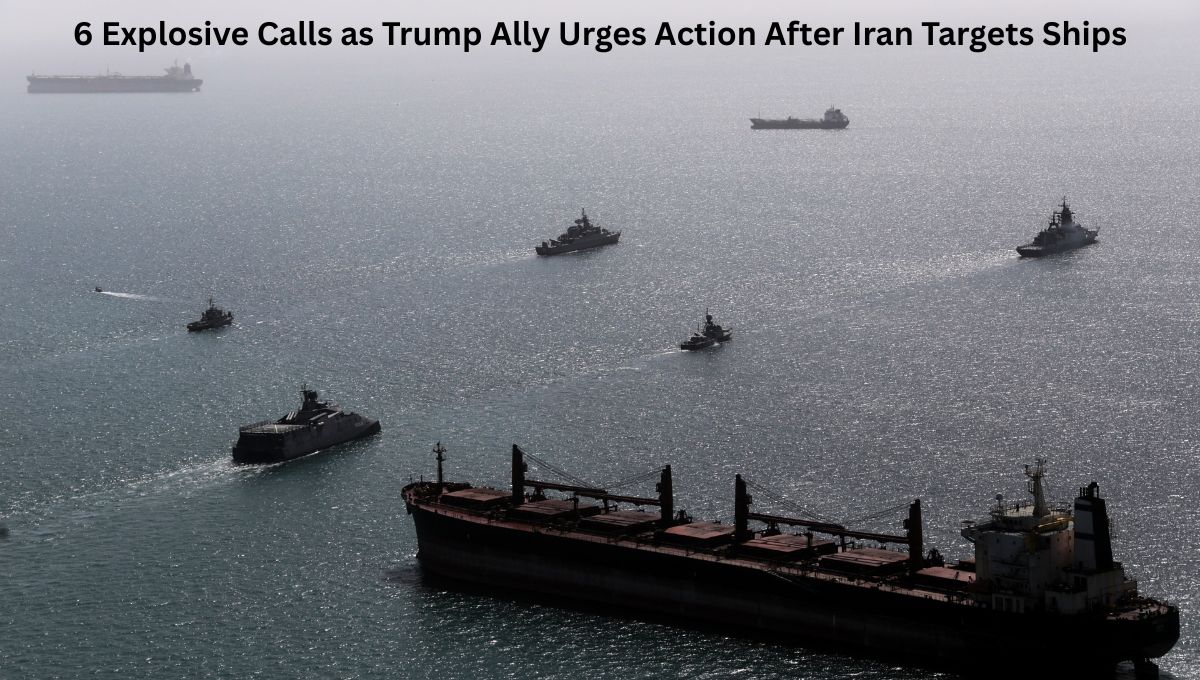
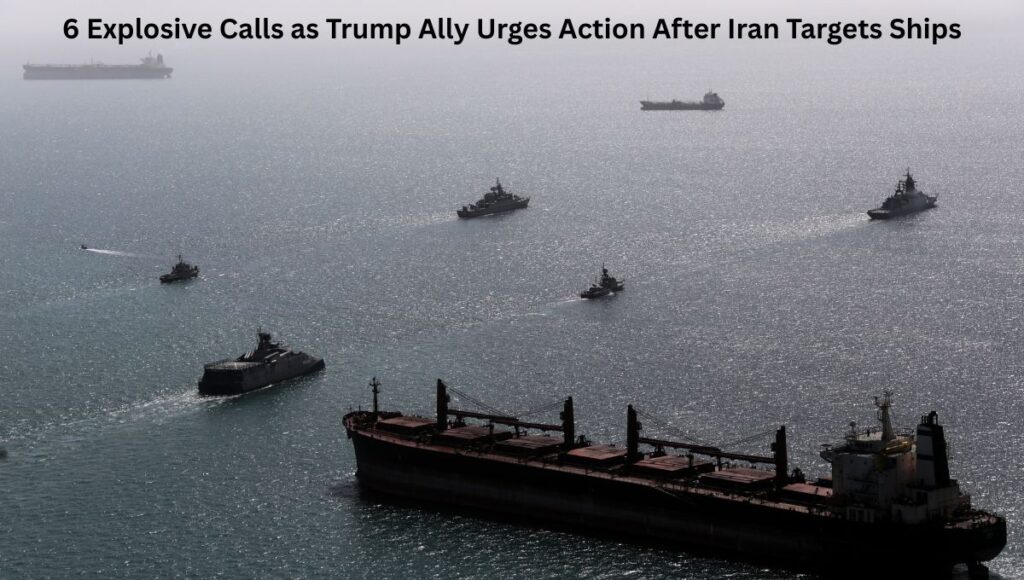
6 Explosive Calls as Trump Ally Urges Action After Iran Targets Ships, threatening global oil supply. Tensions in the Middle East have escalated sharply after fresh reports of Iranian attacks on commercial shipping in the Strait of Hormuz, one of the world’s most critical energy corridors.
The situation intensified further after a close ally of US President Donald Trump called for decisive action, urging Washington to “teach Iran a lesson” following the alleged targeting of Indian ships.
The remarks reflect a hardening stance within influential US political circles and highlight growing pressure on the White House to respond forcefully to what is being framed as a direct challenge to global maritime security.
6 Explosive Calls as Trump Ally Urges Action After Iran Targets Ships
Sharp Reaction from Washington
Senior US Senator Lindsey Graham delivered a strong response to the reported incident, describing Iran’s actions as a provocation that demands a firm international response.
He argued that Tehran’s claims of controlling the Strait of Hormuz, combined with attacks on international shipping, represent a dangerous escalation.
According to Graham, allowing such actions to go unchecked would undermine global trade and embolden further aggression.
His message to the US administration was clear:
maintain pressure, strengthen control over the waterway, and ensure that Iran does not dictate the terms of maritime access.
Call to Continue Blockade Strategy
A central pillar of Graham’s position is the continuation of the US-led naval blockade targeting Iranian maritime activity.
He described the blockade as highly effective, claiming it is already exerting significant economic pressure on Iran.
By restricting Iran’s ability to export oil, the strategy aims to weaken the country’s primary source of revenue.
Graham suggested that sustaining this pressure would eventually shift the balance of power in Washington’s favor.
In his view, controlling the Strait of Hormuz is not just a tactical objective—it is a strategic lever that could determine the outcome of the broader conflict.
Targeting Strategic Energy Hubs
In a notable escalation, Graham also proposed targeting key Iranian oil infrastructure, including Kharg Island, which serves as a major hub for the country’s crude exports.
Such a move would represent a significant intensification of the conflict, potentially crippling Iran’s oil industry and amplifying economic pressure.
However, targeting energy infrastructure carries serious risks. It could trigger retaliation, disrupt global oil supplies, and draw additional countries into the conflict.
This highlights the high-stakes nature of the decisions facing policymakers.
Indian Ships Caught in the Crossfire
The crisis took on an international dimension after reports that Indian-flagged cargo vessels were forced to alter their routes following gunfire from Iranian forces.
The incident has raised serious concerns about the safety of commercial shipping in the region, particularly for countries heavily dependent on maritime trade.
India responded swiftly, summoning the Iranian ambassador and lodging a formal protest.
Officials emphasized the importance of ensuring safe passage for commercial vessels and protecting the lives of seafarers.
This development underscores how the conflict is no longer confined to the US and Iran—it is affecting global stakeholders.
India’s Diplomatic Response
New Delhi’s reaction reflects both concern and caution. While strongly protesting the incident, India also called on Iran to resume facilitating safe shipping routes.
The emphasis was on de-escalation and maintaining stability in maritime trade.
India’s position highlights a broader global concern:
ensuring that vital shipping lanes remain open and secure, regardless of geopolitical tensions.
For many nations, the Strait of Hormuz is not just a regional issue—it is a lifeline for energy supplies and economic stability.
Strait of Hormuz: A Global Pressure Point
The Strait of Hormuz sits at the center of this crisis.
Roughly one-fifth of the world’s oil supply passes through this narrow waterway. Any disruption here can have immediate and far-reaching consequences for global markets.
Iran’s actions, combined with US enforcement measures, have effectively turned the strait into a high-risk zone. Shipping companies face increased costs, delays, and uncertainty.
This has already begun to impact oil prices and could lead to broader economic ripple effects if tensions continue to rise.
Economic Pressure as a Strategic Tool
The US strategy appears focused on leveraging economic pressure to achieve its objectives.
By targeting Iran’s oil exports and restricting maritime trade, Washington aims to weaken Tehran’s financial capacity.
Officials have suggested that storage facilities at key export hubs could soon reach capacity due to the blockade, forcing production slowdowns.
This approach is designed to push Iran toward negotiations—but it also risks provoking more aggressive responses.
Rising Military and Political Rhetoric
The language used by both sides has grown increasingly confrontational.
Iran has accused the US of “piracy” and warned of retaliation, while US leaders and allies have emphasized strength and deterrence.
This war of words plays a critical role in shaping the conflict. It signals intent, influences public perception, and sets the tone for potential actions.
However, heightened rhetoric also increases the risk of miscalculation, where statements can escalate tensions beyond control.
Nuclear Issue Remains Central
Beyond maritime disputes, the conflict is deeply rooted in disagreements over Iran’s nuclear program.
US policymakers, including Graham, have taken a firm stance against allowing Iran any capability to enrich uranium.
Iran, meanwhile, insists its nuclear program is for peaceful purposes and has rejected demands that it sees as excessive.
This fundamental disagreement continues to complicate diplomatic efforts and remains a major obstacle to any long-term resolution.
Risks of Escalation
The current trajectory of events points toward a heightened risk of escalation.
Several factors contribute to this:
- Military presence in a confined and strategic area
- Increasingly aggressive rhetoric
- Direct incidents involving commercial shipping
- Lack of trust between the parties
Any misstep—whether intentional or accidental—could trigger a broader conflict with significant global consequences.
Global Implications
The impact of the crisis extends far beyond the Middle East.
Energy markets are particularly vulnerable, with oil prices reacting quickly to developments in the Strait of Hormuz.
Global trade could also be affected, as disruptions in shipping routes lead to delays and increased costs.
For countries reliant on energy imports, the stakes are especially high. A prolonged crisis could strain economies and disrupt supply chains worldwide.
Strategic Calculations in Washington
Graham’s remarks reflect a broader strategic debate within the United States.
Some policymakers favor continued pressure and a hardline approach, believing it will force Iran to concede.
Others warn that excessive pressure could backfire, leading to escalation and reducing the chances of a diplomatic solution.
The administration must balance these competing perspectives while navigating a rapidly evolving situation.
What Lies Ahead?
The coming days will be critical in determining the direction of the conflict.
Key questions include:
- Will the US intensify its blockade and enforcement actions?
- How will Iran respond to continued pressure?
- Can diplomatic efforts regain momentum?
The answers to these questions will shape not only regional stability but also global economic conditions.
Conclusion: A Crisis with Global Stakes
The call to “teach Iran a lesson” captures the rising urgency and intensity of the current situation.
What began as a regional conflict has evolved into a global concern, affecting shipping routes, energy supplies, and international diplomacy.
As tensions escalate, the need for careful decision-making becomes increasingly important.
The balance between pressure and diplomacy will determine whether the crisis moves toward resolution or spirals into wider conflict.
For now, the Strait of Hormuz remains a focal point of uncertainty—where every move carries consequences far beyond its narrow waters.
Also Read: 9 Explosive Claims as Trump Says US Winning Iran War
Also Read: US military will target Iran-linked ships worldwide, broadening scope beyond blockade