

7 Shocking Developments as Iran Moves Toward First Protest Execution of 26-year-old Erfan Soltani. Iran is facing mounting international condemnation as human rights organisations warn that the Islamic Republic is preparing to carry out its first execution linked to the ongoing wave of anti-government protests sweeping the country.
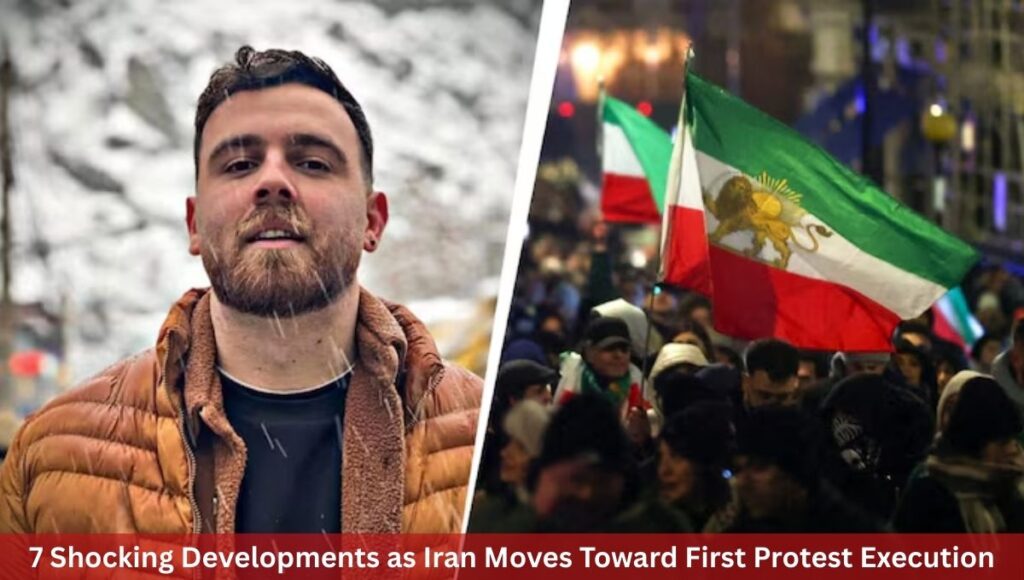
At the centre of the alarm is Erfan Soltani, a 26-year-old protester from Karaj near Tehran, who is reportedly scheduled to be hanged after being convicted of the capital offence of “waging war against God,” known in Iran as moharebeh.
If carried out, Soltani’s execution would mark a grim escalation in the regime’s response to protests that began in late December amid severe economic distress and have since evolved into an unprecedented political challenge to Supreme Leader Ayatollah Ali Khamenei.
Human rights groups say the case exemplifies a broader pattern of summary justice, denial of due process, and the use of fear as a tool to crush dissent.
7 Shocking Developments as Iran Moves Toward First Protest Execution
Who Is Erfan Soltani?
Erfan Soltani is a 26-year-old resident of Fardis, a suburb of Karaj west of Tehran. According to multiple rights groups and media reports, he was arrested on January 8 while participating in demonstrations against the Iranian government.
Arrest During Protests
Soltani was detained during street protests that erupted across Iran in response to soaring inflation, a collapsing currency, and deepening economic hardship.
What began as economic demonstrations quickly transformed into overtly political protests, with chants calling for the removal of Supreme Leader Ayatollah Ali Khamenei and an end to clerical rule.
Karaj, where Soltani was arrested, has been one of the flashpoints of unrest, witnessing repeated clashes between protesters and security forces.
Charges: “Waging War Against God”
Iranian authorities have reportedly charged Soltani with moharebeh, one of the most severe offences under Iran’s Islamic Penal Code.
The charge carries the death penalty and has historically been used against armed groups, bandits, and individuals accused of threatening public security.
Human rights advocates argue that the charge has increasingly been weaponised against peaceful protesters and political dissidents.
Allegations of No Trial and Denial of Legal Rights
Rights groups allege that Soltani was denied fundamental legal protections.
No Access to a Lawyer
According to the National Union for Democracy in Iran (NUFD) and Iran Human Rights (IHR), Soltani was not given access to legal counsel during his detention.
His sister, who is reportedly a licensed lawyer, has allegedly been blocked from reviewing his case file or representing him in court.
Family Told Sentence Is Final
IHR has stated that Soltani’s family was informed that he had already been sentenced to death and that the execution was scheduled for January 14.
The family was reportedly allowed a single, brief 10-minute visit on January 11 to say goodbye.
Human rights groups say such procedures fall far short of international standards for a fair trial and raise serious concerns about arbitrary execution.
Iran Human Rights Groups Sound the Alarm
The Norway-based NGO Iran Human Rights (IHR) has been at the forefront of documenting abuses linked to the protest crackdown.
Rising Death Toll
IHR says it has confirmed at least 648 people killed during the protests, including nine minors. However, it warns that the real number is likely far higher.
“According to some estimates, more than 6,000 people may have been killed,” IHR said, noting that Iran’s near-total internet blackout has made independent verification extremely difficult.
Thousands Arrested
Rights groups estimate that at least 10,000 people have been arrested since the protests began. Many detainees are believed to be held incommunicado, without access to lawyers or contact with their families.
Warnings of Crimes Against Humanity
“The widespread killing of civilian protesters in recent days by the Islamic Republic is reminiscent of the regime’s crimes in the 1980s, which have been recognised as crimes against humanity,” said IHR Director Mahmood Amiry-Moghaddam.
He added that the international community has a responsibility to act to prevent mass killings and executions.
What Is Moharebeh? Iran’s Most Feared Charge
The charge of moharebeh, or “waging war against God,” is among the most feared legal tools in Iran.
Origins and Meaning
Rooted in Islamic jurisprudence, moharebeh was originally intended to address severe crimes such as armed robbery, banditry, and violent threats to public safety.
Expanded Use After 1979
Since the 1979 Islamic Revolution, Iranian courts—particularly revolutionary courts—have expanded the interpretation of moharebeh. Today, it is frequently applied to protesters, activists, and political opponents.
Punishments
Punishments for moharebeh can include hanging, amputation, exile, or, under some interpretations, crucifixion. Human rights organisations say the charge is often based on vague evidence, forced confessions, or participation in protests deemed threatening by authorities.
Protests That Shook the Islamic Republic
Economic Roots
The current wave of unrest began in late December amid a deepening economic crisis. Iran has been grappling with runaway inflation, a plummeting currency, high unemployment, and the cumulative impact of decades of international sanctions.
From Bread to Regime Change
What started as protests over prices and wages quickly evolved into calls for sweeping political change. Demonstrators across cities large and small began chanting slogans against Ayatollah Khamenei and the clerical establishment.
Nationwide Spread
Protests spread from Tehran’s bazaars to provincial cities, involving students, shopkeepers, industrial workers, and middle-class families.
Government Response: Force, Fear, and Funerals
Violent Crackdown
Iranian security forces responded with live ammunition, mass arrests, and heavy deployments of police and Revolutionary Guard units.
Videos circulating on social media—before the blackout—appeared to show bodies lined up in morgues and wounded protesters being carried away from demonstrations.
Official Narrative
Authorities have labelled protesters “rioters” and “terrorists,” accusing foreign powers, particularly the United States and Israel, of fomenting unrest.
Pro-Government Rallies
The government has also organised mass rallies to project an image of control. Ayatollah Khamenei claimed these demonstrations proved the protest movement had been defeated.
Internet Blackout Masks the Scale of the Crisis
Iran has imposed one of its most extensive internet shutdowns in years, severely limiting access to social media, messaging apps, and international news.
Information Control
Rights groups say the blackout is designed to prevent documentation of abuses and hinder coordination among protesters.
Verification Challenges The communications blackout has made it extremely difficult to independently verify death tolls, arrests, and executions, adding urgency to calls for international monitoring.
Also Read: 7 Explosive Revelations Behind Iran’s Starlink Kill Switch Crackdown
Also Read: Iran protester, 26, to be executed today, family got just 10 minutes for final meeting
Related Posts:
- 11 Explosive Developments as Iran Warns US Over…
- 10 Explosive Strikes: Israel Bombs Tehran Oil Depots…

- 3 Explosive Conditions Iran Sets to End War with US…
- 10 Explosive Updates on Iran Bridge Strike as Trump…
- 9 Explosive Signals as Trump Cancels Iran Talks and…

- 11 Explosive Warnings as Trump Vows to ‘Knock the…
