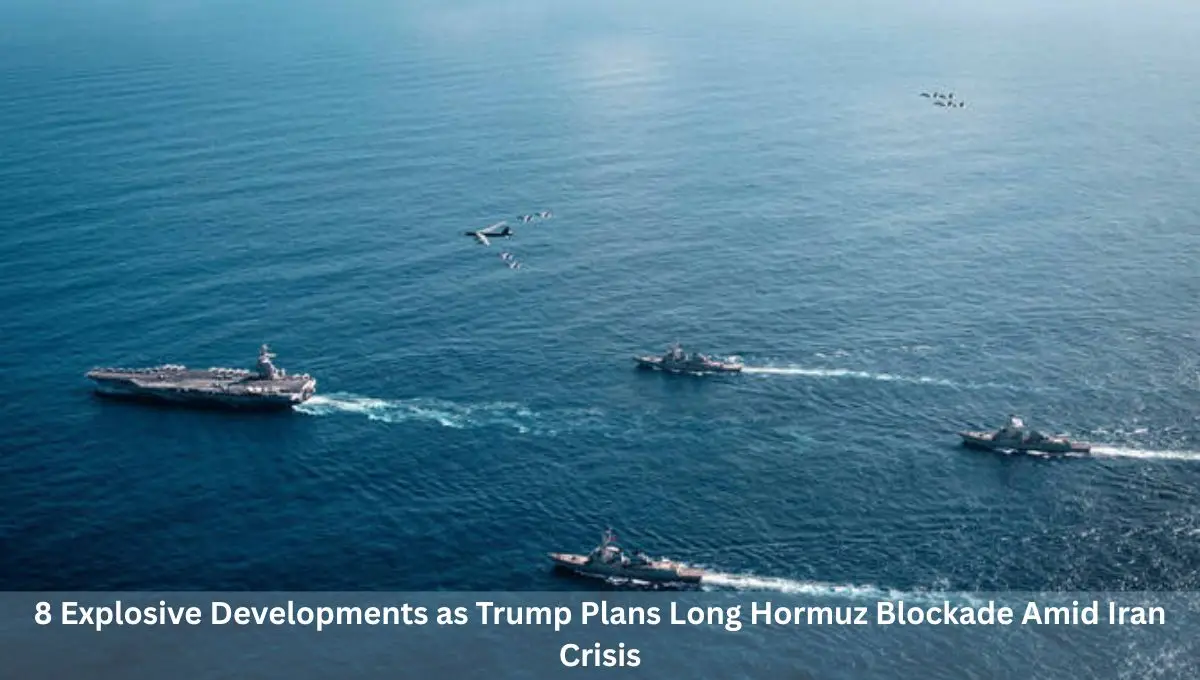
8 Explosive Developments as Trump Plans Long Hormuz Blockade Amid Iran Crisis and global disruption. The global geopolitical landscape has entered a dangerous new phase as Donald Trump reportedly instructed his administration to prepare for a prolonged naval blockade of the Strait of Hormuz—a strategic waterway that carries nearly one-fifth of the world’s oil supply.
With peace talks between the United States and Iran stalled, the move signals a dramatic escalation in economic and military pressure.
The consequences are already rippling across global markets, diplomatic corridors, and energy-dependent economies.
From surging oil prices to fears of a prolonged “frozen conflict,” the situation is rapidly evolving into one of the most consequential geopolitical crises of the decade.
8 Explosive Developments as Trump Plans Long Hormuz Blockade Amid Iran Crisis
According to reports, Trump has directed aides to prepare for an extended U.S. naval blockade targeting Iranian shipping.
The strategy focuses on:
- Intercepting vessels heading to or from Iranian ports
- Restricting Iran’s oil exports
- Intensifying economic pressure
This approach represents a shift from short-term military tactics to sustained economic warfare.
Trump also claimed that Iran has requested the reopening of the Strait, stating that the country is in a “state of collapse.”
However, these claims remain unverified and have not been confirmed by Iranian officials.
2. A “Dual Blockade” Strategy Emerges
What makes this crisis particularly complex is the emergence of what analysts describe as a “dual blockade.”
- The U.S. is restricting Iranian maritime trade
- Iran is limiting access to the Strait of Hormuz
The result is a near-total disruption of one of the world’s busiest shipping lanes.
Before the conflict:
- 125–140 ships passed daily
- A significant portion carried oil
Now:
- Only a handful of vessels are moving
- Oil shipments have nearly halted
This standoff has transformed the Strait into a geopolitical pressure point rather than a trade corridor.
3. Peace Talks Collapse Over Nuclear Dispute
Diplomatic efforts to resolve the crisis have hit a major roadblock.
Iran proposed a phased negotiation strategy:
Iran’s Proposal:
- End the conflict
- Resolve shipping disputes
- Address nuclear issues later
US Position:
- Nuclear concerns must be addressed immediately
- No deal without strict guarantees
This fundamental disagreement has stalled talks, with both sides unwilling to compromise.
4. Rising Tensions and Harsh Rhetoric
The diplomatic breakdown has been accompanied by increasingly sharp rhetoric.
Iranian officials have rejected U.S. demands, calling them:
- “Illegal”
- “Irrational”
Meanwhile, Trump has maintained a hardline stance, emphasizing:
- Economic pressure
- Strategic leverage
- Non-negotiable red lines
Even U.S. allies have expressed concern. German Chancellor Friedrich Merz criticized Washington’s approach, prompting a blunt response from Trump.
5. Global Oil Markets in Turmoil
One of the most immediate impacts of the crisis has been on energy markets.
Key Developments:
- Brent crude surged above $110 per barrel
- Prices have risen more than 50% since the conflict began
- Forecasts suggest further increases
The World Bank has warned that energy prices could rise significantly if disruptions continue.
This has serious implications for:
- Inflation
- Transportation costs
- Industrial production
6. Economic Shock waves Across the World
The effects of the Hormuz crisis are being felt globally.
Asia:
Countries like India, Japan, and South Korea face rising import costs due to heavy dependence on Middle Eastern oil.
Europe:
Already dealing with energy insecurity, European nations risk further inflation and economic slowdown.
United States:
Despite domestic production, rising global prices are pushing up fuel costs, creating political challenges for the administration.
7. UAE’s Exit from OPEC: A Game-Changer
In a surprising move, the United Arab Emirates announced its decision to leave OPEC.
This decision reflects:
- Frustration with production limits
- Desire to increase output
- Strategic positioning in a volatile market
The move could reshape global oil dynamics, weakening OPEC’s influence and adding uncertainty to supply forecasts.
8. A “Frozen Conflict” Warning from Qatar
Diplomatic voices are increasingly warning of a prolonged stalemate.
Qatar has cautioned against the risk of a “frozen conflict”—a situation where:
- Active fighting stops
- Underlying tensions remain unresolved
- Periodic escalations occur
Such scenarios can last for years, creating persistent instability.
9. Iran’s Strategy: Resistance and Adaptation
Despite economic pressure, Iran is adapting its approach.
Key Measures:
- Using alternative trade routes
- Strengthening regional alliances
- Maintaining control over the Strait
Iran’s leadership has also emphasized resilience, rejecting claims of collapse.
This suggests that the conflict may be more balanced than initial narratives indicate.
10. The Nuclear Issue: Core of the Conflict
At the heart of the crisis lies the long-standing dispute over Iran’s nuclear program.
The United States demands:
- Full transparency
- Strict limitations
- Prevention of weapon development
Iran insists on:
- Its right to enrich uranium
- Sovereignty over its program
This disagreement has derailed multiple diplomatic efforts over the years—and continues to do so now.
11. Historical Context: Lessons from 2015 Deal
The current situation echoes the 2015 nuclear agreement, from which Trump withdrew during his first term.
That deal:
- Limited Iran’s nuclear activities
- Provided sanctions relief
- Reduced tensions temporarily
Its collapse has contributed to today’s renewed conflict.
12. Impact on Global Trade Routes
The Strait of Hormuz is not just about oil—it’s a critical artery for global trade.
Disruptions affect:
- Shipping timelines
- Supply chains
- International commerce
Industries ranging from manufacturing to retail are already feeling the impact.
13. Military and Strategic Implications
The blockade also raises serious military concerns.
Potential risks include:
- Naval confrontations
- Escalation into broader conflict
- Involvement of regional powers
The presence of multiple military forces in a confined area increases the likelihood of miscalculation.
14. Domestic Pressure on Trump
The crisis is not just international—it has domestic implications for Trump.
Challenges Include:
- Falling approval ratings
- Rising fuel prices
- Public fatigue with conflict
With elections approaching, these factors could influence political outcomes.
15. Information War and Competing Narratives
Another layer of complexity is the information battle.
- Trump claims Iran is collapsing
- Iran denies and projects strength
- Analysts point to a more nuanced reality
This divergence highlights the role of narrative in modern geopolitics.
16. Allies Divided Over Strategy
Traditional U.S. allies are not fully aligned on the approach to Iran.
Some support pressure tactics, while others advocate:
- Diplomacy
- De-escalation
- Multilateral solutions
This division complicates efforts to build a unified response.
17. The Role of Mediators
Countries like Pakistan and Qatar have attempted to mediate talks.
However:
- Negotiations have stalled
- Trust remains low
- Progress is limited
Without effective mediation, the path to resolution remains uncertain.
18. Environmental and Long-Term Risks
Beyond immediate economic effects, the crisis has environmental implications.
- Increased shipping risks
- Potential oil spills
- Long-term ecological damage
These risks add another dimension to an already complex situation.
19. What Happens If the Blockade Continues?
If the blockade persists, the world could face:
- Sustained high energy prices
- Economic slowdown
- Increased geopolitical instability
The longer the crisis continues, the greater the impact.
20. What Happens If It Ends?
Even a resolution may not bring immediate relief.
- Markets may remain volatile
- Trust between nations may take time to rebuild
- Structural changes in energy markets could persist
Conclusion: A Defining Global Moment
The escalating standoff between the United States and Iran over the Strait of Hormuz represents more than a regional conflict—it is a defining moment for global politics, economics, and security.
With Donald Trump pursuing a strategy of sustained pressure and Iran refusing to concede key demands, the path forward remains uncertain.
What is clear, however, is that the stakes could not be higher. From energy markets to international alliances, the outcome of this crisis will shape the global order for years to come.
Also Read: 10 Explosive Updates as Trump Orders Hormuz Blockade After Iran Talks Fail
Also Read: Trump tells aides to prep for lengthy Hormuz blockade: report says
Related Posts:
- 9 Explosive Claims as Trump Says US Winning Iran War
- Trump's 3 Blunt Warnings to China and Russia Over…
- 11 Explosive Warnings as Trump Vows to ‘Knock the…

- 5 Powerful Highlights as Trump Lands Second Nobel…

- 7 Powerful Measures: Trump Sanctions Russian Oil…

- 10 Powerful Revelations from the Trump–Putin Call on…